Why Wyoming Mandates No Safety Course
Wyoming does not generally require ATV or UTV riders to complete a safety course just to ride, but “not required” does not mean “not useful.” The key is knowing what the rule covers, what other access conditions still apply, and how to prepare for the terrain and machine you’ll use.
What Wyoming’s No-Course Rule Means
For ordinary off-road riding, Wyoming does not impose a general statewide safety-course requirement as a condition of riding an ATV or UTV. A rider does not normally need to show a course card simply to buy an ORV permit or use a route open to that machine.
That narrow answer can be easy to misread. It does not mean every road or trail is open, every rider is allowed to use every machine, or that no other rules apply. It means a safety-course certificate is not generally the statewide gatekeeping requirement for off-road riding. Permits, route designations, age-related rules, land-access conditions, and equipment requirements can still matter.
The absence of a course mandate is also not a statement that training is unnecessary. ATVs and UTVs can tip, slide, get stuck, or behave differently from what a new rider expects. A course can help riders build skills before they encounter steep slopes, loose ground, traffic, water crossings, or changing weather.
A course and a permit do different jobs
A safety course teaches skills and decision-making. A permit or registration requirement is an authorization or access condition. One does not substitute for the other.
Where a Wyoming ORV permit is required, completing a course does not waive that requirement. Likewise, having the permit does not prove that a rider can operate the machine safely. Check Why Every Machine Needs a Wyoming Permit and Wyoming ORV Permit for a Visiting Rider if you’re sorting out the decal rules for a particular ride.
The same distinction applies to route access. A valid permit does not make a closed road or an unsuitable trail open to your machine. Before setting out, confirm the route’s status and any restrictions that apply. [Wyoming Rules for Riding a Designated Route] explains why checking the route itself matters.
| Question | What a safety course addresses | What it does not automatically provide |
|---|---|---|
| Can I operate this machine more safely? | Skills, risk awareness, and riding decisions | Permission to use a restricted route |
| Do I meet an access condition? | Usually not the main purpose of the course | An ORV permit or other required authorization |
| Is this route open to my machine? | May help you understand how to check | A guarantee that a route is open |
| Can I ride on a public road? | May provide useful background | Road-use eligibility, required equipment, or any needed license or endorsement |
| Am I ready to take a child riding? | Can improve preparation for adults and young riders | An exemption from age, supervision, or passenger rules |
Check the specific ride, not just the general rule
“Riding in Wyoming” can mean a lot of different things: an established trail, a forest road, a route on BLM land, an enrolled road, private property, or a public road. The access rules may differ with the land manager, route, machine, and type of use.
That is why the no-course answer should be treated as one item on a pre-ride checklist. Confirm whether a permit applies, whether the route is open to your machine, and whether there are any additional conditions for your group or activity. For federal ground, see [Wyoming Rules for Riding a National Forest] and check the relevant land manager’s current map, signs, and notices.
Why a Course Is Not a Statewide Requirement
A course requirement is one way to encourage safer riding, but it is not the only way to manage risk. Wyoming’s general approach does not make a safety certificate the universal entry ticket for off-road use. Instead, riders still need to pay attention to access rules and take responsibility for operating within their abilities.
It is important not to read more into that policy than it says. The lack of a general requirement does not establish why lawmakers chose that approach, and it does not mean Wyoming considers training unimportant. It simply leaves riders without a broad statewide course prerequisite for ordinary off-road riding.
Access rules and riding skills solve different problems
A land manager can control where machines may go, which routes are open, and what restrictions apply. Those controls help protect users, land, wildlife, and other uses. A safety course, by contrast, helps a rider make better decisions while operating a machine.
Neither is a complete replacement for the other. A well-trained rider can still get into trouble by riding a closed route, ignoring a warning sign, or taking a machine onto terrain it cannot handle. A rider who follows every access rule can still be unprepared for a sudden slope, a loose turn, or a rollover hazard.
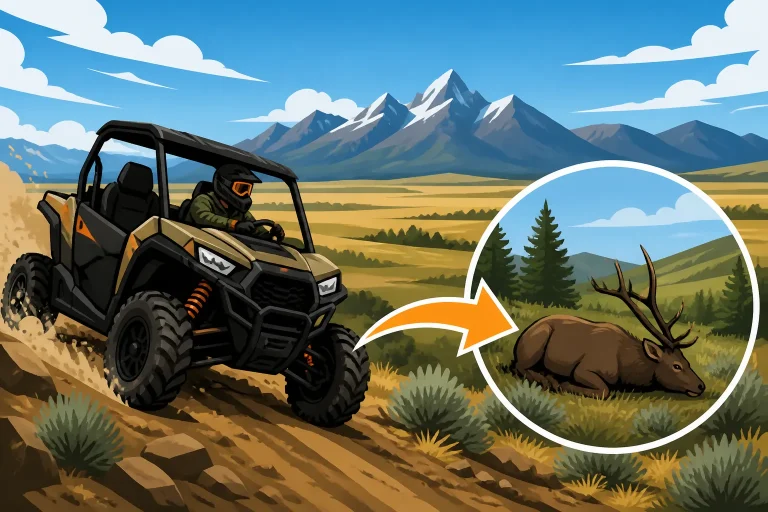
This is one reason riders should not treat a lack of course requirement as evidence that a route is easy or low risk. Trail conditions can change. A two-track that looks simple on a map may have ruts, loose rock, a steep descent, limited sightlines, or an exposed edge. A wide side-by-side may also face restrictions that do not apply to a narrower ATV.
A single course requirement would not cover every situation
Riders vary widely in experience, age, machine type, and intended use. A beginner on a youth quad, an experienced rider on an ATV, and a family traveling in a side-by-side do not face exactly the same operating decisions. Training can be tailored to those differences, while one general course requirement may not address every situation equally well.
That does not make training less valuable. It means the most useful training is the kind that matches the rider and machine. A new rider may need basic control practice and a gradual introduction to terrain. A side-by-side operator may need to focus on rollover risks, occupant restraints, and how load or passenger position affects the machine. A parent teaching a young rider needs to account for supervision, fit, and the child’s ability to follow instructions.
The practical takeaway is simple: Wyoming’s general no-course rule does not tell you whether you personally are ready to ride. Readiness is a separate judgment, and a course is one useful way to build it.
Why Training Still Makes Sense
A course is most useful before a rider has to make a difficult decision on the trail. It gives the rider a chance to learn in a more controlled setting, ask questions, and practice basic responses before an unfamiliar situation develops.
Training does not eliminate risk. It can help riders recognize hazards earlier, choose a safer line, understand the machine’s controls, and make a better decision to stop or turn back. Those benefits matter for new riders and experienced riders alike, especially when they move to a different machine or terrain.
If you want a Wyoming-focused overview of training considerations, Wyoming Safety Training for Riders is a useful starting point. For the legal question itself, see Is an ATV Safety Course Required in Wyoming?. Keep the distinction clear: guidance about good practice is not the same as a statewide legal mandate.
Learn the machine before riding the route
ATVs and UTVs differ in handling, controls, seating, and how they respond to uneven ground. Even two machines in the same category can feel different. Read the manufacturer’s manual, learn where the controls are, and understand the machine’s limits before riding away from a staging area.
For an ATV, practice smooth starts, stops, turns, and controlled speed changes on appropriate ground. Avoid assuming that body position or steering will feel the same as on a bicycle, motorcycle, or car. For a UTV, learn how to use the seat belt and any other occupant-protection equipment, how the parking brake works, and how passengers should sit. Follow the manual’s instructions for the particular model rather than relying on a general rule of thumb.
A first ride is not the time to find out that a passenger does not know how to fasten a restraint, that the machine handles differently with cargo, or that a control works in an unfamiliar way. Preparation is easier when the machine is stationary and the ground is predictable.
Build skills in steps
A sensible progression is more effective than starting with the most challenging route available. Begin on forgiving terrain, ride at a speed that leaves time to react, and practice one skill at a time. Add more demanding conditions only when the rider can control the machine comfortably.
Useful skills include:
- Starting, stopping, and controlling speed smoothly.
- Turning without rushing or making abrupt inputs.
- Reading terrain ahead rather than focusing only on the ground immediately in front of the machine.
- Recognizing when a slope, rut, loose surface, or obstacle is beyond the rider’s ability.
- Communicating clearly with passengers and other riders.
- Stopping safely, regrouping, and turning back when conditions change.
A rider should not feel pressured to keep pace with a faster group. Riding beyond your ability can turn a manageable outing into a recovery problem or an injury. Agree on a pace and regrouping plan before the group spreads out.
Plan for conditions, not just distance
Route length is a poor measure of difficulty on its own. Weather, elevation, surface, visibility, traffic, and the availability of help can matter more than how many miles appear on the map.
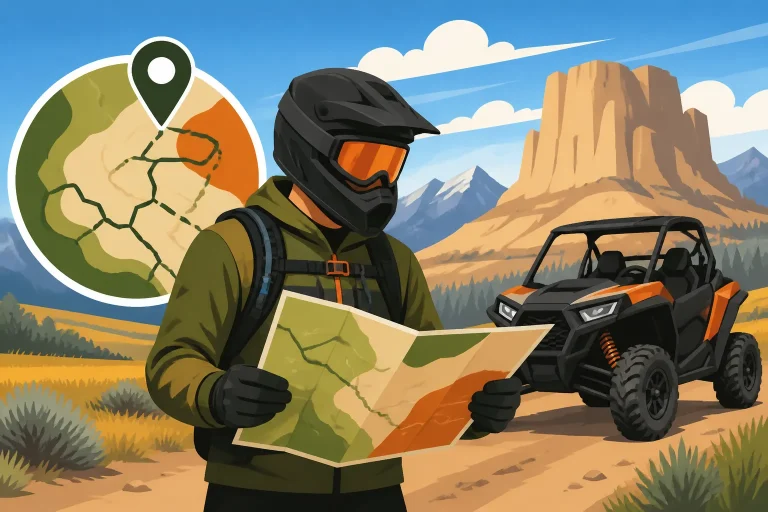
Before leaving, check current route information and conditions. Carry the map or navigation information appropriate to the land manager, and do not assume that a route shown in one source is open to every machine. Follow signs on the ground, and stop to reassess if a sign, closure, or condition conflicts with your plan.
Think through practical questions before setting out:
- Is the route open for the machine’s type and width?
- Could snow, mud, water, wind, or fire restrictions affect access?
- Does the machine have enough fuel for the route and a reasonable margin?
- Do riders know where the group will stop and what to do if separated?
- Is there a way to contact help if the machine breaks down?
- Does anyone in the group have a health, experience, or equipment limitation that should change the plan?
Training helps with judgment, but sound preparation is still necessary. A course cannot make a closed route legal, provide fuel, or guarantee that help will be nearby.
Situations That May Need Extra Checking
The general no-course rule is only a starting point. A particular ride may involve rules or conditions that are separate from any statewide course mandate. Check the details when children are riding, when a machine is rented, when the route uses a public road, or when an organized activity is involved.
Young riders
A safety course and a minimum-age or supervision rule are different kinds of requirements. The fact that a course is not generally mandatory does not mean that every child may ride any machine, on any route, without supervision.
Parents and guardians should check the age and supervision rules that apply to the child’s location and activity. They should also consider whether the machine is an appropriate size and power for the young rider, whether the child can reach and use the controls, and whether the child can reliably follow stop and safety instructions. A course can be a helpful part of preparation even when it is not a legal prerequisite.
For more on the access side of the question, see [Wyoming Minimum Age to Ride Public Land]. For the practical side, an adult should supervise closely and choose terrain that leaves room for mistakes without putting the child in a high-consequence situation.
Rentals and organized rides
A rental company or event organizer may set conditions for its own customers or participants. Those conditions can include safety briefings, minimum ages, experience expectations, or other instructions. A company’s policy is not the same thing as a statewide course mandate, but it may still be a condition of using its machine or joining its ride.
Ask what the operator requires before booking. Confirm whether the machine’s permit is included, where it may be ridden, what safety gear is supplied, and what happens if the planned route is closed. Do not assume that a rental includes permission to use every public route. Wyoming Rules for a Rented Machine covers the distinction between renting a machine and complying with the rules for riding it.
Organized rides may also involve land-manager authorization, route limits, or event-specific procedures. A participant should follow the organizer’s safety instructions, but should still understand the basic route rules and be prepared to make a conservative decision if conditions are unsuitable.
Public roads and road-designated machines
A safety course does not make an off-road machine legal on a public road. Road use has separate requirements that can involve the machine’s classification, equipment, rider qualifications, insurance, and whether the road is designated for that use. An ORV permit is not a road license.
If your plan includes a road connection, crossing, or travel on an enrolled segment, check the applicable rules before riding. Do not infer road permission from a trail permit or from another state’s registration. A machine that is permitted on an off-road route may not qualify for public-road use, and a road-eligible machine may still be barred from a particular road.
When in doubt, confirm with the relevant agency or local authority and follow signs on the ground. The consequences of assuming a road is open can include a citation, a dangerous encounter with traffic, or both.
Federal land and changing conditions
A course certificate does not override a land manager’s route restrictions. On National Forest or BLM land, use the current travel management information and pay attention to seasonal closures and on-site signs. Some routes are designated for specific types of use, and access can change with conditions or management decisions.
Do not ride around a closure or create a new route to avoid an obstacle. If the route is blocked or a sign says it is closed, stop and verify the status rather than assuming a map or old trip report is controlling. The same care applies when a route crosses private property or other land with separate access conditions.
A Practical Pre-Ride Checklist
Because a course is not the general statewide requirement, riders need a practical way to decide what to check instead. Use this list before each outing, then add any machine-specific or land-manager instructions that apply.
- Confirm route access. Check that the route is open and suitable for your machine. Pay attention to vehicle-width limits, seasonal closures, and signs at the route.
- Check permit requirements. Find out whether your machine needs a Wyoming ORV permit for the planned use. Do not assume a permit or registration from another state covers Wyoming.
- Read the machine’s manual. Review the controls, warning labels, load limits, passenger instructions, and maintenance information for that model.
- Assess the riders. Consider experience, age, physical ability, and comfort. Adjust the route and pace to the least experienced rider.
- Use appropriate protective equipment. Choose a properly fitting helmet and other protective gear suited to the machine, weather, and terrain. Follow any legal requirements that apply to the ride.
- Check the machine. Look over tires, brakes, steering, lights, restraints, fuel, and other key components before departure.
- Make a group plan. Agree on pace, signals, stopping points, and what to do if someone becomes separated or a machine breaks down.
- Prepare for the conditions. Check weather and fire-related restrictions, carry needed supplies, and set a turnaround point if conditions worsen.
- Know when to stop. Turn back when the route, weather, machine, or rider is outside the group’s ability. Continuing just to finish the planned route is not worth a preventable accident.
This checklist is not a substitute for training or official rules. It is a way to catch common gaps before they become problems. If a rule is unclear, verify it with the agency responsible for the route rather than relying on assumptions or advice meant for a different location.
Frequently Asked Questions
Does Wyoming require an ATV safety course to get an ORV permit?
A safety-course certificate is not generally a statewide prerequisite for an ordinary Wyoming ORV permit. Permit requirements and course requirements are separate, so check the current permit rules for the machine and use you have in mind.
Is a course useful if Wyoming does not require one?
Yes. Training can help a rider learn the machine’s controls, recognize hazards, and practice safer decisions. It is especially valuable for new riders, young riders, and anyone switching to an unfamiliar machine or terrain.
Does a safety course let me ride a closed route?
No. A course does not provide route access or override a closure, land-manager restriction, permit requirement, or road-use rule. Check the route’s current status before riding.
Can a rental company require a course or briefing?
A rental company may set conditions for renting or operating its machines, including a briefing or other safety requirements. Ask the operator directly; its policy is separate from the general statewide rule.
Does no course requirement mean a child can ride without limits?
No. Course requirements are separate from age, supervision, passenger, and machine-suitability rules. Check the conditions that apply to the child and the planned route.
Disclaimer
This article is for general informational purposes only and does not constitute professional advice. Laws, prices and regulations vary by location and change over time. Consult a qualified professional for guidance on your specific situation.