Getting a Citation From a Forest Service Officer
A Forest Service citation can turn a ride into a paperwork problem, especially if you are unsure whether the route was open or your machine had the right permit. The first priority is to understand what conduct the citation alleges. Then preserve the details of your ride, check the route and permit rules, and follow the response instructions on the citation.
What a Forest Service citation may be about
A citation is not, by itself, proof that every part of your ride was unlawful. Start by identifying the specific conduct and location listed. An allegation about leaving an open route is different from one about riding a closed route, lacking a required decal, or operating a machine that does not meet a route restriction.
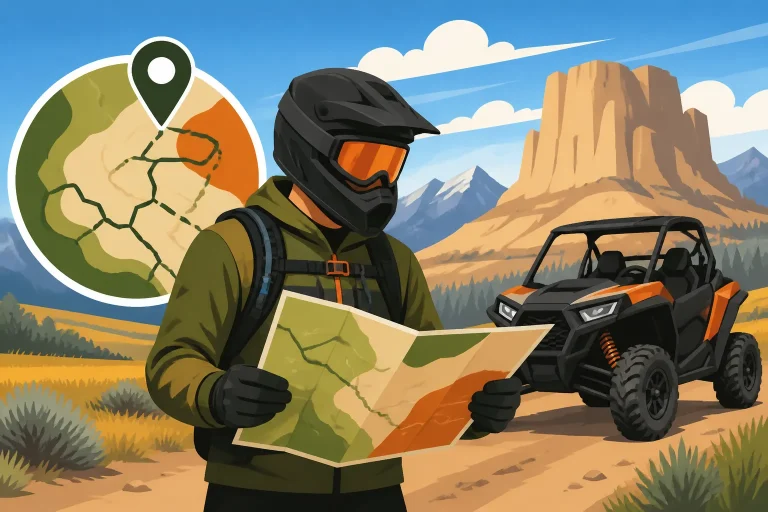
For Wyoming National Forest land, access depends on the route being designated for motorized travel and open to the type of vehicle you are riding. The Forest Service says motorized vehicle travel is permitted on designated roads and trails across the Bighorn National Forest, and visitors should obtain a Bighorn Motorized Vehicle Use Map to identify open roads and trails. A road that looks like a usable track is not automatically open to your machine. Check Wyoming Trail Maps and MVUMs and Wyoming Rules for Riding a National Forest when you are trying to establish what the map and route designations allow.
The consequences can be serious if the allegation is that you drove off a designated route on National Forest System lands. According to the USDA Forest Service, as of November 2026, violations of 36 CFR 261.13 are subject to a fine of up to $5,000, imprisonment for up to six months, or both. That is the maximum penalty listed for the violation, not a statement that every citation results in that penalty. The citation and the instructions from the relevant authority matter for your specific case.
Use the citation to narrow down what you need to verify. Look for the date and location, the regulation or alleged conduct, the issuing officer or agency, and the instructions for responding. If the citation does not make the location or alleged violation clear, ask the agency or contact named on it how to identify the relevant route or rule. Do not assume a citation is about the permit just because it was issued during an ORV ride.
| Issue to check | What to verify |
|---|---|
| Route access | Was the road or trail designated and open for your machine? |
| Route boundaries | Did you remain on the mapped or signed route? |
| Permit | Was the required current Wyoming ORV permit displayed? |
| Machine restrictions | Did the machine meet the route’s width and vehicle requirements? |
| Response | What does the citation say about how and where to respond? |
Wyoming’s ORV permit and route rules overlap, but they are not interchangeable. According to Wyoming State Parks, Historic Sites, & Trails, a Wyoming ORV permit is required for enrolled roads, routes, and trails of 50 inches or less that are designated for ORV use. The same agency says all ORVs must operate only on roads, trails, or areas designated as open by the appropriate local land manager, such as the Forest Service or BLM. A current decal does not make a closed route open.
Permit requirements can also depend on where you were riding and how your machine is registered. According to Wyoming State Parks, Historic Sites, & Trails, a current Wyoming ORV sticker is required on enrolled designated trails even if an ATV or motorcycle has a license plate. On enrolled roads, vehicles must either be street legal or display a state ORV sticker while meeting the ORV definition requirements. A machine with a Multipurpose Vehicle license plate may be operated on Wyoming roadways other than interstates without a Wyoming ORV permit, but that does not cancel a permit requirement on an enrolled trail.
If you are visiting from another state, do not rely on a home-state registration decal as a substitute. Wyoming State Parks, Historic Sites, & Trails says Wyoming does not have reciprocity for out-of-state ORV or OHV registrations, so non-residents must purchase a Wyoming ORV permit when operating in the state. For more on that distinction, see Wyoming ORV Permit for a Visiting Rider and Wyoming ORV Reciprocity Rules.
What to do after receiving the citation
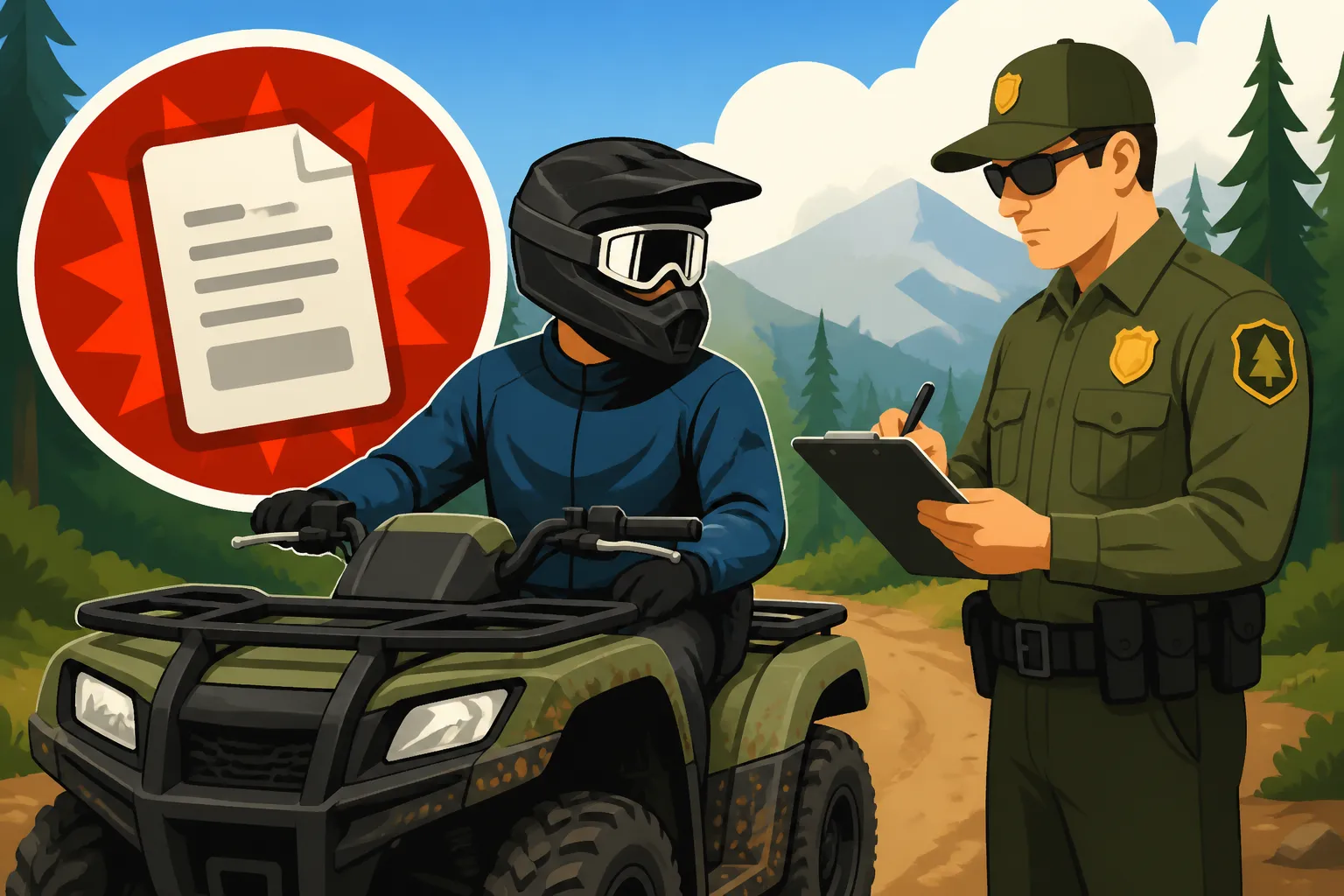
Treat the citation as a document with instructions and a claim that needs to be understood, not as a conversation to settle on the trail. Stay calm, avoid arguing about the case at the roadside, and make sure you know what the officer says the violation was. If anything is unclear, ask a brief, respectful question about the alleged conduct or the process for obtaining the relevant information.
After the encounter, preserve the citation and make a careful record while the details are fresh. Write down where you entered the route, the route name or map designation if known, the direction you traveled, where you stopped, and what signs or barriers you saw. Save any relevant map, permit receipt, photos, and messages about the trip. Keep the original documents and files intact; make working copies if you need to mark up a map or organize notes.
Your account should separate what you personally observed from what you inferred. For example, record whether you saw an open or closed sign at the route entrance, rather than simply writing that you believed the route was open. Note if a sign was missing, damaged, obscured, or positioned in a way that made it hard to see. If another rider was with you, ask them to write down their own recollection independently. Do not alter photos or try to recreate evidence after the fact.
Then follow the response instructions printed on the citation. They should identify the next step or the contact responsible for handling the matter. If they are missing or confusing, use the issuing agency or court contact shown on the document to ask how to proceed. Do not guess at a deadline, payment method, or hearing process based on another person’s citation; the relevant instructions may depend on the specific allegation and issuing authority.
If you disagree with the allegation, organize the facts that support your account before responding. Useful material may include the current travel map for the area, photographs of signs and route conditions, proof of a current permit, and notes about the route you followed. A decal receipt can help show that you bought a permit, but it does not establish that a particular route was open or that you stayed on it. If the allegation involves operating off a designated route, review Wyoming Fines for Riding Off a Route and Riding a Closed Two-Track alongside the map and the citation.
Consider getting legal advice if the potential consequences are significant, if you do not understand the process, or if you plan to contest the citation. A lawyer can assess the details and explain options for your situation. Avoid relying on social media or another rider’s experience as a substitute for the written instructions or qualified advice.
How to reduce the risk on your next ride
Before setting out, check the current motorized vehicle map for the land you intend to ride and confirm that each planned segment is open to your machine. The Forest Service advises Bighorn National Forest visitors to obtain a Bighorn Motorized Vehicle Use Map to identify open roads and trails. Carry a usable copy or make sure you can access the map in the field, and check posted signs as you ride. If the map and a sign seem to conflict, do not treat uncertainty as permission to continue; stop and seek clarification from the land manager.
Confirm that your machine fits the route rules, not just that it can physically travel the route. The Forest Service limits off-highway vehicles to a maximum width of 50 inches at their widest point. Wyoming State Parks, Historic Sites, & Trails also says federal land policy defines trails as no greater than 50 inches wide, so an ORV cannot be wider than that on Wyoming trails. If your machine is too wide for a trail, choose a route that allows it rather than trying to squeeze through.
Check the permit before leaving home. The Forest Service says riders must possess a current State of Wyoming off-road vehicle registration decal, and Wyoming State Parks, Historic Sites, & Trails says ORVs must display the permit while operating on public lands and designated roads, trails, or areas. Wyoming permits are valid for a calendar year and apply equally to residents and non-residents, according to Wyoming State Parks, Historic Sites, & Trails. If you need a permit, the agency lists local selling agents such as ATV and motorcycle dealers, local businesses, selected Forest Service and State Park offices, and some county treasurer offices. More on options is available in Where to Buy a Wyoming ORV Permit.
Do not assume a campground road or recreation-site access lane is an open riding route. The Forest Service says vehicles within its campgrounds and recreation sites may only be used for entering or leaving. A permitted machine still needs to stay within the access allowed for that location. Keep this distinction in mind when parking, repositioning a trailer, or riding between a campsite and a trail.
Other rules can matter even when the permit and route are in order. Wyoming State Parks, Historic Sites, & Trails says ORVs must have a muffler with an approved spark arrester when operated on trails and roads, and all ORV travel must remain on enrolled trails or routes where those program requirements apply. Riders using designated roadways with only an ORV sticker need a valid driver’s license or permit, according to the same agency. Before a ride, check the requirements that apply to your vehicle and the particular kind of route; a decal is not a general road license.
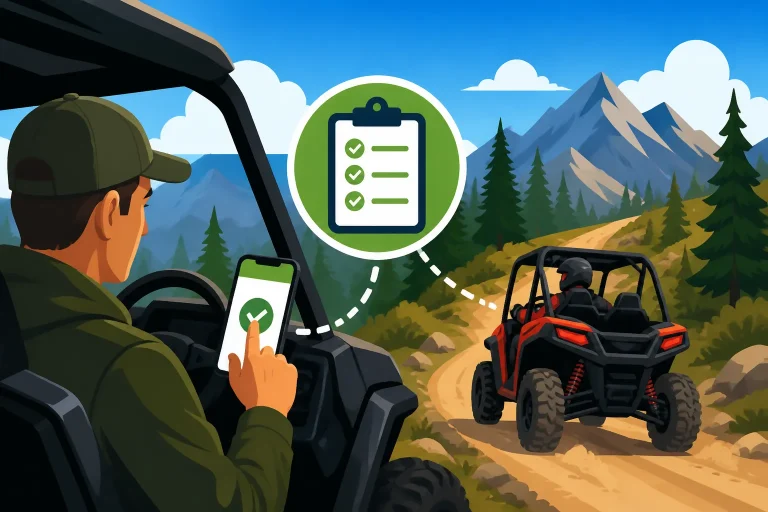
A short pre-ride check can help prevent a preventable citation:
- Confirm the route is designated and currently open for your machine.
- Check the machine’s width against any trail restriction.
- Make sure the required current Wyoming decal is displayed.
- Review signs at entrances and junctions, and remain on the designated route.
- Keep your map and permit information accessible.
- If route status is unclear, stop and contact the land manager rather than continuing on the assumption that it is open.
The central question after a Forest Service citation is not simply whether you had a Wyoming decal. It is what rule the citation identifies, where the alleged conduct occurred, and what the current map and route designation show. Keep your records, follow the citation’s response instructions, and get qualified help when the issue or potential consequence is beyond what you can confidently assess.
Sources
- Wyoming State Parks, Historic Sites, & Trails — Wyoming State Parks, Historic Sites, & Trails – ORV Rules & Regulations – Trails (checked November 3, 2026)
- Wyoming State Parks, Historic Sites, & Trails — Wyoming State Parks, Historic Sites, & Trails – ORV Requirements – Trails (checked November 3, 2026)
- USDA Forest Service — Shoshone National Forest Motor Vehicle Use Map (checked November 3, 2026)
Disclaimer
This article is for general informational purposes only and does not constitute professional advice. Laws, prices and regulations vary by location and change over time. Consult a qualified professional for guidance on your specific situation.