Wyoming ORV Permit for a Machine You Borrowed
It's incredibly frustrating when you're all set for an epic off-road adventure in Wyoming, perhaps borrowing a friend's awesome side-by-side or a family member's reliable ATV, only to realize you're not entirely sure about the permit situation. You might assume their machine's existing permit covers you, or that a permit from another state is good enough. Unfortunately, Wyoming has some very specific rules about ORV permits, and ignoring them can quickly turn a fun day into a costly headache. This guide is here to clear up all that confusion, ensuring your borrowed machine is legal and ready for the trails.
The Core Rule: Every Machine Needs Its Own Wyoming ORV Permit
Let's cut right to the chase: in Wyoming, it's the machine that needs the permit, not the rider or the owner. This is a crucial distinction, especially when you're borrowing an off-road vehicle. Think of it like a vehicle registration; the car has plates, not just the driver. This rule applies uniformly across the board, whether you're a long-time Wyoming resident, a first-time visitor, or just borrowing a quad for the weekend.
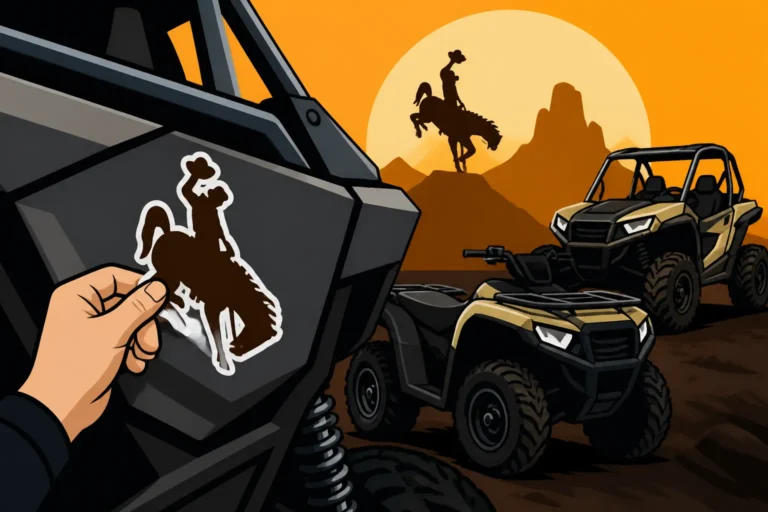
The state doesn't care whose name is on the title (or lack thereof, since most ORVs don't get titles in Wyoming!), or if the owner already has ten other permitted machines. Each individual ATV, UTV, or dirt bike needs its own current [Wyoming ORV Permit]. This permit is essentially a decal that must be affixed to the machine where it's clearly visible. It signifies that the machine has contributed its share to the state's trails program, helping to maintain and improve the very places you're eager to explore.
Why Your Friend's Permit Doesn't Transfer
A common misconception is that if the owner has a permit on their machine, and you're borrowing their machine, then you're all good. Or perhaps you have a permit for your own machine back home, and you assume that covers any ORV you ride in Wyoming. This isn't how it works. Wyoming has no reciprocity agreements with other states when it comes to ORV permits. Your Colorado, Utah, or Montana sticker, no matter how current, won't cut it on Wyoming's designated trails. [Why Wyoming Honors No Other State's Registration] is a topic that comes up often, and the simple truth is that Wyoming's program is self-funded, with permit fees directly supporting the trails and facilities within the state.
When a permit is purchased, it's specific to that single VIN (Vehicle Identification Number). It's not a general rider's pass. If your buddy just bought a brand-new side-by-side and hasn't gotten around to permitting it yet, even if he plans to, it's illegal to ride until that decal is properly displayed. The permit sticks with the machine for its designated period, which is a calendar year, regardless of who is operating it at any given moment. So, even if the owner has a whole garage full of permitted machines, the one you're borrowing still needs its own, valid decal.
What Happens If You Ride Without a Permit
The consequences of riding an unpermitted machine in Wyoming are definitely something you want to avoid. You might think, "What's the harm? It's just a sticker." But Wyoming's game wardens, Forest Service rangers, and BLM officers are serious about compliance. They are out on the trails, especially in popular riding areas, and checking for valid permits is part of their routine. [What a Warden Checks at a Trailhead] often includes your permit, and if it's missing or expired, you're looking at a citation.
A ticket for riding without a valid permit can be a significant setback, often involving a fine that far exceeds the cost of the permit itself. Imagine traveling hours to a trail, unloading your borrowed machine, only to be stopped minutes into your ride and told you can't continue without paying a fine and, worse, you can't ride the machine until a permit is obtained. This can effectively ruin your entire trip. Beyond the financial penalty, it's also about respecting the system that keeps these trails open and maintained for everyone to enjoy. The revenue from these permits directly supports the trails you're using. If you want to dive deeper into the specifics, you can check out [Wyoming Fines for Riding Without a Permit].
Getting a Permit for a Borrowed Machine: Your Options
So, you're planning to borrow a machine. What's the best way to ensure it's properly permitted before you hit the trail? The responsibility often falls on the borrower, even though the permit is for the machine itself. Communication with the machine's owner is key here. You need to clarify if the machine already has a current permit or if one needs to be purchased.
The good news is that obtaining a Wyoming ORV permit is relatively straightforward. They're sold in various locations across the state, and even online. The cost is a flat fee, the same for residents and non-residents, and it covers the machine for the entire calendar year, expiring on December 31st regardless of when you buy it. This makes it easy to understand the commitment, and there's no pro-rating or complex calculations. You can learn more about the cost in [Wyoming ORV Permit Cost].
The Borrower's Responsibility
As the person borrowing the machine, it's in your best interest to confirm its permit status. Don't just assume. Ask the owner directly: "Does this side-by-side have a current Wyoming ORV permit decal affixed to it?" If the answer is no, or they're unsure, then you need to take action. You can offer to purchase the permit yourself. This is a common and courteous gesture, especially if you're borrowing the machine for an extended period or for a specific trip.
Remember, the permit must be physically affixed to the machine. A receipt on your phone, or a printout of an online purchase, isn't enough. You need the actual decal. So, if you purchase it online, factor in mailing time. If you're heading to the trails soon, it might be better to buy it in person at one of the many selling agents. These include county clerk offices, Forest Service and BLM offices, and even many powersports dealerships. [Where to Buy a Wyoming ORV Permit] can give you a comprehensive list of locations. Planning is essential to ensure you have that physical decal on the machine before your tires even touch an enrolled trail.
Planning Ahead with the Owner
The best scenario involves clear communication and planning between you and the machine's owner. Here are a few ways to handle the permit situation:
- Owner already has a permit: Great! Just double-check that the decal is visible and current. Remind the owner to keep the machine's permit current, especially if you plan to borrow it regularly. [Wyoming ORV Permit Renewal] is a straightforward process.
- You buy the permit: If the machine doesn't have one, offer to buy it. This benefits both of you – the owner now has a permitted machine for the rest of the calendar year, and you can ride legally. Just make sure the decal gets applied correctly once you receive it.
- Split the cost: Perhaps you use the machine frequently. You could agree to split the cost, making it a shared investment in trail access.
- Owner buys it, you reimburse: The owner might prefer to handle the purchase themselves, and you can simply reimburse them for the permit cost.
No matter the arrangement, the goal is always the same: ensure the specific machine you're borrowing has a valid Wyoming ORV permit decal before it ever touches public land or designated trails. It’s also worth noting that the [Wyoming's Calendar-Year Permit] means if you buy it in October, it still expires on December 31st. Keep that in mind for your riding plans.
Essential Paperwork and Best Practices for Borrowing
Beyond the ORV permit, borrowing an expensive piece of equipment like an ATV or side-by-side involves a certain level of trust and responsibility. While Wyoming doesn't legally require a formal agreement for borrowing an ORV (unless it's a rental, which is a different beast entirely), it's highly recommended to have something in writing. This protects both you and the owner, clarifying expectations and responsibilities.
Think about potential scenarios: What if the machine breaks down? Who pays for repairs? What if there's an accident? While insurance is a separate topic, having a clear understanding of the terms of the loan can prevent disputes and maintain friendships. Remember, these machines are often a significant investment, and treating them with care and respect, both legally and practically, is paramount.
Why a Loan Agreement is a Smart Move
A simple loan agreement, even if informal, can save a lot of headaches. It doesn't have to be a multi-page legal document, but outlining key points can be incredibly beneficial. This is where a resource like LawDepot could come in handy. They offer templates for various legal documents, and while you'd need to adapt one for an ORV loan, the core idea is to put down the terms of the agreement.
Here's what you might consider including in a basic loan agreement, or at least discuss explicitly:
- Identification of the machine: VIN, make, model, year.
- Duration of the loan: When are you taking it, and when will you return it?
- Permit status: Confirming the machine has a valid permit, or who is responsible for obtaining one.
- Maintenance and damage: Who is responsible for routine maintenance during the loan period? What happens if the machine is damaged while in your care? Are you liable for repairs?
- Insurance: Is the machine covered by the owner's insurance while you're operating it? Do you need your own temporary coverage?
- Authorized use: Where can you take the machine? Are there any specific restrictions on its use (e.g., no racing, no jumping)?
- Return condition: What condition should the machine be in upon return (e.g., clean, full tank of gas)?
Even a handshake agreement carries weight, but having these points written down can prevent misunderstandings. A little foresight can go a long way in preserving both your friendship and the integrity of the borrowed machine.
Other Considerations Beyond the Permit
Riding a borrowed machine means you’re not just responsible for the permit, but for safe operation, too. Here are some other things to keep in mind when [Riding a Friend's Quad for a Day]:
- Safety Gear: Ensure you have appropriate safety gear. This includes a helmet, eye protection, gloves, long pants, and sturdy boots. Some states have helmet laws for certain ages, and while Wyoming's ORV permit doesn't mandate one for adults on trails, it's always the safest choice.
- Machine Familiarity: Take some time to get familiar with the machine before hitting challenging trails. Every ORV handles differently. Understand its controls, braking, acceleration, and how it responds to different terrain. Ask the owner for a quick rundown if you're not used to that specific model.
- Owner's Rules: Beyond formal agreements, ask the owner if they have any specific rules or preferences for how you handle their machine. They might have quirks about its operation, storage, or cleaning that they appreciate you following.
- Emergency Preparedness: Know what to do if something goes wrong. Do you have a plan for breakdowns? Does the owner have a roadside assistance plan for their ORV? Carry a basic toolkit, first-aid kit, and communication device.
- Respect the Land: Always ride on designated trails and avoid going off-route. Respect private property, even if you’re unsure of the boundaries. Understanding [Wyoming Trespass Rules for Riders] is vital. The ORV permit gives you access to public land, not carte blanche to ride anywhere.
- Fueling and Maintenance: Clarify who is responsible for fuel costs during your loan period. It's generally good etiquette to return the machine with a full tank. Ask the owner about any pre-ride checks you should perform, like tire pressure or fluid levels.
Being a responsible borrower not only ensures your own safety and legal compliance but also strengthens the trust that allows you to borrow such valuable equipment in the first place.
Here's a quick comparison of owning vs. borrowing an ORV in Wyoming regarding permits:
| Feature | Owning Your Own ORV | Borrowing an ORV |
|---|---|---|
| Permit Responsibility | You (the owner) are responsible for purchasing. | Either the owner or borrower, agreed upon beforehand. |
| Permit Location | Decal affixed to your machine. | Decal must be affixed to the borrowed machine. |
| Cost of Permit | Flat fee for your machine. | Flat fee for the borrowed machine, paid by arrangement. |
| Legal Compliance | Your machine is legally permitted for use. | The borrowed machine must be legally permitted for use. |
| Out-of-State Permits | Not honored. Must buy Wyoming permit. | Not honored. Borrowed machine still needs Wyoming permit. |
| Paperwork | Bill of sale (if bought used), possibly title. | No title usually. Consider a loan agreement (LawDepot). |
| Insurance | Your policy covers your machine. | Verify owner's insurance coverage while you operate. |
| Liability | You are liable as owner/operator. | Clarify liability with owner via agreement. |
Ultimately, whether you own the machine or are just using it for a day, the rules for riding in Wyoming's beautiful backcountry are the same for the machine itself. Ensure that decal is current, visible, and valid for the machine you're operating, and you'll be set for an amazing adventure!
Disclaimer
This article is for general informational purposes only and does not constitute professional advice. Laws, prices and regulations vary by location and change over time. Consult a qualified professional for guidance on your specific situation.