Wyoming Rules for Night Riding on a Trail
Night riding on a Wyoming trail takes more than switching on a headlamp. You need to know whether the route is open, whether it is enrolled in the state ORV program, and what lighting and permit rules apply to your machine. Here’s how to check those basics and prepare for a dark ride without confusing trail rules with roadway rules.
What Wyoming requires for riding after dark
Wyoming’s lighting rule applies during a defined overnight period: from one-half hour after sunset to one-half hour before sunrise. According to Wyoming State Parks, Historic Sites, & Trails, an ORV operating then must have a working headlamp, taillights, and brake light. Treat all three as required equipment, not optional extras for a trail ride.
Check the lights before setting out, especially if the machine has been stored or recently worked on. A headlamp that turns on does not confirm that the taillights or brake light work. Test the brake light using the controls that activate it, and make sure the headlamp and rear lights stay on as intended while the engine is running. If a light fails during the ride, the safer choice is to stop somewhere secure and address it rather than continue without required equipment.
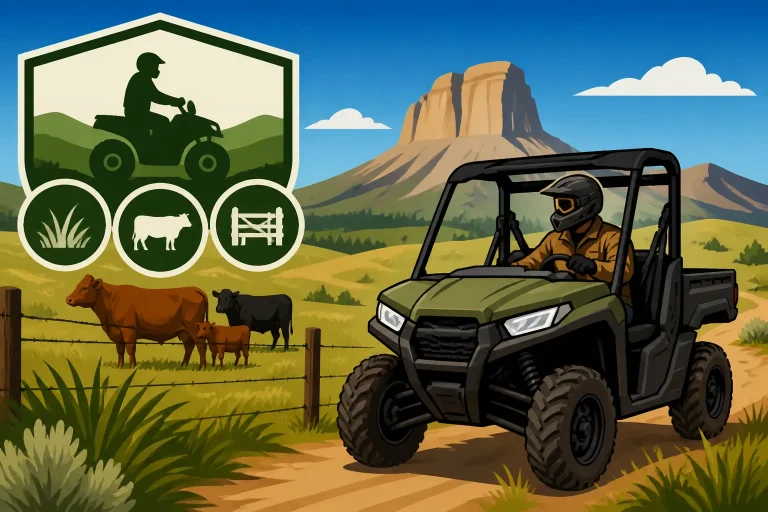
The lighting requirement is only one part of legal access. A route must also be designated for ORV travel and open under the relevant land manager’s rules. Wyoming State Parks, Historic Sites, & Trails says ORVs may only be operated on roads, trails, or areas designated as open by the appropriate local land manager, such as the Forest Service or BLM. A line on a map or a route that was open on a previous visit is not a substitute for checking current access information.
| Before riding after dark | What to confirm |
|---|---|
| Lighting | Working headlamp, taillights, and brake light for operation during the overnight period |
| Route status | The land manager designates the road or trail open |
| Route type | The route is enrolled or otherwise designated for the kind of ORV travel planned |
| Permit | The required current Wyoming ORV permit is displayed |
| Machine width | The machine meets applicable trail-width restrictions |
| Local restrictions | The managing agency has no additional closure or hours restriction |
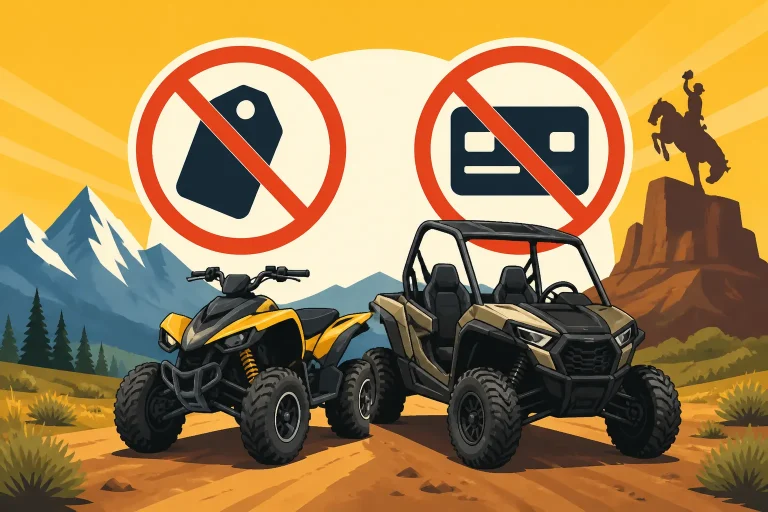
Trail rules and roadway rules are not interchangeable. For an enrolled trail, a current Wyoming ORV permit is required even if the ATV or motorcycle also has a license plate. According to Wyoming State Parks, Historic Sites, & Trails, designated trails enrolled in the ORV program require the state sticker regardless of whether the vehicle is street legal. See Wyoming’s Enrolled Roads and Trails for how enrolled routes differ from other roads and trails.
On a road identified as part of the Wyoming ORV Program, the permit and road-use requirements matter too. Operators must have a valid operator’s license and carry proof of liability insurance when operating on those program roads, according to Wyoming State Parks, Historic Sites, & Trails. The agency also requires the headlamp, taillights, and brake light during the defined overnight period on program roads. If your plan changes from trail to road, do not assume the trail rules alone cover the road segment.
A machine with a Multipurpose Vehicle, or MPV, plate has a different roadway status: according to Wyoming State Parks, Historic Sites, & Trails, it may be operated on Wyoming roadways except interstates without a Wyoming ORV permit. That does not make every trail accessible without a permit. A designated enrolled trail still requires the state ORV sticker, including for a street-legal machine. For the distinction between an ORV permit and road use, see Why an ORV Permit Is Not a Road License.
Check the permit and route before you leave
Wyoming does not recognize an out-of-state ORV or OHV registration as a substitute for its own permit. According to Wyoming State Parks, Historic Sites, & Trails, non-residents must buy a Wyoming ORV permit when operating in the state, and the state permit applies equally to residents and non-residents. If you are visiting, check Wyoming ORV Permit for a Visiting Rider before loading up.
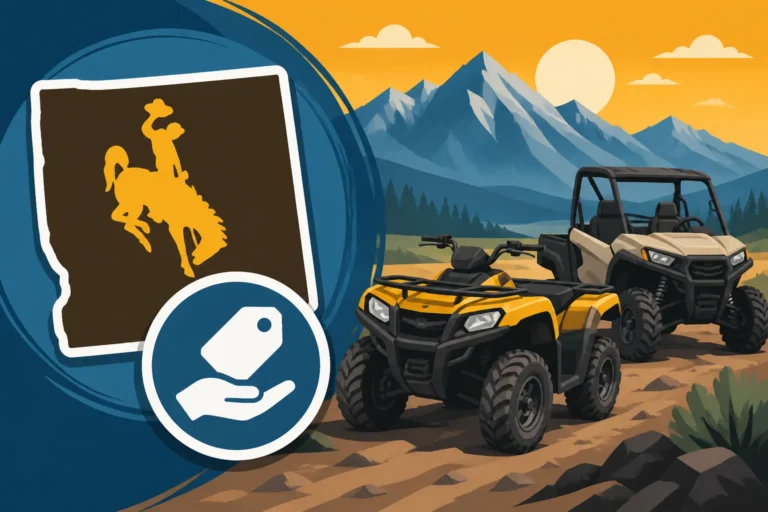
The annual registration user fee for an ORV operated on designated trails and areas in Wyoming is $15, according to Wyoming State Parks, Historic Sites, & Trails, as of November 2026. The permit is valid for a calendar year and must be affixed to the machine. Wyoming ORV decals are available online and in person; local sellers include ATV and motorcycle dealers, local businesses, selected Forest Service and State Park offices, and some county treasurer offices. For placement and purchase details, see Wyoming ORV Decal Placement and Where to Buy a Wyoming ORV Permit.
Then confirm that the specific route is open. The Forest Service advises visitors to obtain a Bighorn Motorized Vehicle Use Map to identify open roads and trails in the Bighorn National Forest. A travel map helps you distinguish authorized routes from closed or non-motorized ones, but also check for current notices from the land manager. Conditions and restrictions can change, and a route that appears suitable on a general map may not be open to motorized travel.
Do not treat a trail’s open status as automatic permission to ride it at any hour. The statewide lighting rule sets equipment requirements for night operation, but the land manager may have additional restrictions or closures. Verify any local rules that apply to the route, including whether the planned hours are allowed. For help interpreting route maps, see Wyoming Trail Maps and MVUMs and Wyoming Rules for Riding a National Forest.
The machine itself also has to fit the route. The Forest Service limits off-highway vehicles on its trails to a maximum width of 50 inches at the widest point. Wyoming State Parks, Historic Sites, & Trails likewise says federal land policy defines trails as no greater than 50 inches wide, so ORVs on Wyoming trails cannot exceed that width. If you ride a wide side-by-side, confirm that the route permits it rather than assuming every road and trail in the same area has the same limit. Wyoming Trails for a Wide Side-by-Side explains why route choice matters.
Riding a campground road is another situation that can be easy to misread. Within Forest Service campgrounds and recreation sites, vehicles may only be used for entering or leaving, according to the Forest Service. A campground is not a place to use as a night-riding loop or shortcut.
Prepare the machine and rider for limited visibility
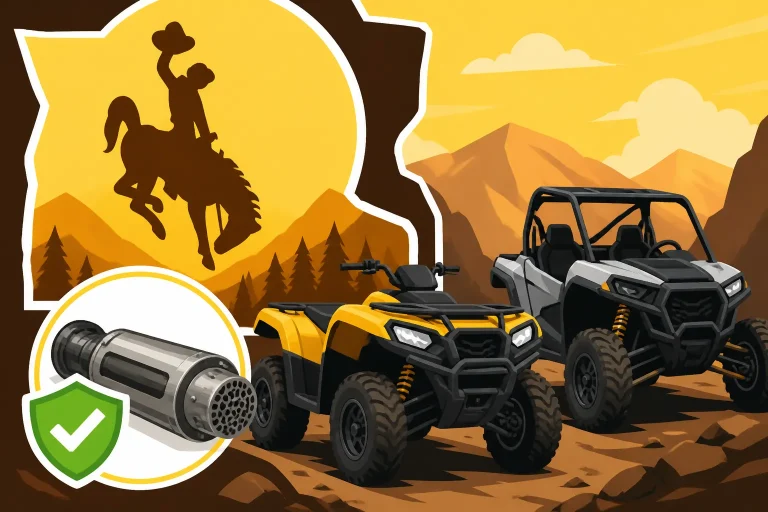
The legal lighting minimum is not the same as a complete night-riding setup. A working headlamp and rear lights help meet the stated requirements, but darkness makes it harder to see turns, loose ground, washouts, branches, animals, and other riders. Before riding, inspect the lights and the rest of the machine, including the controls and brakes. Wyoming State Parks, Historic Sites, & Trails also requires ORVs to have a muffler with an approved spark arrester when operated on roads and trails. See Wyoming Spark Arrester Requirement for that separate equipment rule.
Keep the route conservative. A trail that feels manageable in daylight can be much harder to read after dark, so choose a route whose conditions and turns you can reasonably handle. Avoid pushing on if visibility, weather, or machine performance worsens. If you are unfamiliar with the trail, consider riding it in daylight first or choosing a familiar, open route rather than relying on memory alone.
Carry a reliable way to deal with a minor lighting problem, such as a spare bulb if the machine uses replaceable bulbs, and a compact work light for repairs. If you buy spare parts or a portable light through Amazon, check that the item fits your machine and can be stored securely; a generic part may not be compatible. A phone can help with navigation or contacting someone when service is available, but do not make a phone the only plan for finding your way or handling a breakdown.
Plan for the possibility that you will need to stop. Agree with your group on a meeting point and what to do if riders become separated. Keep enough space between machines to avoid riding into the dust or spray from the vehicle ahead, and slow down when visibility drops. These are practical precautions, not replacements for checking the route’s official rules.
Riders also need to fit the route’s operator requirements. Wyoming State Parks, Historic Sites, & Trails says an operator without a driver’s license or permit, typically someone age 15 or younger, may operate only on enrolled trails, designated riding areas, and private property with permission. The agency says there is no driver’s-license requirement on a designated trail enrolled in the Wyoming ORV Program when the ORV displays a current permit, but that does not grant access to every trail or override other restrictions. On designated roadways, a rider with only an ORV sticker must have a valid driver’s license or permit. Check Wyoming Rules for a Rider Under 16 on a Trail if a young rider is coming along.
For riders under 18, Wyoming State Parks, Historic Sites, & Trails requires operators and riders to wear an approved helmet. More broadly, make sure everyone in the group has protective gear suitable for the conditions and can follow the route plan. A passenger should only ride on a machine designed to carry one; Wyoming State Parks, Historic Sites, & Trails notes that most ORVs are not intended to carry passengers unless a second seat is specifically provided.
A practical night-ride checklist
Use this checklist before leaving the staging area. It is not a substitute for the current land-manager map or rules, but it helps catch common oversights.
- Confirm the route: Check that the trail or road is designated for ORV travel and currently open. Verify any local restrictions on hours or access.
- Check the decal: Make sure the current Wyoming ORV permit is displayed when required. Remember that an out-of-state sticker does not replace the Wyoming permit.
- Test every required light: Confirm that the headlamp, taillights, and brake light work before riding during the period from one-half hour after sunset to one-half hour before sunrise.
- Check the machine’s fit: Confirm that its width meets the trail limit and that the route is suitable for the type of vehicle.
- Review the roadway portion: If the plan includes an enrolled road, confirm the operator, insurance, equipment, and permit requirements that apply there. Do not treat a trail permit as a general road license.
- Set a group plan: Choose a turnaround point, decide how the group will respond if separated, and make sure everyone knows the route.
- Carry repair essentials: Bring suitable tools and parts for likely minor problems, and a work light that lets you inspect the machine safely.
- Reconsider if conditions change: A closed route, failed light, worsening visibility, or uncertain navigation is a reason to stop or turn back, not to improvise an unauthorized route.
The key distinction is simple: Wyoming’s lighting requirement tells you what equipment must work during the overnight period, while the land manager determines where motorized travel is allowed. Check both before a ride, carry the correct permit, and do not assume that a route open to ORVs is automatically open at night. If you need to sort out how permits work for a particular machine, Wyoming ORV Permits Explained is a useful next step.
Sources
- Wyoming State Parks, Historic Sites, & Trails — Wyoming State Parks, Historic Sites, & Trails – ORV Permits – Trails (checked November 3, 2026)
- Wyoming State Parks, Historic Sites, & Trails — Wyoming State Parks, Historic Sites, & Trails – ORV Rules & Regulations – Trails (checked November 3, 2026)
- Wyoming State Parks, Historic Sites, & Trails — Wyoming State Parks, Historic Sites, & Trails – ORV F.A.Qs (checked November 3, 2026)
- Wyoming State Parks, Historic Sites, & Trails — Wyoming State Parks, Historic Sites, & Trails – ORV Requirements – Trails (checked November 3, 2026)
- Wyoming State Parks, Historic Sites, & Trails — Wyoming State Parks, Historic Sites, & Trails – OHV (Off-Highway Vehicle) Partnership Grants (checked November 3, 2026)
Disclaimer
This article is for general informational purposes only and does not constitute professional advice. Laws, prices and regulations vary by location and change over time. Consult a qualified professional for guidance on your specific situation.