Why an ORV Permit Is Not a Road License
It's a common scene: you've just bought your shiny new side-by-side or a rugged ATV, you’ve proudly slapped your new Wyoming ORV permit decal on it, and you’re itching to hit the trails. But then you start wondering, "Does this permit mean I can just drive down the paved road to get to the trailhead, or even across town?" The frustration is real, and the confusion is widespread. Many riders, especially those new to Wyoming or coming from other states with different rules, assume that once they have that official decal, they're good to go anywhere. This guide is here to clear up that exact misunderstanding, explaining why your Wyoming ORV permit is not the same as a road license, and what steps you actually need to take if you want to legally ride your machine on public roads.
The Fundamental Difference: Permit vs. License in Wyoming
The terms "permit" and "license" often get used interchangeably in everyday conversation, but in the world of Wyoming off-road vehicles and public roads, they signify two entirely distinct things. Understanding this core difference is the very first step toward ensuring you're riding legally and safely, whether you're on a remote forest trail or a county road. Mistaking one for the other can lead to inconvenient stops by law enforcement, hefty fines, and potentially even accidents.
What Your ORV Permit Truly Means for Your Machine
When you purchase a Wyoming ORV permit, you are essentially buying the right to operate your off-road vehicle on designated public lands and trails within the state. Think of it as a user fee that contributes directly to the upkeep and expansion of the very trail systems you love to ride. This annual permit helps fund everything from trail maintenance and signage to land access agreements and enforcement. It's a critical piece of the puzzle that keeps Wyoming's vast and incredible riding opportunities accessible for everyone.
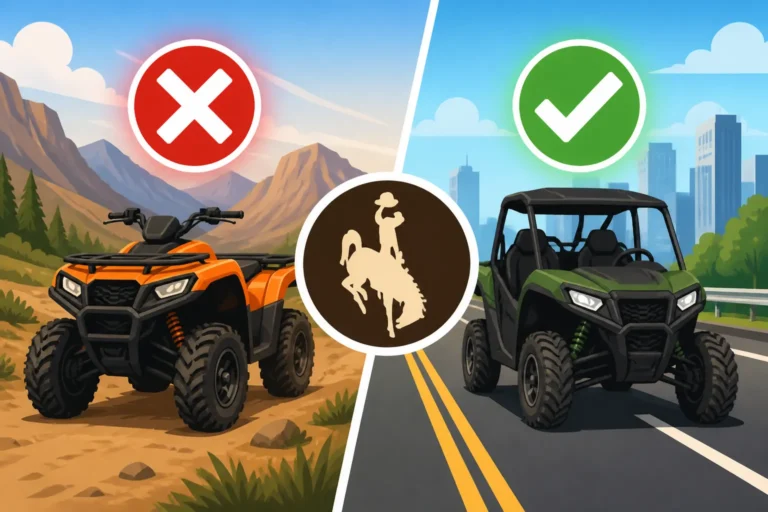
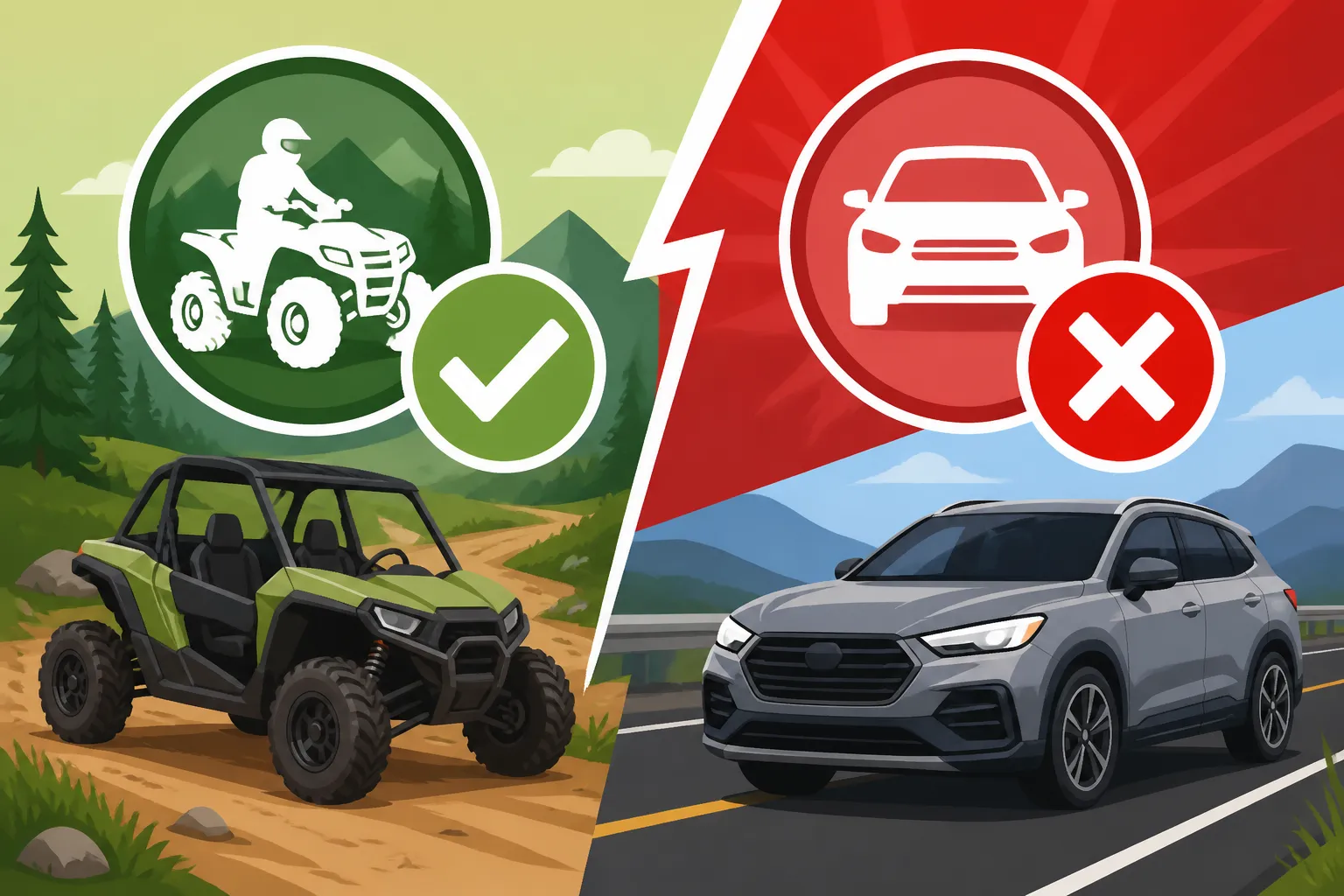
However, an ORV permit is exclusively for off-road use. It identifies your machine as having paid its dues to the trails program, but it doesn't magically transform your ATV or side-by-side into a vehicle that’s allowed on regular streets, highways, or most county roads. It’s about access to dirt and gravel routes, not asphalt. It tells a game warden or a Forest Service ranger that your machine is authorized to be on the trail, but it carries no weight with a state trooper or county sheriff patrolling a paved thoroughfare. The permit is tied to the machine's eligibility for off-highway travel, not its roadworthiness or the driver's qualification to operate it on a public road.
What a Road License Signifies for Public Thoroughfares
On the flip side, a road license—which for most vehicles comes in the form of a license plate and registration—is what allows a vehicle to operate legally on the vast network of state highways, county roads, and city streets. This type of license implies that the vehicle meets specific safety and equipment standards required for road use, such as proper lighting, mirrors, turn signals, and often a horn. It's a declaration that your vehicle is built and equipped to interact safely with other traffic, pedestrians, and cyclists, and to adhere to all applicable traffic laws.
Beyond the vehicle itself, a road license also implies that the operator holds a valid driver's license, demonstrating they have passed the necessary tests to prove their competence and knowledge of traffic laws. Operating a vehicle on a public road, whether it's a car, truck, or a specially equipped off-road machine, requires this dual qualification: the vehicle must be licensed, and the driver must be licensed. The fees associated with road registration and licensing often go toward maintaining roads, highway patrols, and other services that ensure safe and efficient public travel. Without both a properly licensed vehicle and a licensed driver, you are effectively operating an unregistered or illegal vehicle on public roads, which can result in significant legal consequences.
Wyoming's ORV Designation: Where You Can and Cannot Ride
Wyoming is an incredible state for off-road enthusiasts, boasting thousands of miles of trails and open riding areas across diverse landscapes. But this access comes with a clear set of rules, particularly regarding what kind of machine can go where. The ORV designation defines the nature and capabilities of your vehicle, and consequently, where it’s legally permitted to operate. Understanding these boundaries is crucial for avoiding unintentional violations and ensuring a smooth, enjoyable ride.
Understanding the Limitations of an Off-Road Vehicle
An Off-Road Vehicle (ORV) in Wyoming is broadly defined as a motorized vehicle designed for travel on unimproved roads, trails, or off-highway areas. This includes most ATVs, dirt bikes, and many side-by-sides right off the showroom floor. The key phrase here is "unimproved roads, trails, or off-highway areas." This designation inherently means these vehicles are generally not designed or equipped for safe operation on paved or maintained public roads where typical passenger vehicles travel.
The limitations of an ORV stem from several factors. Factory-standard ORVs often lack critical safety features required for road use, such as DOT-approved tires, adequate mirrors for observing traffic, turn signals, or even brake lights that are visible enough in bright daylight to alert following vehicles. Their suspension systems, gearing, and overall handling characteristics are optimized for rugged terrain, not smooth asphalt at higher speeds. They might not have the stability or braking power required to stop quickly or maneuver safely in traffic. Furthermore, the noise levels of many stock ORV exhausts exceed what's permissible for road-legal vehicles. These aren't just arbitrary rules; they are designed to protect both the ORV operator and other road users by preventing machines unsuited for road conditions from being integrated into regular traffic flow.
Public Lands and Enrolled Trails: The ORV's Domain
Where your ORV does belong is on Wyoming's vast network of public lands and designated trails. This includes national forests, BLM (Bureau of Land Management) lands, and specific state park and recreation areas that have "enrolled" routes for off-highway use. These are the places where your [Wyoming's Annual ORV Permit] truly shines. The permit revenue directly supports these areas, ensuring they remain accessible and well-maintained for future generations of riders.
When you purchase your permit, you are contributing to the very infrastructure that allows you to explore breathtaking landscapes, from the sandy expanses of Killpecker Dunes to the high mountain trails of the Bighorn National Forest. These enrolled trails are clearly marked and managed specifically for off-highway recreation. It's important to remember that even within these areas, "open riding" might not mean completely unrestricted travel; often, riding is confined to designated routes to protect sensitive ecosystems and prevent resource damage. Always carry a current map of the area you're riding, such as a Motor Vehicle Use Map (MVUM) for Forest Service lands, to ensure you stay on legal routes. This ensures you're riding responsibly and preserving access for everyone.
Why an ORV Permit Isn't a Ticket to the Pavement
The distinction between an ORV permit and a road license isn't merely bureaucratic; it's rooted in fundamental differences in vehicle design, operational intent, and public safety. Many riders understandably get confused because the permit feels like an official endorsement from the state. However, it's crucial to understand why that permit applies exclusively to off-road environments and offers no authority for street legal travel.
The Core Purpose of the Wyoming ORV Permit Program
The primary purpose of the Wyoming ORV Permit program is to fund and manage the state's extensive system of off-road trails and riding areas. When you buy a permit, your dollars go directly into a special fund administered by Wyoming State Parks, Historic Sites and Trails. This fund is then used for things like trail construction, maintenance, signage, law enforcement patrols on designated trails, and even educational programs for riders. It's an essential mechanism to sustain the very resources that off-road enthusiasts enjoy.
The permit acts as a user fee, signifying that you've contributed to the system. It helps identify legal users and ensures that those benefiting from the trails are also helping to pay for them. It has absolutely nothing to do with whether your machine is built or equipped to safely share the road with cars, trucks, and motorcycles at highway speeds. It's about preserving and enhancing the off-highway experience, not integrating off-road vehicles into the conventional transportation infrastructure. Thinking of it as a "trail pass" rather than a "road pass" can help clarify its function. For further details on how your contribution helps, you might want to read [Where Wyoming ORV Permit Money Goes].
Legal Restrictions and Safety Concerns on Public Roads
Wyoming law is quite clear: a standard ORV is generally prohibited from operating on paved public roads, county roads, and state highways. There are very specific exceptions for designated "enrolled" routes or for crossing at specific intersections, which we'll discuss later. But as a default, assume your ORV permit does not grant you permission to drive on the road. The reasons for these restrictions are primarily safety-related.
Firstly, ORVs lack many of the standard safety features that conventional street-legal vehicles are mandated to have. This includes things like turn signals, DOT-approved headlights and taillights that meet specific visibility standards, properly mounted and adjusted mirrors, and often a horn loud enough to be heard in traffic. Their tires, designed for grip in dirt and mud, perform poorly on asphalt, reducing traction and braking effectiveness. Secondly, the design of ORVs prioritizes ground clearance and suspension travel over on-road stability, making them more prone to rollovers or instability at higher speeds on paved surfaces. Imagine trying to make an emergency maneuver on a busy highway in a vehicle designed for crawling over rocks – it’s a recipe for disaster. Lawmakers in Wyoming, like most other states, recognized these inherent design differences and implemented clear legal boundaries to protect both ORV operators and the general motoring public.
Introducing the Multipurpose Vehicle (MPV): Wyoming's Road-Legal Solution
If you're a Wyoming resident and the idea of riding your side-by-side or even a specialized ATV on public roads appeals to you, don't despair! Wyoming does offer a pathway for certain types of off-road machines to become street legal through its Multipurpose Vehicle (MPV) classification. This is the crucial distinction that many riders miss when they're thinking about road access. It's not about your ORV permit; it's about reclassifying and equipping your machine. This designation is your key to unlocking greater versatility for your ride.
Defining an MPV: More Than Just an ATV or UTV
Wyoming law specifically defines a Multipurpose Vehicle (MPV) as a vehicle, other than an ATV, that has three or more wheels, is designed for off-highway use, and has an unladen weight of at least 300 pounds but not more than 3,000 pounds. Crucially, it must also have a seat or saddle for the operator at a minimum height of 24 inches from the ground. This definition primarily covers most modern side-by-sides (UTVs) and some larger, more specialized ATVs. This specific set of criteria distinguishes MPVs from regular ATVs, which typically don't meet the "other than an ATV" part of the definition when it comes to the legal nuances for road use.
The MPV designation was introduced to accommodate the growing popularity of side-by-sides, which often have characteristics that make them more adaptable to road use than traditional ATVs, such as steering wheels, roll cages, and more car-like controls. However, simply being a side-by-side doesn't automatically make it an MPV. It must meet all the weight and seat height requirements, and then it must be properly equipped and registered. This is where the real work begins, and it's a significant shift from merely having an ORV permit. You can delve deeper into the criteria by looking at [Wyoming's MPV Definition in W.S. 31-1-101].
The Critical Distinctions Between ORV and MPV
The table below highlights the key differences between a standard ORV (like an ATV or most dirt bikes) and a registered MPV in Wyoming:
| Feature | Off-Road Vehicle (ORV) | Multipurpose Vehicle (MPV) |
|---|---|---|
| Primary Use | Off-highway trails, public lands, private property | Public roads, highways (where permitted), off-highway |
| Permit/License | Wyoming ORV Permit (decal) | Standard vehicle registration (license plate), ORV permit (if used off-road) |
| Required Equipment | Spark arrester, muffler, head/tail lights (for night) | All ORV reqs + DOT-approved tires, horn, mirrors (left side), turn signals, brake lights, windshield, seatbelts |
| Driver's License | Not required for trail riding (age restrictions apply) | Required (with M or MR endorsement for some machines) |
| Insurance | Not legally required for trail use | Required for road use (liability) |
| Title | Generally no title issued by the state | Must be titled by County Clerk |
| Weight Limit | No specific limit for ORV status | 300-3,000 lbs (unladen) |
| Seat Height | No specific limit | Operator seat at least 24 inches from ground |
As you can see, the MPV category demands a much higher level of compliance and equipment. An ORV permit simply allows you to ride off-road, whereas an MPV registration and license plate allow you to drive on some roads. It's possible for an MPV to also have an ORV permit if you plan to use it on designated trails. The permit and license plate serve different, but sometimes complementary, purposes. One covers your off-road adventures, the other your on-road travel.
Making Your Machine Street Legal: The MPV Conversion Process
Converting your off-road machine into a road-legal Multipurpose Vehicle (MPV) in Wyoming is a multi-step process that goes far beyond simply having an ORV permit. It requires specific equipment upgrades, a trip to your County Clerk for titling, and then another stop at the County Treasurer's office for registration and a license plate. It's a commitment, but one that can open up a whole new world of riding opportunities, allowing you to seamlessly transition from trail to town.
Essential Equipment Additions for Road Compliance
To transform your off-road side-by-side or large ATV into a street-legal MPV, it must meet specific equipment requirements to ensure it's safe for public roads. This isn't just about adding a few lights; it's about meeting Department of Transportation (DOT) standards for safety. Many riders turn to aftermarket suppliers like SuperATV for their comprehensive kits and individual components designed specifically for this purpose. They offer a wide range of accessories that can help you meet Wyoming's stringent requirements.
Here’s a breakdown of the key equipment you'll need:
- Headlights and Taillights: These must be DOT-approved and fully functional, providing adequate illumination for night driving and visibility to other vehicles. They need to meet specific brightness and beam pattern standards.
- Brake Lights: You must have functional brake lights that illuminate when the brakes are applied, clearly signaling your deceleration to traffic behind you.
- Turn Signals: Front and rear turn signals are mandatory for indicating lane changes and turns. Many kits include integrated turn signal systems that replace or augment existing lights.
- Mirrors: Wyoming law requires at least one mirror on the left side of the vehicle, positioned to provide a clear view of the road to the rear. Often, riders choose to install both a left and right side mirror, along with a rearview mirror, for maximum safety.
- Horn: A working horn, audible from 200 feet away, is essential for signaling other drivers or pedestrians in traffic.
- Windshield: While not always required for every configuration, many MPVs benefit from a full windshield for protection against road debris and weather. Check specific regulations as sometimes safety glasses can suffice depending on the vehicle type.
- Tires: Your tires must be DOT-approved for road use. Off-road tires, while great for the dirt, are often not rated for highway speeds or conditions and can wear quickly, handle poorly, and even be dangerous on pavement.
- Seatbelts: If your machine has seats (like a side-by-side), seatbelts are usually required for all occupants.
- License Plate Mount and Light: You'll need a proper mount for your license plate and a light to illuminate it at night.
Making these upgrades can be a significant investment, but it's non-negotiable for road legality. You can find many of these items, from mirrors to full turn signal kits, through various retailers, including aftermarket specialists like SuperATV, ensuring your machine is fully compliant. Take a look at [Wyoming Lighting Requirements for ORVs], [Wyoming Mirror Requirements for Road Use], and [Wyoming Horn Requirement on a Road Machine] for more detailed information on these specific component needs.
Navigating Wyoming's Titling and Registration Requirements
Once your machine is properly equipped, the next hurdle is the paperwork. This involves two main stops: first, your County Clerk for titling, and then your County Treasurer for registration and a license plate. This two-part process is a significant difference from merely getting an ORV permit, which doesn't involve a title or a traditional vehicle registration.
-
Titling with the County Clerk: Your journey begins at your local County Clerk's office. You'll need to present documentation of ownership, such as a manufacturer's statement of origin (MSO) if it's new, or a bill of sale if you purchased it used. The Clerk will verify that your machine meets the MPV criteria (weight between 300-3,000 lbs unladen, seat height of 24 inches or more, and having three or more wheels, not counting as an ATV). They may also require you to fill out a special "Multipurpose Vehicle Checklist" form to confirm these specifications. If everything checks out, the Clerk will issue you a Wyoming Certificate of Title for your MPV. This title is proof of legal ownership and a fundamental step in making your machine street legal. It’s important to note that most standard ORVs, particularly ATVs, do not receive a title in Wyoming, making this a critical distinction for MPVs. For specifics, refer to [Wyoming MPV Title Requirements] and [Wyoming County Clerk Title Process].
-
Registration with the County Treasurer: With your shiny new title in hand, your next stop is the County Treasurer's office. Here, you will register your MPV just like you would any other road vehicle. You'll need to show your title, proof of insurance, and a valid driver's license. The Treasurer's office will collect the appropriate registration fees, which are typically based on the machine's value or weight, and then issue you a standard Wyoming license plate. This plate must be securely affixed to the rear of your MPV, visible and illuminated at night, just like a car. This is the ultimate symbol that your machine is now recognized as a road-legal vehicle in Wyoming. You can find more information about this part of the process in [Wyoming MPV Plate Requirements] and [Wyoming County Treasurer Plate Process].
Remember, even after your MPV is registered with a license plate, if you plan to use it on designated ORV trails, you will still need to purchase a [Wyoming's Annual ORV Permit] decal and affix it to your machine. The license plate allows road travel; the decal allows trail access.
Driver's License and Insurance Requirements for MPVs
Operating an MPV on Wyoming's public roads isn't just about the vehicle; it's also about the operator. Just like driving a car, you need to be properly licensed and insured to get behind the wheel of a road-legal MPV. This is another area where the ORV permit offers no coverage or qualification.
-
Driver's License: To drive an MPV on any public road in Wyoming, you must possess a valid driver's license. While a standard Class C driver's license is generally sufficient for operating an MPV, some vehicles might require a motorcycle endorsement (Class M) or a special "Motorcycle-Related" (MR) endorsement depending on their specific characteristics, especially if they closely resemble a motorcycle in handling or design. It's always best to check with the Wyoming Department of Transportation (WYDOT) or your local driver's license office to confirm the exact endorsement needed for your specific MPV. For example, some jurisdictions might consider certain larger ATVs or smaller, more agile side-by-sides to fall under motorcycle-related endorsements. You can learn more about this by checking [Wyoming Driver's License Rules for ORVs] and [Wyoming Motorcycle Endorsement for an MPV].
-
Insurance: Unlike operating a purely off-road vehicle on trails, liability insurance is a mandatory requirement for any MPV driven on Wyoming's public roads. This protects you and others in case of an accident. You will need to provide proof of insurance to the County Treasurer's office when you register your machine and carry that proof with you whenever you operate the MPV on a road. The minimum coverage requirements are similar to those for passenger cars. Driving an MPV without valid insurance on a public road can lead to significant fines, penalties, and even suspension of your driving privileges. For more details on what's required, review [Wyoming ATV Insurance Requirement].
Finally, while Wyoming's helmet laws for MPV operators are generally less stringent than for motorcycles, riders and passengers under the age of 18 are typically required to wear a DOT-approved helmet when riding an MPV on public roads. While not always legally mandated for adults, wearing a helmet is always a wise safety precaution, especially when sharing the road with larger, faster vehicles.
Operating an MPV on Wyoming Roads: Rules of the Road
So, you've gone through the process, equipped your machine, titled and registered it as an MPV, and you've got your driver's license and insurance. Congratulations! You're now ready to legally ride your machine on many of Wyoming's public roads. However, having an MPV plate doesn't mean you have carte blanche to ride everywhere. There are still specific rules and designations you need to understand to ensure you're always riding legally and safely.
Identifying and Using Wyoming's Enrolled Roads and Crossings
Wyoming has a system of "enrolled" roads and trails. These are routes, often county or Forest Service roads, that have been specifically designated by the relevant land management agency (e.g., County Commissioners, Forest Service) and approved by Wyoming State Parks, Historic Sites and Trails as open for ORV and/or MPV use. While your MPV is generally street legal, it's still prudent to be aware of these designations, especially when transitioning between paved and unpaved routes. Some roads might be open to MPVs but not traditional ORVs.
It's absolutely critical to consult current maps, such as Motor Vehicle Use Maps (MVUMs) for National Forests or county road maps with ORV/MPV designations, before heading out. These maps clearly show which roads are open to what types of vehicles. Never assume a road is open just because it looks like a public thoroughfare. The state maintains a list and maps of [Wyoming's Enrolled Roads and Trails], which is an invaluable resource for planning your rides. Riding an MPV on an unenrolled or closed road, even if it's technically "street legal," can still result in fines or penalties.
Crossing Highways and Interstates Legally
One of the most challenging aspects for off-road riders, even those with MPVs, is navigating state highways and especially interstates. Generally, MPVs are not permitted to travel on controlled-access highways or interstates. However, Wyoming law does provide specific provisions for crossing them at designated points. This is a critical distinction: you can cross, but you cannot travel along the interstate.
These crossings are typically found at grade-separated underpasses or overpasses, or at specific designated intersections. You must adhere to all traffic laws, including stopping at stop signs, yielding to traffic, and ensuring you have clear sight lines before proceeding. Attempting to cross an interstate at an undesignated point, or traveling along an interstate shoulder, is illegal and extremely dangerous. Always look for signage indicating where crossings are permitted and be prepared to wait for long periods for a clear window to cross safely. For detailed guidelines, you might want to look into [Wyoming Rules for Crossing an Interstate].
Local Ordinances and City Street Rules
While Wyoming state law provides the overarching framework for MPV operation, individual counties, towns, and cities have the authority to enact their own ordinances regarding the use of MPVs on local streets. What's legal on a county road outside of town might be prohibited within city limits. Some communities might allow MPVs on all their streets, while others might restrict them to specific routes, disallow them entirely, or have curfews for their operation.
Before riding your MPV in any incorporated town or city, it is always advisable to check with the local police department or municipal office for their specific rules. Don't rely on assumptions or what you've seen others do. A quick phone call or website check can save you from a ticket. For example, some cities might have stricter noise ordinances, lower speed limits, or require different types of mirrors or lighting than what's mandated by the state. Always default to caution and local inquiry.
Common Pitfalls and Costly Misunderstandings
Despite the clear distinctions between an ORV permit and a road license, and the detailed pathway to MPV legality, many riders still fall victim to common misunderstandings. These pitfalls can lead to frustrating encounters with law enforcement, expensive fines, and even compromise your safety. As a seasoned rider and blogger, I’ve seen these mistakes happen time and time again.
The Assumption of "Rural Road" Legality
One of the most prevalent misconceptions is the belief that any unpaved, rural, or dirt road is fair game for an ORV, regardless of whether it's designated as an enrolled route or if the machine is street legal. Riders often assume that because a road is gravel and leads to a trail, it's automatically part of the off-road network. This is a dangerous and incorrect assumption.
Many county roads, even those that are gravel or dirt, are considered public roads just like their paved counterparts. They are maintained by the county, open to all licensed vehicles, and therefore require your machine to be a registered MPV with a license plate and for you to have a valid driver's license. The presence of an ORV permit decal means nothing on a public county road unless that road is specifically "enrolled" for ORV use. The "rural" or "dirt" appearance does not change its legal classification. Getting caught riding a non-MPV ORV on such a road can lead to citations, even if you were just trying to get to a nearby trail. Always check your maps and look for official signage.
Penalties for Misclassifying Your Machine
The penalties for operating an ORV on public roads without it being properly classified, equipped, titled, and registered as an MPV can be significant. It's not just a slap on the wrist; these are serious infractions that law enforcement takes seriously for public safety reasons.
You could face fines for:
- Operating an unregistered vehicle: This is a core violation, as your ORV permit does not count as road registration.
- Driving without a valid driver's license: If you don't have a license, or the proper endorsement, that's another ticket.
- Driving without proof of insurance: A mandatory requirement for MPVs on the road.
- Equipment violations: Missing or inadequate headlights, taillights, turn signals, mirrors, or horn can each incur separate fines.
- Improper license plate display: If you have an MPV plate but it's not correctly mounted or illuminated.
In addition to fines, repeated offenses or serious violations could lead to your machine being impounded, your driver's license being suspended, or even more severe legal consequences. Imagine getting your side-by-side impounded miles from home, or worse, causing an accident because your machine wasn't properly equipped for road use. The cost of conversion to an MPV, while not insignificant, pales in comparison to the potential legal and financial repercussions of operating illegally. For information on specific fines, you might be interested in [Wyoming Fines for Riding Without a Permit] – while this refers to ORV permits, the fines for illegal road use can be even steeper.
Ensuring a Legal and Enjoyable Ride in Wyoming
Wyoming offers some of the most spectacular off-road riding in the country, and by understanding the rules, you can enjoy it all without stress or legal headaches. The key is to be proactive, informed, and always err on the side of caution. Whether you're sticking exclusively to trails or venturing onto roads with an MPV, preparation is your best friend.
Always Verify Route Designations
Before you ever load up your machine or head out your driveway, make it a habit to check the current route designations for the area you plan to ride. This means consulting official maps – like Forest Service MVUMs, BLM travel management maps, or county-specific ORV/MPV maps provided by Wyoming State Parks. Websites and mapping apps can be helpful, but always cross-reference with official, up-to-date sources.
Roads and trails can close seasonally for wildlife management, weather conditions, or maintenance. What was open last year might be closed this year. A designation allowing ORVs might not mean it's open to MPVs, and vice-versa. Printed maps are invaluable, especially in areas without cell service, and keep an eye out for physical signs on the ground. When a sign contradicts your map, always trust the sign – it's the most current and authoritative directive. Being meticulous about route designations protects the land, respects local regulations, and keeps you out of trouble.
Equipping Your Machine for Its Intended Use
The final piece of the puzzle for a legal and enjoyable ride is making sure your machine is equipped for its intended use. If you plan to stick purely to designated ORV trails, your ORV permit and standard off-road safety gear (helmet, eye protection, sturdy boots) are sufficient. Your machine should have a working spark arrester, a muffler to keep noise levels reasonable, and lights if you plan to ride after dark.
However, if you envision using your side-by-side or large ATV on public roads, even just to get to a trailhead or run into town for gas, then investing in the MPV conversion is essential. This means equipping it with DOT-approved lights, a horn, mirrors, turn signals, and ensuring your tires are rated for road use. Beyond the legal requirements, these upgrades significantly enhance your safety and visibility when interacting with regular traffic. Don't cut corners on safety equipment. Products from reputable brands like SuperATV can help ensure you're installing quality, compliant parts. The peace of mind that comes from knowing your machine is properly equipped and legally compliant for its intended environment is priceless. Happy riding, and stay safe out there!
Disclaimer
This article is for general informational purposes only and does not constitute professional advice. Laws, prices and regulations vary by location and change over time. Consult a qualified professional for guidance on your specific situation.