Wyoming Passenger Rules on an ATV
Riding an ATV or UTV in Wyoming with a passenger can seem like a straightforward way to share the thrill of the trail, but the rules aren't always as simple as they appear. Many riders assume that if there's a seat, it's fair game, only to discover that Wyoming law has specific stipulations about who can ride, where they can ride, and what kind of machine they can ride on. This guide will walk you through the nuances of Wyoming's passenger rules, helping you understand the legalities and ensuring everyone on your adventure stays safe and compliant.
The Fine Print: What Wyoming Law Says About ATV Passengers
Wyoming's regulations regarding passengers on ATVs can be a bit tricky, primarily because they distinguish between different types of off-road vehicles and their intended use. It's not just about having a seat; it's about how the manufacturer designed the machine and whether you're on a designated trail, a county road, or other public land. Understanding these distinctions is crucial for avoiding citations and ensuring the safety of your riding companions.
The "Manufacturer's Design" Rule
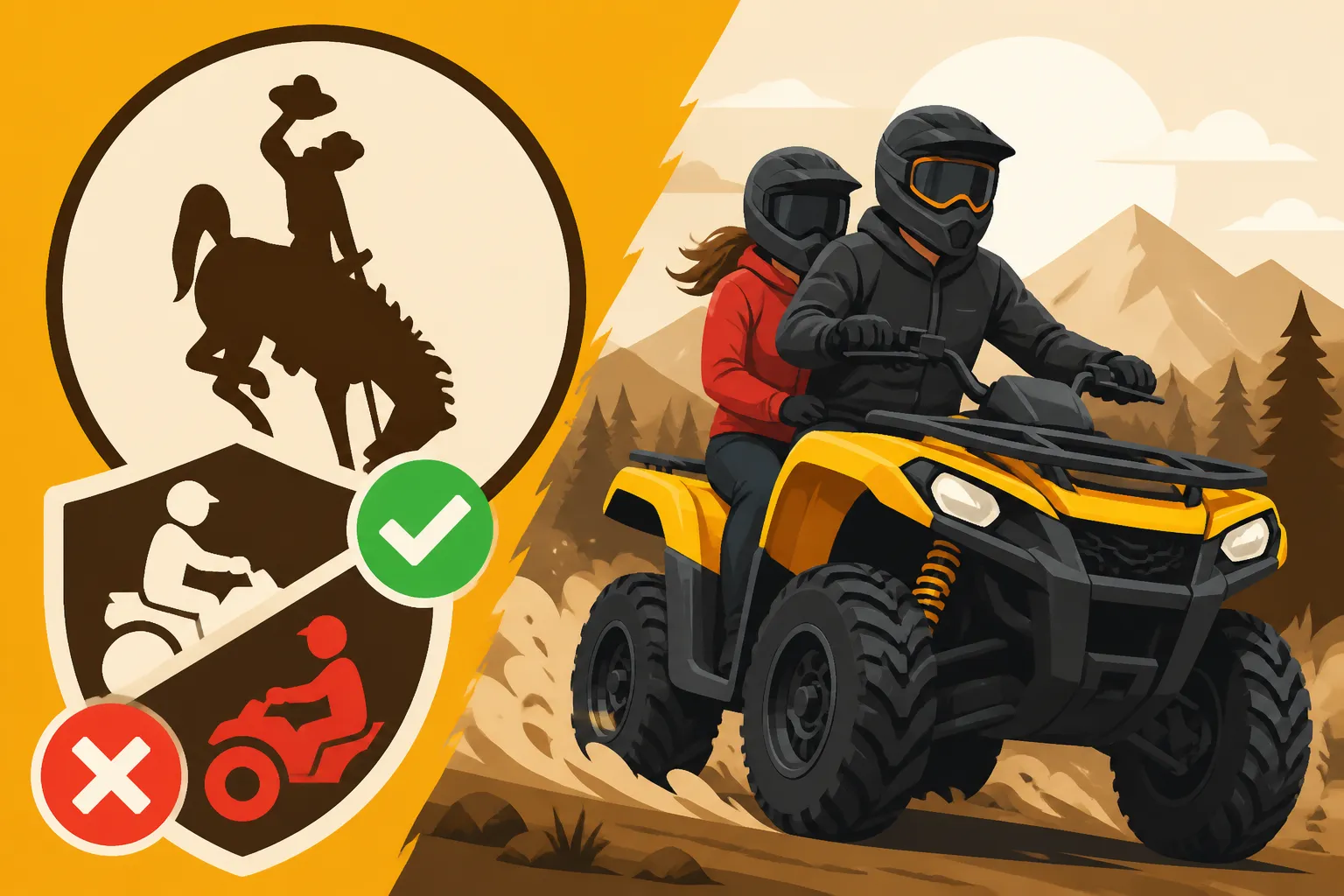
The most fundamental rule regarding carrying passengers on an ATV in Wyoming revolves around how the vehicle was originally manufactured. Generally speaking, a traditional ATV (often called a quad) is designed for a single operator. Unless the manufacturer explicitly designed the ATV for two people, complete with a seat and footrests intended for a passenger, carrying a passenger on a single-rider ATV is typically prohibited. This isn't just a suggestion; it's a safety standard meant to prevent rollovers and loss of control. The balance and handling characteristics of a single-rider ATV change dramatically with a second person onboard, especially during turns or over rough terrain.
Imagine you're out exploring some of the incredible trails near Lander or in the Bighorns. You pull up to a trail warden checkpoint, excited for a day of riding. If your ATV is clearly a single-rider model, and you have a friend perched precariously behind you, you're likely to receive a warning or even a citation. It’s not that the warden is trying to spoil your fun, but they're enforcing rules designed to keep everyone safe. Many accidents involve overloaded or improperly ridden ATVs, and the "manufacturer's design" rule is a direct response to those safety concerns. Always check your ATV's owner's manual or manufacturer's specifications to confirm its passenger capacity before heading out.
Beyond the Trails: Roads and Highways
While many ATVs spend their lives on dirt trails, Wyoming also has specific rules if you're planning to ride on designated public roads. This is where the distinction between a traditional ATV and a Multipurpose Vehicle (MPV), often a side-by-side or UTV, becomes very important. A traditional ATV, even a two-up model designed for a passenger, is generally not street-legal on paved roads or highways in Wyoming unless those roads are specifically designated as "enrolled" for ORV use. Even then, an ORV permit is required for any public land use, which is different from street registration. [Wyoming's Trail User Registration Decal] is a must.
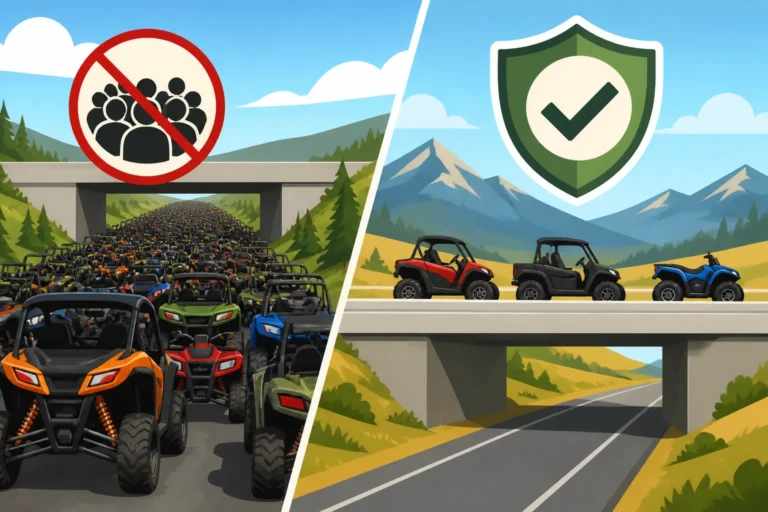
If you are riding a two-up ATV on an enrolled trail, the manufacturer's design rule still applies. You must ensure your ATV was built to carry that second person. For side-by-sides, which are often classified as MPVs if they meet certain criteria like weight and seat height, carrying passengers is much more common and explicitly designed for. However, even with an MPV, you must adhere to the designated seating capacity. Overcrowding a side-by-side is just as dangerous and illegal as carrying an unauthorized passenger on a traditional ATV. For example, if your side-by-side has two bucket seats and you try to squeeze three people onto them, you're not only compromising safety but also potentially breaking the law. Companies like SuperATV offer a range of aftermarket seating and safety solutions, but even with these additions, you must stay within the legal and safe limits of your vehicle's design and designation.
Age Restrictions and Supervision for Passengers
When it comes to carrying younger passengers, Wyoming has additional layers of rules that focus on safety and supervision. It's not just about whether your machine can technically carry them, but whether they are old enough or properly supervised to be on it. These rules are in place to protect children, who are inherently more vulnerable in riding scenarios.
Youth Riders on Public Lands
Wyoming law states that individuals under the age of 16 cannot operate an ORV on public lands unless they are under the direct supervision of a parent or legal guardian, or an adult authorized by a parent or legal guardian. This rule primarily applies to operators, but it sets a precedent for the care and supervision of young people around these machines. While there isn't a specific minimum age to be a passenger on an ATV, the underlying principle of safety and appropriate supervision remains paramount. If you're riding a two-up ATV (designed by the manufacturer for two riders) on an enrolled trail or designated ORV area, and you have a young passenger, you are responsible for their safety.
Consider a scenario where you're planning a family trip to [Killpecker Sand Dunes in Southwest Wyoming]. You have a designated two-up ATV and want to take your pre-teen child as a passenger. While there's no strict minimum age for them to be a passenger, they must be able to sit securely, reach the footrests, and hold on properly. If the child is too small or unable to maintain a stable position, it poses a significant risk. Even if your machine is technically a two-up, common sense and a strong commitment to safety should always dictate whether a child is ready to be a passenger. Think about their helmet fit, their ability to follow instructions, and their general comfort level with the ride. [Wyoming Rules for a Child Passenger] go into more detail on specific requirements.
Riding with Children on the Road
The rules change significantly when you transition from off-road trails to designated public roads, particularly if your machine is an MPV. For MPVs, which are street-legal under specific conditions, Wyoming has a helmet law for passengers. While there isn't a blanket minimum age for passengers on an MPV, anyone under the age of 18 is required to wear an approved helmet when riding on public roads. This aligns with motorcycle helmet laws and emphasizes safety for younger riders in a road environment.
If you’re driving your side-by-side (registered as an MPV) on a county road to get to a trail system, and you have your children with you, they must be properly secured in seats designed for them and, if under 18, wearing helmets. It’s also crucial that they can reach the floorboards or footrests and are able to hold on. The road environment introduces different hazards than trails, including other vehicles and higher speeds. Always make sure your young passengers are securely belted in, especially if your side-by-side is equipped with racing harnesses or four-point seatbelts, which offer superior protection compared to standard lap belts. Remember, [Wyoming Helmet Law for Passengers] is a serious consideration for any road-legal machine.
Specific Rules for Street-Legal UTVs MPVs vs. Off-Road ATVs
The biggest differentiator in Wyoming for passenger rules often comes down to whether your vehicle is considered a traditional Off-Road Vehicle (ORV) like an ATV, or a Multipurpose Vehicle (MPV), which is typically a UTV or side-by-side that meets specific criteria for street legality. This distinction profoundly impacts where you can ride with passengers and what safety equipment is required.
The Difference Between an ATV and an MPV
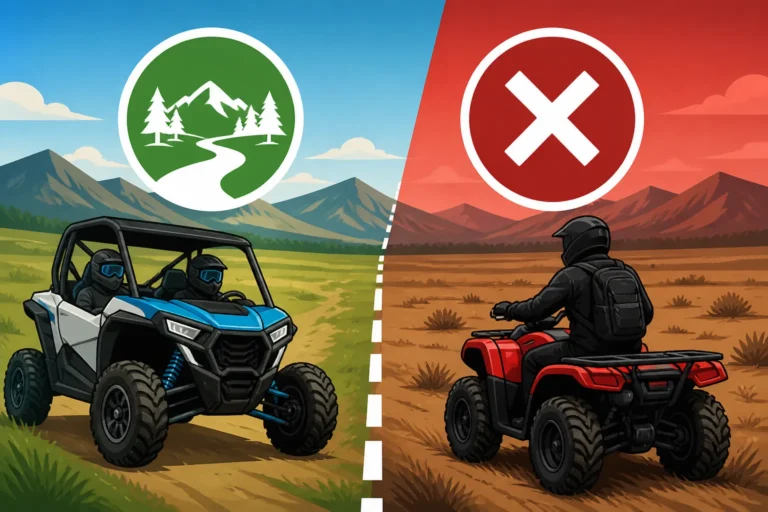
In Wyoming, an ATV is generally defined as a motorized vehicle with four or more low-pressure tires, a seat designed to be straddled by the operator, and handlebars for steering. These are typically designed for off-road use. As discussed, most ATVs are single-rider, though some models are explicitly designed as two-up.
An MPV, on the other hand, refers to a class of vehicle that, while often used off-road, can also be made street-legal in Wyoming if it meets certain requirements. MPVs typically have a steering wheel, non-straddle seating (like bucket seats or a bench seat), and come equipped with various road-specific features. The legal definition of an MPV in Wyoming is very specific, including factors like weight between 300 and 3,000 pounds and a seat height of at least 24 inches from the ground. Many side-by-sides fall into this category. Understanding [Wyoming's MPV Definition in W.S. 31-1-101] is critical if you intend to use your machine on public roads.
| Feature | Traditional ATV (ORV) | Multipurpose Vehicle (MPV) – e.g., Side-by-Side |
|---|---|---|
| Steering | Handlebars | Steering Wheel |
| Seating | Straddle seat (single or two-up designed) | Non-straddle seats (bucket, bench) |
| Primary Use | Off-road | Off-road and potentially street-legal |
| Passenger Capacity | Manufacturer-designed one or two | Designed for multiple passengers (e.g., 2-6) |
| Road Legality | Generally limited to enrolled ORV roads/trails | Can be street-legal with registration/equipment |
| Helmet Requirement | Recommended off-road, sometimes required for <18 (operator) | Required for <18 on roads (all occupants) |
| Registration | [Wyoming's Annual ORV Permit] for public land | Title and plate from county treasurer for road |
Seating Requirements for MPVs
For an MPV to be considered street-legal, it must have seating that meets specific safety standards. These vehicles are designed with roll cages and seatbelts for each occupant, similar to a car. The key is that each passenger must have their own designated, secured seating position. This means no doubling up on a single seat designed for one, and certainly no passengers riding in the cargo bed unless it's specifically designed and equipped with appropriate safety restraints and seating for that purpose (which is rare for street-legal use).
Think about a common side-by-side like a Polaris RZR or a Can-Am Defender. These machines come with factory-installed seats and seatbelts for a specific number of occupants. If your machine is designed for two people, only two people can ride. If it's a four-seater, then four people can ride. This is non-negotiable for road legality and highly recommended for trail use too. [Wyoming MPV Seat Height Rule] ensures that the basic design contributes to safety. When you purchase aftermarket accessories, such as additional seating or roll cage extensions from a company like SuperATV, always ensure that these modifications comply with Wyoming's safety and registration laws, especially if you plan to make your UTV street-legal. Adding a "jump seat" that isn't properly secured or doesn't come with adequate restraints could put you in a tough spot with law enforcement and, more importantly, put your passengers at risk.
Safety Gear and Practical Considerations for Carrying Passengers
Beyond the legal definitions and age requirements, practical safety considerations are paramount when carrying passengers on any off-road vehicle. Responsible riding means not only adhering to the law but also ensuring everyone is as protected as possible.
Helmets and Protective Gear
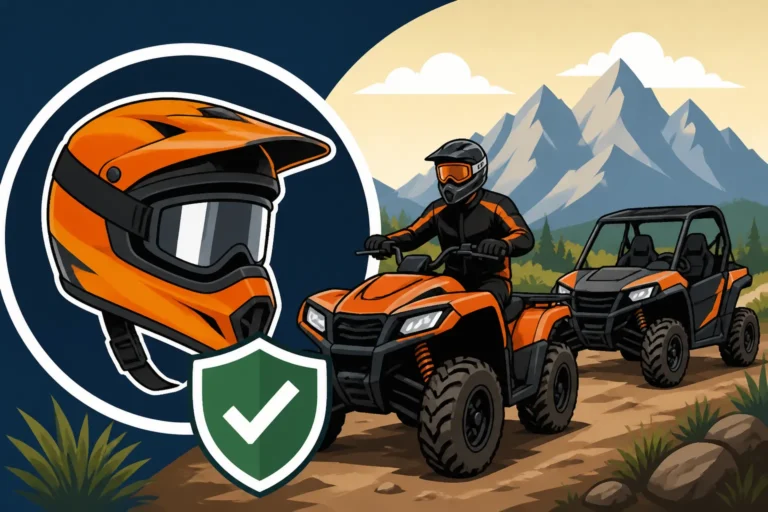
Wyoming law is pretty clear on helmets for younger riders on public roads: anyone under 18 years of age operating or riding as a passenger on an MPV on a public road must wear an approved safety helmet. While this doesn't explicitly extend to all off-road ATV riding for passengers over 18, it's highly, highly recommended for everyone, regardless of age, to wear a helmet when riding any ORV, on or off-road. The terrain can be unpredictable, and even a slow-speed tip-over can result in serious head injuries. A sturdy, DOT-approved helmet is your best defense.
Beyond helmets, encourage your passengers to wear appropriate protective gear:
- Eye protection: Goggles or a face shield are essential to protect against dust, branches, and insects.
- Gloves: Help prevent blisters and offer protection in case of a fall.
- Long pants and sleeves: Protect against scrapes, sun, and flying debris.
- Over-the-ankle boots: Provide ankle support and protection.
Imagine you're taking a scenic ride through [Riding Wyoming's Bighorn National Forest]. Even on a well-maintained trail, a sudden gust of wind can kick up dust, or a low-hanging branch might surprise you. Proper gear ensures that you and your passenger can enjoy the ride without unnecessary risks. It's much easier to explain why someone needs a helmet before the ride than to deal with an injury afterward.
Machine Capacity and Stability
Always respect your machine's weight capacity and structural integrity. Overloading an ATV or UTV can severely affect its handling, braking, and suspension. This isn't just about the engine struggling; it's about the vehicle becoming unstable and difficult to control, especially on inclines, declines, or during quick maneuvers. Every manufacturer specifies a maximum weight limit for their vehicles, and this includes the operator, passengers, and any cargo.
Before you load up your machine with friends and gear for a trip, take a moment to check that total weight against the manufacturer's recommendations. An overloaded machine is more prone to rollovers, tire blowouts, and brake fade. For example, if you're taking your side-by-side on trails that might feature steep climbs or technical sections, exceeding the weight limit means compromising the vehicle's stability and making it much harder to navigate safely. Accessories designed to enhance performance, like upgraded suspension components from companies such as SuperATV, can improve handling, but they don't magically increase the fundamental weight capacity of your machine. Always prioritize safety over squeezing in one more person or too much gear.
Disclaimer
This article is for general informational purposes only and does not constitute professional advice. Laws, prices and regulations vary by location and change over time. Consult a qualified professional for guidance on your specific situation.