Why Each Interstate Crossing Is Capped at 1,000 Machines
Riding an off-road vehicle in Wyoming offers unparalleled freedom, but navigating the state's sprawling network of highways, especially the interstates, can feel like a maze of regulations. Many riders are thrilled by the prospect of taking their side-by-side or ATV on designated road segments, only to encounter a very specific and often confusing rule: the 1,000-machine cap for certain interstate crossings. This guide will dive deep into the reasons behind this unique limit, exploring the safety concerns, legislative history, and community input that shaped this crucial aspect of Wyoming's off-road vehicle laws.
The Road to Street Legality: Understanding Wyoming's MPV Definition
Before we can truly understand the interstate crossing cap, it's essential to grasp how Wyoming differentiates an off-road vehicle (ORV) from a multipurpose vehicle (MPV) and why that distinction matters for road use. For many years, taking your ATV or side-by-side on any paved road was largely prohibited, forcing riders to trailer their machines between trailheads or stick to strictly off-highway routes. This was a major frustration for enthusiasts who just wanted to connect trail systems or access a town for gas and supplies without the hassle of loading and unloading.
From Off-Road to Multipurpose: The MPV Transformation
Wyoming recognized this need and, in 2008, introduced the Multipurpose Vehicle (MPV) classification. This created a pathway for certain ORVs to become "street legal," allowing them to operate on designated public roads and highways. It wasn't just a simple wave of a magic wand; machines had to meet specific criteria to qualify. Imagine you're standing in your garage, looking at your trusty side-by-side, wondering if it could ever legally run down a county road. Suddenly, there's a set of rules you can follow to make that a reality.
To become an MPV, a machine generally needs to meet certain physical characteristics, such as [Weight Between 300 and 3,000 Pounds] and [A Seat at Least 24 Inches Up]. These rules are designed to ensure that vehicles capable of road use have a certain level of stability and visibility, making them safer to share the road with traditional automobiles. For a rider, this meant a whole new world of access, but it also came with the responsibility of ensuring their machine met these new standards, often requiring aftermarket additions. Many riders turn to suppliers like SuperATV for parts such as mirrors, turn signals, or even full cab enclosures to help meet these requirements. You can learn more about [The MPV Rule That Started in 2008].
Equipping Your MPV for the Open Road
Once a machine qualifies as an MPV, it's not simply "good to go" on any road. It must also be equipped with standard safety features commonly found on street-legal vehicles. Think about what your car has: headlights, taillights, brake lights, mirrors, and a horn. Your MPV needs these too, and in specific configurations. For instance, [Wyoming Lighting Requirements for ORVs] dictate what kind of illumination your machine needs, especially for riding after dark.
You'll also need [The Left-Side Mirror Wyoming Wants] and sometimes a right-side mirror, along with a functional horn. These aren't just suggestions; they're legal necessities for operating on public roads. Many riders find that getting their machine properly equipped can be a project, involving wiring, mounting, and ensuring everything is up to code. It's a small investment, though, for the expanded freedom of connecting trails or running into town for supplies. Without these, your MPV is still effectively an ORV for road use purposes, limiting where you can ride.
The Interstate Conundrum: Why Crossings Are Different
While Wyoming embraced the concept of MPVs on many public roads, interstates present a unique challenge. These are high-speed, high-traffic arteries of commerce and travel, and integrating slower-moving, less protected off-road vehicles into this environment requires extreme caution and specific, limited allowances. It's one thing to drive your side-by-side on a quiet county road; it's an entirely different beast to navigate the rumble and speed of I-80 or I-25.
The Historical Context: Bridging Communities Divided by Interstates
The need for interstate crossings didn't emerge from a desire for joyriding on the highway; it often arose from the very real plight of communities bisected by these massive transportation corridors. A prime example is [Evanston and the Interstate That Split It]. For years, I-80 effectively cut off segments of Evanston, making it difficult for residents to access different parts of their own community, including popular recreation areas. This kind of geographical division isn't unique to Evanston, but their advocacy played a significant role in pushing for a solution.
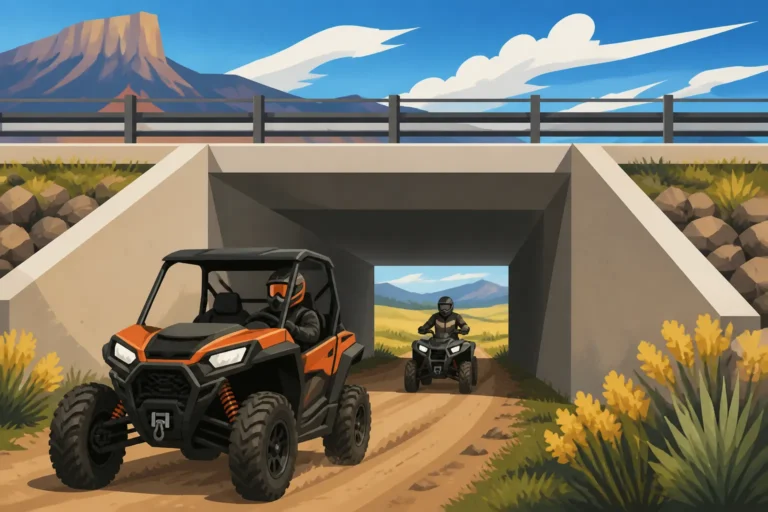
When an interstate comes through, it often carves through existing land use patterns, isolating trail systems or cutting off direct routes between towns and their surrounding recreational lands. For local riders and businesses, this meant a significant loss of access and economic opportunity. The solution wasn't to simply open all interstates to all ORVs, but to create very specific, controlled crossings at grade-separated points (like overpasses or underpasses) to bridge these divides. These aren't just open stretches of highway; they are designated points where riders can safely traverse from one side to the other.
Safety First: The Paramount Concern for Interstate Crossings
The primary reason behind the strict regulations and the 1,000-machine cap for interstate crossings is, unequivocally, safety. Interstates are designed for vehicles traveling at high speeds, and the introduction of slower-moving, open-air MPVs creates a significant potential for accidents. Even with all the right [Wyoming Equipment a Road Machine Needs], the dynamics are completely different.
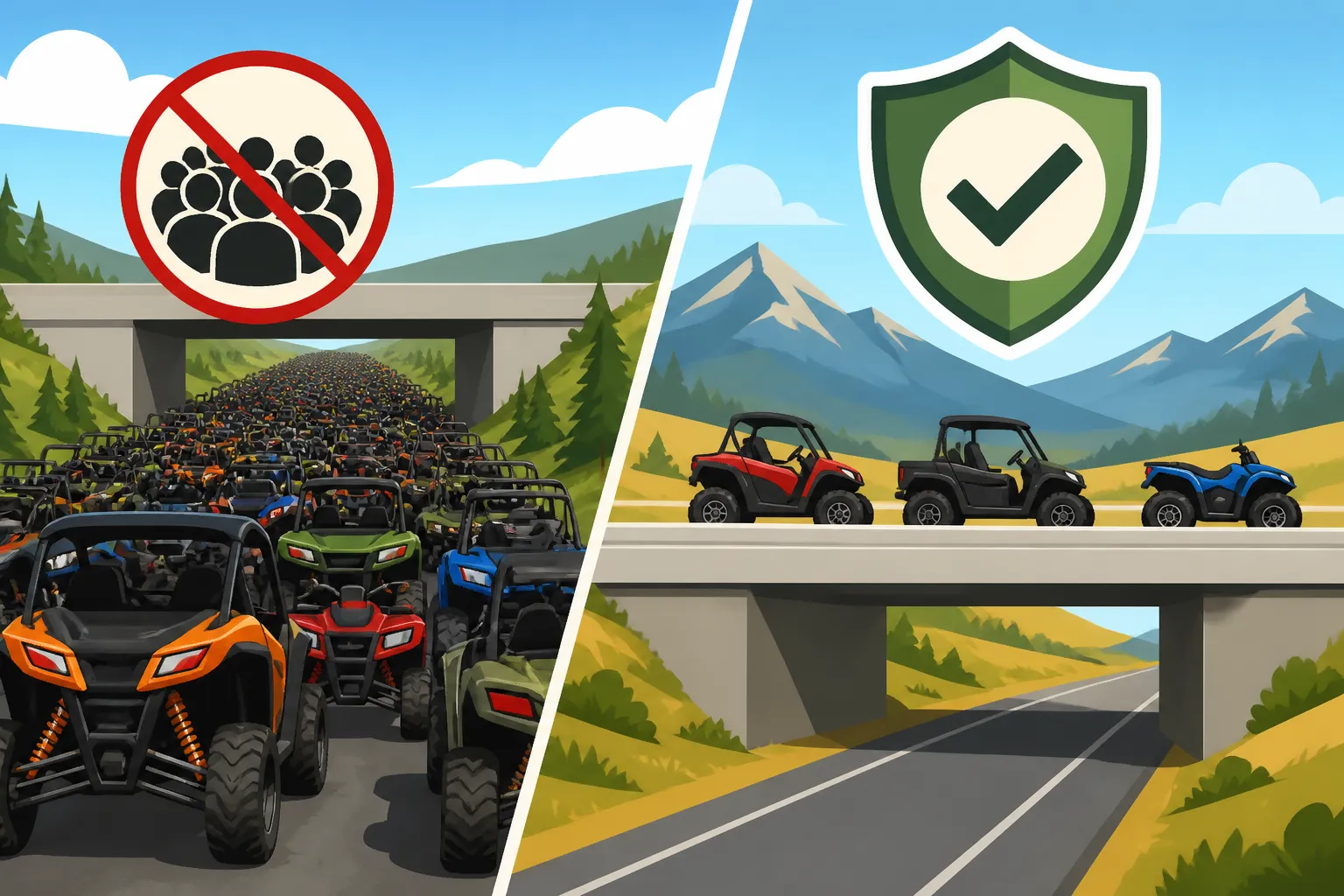
Consider the potential for catastrophic accidents if large numbers of off-road vehicles were allowed to freely mingle with 18-wheelers and passenger cars doing 80 mph. The physical size, braking capabilities, and driver visibility of an MPV are not comparable to a semi-truck. The cap limits the number of machines that can use a specific crossing per year, ensuring that traffic managers can carefully monitor and assess the impact. It's a proactive measure to prevent dangerous situations, allowing the state to gather data and adjust as needed, rather than reacting to tragedies. This careful approach helps keep everyone safer, whether they're in a pickup or a [Wyoming Permits for a Side-by-Side].
The 1,000-Machine Cap: A Closer Look
So, where did this specific number come from, and how does it actually work in practice? The 1,000-machine cap isn't an arbitrary figure plucked from thin air. It's a carefully considered limit designed to manage risk, facilitate data collection, and maintain the integrity of interstate operations while still offering some level of recreational access.
Legislative Intent and Monitoring Progress
The 1,000-machine cap on interstate crossings is part of Wyoming Department of Transportation (WYDOT) regulations, specifically outlined in rules like [The WYDOT Chapter 33 Rule of 2025]. This rule didn't just appear overnight; it was the result of extensive discussions among stakeholders, including WYDOT, the Wyoming State Trails Program, local communities, and off-road advocacy groups. The idea was to create a pilot program, essentially, for each crossing, allowing a limited number of vehicles to test the waters.
The cap allows the state to monitor several critical factors:
- Safety Incidents: Are there any accidents or near-misses involving MPVs at these crossings?
- Traffic Flow Impact: How do the crossings affect the flow of interstate traffic? Are there backups or slowdowns?
- Environmental Impact: While less direct for grade-separated crossings, it still allows for overall assessment of increased ORV presence in an area.
- Enforcement Challenges: How easy or difficult is it to enforce the rules at these specific crossing points?
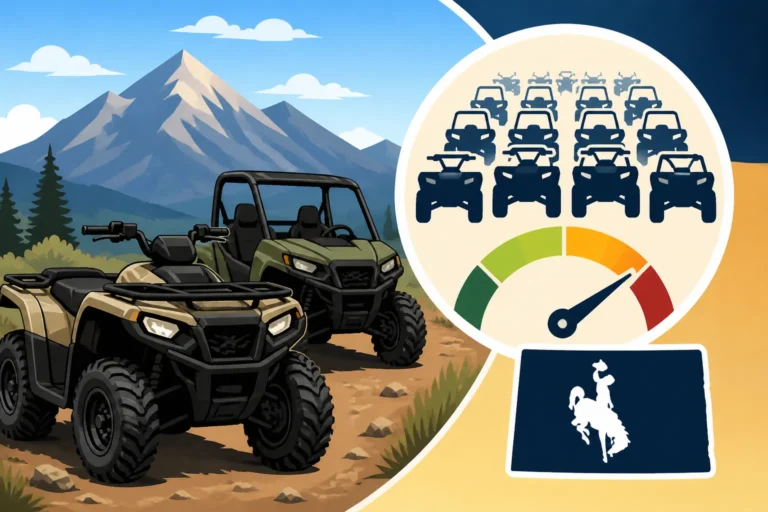
By capping the number at 1,000 machines per year per crossing, WYDOT can collect meaningful data without overwhelming the system or creating undue risk. If a crossing sees its 1,000-machine limit reached quickly, it might trigger a review. Conversely, if a crossing rarely sees much use, it provides insights into demand. This kind of controlled experiment is crucial for developing sustainable long-term policies for [Wyoming Rules for Crossing an Interstate].
Practical Implications for Riders and Agencies
For riders, this cap means that while the opportunity to cross an interstate exists, it's not unlimited. Each time an MPV uses one of these designated crossings, it counts towards that location's annual 1,000-machine limit. This requires careful tracking by the agencies involved. It also means that popular crossings might reach their limit before the year is out, potentially forcing riders to find alternative routes or wait until the next calendar year. This is not a situation any rider wants to be in, especially if they've planned a multi-day trip.
Agencies like the Wyoming State Trails Program and WYDOT are responsible for managing and monitoring these crossings. They work together to ensure the crossings are clearly marked, properly maintained, and that the 1,000-machine limit isn't exceeded. The logistics of tracking each individual crossing can be complex, often relying on data collected from various sources, including permit sales and direct observations. It highlights why coordination is so important when dealing with [Why a Road Needs Two Designations] and the approval of specific segments.
For riders thinking of making their side-by-side road legal, getting the right equipment is key. Aftermarket companies like SuperATV offer a range of products, from full wiring harnesses to robust roll cages, that can help machines meet both the safety and legal requirements for MPV status, ensuring you're ready to tackle those special interstate crossings.
Who Pays to Make These Crossings Possible?
Establishing and maintaining these specialized interstate crossings isn't free. There are costs associated with signage, enforcement, and potentially even structural improvements, depending on the nature of the crossing. Riders often wonder where this money comes from, especially when they purchase their [Wyoming's Annual ORV Permit].
The Role of Permit Fees in Funding Crossings
A significant portion of the funding for Wyoming's off-road vehicle program, including aspects that support these interstate crossings, comes from the sale of ORV permits. When you buy your annual decal, a portion of that fee goes directly into the state's Trails Program. This program isn't just about cutting new paths through the wilderness; it's also about managing access, maintaining existing routes, and funding critical infrastructure related to ORV use. This means [Where Wyoming ORV Permit Money Goes] directly contributes to the system that allows these interstate crossings.
It's a user-pay, user-benefit system. Riders contribute through their permits, and those funds are then reinvested into the trails and access points that riders use. This cooperative model ensures that the burden of maintaining and developing the system doesn't fall solely on taxpayers, but on those who directly benefit from it. It's part of the reason [Why the Trails Program Pays for Crossings] and other vital trail infrastructure.
Collaborative Efforts Between State and Local Entities
It's not just the state government funding these crossings. Local communities and various state and federal agencies often work together in a collaborative effort. For instance, a county might identify a critical need for an interstate crossing to connect its residents to recreational areas or to facilitate local travel. They would then work with WYDOT and the State Trails Program to propose and develop such a crossing. This is why [Why a County Must Say Yes First] when considering opening new road segments or crossings to MPVs.
This multi-agency approach ensures that all relevant perspectives are considered, from state transportation safety standards to local community needs and environmental concerns. It's a balancing act, and the 1,000-machine cap is a key part of that balance, allowing for responsible expansion of access while prioritizing safety and resource management.
Future Outlook: Adaptability and Evolution
Regulations around off-road vehicle use are rarely static. As technology evolves, rider numbers change, and communities grow, so too do the rules and guidelines that govern how and where we can ride. The 1,000-machine cap on interstate crossings is no exception.
Data-Driven Decisions for Tomorrow's Trails
The cap isn't meant to be a permanent, unchangeable fixture. Instead, it serves as a mechanism for gathering essential data. If, over several years, a particular crossing consistently operates safely, without incident, and at or near its 1,000-machine limit, it might prompt a review by WYDOT and the State Trails Program. They might consider whether the cap could be safely raised, or if additional crossings could be implemented elsewhere. Conversely, if a crossing proves problematic, it could lead to stricter controls or even closure.
The data collected from these capped crossings helps inform future policy decisions, allowing Wyoming to adapt its regulations to meet the evolving needs of riders and communities while always keeping safety at the forefront. This adaptability is crucial for a state like Wyoming, where outdoor recreation is a way of life and ORV use continues to grow in popularity. For riders looking to enhance their machines, remember that reputable brands like SuperATV continuously innovate with products that meet safety standards and enhance rider experience, making them an excellent resource for any future regulation changes.
The Community's Voice in Shaping Policy
The experience of towns like Evanston demonstrates the power of local communities in advocating for their specific needs. As more communities see the benefits of connected trail systems and increased access, their input will continue to shape how and where these types of special allowances are made. It's a continuous dialogue between riders, local governments, state agencies, and federal land managers, all working towards a common goal of responsible and enjoyable off-road recreation.
So, while the 1,000-machine cap might seem like a strict limitation, it's actually a testament to Wyoming's commitment to finding a workable solution for off-road vehicle access on its most critical roadways. It’s a mechanism for learning, adapting, and ensuring that the freedom of the trail can, at designated points, extend to the critical connections across the state's interstates.
| Aspect | Multipurpose Vehicle (MPV) | Off-Road Vehicle (ORV) | Interstate Crossing Specifics |
|---|---|---|---|
| Primary Use | Designed for both off-road and limited on-road use. | Exclusively for off-road trails and unpaved areas. | Specific, grade-separated locations for MPVs to traverse interstates. |
| Registration/Titling | Requires both a title (county clerk) and a plate (county treasurer). [Titling a Multipurpose Vehicle in Wyoming] | Requires an annual ORV permit decal. [Registering an ORV in Wyoming] | Still requires MPV title/plate; ORV decal for trail use. |
| Equipment Requirements | Headlights, taillights, brake lights, horn, mirrors, turn signals, proper tires. Wyoming Mirror Requirements for Road Use | Spark arrester, muffler, working brakes, basic lights (for night riding off-road). | All MPV equipment, plus adherence to crossing-specific rules. |
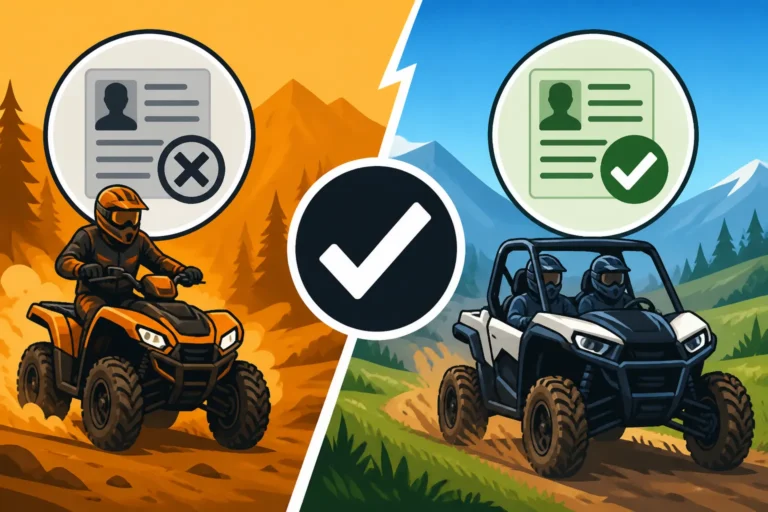
| Driver's License | Requires a valid driver's license with an M or MR endorsement. Wyoming Motorcycle Endorsement for an MPV | No driver's license required for off-road riding (age restrictions apply). | Valid license with M/MR endorsement required. |
| Insurance | Mandatory liability insurance for road use. Wyoming ATV Insurance Requirement | Not mandated by state law for off-road use. | Mandatory liability insurance. |
| Speed/Road Type | Permitted on enrolled county, state, and some federal roads (posted speeds). | Restricted to unpaved trails, two-tracks, designated off-road areas. | Limited to specific crossing points, not for travel on the interstate. |
| Interstate Access | ONLY at designated, grade-separated crossings with a 1,000-machine annual cap per crossing. | Absolutely prohibited. | Strictly capped for safety and monitoring. |
| Purpose of Cap | Manages safety, traffic impact, and allows data collection for future policy. | N/A | Ensures controlled, monitored access for critical connections. |
Disclaimer
This article is for general informational purposes only and does not constitute professional advice. Laws, prices and regulations vary by location and change over time. Consult a qualified professional for guidance on your specific situation.