Wyoming Rules for Riding Near Livestock
Riding your ATV or UTV through Wyoming's vast and beautiful landscapes is an incredible experience, but it comes with a unique set of responsibilities, especially when you encounter the state's most iconic residents: livestock. Many riders feel a knot of anxiety when they see a herd of cattle or a flock of sheep on or near their trail, unsure of the proper protocol. This guide aims to clear up that confusion, offering practical advice and outlining the critical rules you need to follow to ensure a safe, respectful, and legal ride for everyone, from the two-legged to the four-legged inhabitants of the Cowboy State.
Understanding Wyoming's Open Landscape and Livestock
Wyoming is a state deeply rooted in its agricultural heritage, and that heritage profoundly influences how we share the land. When you're out on a trail, whether it's on public land or a designated route across private property, you're very likely to encounter livestock. These aren't just scenic backdrops; they're someone's livelihood, and respecting their presence is paramount.
The Open Range Tradition
One of the most defining characteristics of Wyoming, and many western states, is the concept of "open range." This isn't just a romantic idea from old westerns; it's a legal designation. In open range areas, livestock are permitted to roam freely, and it's the responsibility of motorists (and, by extension, off-road vehicle operators) to avoid collisions with them. This is a stark contrast to "closed range" areas where fences are expected to keep animals contained. While most designated ATV/UTV trails will have clear boundaries, you might find yourself in an area where cattle guards on a ranch road are the only thing separating you from a vast expanse where animals graze. It means you must be constantly vigilant, expecting to see animals around every bend, not just in pastures but potentially right on the trail. Understanding this tradition helps set the mindset for responsible riding.
Grazing Allotments and Private Lands
Much of Wyoming's public land, managed by agencies like the Bureau of Land Management (BLM) and the U.S. Forest Service, includes grazing allotments. These are areas where ranchers have permits to graze their livestock, effectively turning public land into temporary, working pastures. So, even when you're on what you believe is purely public territory, you're sharing it with private property – the livestock themselves. Then there's the clear-cut private land, which your machine might traverse if you have explicit permission or if a public easement crosses it. In both scenarios, the animals have a right to be there, and it's your responsibility to ride respectfully. Failing to understand that these animals are not wild game, but rather managed and owned, is a common misstep for new riders. [Wyoming Rules for Riding a Grazing Allotment] delves deeper into these specific regulations.
Specific Rules and Etiquette for Encountering Livestock
When you come across livestock, whether it's a small group of cows or a large herd of sheep, your actions matter. How you approach, pass, and leave the area can significantly impact the animals, the rancher, and your own experience.
Slow Down and Give Space
This is perhaps the most crucial rule of all. As soon as you spot livestock, whether they're on the trail, nearby, or even just hear them, slow down immediately. Reduce your speed to a crawl, and if necessary, stop your machine. Animals, especially cattle, horses, and sheep, can be easily spooked by sudden noises or fast-moving vehicles. A panicked animal can bolt, injure itself, or even charge if it feels threatened.
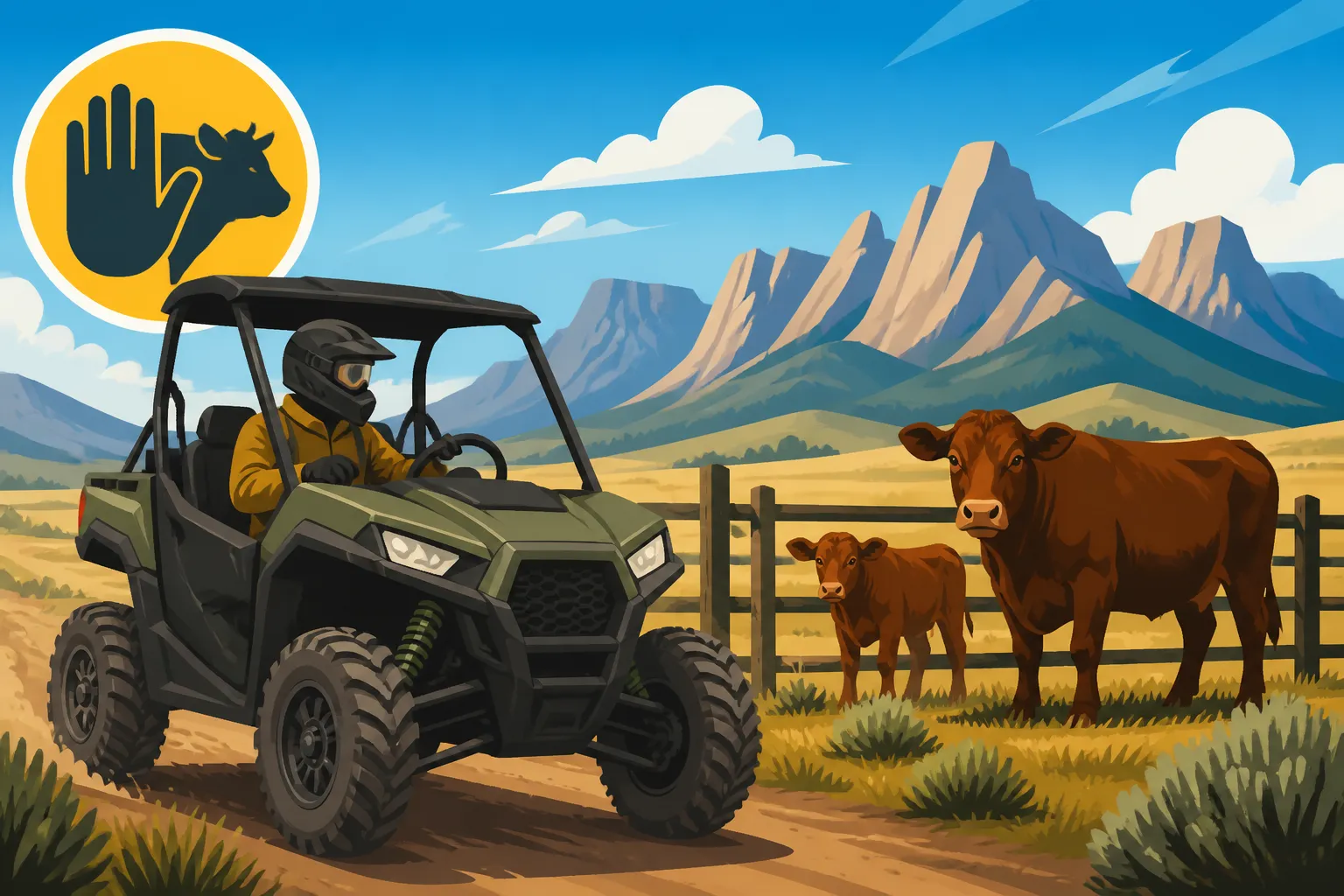
Imagine a cow with its calf standing on the trail. Racing past it could cause the mother to panic, potentially separating her from her young or causing a stampede. Give them a wide berth, moving slowly and predictably. If you can, try to give them at least 50 to 100 feet of space. If they're blocking the trail and don't seem to want to move, turn off your engine and wait patiently. Sometimes a gentle, quiet presence is all it takes for them to meander off. Never try to "herd" them with your machine or make loud noises to scare them away. That's harassment, and it could lead to serious legal consequences and harm to the animals. This is especially true for any aftermarket modifications that increase engine noise; while a high-performance exhaust system from, say, SuperATV might sound great on an open track, on a quiet trail near livestock, a more subdued approach is always better.
Handling Gates and Fences
Gates and fences are working parts of the ranching landscape, and how you interact with them is a tell-tale sign of a respectful rider. The golden rule is simple: leave gates as you find them. If a gate is closed, close it behind you. If it's open, leave it open. This isn't just a courtesy; it's critical for livestock management. A gate left open that should have been closed can allow an entire herd to wander onto a highway, into another rancher's pasture, or onto private land where they shouldn't be. The consequences for a rancher can be devastating, resulting in lost animals or thousands of dollars in fines for straying livestock.
Always take the time to dismount, open the gate, ride your machine through, and then securely close it. Check that the latch is properly engaged. Don't rush or assume someone behind you will close it. If you're riding with a group, appoint someone to be the "gate keeper" to ensure it's handled properly every time. [What Happens If You Leave a Gate Open] explains the severe impact this can have. Similarly, never cut fences or ride around them, as this can damage vital infrastructure and lead to animals escaping. This is where durable components like heavy-duty bumpers or rock sliders from SuperATV can protect your machine if you misjudge a tight squeeze, but always prioritize the integrity of the fence.
Communication with Ranchers
While it might not always be possible, communicating with ranchers or landowners when you're planning a ride through an area known for livestock can save a lot of headaches. A quick call to ask about current grazing patterns, specific gate instructions, or any sensitive areas can go a long way. If you encounter a rancher or cowboy on the trail, be friendly, courteous, and respectful. A simple wave, a nod, and a genuine inquiry about their operations can build goodwill. They are often incredibly knowledgeable about the area and its conditions.
If you accidentally disturb livestock or notice an open gate that might be problematic, don't hesitate to inform the nearest rancher or authority. Being proactive and honest can often mitigate potential issues. Remember, you're a guest on their shared landscape, and a positive relationship with the local community makes everyone's experience better.
Legal Ramifications and Avoiding Conflicts
Ignoring the rules or acting irresponsibly around livestock in Wyoming can lead to more than just a stern look from a cowboy; it can result in significant legal trouble and financial penalties.
Trespass and Property Damage
Even if you're riding on what you believe is a public trail, you can still be liable for trespass if your actions cause livestock to wander onto private property or if you veer off a designated route. Ranchers often have grazing leases that extend across public lands, meaning the animals, though on public ground, are essentially private property. If your machine spooks a herd that then breaks through a fence, you could be held responsible for the cost of repairs and any damages or losses to the livestock. [Wyoming Trespass Rules for Riders] outlines the broader legal framework.
It's not just about fences, either. Riding through irrigated pastures or sensitive grazing areas off a designated trail can damage crops or forage, impacting the livelihood of ranchers. Always stay on marked trails, even if they seem to take a longer, less direct route. The short cut isn't worth the legal headache or the damage it might cause.
Penalties for Disturbing Livestock
Wyoming law takes the disturbance of livestock seriously. Harassing, injuring, or killing livestock can result in hefty fines, restitution to the owner for the value of the animal, and even criminal charges. This isn't just reserved for intentional acts; negligent actions, like speeding through a herd and causing an animal to break a leg, can also lead to severe penalties. The state values its agricultural industry, and laws are in place to protect it.
Fines can vary widely depending on the severity of the offense, but they are often substantial. Imagine having to pay for a prize breeding bull that was injured or lost due to your negligence. It's a risk no rider wants to take. Furthermore, if you're involved in a collision with livestock on an open range road, while often the vehicle owner bears the burden of damage, if negligence (like excessive speed or reckless driving) can be proven, liability can shift. This is why vigilance and caution are not just good practice, but a legal necessity.
Best Practices to Ensure a Smooth Ride
To ensure your rides are enjoyable and free of conflict with livestock, here are some actionable best practices:
- Plan Ahead: Before heading out, study your maps. Identify areas known for grazing. Many BLM and Forest Service maps will show grazing allotments. Consider calling the local field office for current conditions.
- Maintain Your Machine: A well-maintained machine is a quiet machine. Ensure your muffler and spark arrester are in good working order. Avoid unnecessary modifications that increase noise. A smooth-running engine is less likely to startle animals. Consider using a utility-focused UTV, which often comes with a quieter exhaust than a sport model, or look into specific muffler upgrades if you frequently ride near ranches.
- Carry a Map: Always have a physical map or a reliable GPS device with downloaded maps. This helps you stay on designated routes and avoid inadvertently trespassing.
- Educate Your Group: If you're riding with friends or family, make sure everyone understands the rules and etiquette for encountering livestock. Emphasize patience and respect.
- Report Issues: If you see fences down, livestock in distress, or other issues, report them to the nearest rancher or land management agency. Being a responsible steward of the land benefits everyone.
- Utilize Durable Equipment: For riding on ranch roads or two-tracks where you might encounter cattle guards or unexpected obstacles, having robust parts can be a lifesaver. Products like heavy-duty suspension components or reinforced skid plates from SuperATV can protect your machine from damage, allowing you to focus on safe passage rather than worrying about breaking down. [Cattle Strung Across a Forest Road] is a common sight and one that requires careful navigation.
Here's a quick summary of good versus bad practices when encountering livestock:
| Action / Practice | Good Practice | Bad Practice |
|---|---|---|
| Approach | Slow down, anticipate animals, turn off engine if stopped. | Speed through, use horn, rev engine. |
| Distance | Give animals a wide berth (50-100 feet), wait for them to move. | Attempt to "herd" animals, drive directly at them. |
| Noise | Keep engine noise low, avoid yelling or loud music. | Blare music, shout, make sudden loud noises. |
| Gates & Fences | Leave gates as found (open if open, closed if closed), check latch. | Leave gates open that were closed, ride around fences, cut fences. |
| Trail Discipline | Stay on marked trails, avoid sensitive grazing areas. | Ride off-trail, create new tracks, damage forage. |
| Interaction with Ranchers | Be courteous, communicate, report issues. | Be confrontational, ignore warnings, cause trouble. |
| Animal Welfare | Do not feed, do not harass, report injured animals. | Attempt to pet wild-looking livestock, separate calves from mothers. |
Preparing for Livestock Encounters
Being prepared for livestock encounters goes beyond just knowing the rules; it involves thoughtful planning and equipping yourself and your machine appropriately.
Planning Your Route with Livestock in Mind
Before you even load up your rig, take some time to review maps of your intended riding area. Look for indications of grazing allotments, ranch roads, and private land boundaries. Land management agencies often provide Motor Vehicle Use Maps (MVUMs) that detail designated routes. These maps are invaluable for staying on legal trails and avoiding areas that might be particularly sensitive to livestock.
If your route takes you through or near areas marked for grazing, anticipate encountering animals. This might influence the time of day you choose to ride (animals might be less active or in different areas during certain hours) or even lead you to select an alternative route if you prefer to avoid high-density livestock zones. Remember, [Wyoming Rules for Riding a Two-Track] often involve sharing these narrow paths with four-legged residents. Having a clear understanding of the terrain, and what animals typically graze there, can also help you predict their behavior and react appropriately.
Equipping Your Machine Responsibly
While you're not outfitting your ATV or UTV specifically for livestock, certain equipment choices can make your interactions smoother and safer. A quiet exhaust system, as mentioned, is paramount. You might also consider a more subdued horn, rather than a jarring air horn, if your machine is equipped with one, for a gentler warning if absolutely necessary.
Beyond noise, consider durability. If you're frequently navigating trails that might have gates, rough cattle guards, or tight squeezes around a grazing herd, having sturdy protection for your machine is a good idea. Skid plates, A-arm guards, and bumpers from companies like SuperATV can help prevent damage if you accidentally clip something or need to maneuver carefully through overgrown areas. Carrying basic tools, like fencing pliers, might even be useful if you encounter a downed fence that you can safely and legally mend in a pinch to prevent livestock from escaping, though direct repair should generally be left to landowners. Remember, the goal isn't to modify your machine to handle livestock directly, but to ensure it operates quietly, reliably, and can withstand the rigors of sharing the landscape without causing additional stress or damage.
Disclaimer
This article is for general informational purposes only and does not constitute professional advice. Laws, prices and regulations vary by location and change over time. Consult a qualified professional for guidance on your specific situation.