How the Interstate Cut Evanston Off From Its Trails
It's a familiar story for many of us who love to hit the trails: you live near prime riding country, but a major highway acts like an impenetrable fortress, cutting you off from the very places you want to explore. For years, folks in Evanston faced this exact frustrating reality, watching Interstate 80 snake through their landscape, effectively severing their community from some of the best off-road opportunities the region had to offer. This guide dives deep into that challenge and how the ingenuity and persistence of Wyoming's riders and officials found a way to bridge that divide.
A Community Divided: The Early Impact of Interstate 80 on Evanston's Riding Access
When Interstate 80 carved its path through southwestern Wyoming, it brought immense benefits for cross-country travel and commerce. But for local communities like Evanston, it often created unexpected barriers, especially for recreational activities like off-road riding. What was once a relatively easy jaunt from town to the foothills or sagebrush country became a logistical nightmare, with a formidable concrete and asphalt river flowing in between.
The Physical Barrier: I-80's Imposing Presence
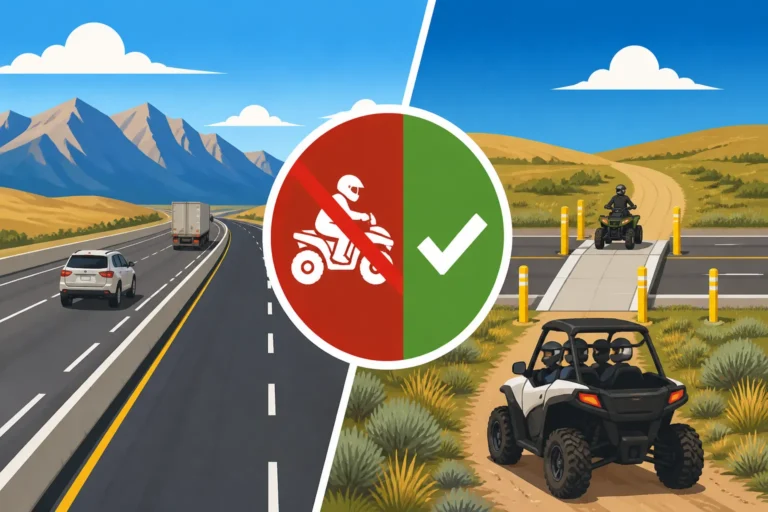
Imagine living in a town, looking out your window, and seeing beautiful, open country just a few miles away. You know there are fantastic two-tracks and scenic routes perfect for your ATV or side-by-side. But between you and that pristine landscape is Interstate 80, a bustling artery of traffic where speeds are high and pedestrian or off-road vehicle crossings are absolutely out of the question. This wasn't just a psychological barrier; it was a very real, very dangerous physical one. Roads that once led directly to favorite riding spots were either absorbed by the interstate's footprint or terminated abruptly at its fence lines. For families and local enthusiasts, this meant either trailering their machines much further out of town, or simply giving up on those nearby trails altogether. The immediate frustration was palpable – a vibrant riding culture suddenly felt hemmed in, with prized access points vanishing behind the roar of eighteen-wheelers.
The Legal Landscape: Early Road Rules and ORV Limitations
In the early days of ORV recreation, the laws surrounding their use on public roads were, to put it mildly, less developed than they are today. Most off-road machines were strictly that—off-road. There was little to no provision for them to legally traverse paved highways, let alone a major interstate. This left Evanston riders in a bind. Even if a small county road existed that seemed like it could get them close to a crossing point, the minute their tires touched the asphalt of a state highway or interstate right-of-way, they were breaking the law. The thought of [Wyoming Fines for Riding a Closed Road] was enough to deter most. It wasn't just about common sense safety; it was about the letter of the law that simply hadn't caught up with the growing popularity and practical needs of off-road vehicle users. This legal vacuum added another layer of complexity to an already frustrating situation, making authorized crossings seem like an impossible dream.
The Quest for Reconnection: Evanston's Advocacy for Trail Access
The people of Evanston weren't ones to simply throw up their hands and give up their passion for riding. The feeling of being cut off from their recreational lands spurred a determined effort to find a solution. This wasn't just about individual enjoyment; it was about the vibrancy of the community and the economic health of a town that thrives on outdoor recreation.
Grassroots Efforts and Local Voices
The push for better access wasn't top-down; it started with the riders themselves, the local businesses that catered to them, and the community leaders who understood the importance of outdoor recreation to Evanston's identity. There were countless conversations around kitchen tables, at local diners, and in community meetings about how to address this interstate barrier. People shared stories of past riding adventures and lamented the lost access, all while brainstorming ideas for how to approach the state. They knew that local trails, often maintained by volunteers and funded in part by [Wyoming Permits and the Trails Program], were a critical asset. Rallying together, they gathered petitions, sent letters, and made their voices heard, emphasizing that this wasn't just a minor inconvenience, but a significant impediment to a cherished local pastime and a potential blow to local tourism. Businesses selling parts and accessories, like those from SuperATV, understood that accessible trails meant more riders and a healthier local economy.
Partnering with State Agencies: WYDOT and Wyoming State Parks
Turning grassroots energy into tangible results required a coordinated effort with state-level agencies. The challenge was multifaceted: it involved not just building physical structures, but also navigating complex legal frameworks and securing funding. Wyoming's Department of Transportation (WYDOT) was the obvious partner for anything involving an interstate, but the recreational aspect brought Wyoming State Parks, Historic Sites and Trails into the conversation. These agencies, each with its own mission and regulatory requirements, had to come together to find a common path forward. It was a classic example of how local needs often drive state-level policy changes. The question wasn't just how to build a crossing, but who would manage it, who would fund it, and how it would integrate into the broader network of [Wyoming's Enrolled Roads and Trails]. Understanding [Why the Trails Program Pays for Crossings] became a key part of the advocacy, as it highlighted the direct benefit of permit fees to projects like these.
Forging a Path Forward: Grade-Separated Crossings and the Future
After years of advocacy and collaboration, the pieces started falling into place, leading to innovative solutions that now allow riders to safely and legally access trails beyond Interstate 80. This wasn't a quick fix, but a testament to perseverance and smart planning.
The Innovative Solution: Crossing Under or Over the Interstate
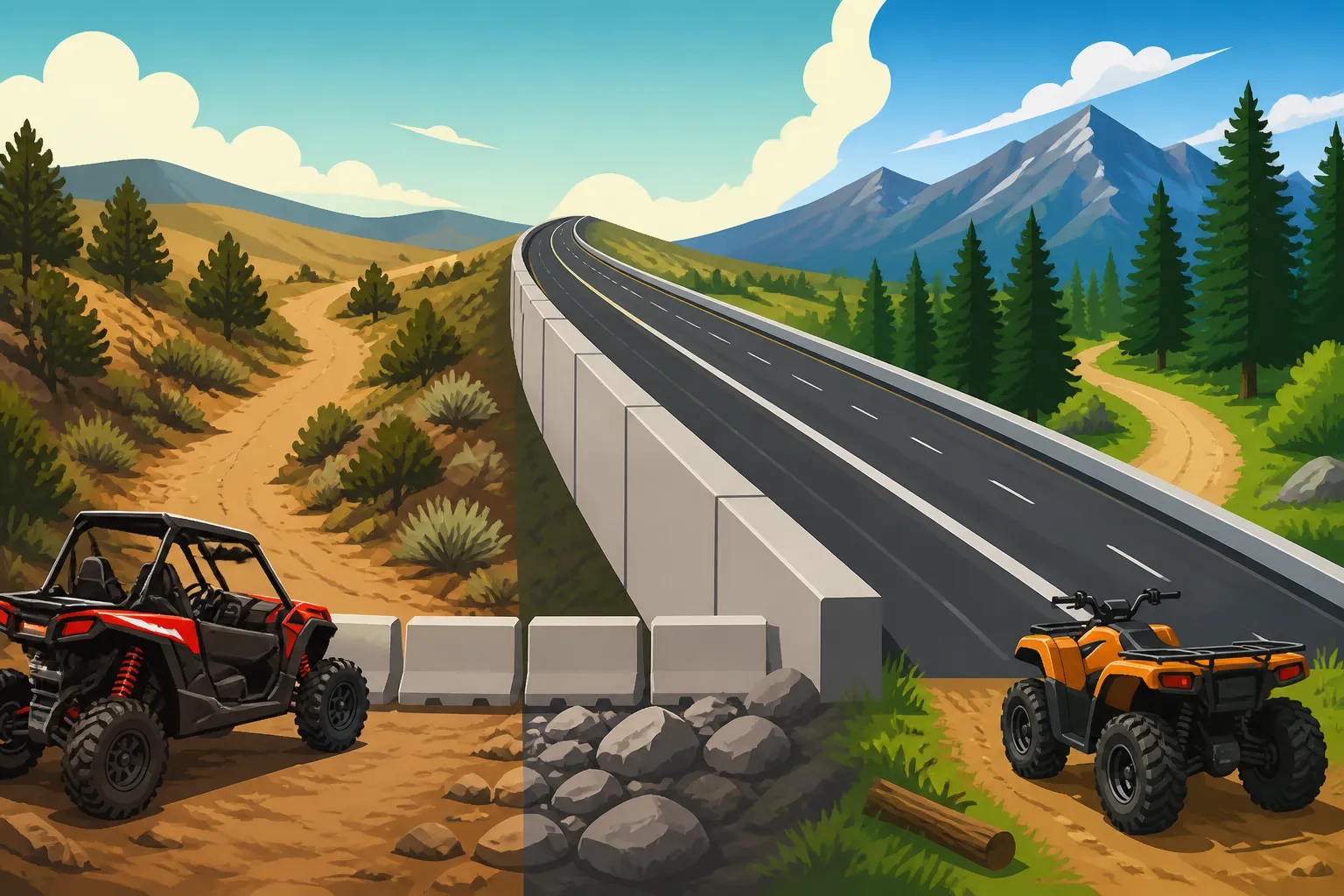
The most practical and safest solution for traversing a busy interstate like I-80 is a grade-separated crossing. This means that the off-road trail either goes under the interstate via a tunnel or culvert, or over it on a dedicated bridge, completely separating ORV traffic from highway vehicles. This eliminates any direct interaction with high-speed interstate traffic, ensuring rider safety and preventing disruption to freeway flow. For Evanston, these crossings became literal bridges – or tunnels – to opportunity, reconnecting riders with vast swaths of public land that were once effectively off-limits. Imagine the relief of knowing you can safely pass beneath roaring trucks without fear of a collision or a citation for illegal crossing. These [Grade-Separated Interstate Crossings] are engineered marvels in their own right, designed to withstand the elements and heavy ORV traffic. Products like heavy-duty axles and lift kits from SuperATV can certainly help machines handle the varying terrain leading into and out of these types of crossings. This shift from dangerous, illegal crossings to designated, safe pathways was a game-changer for local riders.
Navigating the Regulations: The WYDOT Chapter 33 Rule
The implementation of physical crossings was only half the battle. Legalizing their use required specific regulatory adjustments. This is where the [WYDOT Chapter 33 Rule of 2025] (as per its full title) came into play. This crucial regulation outlines the criteria and procedures for designating routes that allow ORVs to cross state highways, including interstates, under specific conditions. It formalizes what was once a gray area, providing a clear legal framework for ORV use in these critical areas. It's not a free-for-all; these crossings are carefully planned and marked. Riders still need to understand [Wyoming Rules for Crossing an Interstate] and adhere to all signage.
The rule allows for specific, limited access points, ensuring safety remains paramount. It also often dictates that machines making these crossings must meet certain criteria, sometimes implying a move towards [Wyoming's MPV Path to the Road] or ensuring they are indeed properly registered ORVs. The rule specifies maximum numbers of machines per crossing annually, as seen in provisions like [How the 1,000 Machine a Year Cap Works], demonstrating the careful thought put into managing impact and safety. Essentially, this rule is the legal green light that makes [Crossing Under the Highway at a Grade-Separated Crossing] possible and legal, giving riders a sanctioned way to explore territories previously separated by concrete.
Looking Ahead: Expanding Access and Maintaining Trails
The efforts in Evanston are a shining example of how communities and state agencies can work together to solve complex access issues. But the work is never truly done. Maintaining these crossings and the trails they lead to is an ongoing commitment. This involves regular upkeep, clear signage, and continued funding, much of which comes directly from the sale of [Wyoming ORV Permits Explained]. When you purchase your [One Flat Permit Price, Whatever You Ride] decal, a portion of that money goes directly into the state's trails program, funding crucial infrastructure and maintenance projects.
The success of the Evanston crossings serves as a blueprint for other areas in Wyoming facing similar challenges, demonstrating that with persistence and collaboration, geographical and legal barriers can be overcome. Riders now have the freedom to explore vast networks of trails like those found on [Wyoming Rules for Riding a County Road] or federal lands, knowing that their machines, perhaps equipped with high-performance parts from SuperATV, can take them safely across the interstate divide and into new adventures. The dedication of the local community and state partners ensures that the spirit of off-road adventure in Wyoming continues to thrive, even in the face of major infrastructure.
| Aspect | Pre-Interstate I-80 Access | Post-I-80 Construction (Initial) | Current Solution (Grade-Separated Crossings) |
|---|---|---|---|
| Physical Barrier | Minimal, local roads | High-speed interstate, fences | Dedicated underpasses/overpasses |
| Legal Access | Generally unrestricted (local) | Illegal to cross I-80 | Legal, designated crossing points |
| Safety | Lower traffic, fewer hazards | Extremely dangerous, high collision risk | High safety, no interaction with I-80 traffic |
| Rider Frustration | Low, easy access | High, feeling cut off from trails | Reduced significantly, reconnected access |
| Community Impact | Positive, easy recreation | Negative, limited local recreation | Positive, enhances local recreation & tourism |
| Required Equipment | Standard ORV (e.g., SuperATV parts) | – | Standard ORV, adherence to specific rules |
Disclaimer
This article is for general informational purposes only and does not constitute professional advice. Laws, prices and regulations vary by location and change over time. Consult a qualified professional for guidance on your specific situation.