Riding Between Two Enrolled Segments
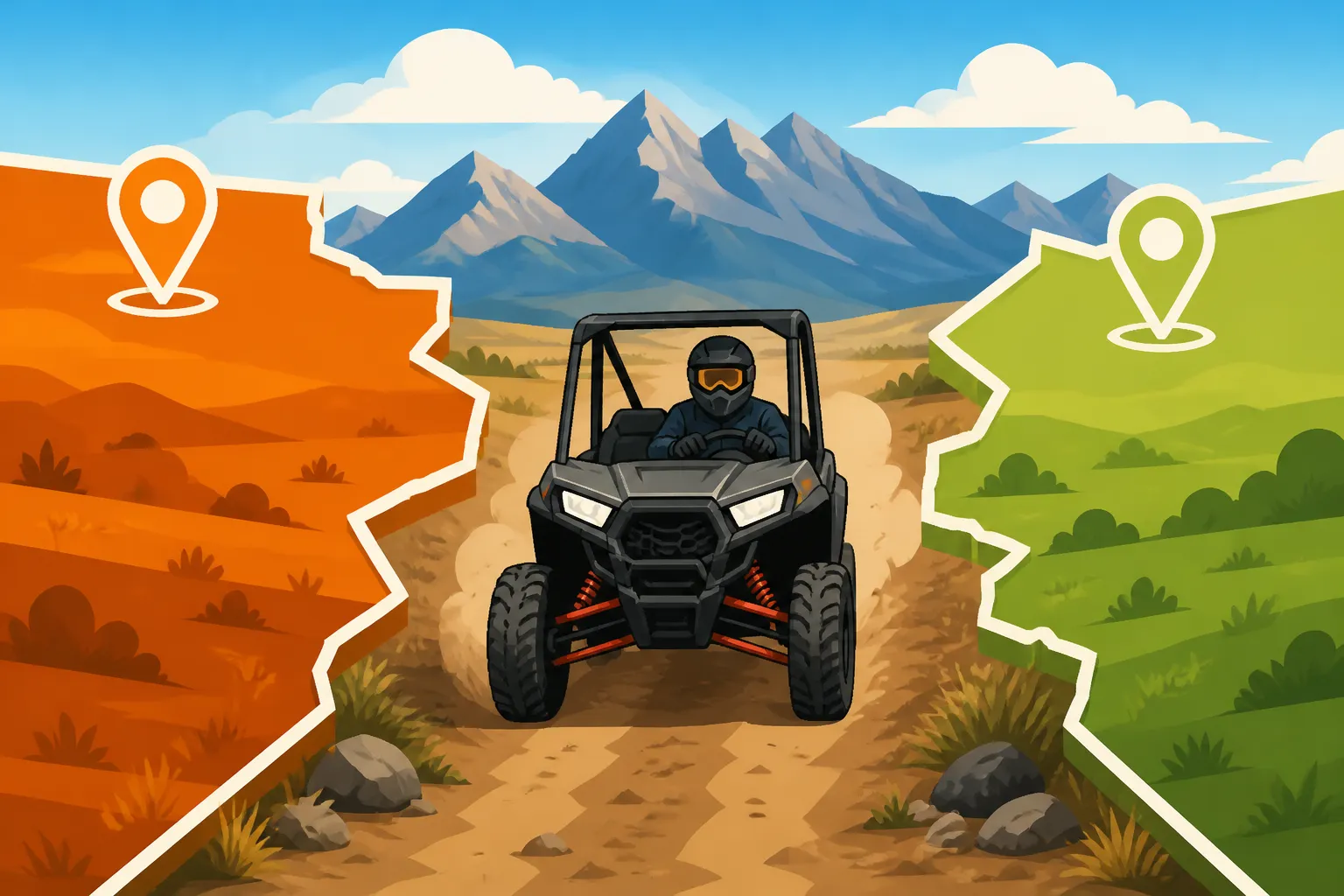
There’s nothing quite as frustrating as being out on an incredible Wyoming trail ride, finding your rhythm, enjoying the breathtaking scenery, only to have your adventure abruptly halted by a sign telling you the designated route has ended. You look across the way, and there it is – another clearly marked trail segment, tantalizingly close, but separated by what appears to be just a short stretch of gravel road or a county lane. Your mind races: "Can I just hop over there? It's only a few hundred yards!" This guide is here to walk you through the complex reality of riding between those distinct "enrolled segments" in Wyoming, helping you understand the rules, the risks, and the legal pathways to keep your adventure going safely and lawfully.
Understanding Wyoming's Enrolled Roads and Trails System
Wyoming’s approach to off-road vehicle (ORV) access is unique and incredibly important for riders to grasp. Unlike some states where general access might be assumed or broadly permitted, Wyoming operates on an "enrolled" system, especially when it comes to riding on roads that connect off-road trails. An "enrolled segment" simply means that a particular road or trail has been officially designated and approved for ORV use by the state's Trails Program, often in cooperation with local counties and federal land management agencies like the Forest Service or Bureau of Land Management (BLM).
What Exactly Is an Enrolled Road or Trail?
Imagine a vast network of arteries and capillaries across the landscape. The enrolled segments are the official, clearly marked pathways where your ATV, UTV, or dirt bike is welcome. These are not just any old two-track or gravel road. They are routes that have undergone a specific process, involving local government, land managers, and the Wyoming State Trails Program, to be formally recognized as open to ORVs. This designation is crucial because it means that the necessary assessments for safety, environmental impact, and public access have been made.
When you see a route marked as "enrolled," it's a signal that all the involved parties have agreed that ORVs can legally traverse that section. This system helps manage traffic, prevent environmental damage, and ensure that riders know exactly where they are permitted to be. It's a structured approach, which can sometimes feel restrictive, but it's designed to protect the very trails we all love to ride and maintain access for years to come. You can find comprehensive information about these routes by checking out [Wyoming's Enrolled Roads and Trails].
Why Are Some Roads Enrolled and Others Not?
This is where the rubber meets the road, quite literally. The decision to enroll a road segment involves a multi-agency agreement, and it's not always a quick or easy process. For a county road, for instance, the local county commissioners must agree to allow ORVs on their roads. Then, the Wyoming State Parks, Historic Sites and Trails division, which oversees the Trails Program, needs to officially enroll that segment. On federal lands, the Forest Service or BLM must first designate certain roads and trails as open to ORVs through their travel management planning process before they can be considered for state enrollment.
The reasons a segment might not be enrolled are varied. It could be due to concerns about public safety on higher-traffic roads, potential conflicts with other users, environmental sensitivities, or even simply a lack of consensus among the various agencies involved. Sometimes, a county might not want to bear the perceived additional burden of ORV traffic or may have specific local ordinances that prevent it. This complex dance of jurisdictions means that while a short stretch of road might look perfectly suitable for your side-by-side, if it hasn't gone through the enrollment process, it's considered off-limits for ORV travel unless your machine is legally "street-legal" as a Multipurpose Vehicle (MPV).
The Challenge: Gaps Between Enrolled Segments
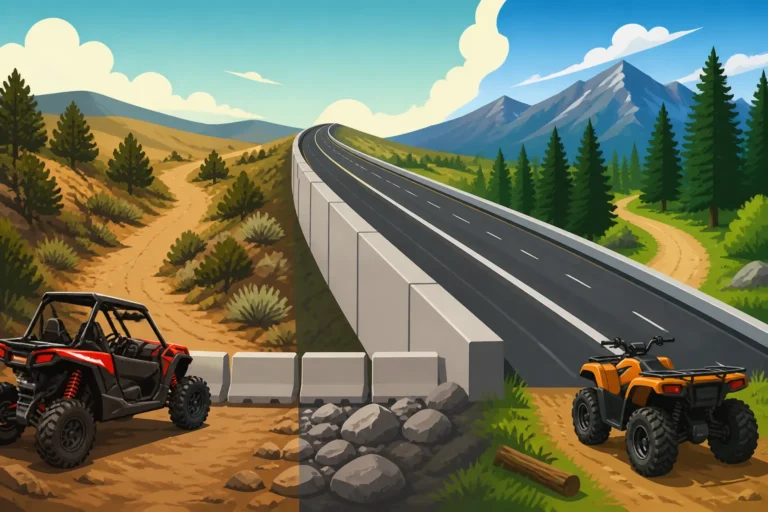
The reality of Wyoming's enrolled system is that it's not always a perfectly seamless spiderweb. You'll often encounter situations where a fantastic stretch of singletrack or a scenic two-track abruptly ends, leaving a gap of non-enrolled public road, or even private land, before the next section of designated ORV route begins. This fragmentation is precisely what causes so much head-scratching and temptation for riders.
What Happens When an Enrolled Trail Suddenly Ends on an Unenrolled County Road?
Imagine you're deep in the [Medicine Bow National Forest], following a clearly marked trail, and suddenly you hit a T-intersection with a gravel road. A small sign indicates "End of Enrolled Trail." Across the gravel road, 200 yards to the left, another sign points to the start of "Enrolled Trail Segment B." What do you do?
The critical point here is that if that short stretch of gravel road is not also an enrolled segment, it's legally no different from any other public road in Wyoming where ORVs are typically prohibited. You cannot simply ride across it or down it, even for a short distance, unless your machine has been legally converted into a street-legal Multipurpose Vehicle (MPV) and you are compliant with all road-use laws. It's a stark reality that catches many riders off guard, especially those used to more lenient rules in other states or private property.
The Temptation to "Just Ride a Short Bit" and the Legal Risks
It's easy to rationalize: "No one's around," "It's just a few hundred feet," or "I'll be quick." However, giving in to this temptation carries significant legal risks. Wyoming law enforcement, including county sheriffs, state troopers, Forest Service rangers, and BLM officers, actively patrol these areas. They understand the nuances of the enrolled system and are well aware of the common points where riders might be tempted to cut corners.
The consequences of riding a non-enrolled road without proper MPV status can include hefty fines, and in some cases, your machine could even be impounded. This isn't just a slap on the wrist; it can quickly turn an incredible day of riding into an expensive and frustrating ordeal. Moreover, riding off-route, even on a public road, can erode public trust and potentially jeopardize future trail access for everyone. It's vital to respect the system, even when it feels inconvenient.
Legal Requirements for Riding Enrolled Roads/Segments
To ride any enrolled segment in Wyoming, whether it's a dedicated trail or an enrolled road connecting two trails, your machine needs a current Wyoming ORV Permit. This brightly colored decal signifies that you've paid your dues to the state's Trails Program, which in turn funds trail maintenance, signage, and even the creation of new enrolled routes. Check out [Wyoming's Annual ORV Permit] for more details.
However, when it comes to riding roads – even enrolled roads – there's a crucial distinction. Your standard ORV permit allows you to ride the enrolled trail, but it does not make your machine street-legal for broader road use. For that, you need to navigate Wyoming's Multipurpose Vehicle (MPV) rules.
Machine Requirements for Road Travel (MPV Status)
Wyoming has a specific classification for Multipurpose Vehicles (MPVs), which are essentially ORVs that have been modified and registered to be street-legal on designated public roads. This is the pathway that allows you to legally bridge those gaps between enrolled trail segments. For your machine to qualify as an MPV, it needs to meet several criteria, including weight limits and seat height. Generally, this applies to side-by-sides and some larger ATVs.
Beyond the basic classification, an MPV must be equipped with specific safety features to be legal on public roads. These include:
- Headlights and Taillights: Operational during day and night.
- Brake Lights: Functioning stop lamps.
- Horn: An audible warning device.
- Mirrors: At least one left-side mirror for visibility. Many riders opt for a full SuperATV mirror kit for enhanced safety and compliance.
- Spark Arrester: A U.S. Forest Service approved spark arrester is required for all ORVs on public lands, including MPVs.
- Muffler: To ensure sound limits are met.
- License Plate: Issued by your county treasurer.
You can learn much more about these requirements by exploring [Wyoming's MPV Path to the Road] and [Wyoming MPV Street Legal Requirements].
Driver Licensing and Insurance
Just like driving a car, operating an MPV on public roads requires a valid driver's license. For MPVs, you typically need a standard driver's license (Class C equivalent). Some states require a specific motorcycle (M) or motorcycle-related (MR) endorsement, so it’s always best to check the latest Wyoming DMV regulations. If you're riding an MPV on a public road, you also must carry proof of liability insurance. This is a non-negotiable requirement for any street-legal vehicle and protects you and others in case of an accident.
Age Restrictions
Wyoming has age restrictions for both ORV and MPV operation. For general ORV trail riding, riders under 16 have specific supervision and training requirements. However, to operate an MPV on a public road, the driver must be at least 16 years old and possess a valid driver's license, just like operating any other motor vehicle. Passengers also have age guidelines, especially when it comes to young children, so always consult the specific regulations.
Strategies for Legally Connecting Segments
Since simply "hopping over" an unenrolled road is out of the question, you need a strategy to legally bridge those gaps. There are two primary approaches: converting your machine to an MPV or trailering.
The MPV Route: Converting Your Machine
This is the most attractive option for many riders who want the freedom to connect trails without constantly loading and unloading their machines. Converting your side-by-side or ATV to an MPV involves a series of steps and modifications.
What Makes an MPV? Weight and Seat Height
First, your machine must physically qualify. Wyoming statute defines an MPV as a motor vehicle that weighs between 300 and 3,000 pounds, has a seat or seats at least 24 inches from the ground, and has four or more tires designed for off-road use. This definition primarily includes side-by-sides and some utility ATVs, but generally excludes standard sport ATVs or dirt bikes.
Equipment Upgrades
Once your machine meets the physical criteria, you'll need to install the necessary street-legal equipment. This usually includes:
- Headlights and Taillights: Ensure they are DOT-compliant.
- Brake Lights: Must activate when the brakes are applied.
- Turn Signals: Front and rear turn signals are usually required for road legality. SuperATV and similar aftermarket companies offer comprehensive kits that include wiring harnesses and switches, making these installations much smoother.
- Horn: A simple push-button horn is sufficient.
- Mirrors: A left-side mirror is mandatory, but most riders add a rearview mirror and often a right-side mirror for full visibility. These are widely available from accessory providers like SuperATV.
- License Plate Mount and Light: To display your plate legally, even after dark.
The Process: Titling and Platting
After equipping your machine, you embark on the bureaucratic journey. This involves two main stops:
- County Clerk: You'll visit your local County Clerk's office to apply for a title for your newly designated MPV. This process often requires an inspection of your vehicle to verify it meets the MPV criteria and that the VIN is valid. For a deep dive, consult [Titling a Multipurpose Vehicle in Wyoming] and [Wyoming County Clerk Title Process].
- County Treasurer: Once you have your MPV title, you'll head to the County Treasurer's office to register the vehicle and obtain your street-legal license plate. This is similar to registering a car and involves paying registration fees. More information can be found in [Wyoming County Treasurer Plate Process].
Limitations: Not All ORVs Can Become MPVs
It's crucial to understand that not every off-road machine can be converted into an MPV. Lightweight dirt bikes typically don't meet the weight or seat height requirements. Some very wide custom-built buggies might exceed the practical width limits for road use or other specifications. Always verify your specific machine's compliance with Wyoming's MPV definition before investing in significant modifications.
Trailering: The Safest, Most Common, and Often Only Legal Option
When MPV conversion isn't an option, or if the connecting road is simply too long or too high-traffic for comfortable road riding, trailering becomes your go-to solution. It might be inconvenient to load your machine onto a trailer for a short hop, but it's the only way to ensure you're completely within the bounds of the law.
The Inconvenience but Necessity
Planning your ride to account for unenrolled road segments means either backtracking, or having a tow vehicle and trailer at the ready to shuttle your machine from the end of one enrolled section to the beginning of the next. This requires more logistics, especially if you're riding with a group, but it's a small price to pay to avoid fines and ensure you can continue riding lawfully. Many riders map out their routes with this in mind, often identifying specific staging areas or parking spots where they can safely load and unload.
Knowing the Maps: Emphasize the Importance of Official Maps
Never rely solely on anecdotal advice or outdated information. The single most important tool in your arsenal is an up-to-date, official map that clearly delineates enrolled segments.
Official Resources
- Motor Vehicle Use Maps (MVUMs): For federal lands (National Forests, BLM lands), MVUMs are gold. These maps are legally enforceable documents that show exactly which roads and trails are open to which types of vehicles and during what seasons. They are often available for free at ranger stations or online.
- Wyoming State Trails Program Maps: The state offers its own maps, often integrating information from federal and local sources, to provide a comprehensive view of enrolled trails and roads.
- Digital GPS Apps: Many modern GPS units and smartphone apps now integrate MVUM data, allowing you to see in real-time whether you're on an enrolled route or not. Always ensure your app's data is current.
Understanding [Wyoming Trail Maps and MVUMs] is paramount to planning a legal and enjoyable ride. Always carry a physical map as a backup, especially in areas with no cell signal.
Distinguishing Enrolled Roads from Non-Enrolled
On these maps, enrolled roads will be clearly marked, often with specific symbols or colors indicating their status. If a road doesn't have that designation, assume it's not enrolled. "An enrolled road will always be clearly marked," is a good mantra to remember. Don't guess, and don't assume. If in doubt, stay off.
Real-World Scenarios and Consequences
Let's look at a few hypothetical situations to illustrate the importance of understanding and adhering to Wyoming's ORV and MPV laws.
Scenario 1: Riding an ATV on a Short Stretch of Non-Enrolled County Road
You're on a fantastic ORV trail in Carbon County, enjoying the sagebrush flats. The trail ends at a county road, and you can see the next segment clearly marked a quarter-mile down the asphalt. Your ATV isn't an MPV. You think, "It's just a quick dash; no one will know." As you round the corner, a county sheriff's patrol car is waiting.
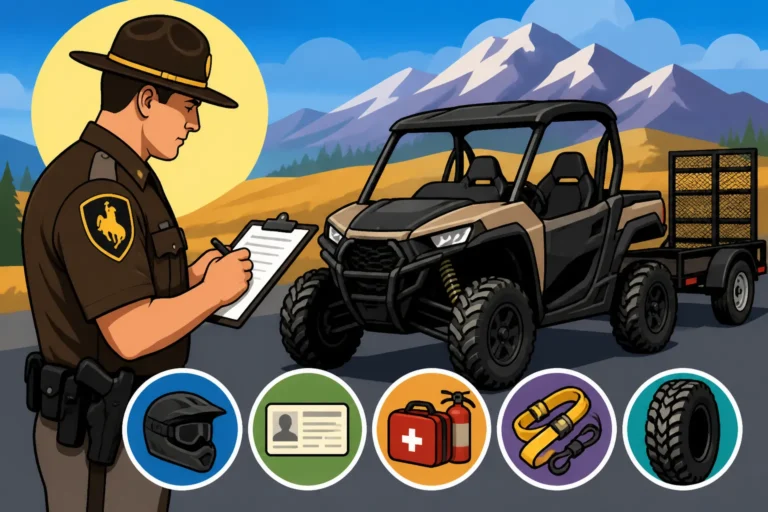
Consequences: You'll likely receive a citation for operating an unregistered (for road use) ORV on a public road. Fines can be significant, and in some situations, the officer may even have your ATV impounded, adding towing and storage fees to your woes. The officer will check for your valid Wyoming ORV permit, but that permit only covers enrolled trails, not non-enrolled public roads. The legal implications can be far-reaching, as described in [What a Wyoming Trooper Checks Roadside].
Scenario 2: Having an MPV, But It's Not Properly Equipped or You Lack the Right License
You've gone through the trouble of getting your side-by-side titled and plated as an MPV. Feeling confident, you decide to use it to connect some trail segments by riding a county road. However, you forgot to install a horn, or your driver's license expired last month, or you don't have proof of insurance with you.
Consequences: Even with an MPV plate, you are subject to the same traffic laws as any other vehicle on the road. A lack of required equipment (like a horn or mirror) can result in a fix-it ticket or a citation. Driving without a valid license or proof of insurance carries severe penalties, including fines, points on your driving record, and potentially even vehicle impoundment. Your MPV status is only valid if you meet all the requirements for road operation.
Scenario 3: Getting Caught on Private Land While Trying to Bypass a Non-Enrolled Section
Instead of using the county road, you try to find a shortcut around an unenrolled section by riding through what appears to be an open field. You figure it's faster than trailering. Unbeknownst to you, it's private ranch land, and the owner sees you.
Consequences: This is a clear case of trespass. Wyoming takes private property rights very seriously. You could face criminal charges for trespassing, in addition to potential civil lawsuits for any damage caused. Landowners are often protective of their property, and these incidents can lead to animosity towards all riders, potentially closing off future access opportunities. Always be mindful of [Wyoming Trespass Rules for Riders] and respect private property boundaries.
Advocacy for More Connections
The system of enrolled segments is dynamic, and it can improve. Many riders and local organizations actively advocate for opening more connecting routes and turning previously unenrolled roads into legal thoroughfares for ORVs.
How the System Evolves
The number of enrolled miles in Wyoming isn't static. It grows and changes as counties, land managers, and the Trails Program work together. This process often begins with local riders, clubs, or communities identifying critical gaps in the trail network and lobbying their local county commissioners or federal land agencies to consider enrolling specific road segments.
Role of Local Groups, Counties, and the Trails Program
Local ORV clubs play a vital role in this evolution. They often serve as the voice of the riding community, conducting trail work, educating riders, and most importantly, engaging with local and state governments. By presenting well-researched proposals, addressing concerns, and demonstrating the economic benefits of ORV tourism, these groups can influence decisions to expand the enrolled system.
The Wyoming State Trails Program, funded in part by your ORV permit fees, also offers grants and support for projects that improve and expand the trail network, including connecting existing segments. Learning about [Where Wyoming Permit Money Is Spent] can help you understand how your permit contributes to these efforts.
How to Get Involved
If you encounter a frustrating gap between two enrolled segments, don't just grumble. Consider becoming an advocate. Contact your local county commissioners, reach out to your local Forest Service or BLM office, or connect with a local ORV club. Share your observations, explain the benefits of connecting that particular segment, and offer to help with any necessary legwork or volunteer efforts. Collective action can often lead to positive change and more seamless riding experiences for everyone.
ORV vs. MPV: A Quick Comparison for Road Travel
To help clarify the distinctions, here's a brief table outlining the key differences between a standard ORV and a Wyoming MPV when it comes to road use:
| Feature/Requirement | Standard ORV (Trail Use Only) | Wyoming Multipurpose Vehicle (MPV) |
|---|---|---|
| Primary Use | Designated ORV trails | Public roads (where allowed), ORV trails |
| Wyoming Permit | Required (ORV Decal) | Required (ORV Decal) |
| Street Legal? | No | Yes |
| Title Required? | No (unless MPV) | Yes, as an MPV (from County Clerk) |
| License Plate? | No | Yes (from County Treasurer) |
| Driver's License | Not always (age dependent) | Required (valid driver's license) |
| Insurance | Not required for public land | Required (liability insurance) |
| Weight Limits | None specified for ORV status | 300 lbs to 3,000 lbs |
| Seat Height | Not specified | At least 24 inches from ground |
| Equipment | Spark arrester, muffler | Headlights, taillights, brake lights, horn, at least one left-side mirror, turn signals, spark arrester, muffler |
| Crossing Unenrolled Roads | Illegal | Legal (if all MPV requirements met) |
Remember, this table is a general overview. Always consult the official Wyoming statutes and regulations for the most current and specific requirements. Companies like SuperATV can often provide guidance on the types of accessories needed to bring your machine into MPV compliance.
Disclaimer
This article is for general informational purposes only and does not constitute professional advice. Laws, prices and regulations vary by location and change over time. Consult a qualified professional for guidance on your specific situation.