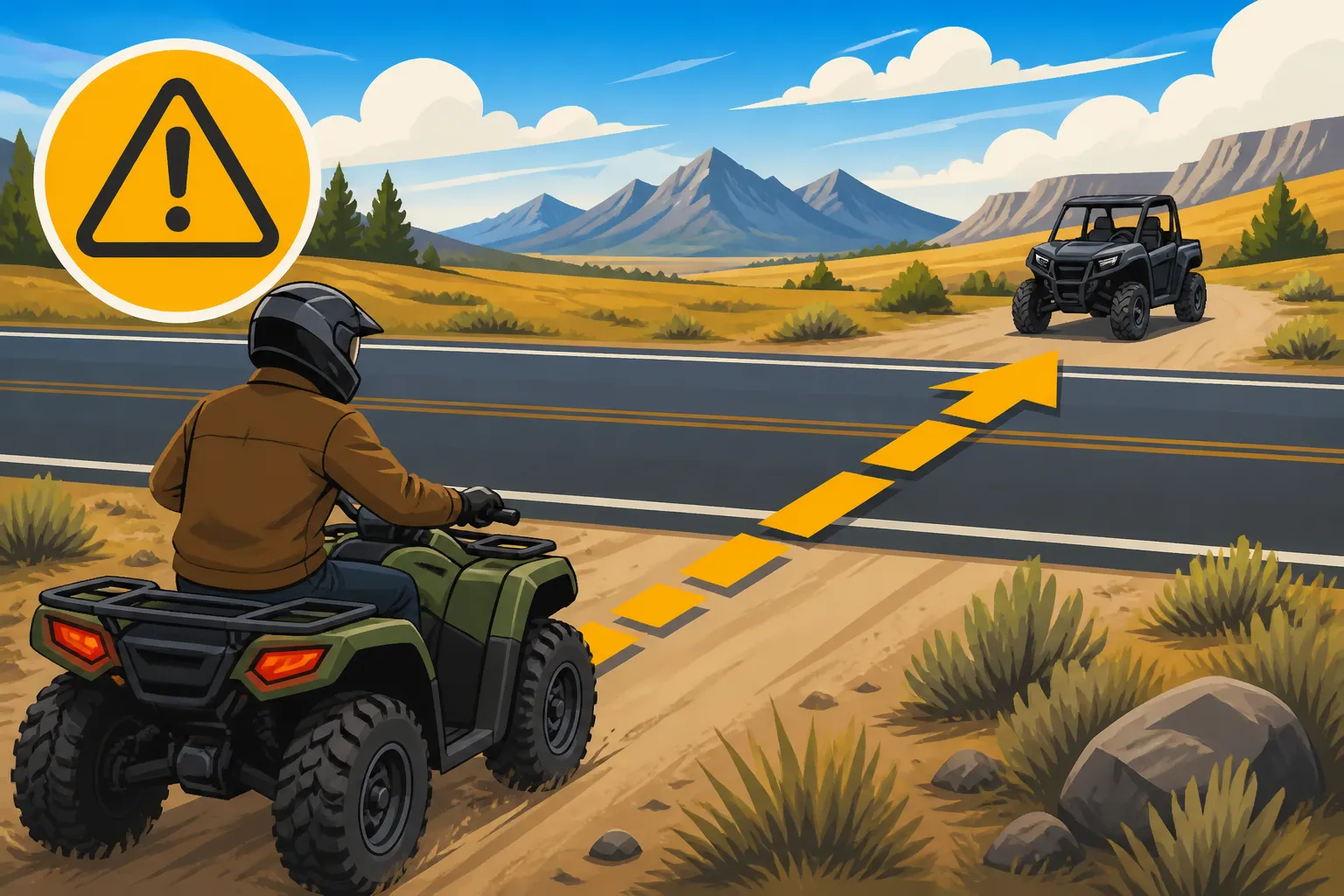
Crossing a State Highway at an Angle
Navigating Wyoming's vast and beautiful landscape on your ATV or UTV is an incredible experience, but sometimes you find yourself needing to get from one section of trail to another, and a state highway stands between you and your destination. It can be incredibly frustrating to hit a perfectly good trail, only to have it abruptly end where a busy paved road begins, leaving you scratching your head about the legal way forward. This guide will walk you through the specific rules and best practices for legally and safely crossing a state highway at an angle in Wyoming, ensuring you stay on the right side of the law and avoid any mishaps.
The Nuances of Crossing a State Highway in Wyoming
Wyoming offers an incredible network of trails and designated routes for off-road enthusiasts, but the rules for connecting these segments often involve navigating public roads. It's a common point of confusion for riders, especially those new to the state or coming from areas with different regulations. The key is understanding that "crossing" is very different from "riding on" a highway, and Wyoming has specific stipulations to keep everyone safe.
Why "Crossing" Isn't Just "Riding On"
When you're out on your machine, it's easy to think a quick hop across a paved road is no big deal, but the law sees it differently. Riding your ATV or UTV on a state highway for any sustained distance in Wyoming requires your machine to be designated as a Multipurpose Vehicle (MPV) and registered for road use, complete with plates, title, and all the necessary equipment. This is a crucial distinction. A brief, direct crossing, even on a road that isn't designated as an "enrolled" ORV route, often falls under a different set of rules, specifically designed to allow you to transition from one trail segment to another without requiring full MPV status just for that crossing.
The state understands that sometimes a short transit on a paved road is unavoidable to connect legitimate trail systems. However, this doesn't grant you a free pass to cruise down the highway. The intent is strictly to facilitate access between off-road areas, not to transform your trail machine into a street-legal vehicle for joyriding on asphalt. Ignoring this distinction is a common reason riders find themselves facing fines or, worse, dangerous situations.
The Importance of Designated Crossing Points
While Wyoming law allows for certain types of highway crossings for ORVs, it's important to differentiate between general crossings and those that might be specifically marked or implied by the trail system itself. Many of Wyoming's "enrolled roads" and trails are part of a larger, interconnected system. Sometimes, a trail will lead right up to a state highway, and another segment will pick up directly on the other side. In these instances, the expectation is that you will cross directly and expeditiously.
However, this doesn't mean every single point on every state highway is a legal ORV crossing point. Riders are generally expected to use common sense, seek out areas with good sightlines, and be aware of traffic conditions. There aren't always big signs proclaiming "ORV CROSSING HERE," so a bit of pre-ride planning, often involving [Wyoming's Designated ORV Roads] maps, can save you a lot of guesswork and potential trouble. If you’re ever in doubt, it’s safer to look for an alternative route or avoid the highway altogether. The goal is always to minimize your time on the pavement and maximize your safety.
The "Angle" Requirement: What It Means for Safety and Legality
Now, let's get to the heart of the matter: crossing a state highway at an angle. Wyoming law specifies that an ORV, when crossing a paved highway that isn't otherwise enrolled for ORV use, must do so at approximately a 90-degree angle. This isn't just a quirky rule; it's a critical safety measure.
Think about it:
- Reduced Exposure Time: Crossing at a perpendicular (90-degree) angle means you traverse the shortest possible distance across the road. The less time you spend in active traffic lanes, the lower your risk of an incident. If you try to cross diagonally, you're on the road for much longer, increasing your exposure to oncoming vehicles.
- Predictability for Other Drivers: When you approach the road at a 90-degree angle, it makes your intentions clear to other motorists. They can anticipate your movement more easily. If you're coming in at a shallow angle, it might look like you're trying to merge or ride alongside the road, which is exactly what you should not be doing on a state highway without a full MPV registration.
- Better Visibility: Approaching at a right angle often allows you a better view of traffic in both directions, especially if there are shoulders or pull-off areas leading up to the crossing point. This maximizes your ability to make a safe judgment about when it's clear to proceed.
This rule applies to any state highway that is not specifically designated as an ORV route itself. So, if you're on a trail and need to get to the other side of US-26 or WY-789, and those roads aren't "enrolled" at that specific location, you must make a direct, 90-degree crossing. This is a fundamental aspect of [Wyoming Rules for Crossing a Highway]. Remember, your objective is to cross, not to travel along the highway.
Essential Rules and Equipment for Highway Crossings
Just because you're only "crossing" doesn't mean you can throw caution and regulations to the wind. There are still crucial requirements you need to meet to ensure your safety and legality. Failing to adhere to these can result in citations or, more importantly, accidents.
Required Equipment for Road-Legal Machines (Even for a Crossing)
While you might not need a full MPV conversion just for a quick crossing, the law in Wyoming still expects a minimum level of safety equipment. This is where many riders get tripped up, thinking their trail-ready machine is good to go for any road interaction. Even for a momentary presence on a paved highway, certain items are non-negotiable for visibility and communication with other drivers.
- Headlights and Taillights: Your machine must have working headlights and taillights, especially if visibility is low due to weather or time of day. This is paramount. Imagine crossing a highway at dusk without proper lighting – it's an accident waiting to happen. Consider adding brighter LED options from brands like SuperATV if your factory lights aren't cutting it. [Wyoming Lighting Requirements for ORVs] detail these expectations.
- Stop Lamps: A functioning stop lamp (brake light) is critical. It signals your deceleration to vehicles behind you, even if you’re only slowing to assess traffic before crossing.
- Rear Reflector: A red rear reflector is another passive safety device that significantly improves your visibility to other drivers, particularly at night or in low-light conditions.
- Horn: You need a working horn. This is not just for startling wildlife; it's a vital communication tool with other vehicles on the road. A quick tap can alert a distracted driver to your presence. [Wyoming Horn Requirement on a Road Machine] makes this clear.
- Mirrors: A left-side mirror is typically required. While a single mirror might seem minimal, it's essential for monitoring traffic approaching from behind as you prepare to cross. Having a mirror helps you safely merge into or out of the flow, even for a brief crossing maneuver. Many aftermarket companies offer robust mirrors that can withstand the rigors of off-road riding while providing the necessary road visibility, and SuperATV is a good example of a brand that offers such accessories. [Wyoming Mirror Requirements for Road Use] provides the specifics.
Always give your machine a quick once-over before heading out, especially if you anticipate any road crossings. A burnt-out bulb or a missing mirror can turn a simple crossing into a costly citation or, worse, a dangerous situation.
Rider Licensing and Age Requirements
Wyoming has specific requirements for who can operate an ORV on public roads, even for just a crossing. It's not just about the machine; it's about the operator.
- Driver's License: If you are operating an ORV that could potentially become an MPV and you are on a public road, you need to possess a valid driver's license. This means a standard automobile license (Class C) is usually sufficient for most operators over 16. [Wyoming Driver's License Rules for ORVs] confirms this.
- Age Restrictions: For riders under 16, operating an ORV on a public road or highway, even for a crossing, becomes much more complex and generally restricted. While they can ride on designated trails with proper supervision, state highways are a different beast. It's safest to assume that if a highway crossing is required, the machine should be operated by a licensed adult. Check the specific statutes regarding minor operation on highways if you have any doubts, as the penalties for non-compliance can be severe.
It's tempting to let a capable teenager quickly run across a road, but if they aren't legally licensed, it's simply not worth the risk. The law prioritizes the safety of all road users.
The Wyoming ORV Permit: Is It Enough?
This is perhaps the biggest point of confusion for many riders, especially non-residents. You've diligently bought your Wyoming ORV Permit, proudly affixed your [Wyoming's Annual ORV Permit] decal, and you're ready to hit the trails. So, does this permit cover you for highway crossings?
The short answer is: No, not by itself for most highway use.
The Wyoming ORV Permit is specifically for operation on designated off-road trails and routes. It funds the state's trail program and signifies your right to ride off-road. It does not automatically grant your machine street-legal status or permit extended travel on paved public highways.
For your ATV or UTV to be legally ridden on a public road in Wyoming (beyond a brief, direct crossing of a non-enrolled road), it needs to be registered as an MPV (Multipurpose Vehicle). This involves:
- Meeting specific weight and seat height requirements.
- Having a vehicle title issued by the county clerk, as outlined in [Wyoming MPV Title Requirements].
- Having a license plate issued by the county treasurer, as covered in [Wyoming MPV Plate Requirements].
- Equipping the machine with additional safety features required for road use, such as the mirrors, horn, and lights mentioned earlier.
- Carrying proof of insurance.
So, while your ORV permit is essential for the trails you're connecting, it's not the magic bullet for highway travel. For the specific act of a direct, 90-degree crossing of a non-enrolled state highway, you're relying on the specific "crossing at an angle" provision, which is distinct from full MPV road registration. Always carry your ORV permit, but understand its limitations when pavement comes into play. [Wyoming ORV Permit for Nonresidents] also outlines that visitors must adhere to the same permit rules as residents.
Step-by-Step for a Safe and Legal Crossing
Crossing a state highway, even at an angle, requires focus, planning, and precise execution. It’s not something to do on a whim. Approach every crossing with the utmost caution.
Pre-Crossing Checks and Situational Awareness
Before you even get close to the pavement, you need to be thinking ahead. This isn't just about the law; it's about your personal safety and the safety of others.
- Scout the Crossing Point: As you approach the highway, look for the safest place to cross. This means a spot with excellent sightlines in both directions for a considerable distance. Avoid blind curves, hillcrests, or areas with heavy roadside brush that might obscure your view or the view of oncoming traffic. If possible, choose a point where there's a good, solid shoulder on both sides, offering a safe staging area.
- Come to a Complete Stop: Do not roll up to the highway and expect to just slide across. Bring your machine to a complete, controlled stop at the very edge of the pavement, or even slightly off it, where you have the clearest view of traffic.
- Assess Traffic Thoroughly: Look left, then right, then left again. Wait for a clear, substantial gap in traffic. Remember, your ATV or UTV accelerates differently than a car, and you're smaller and less visible. Do not try to "beat" traffic. Be patient. If you're riding with a group, make sure everyone is aware of the plan and ready to cross when the leader gives the signal.
- Signal Your Intentions (If Applicable): While your machine might not have turn signals, you can use hand signals if it feels safe to do so, especially if you're pulling slightly onto a shoulder. More importantly, make eye contact with any drivers who might be approaching if possible, to ensure they see you.
- Check Your Equipment: A quick mental check: are your headlights on (day or night)? Are your mirrors adjusted? Is your horn ready if needed? Are you and your passengers wearing appropriate safety gear?
Executing the Angled Crossing Safely
This is where the "at an angle" rule comes into play. Once you've determined it's safe to cross, execute the maneuver swiftly and directly.
- Accelerate Smoothly and Decisively: When the gap in traffic is clear, accelerate firmly but smoothly across the highway. Avoid jackrabbit starts that could cause you to lose control, but also don't hesitate. Your goal is to get across the pavement as quickly and safely as possible.
- Maintain the 90-Degree Angle: Drive straight across, perpendicular to the flow of traffic. Do not drift with the highway, even for a few feet. Your path should be the shortest possible distance over the paved surface. This minimizes your time in the lanes and makes your movement predictable for any unexpected vehicles.
- Stay in Your Lane (Figuratively): Even though you're crossing, avoid swerving or making sudden movements. Drive a straight line from one side to the other.
- Eyes Up and Aware: Keep your head on a swivel, constantly monitoring traffic as you cross. Just because you saw a clear opening doesn't mean something couldn't change rapidly, especially on high-speed state highways.
What to Do (and Not Do) Once You've Crossed
The crossing isn't over until you're safely off the highway.
- Immediately Exit the Pavement: As soon as your wheels are clear of the main travel lanes, get off the highway. Do not continue to ride on the shoulder, even for a short distance, unless it is a specifically designated ORV route. The purpose of the crossing is to connect trails, not to utilize the highway as a travel corridor. Riding on the shoulder is a common violation addressed in [Wyoming Rules for Riding a Highway Shoulder].
- Regroup Safely: If you're riding with a group, ensure everyone has crossed safely and then regroup in a secure off-road location, away from the highway.
- Do NOT Linger: Once you've crossed, your business with the state highway is done. Do not stop to adjust gear, check maps, or chat with your buddies while still on or directly adjacent to the highway. Find a safe, off-road spot to do so.
Potential Pitfalls and Avoiding Fines
Even with the best intentions, mistakes can happen. Understanding common pitfalls and the consequences can help you avoid them.
Common Mistakes Riders Make
It's easy to make assumptions, especially if you're used to different regulations in other states. Here are some of the most common errors riders make when dealing with highways in Wyoming:
- Assuming Reciprocity: Many states have reciprocity agreements for off-road vehicle permits. Wyoming largely does not. An out-of-state ORV sticker means nothing on Wyoming trails or roads. If you're a visitor, you need a Wyoming ORV permit to ride designated trails, and your machine needs full MPV registration for any extended road use. Don't assume your home state's registration grants you rights here.
- Riding Too Far: The biggest mistake is extending the "crossing" into "traveling." A quick dash across is one thing; riding a quarter-mile down the shoulder to reach a better trail entrance is another. This quickly moves you into the realm of operating an unregistered vehicle on a public highway, which carries significant penalties.
- Lack of Proper Equipment: Forgetting to turn on lights, having a broken mirror, or no horn might seem minor, but these are crucial safety features that Wyoming law expects you to have if you interact with public roads, even briefly. Checking for these before you leave is part of a responsible pre-ride routine. Accessories from SuperATV can help ensure your machine is properly equipped.
- Ignoring Traffic Laws: Even for a quick crossing, you are still subject to traffic laws. Speed limits, yielding to traffic, and general road etiquette apply. Don't become so focused on crossing that you forget to be a responsible road user.
- Misinterpreting "Enrolled Roads": Some state highways or county roads are indeed "enrolled" and designated for ORV use. However, this designation is specific to certain segments. Just because a road is enrolled five miles down the line doesn't mean your current stretch is. Always refer to current maps for [Wyoming's Designated ORV Roads] or consult with local authorities if unsure.
Penalties for Non-Compliance
Breaking these rules can lead to more than just a stern talking-to. Wyoming law enforcement takes highway safety seriously, and fines can be substantial.
- Fines: Expect citations for operating an unregistered or improperly equipped vehicle on a public highway. These fines can quickly add up. [Wyoming Fines for Riding a Closed Road] or illegally on any road are designed to deter unsafe behavior.
- Towing and Impoundment: In some cases, law enforcement might have your machine towed and impounded, especially if you're found to be operating significantly outside the legal parameters or creating a hazard. This adds significant costs in towing fees, storage fees, and retrieval hassles.
- Safety Risks: Beyond the legal and financial penalties, the greatest risk is personal injury or property damage. Highways are designed for high-speed vehicle traffic; your ATV or UTV is significantly more vulnerable. A collision with a car or truck on a state highway can have catastrophic consequences.
Beyond the Crossing: Understanding "Enrolled Roads"
While this guide focuses on the specific act of crossing a state highway at an angle, it's important to understand the broader context of legal ORV use on Wyoming's roads. Wyoming does allow street-legal operation of certain ORVs, specifically those classified as MPVs, on many public roads.
- Multipurpose Vehicles (MPVs): If your ATV or UTV meets certain criteria (like weight, seat height, and specific equipment requirements) and you go through the full title and registration process, it can become an MPV. This allows you to ride it on many public roads, effectively making it "street legal" for a wider range of travel. [Wyoming's MPV Path to the Road] explains this in detail.
- Enrolled Roads: Many county, forest, and BLM roads are "enrolled" into the state's ORV program, meaning they are explicitly designated as legal routes for ORVs, often even without full MPV registration (though your ORV permit is always required). These roads are usually marked and appear on official maps. This is different from the generic state highways we've been discussing for crossing purposes.
- Know Your Route: Always check official maps and signage. Don't rely on assumptions or vague directions. Understanding the difference between an enrolled road and a general state highway is crucial for responsible riding in Wyoming.
The ability to cross a state highway at an angle is a privilege designed to enhance your access to Wyoming's incredible trail system. Treat it with the respect it deserves, prioritize safety, and always adhere to the specific rules. That way, you can keep enjoying the Cowboy State's backcountry without unexpected detours from law enforcement.
| Pre-Crossing Checklist | Action Required | Why It Matters |
|---|---|---|
| Location Scout | Identify an area with clear sightlines in both directions. Avoid blind spots. | Maximizes visibility for you and oncoming traffic, reducing collision risk. |
| Full Stop | Come to a complete stop at the very edge of the pavement before entering the highway. | Allows full assessment of traffic without moving into harm's way. |
| Traffic Assessment | Look left, right, then left again. Wait for a clear, significant gap in traffic. | Ensures you have enough time to cross safely without interfering with other vehicles. |
| Lighting On | Ensure headlights and taillights are functional and on, even during daylight hours. | Makes your machine more visible to other motorists. |
| Mirror Check | Verify your left-side mirror is clean and adjusted to monitor rear traffic. | Critical for awareness of vehicles approaching from behind. |
| Horn Function | Quick test of your horn to ensure it's working for emergency signaling. | Essential communication tool with other road users. |
| Safety Gear | Confirm all riders are wearing helmets (if applicable), eye protection, and appropriate attire. | Personal protection in case of an incident. |
| 90-Degree Approach | Plan to cross the highway at a direct, perpendicular angle. | Minimizes time on the road and makes your movement predictable. |
| Decisive Action | Once clear, accelerate smoothly and directly across the highway without hesitation. | Reduces exposure time and avoids confusing other drivers. |
| Immediate Exit | Immediately move off the paved surface onto the next trail segment or safe off-road area. | Prevents illegal use of the highway shoulder and minimizes road interaction. |
Disclaimer
This article is for general informational purposes only and does not constitute professional advice. Laws, prices and regulations vary by location and change over time. Consult a qualified professional for guidance on your specific situation.