Wyoming Rules for Riding to a Trailhead
There’s nothing quite like the anticipation of a day on Wyoming’s trails, but getting your ATV or UTV from your driveway or campsite to the official trailhead can sometimes feel like navigating a minefield of regulations. It's a common frustration, hitting a paved road and wondering, "Can I even be here?" This guide is here to clear up that confusion, helping you understand exactly how to legally and safely reach your favorite riding spots without risking a costly citation.
The Big Question: Is My Machine Street Legal in Wyoming?
Let's address the elephant in the room right away: the vast majority of ATVs and UTVs in Wyoming are not considered "street legal" in the way a car or motorcycle is. This is a critical distinction that many riders misunderstand, and it often leads to trouble. While you might see some machines on paved roads, there are very specific rules governing their presence, and they generally don't apply to every quad or side-by-side.
Understanding the Off-Road Vehicle ORV vs. Multipurpose Vehicle MPV Distinction
In Wyoming, your machine falls into one of two main categories for registration purposes: an Off-Road Recreational Vehicle (ORV) or a Multipurpose Vehicle (MPV). An ORV is what most people think of when they picture an ATV or UTV – it's designed purely for off-pavement use. These machines require an [Wyoming's Annual ORV Permit] decal if you're riding on public lands, but they are generally not permitted on paved public roads unless those roads are specifically designated as "enrolled" ORV routes or you're crossing a highway under very specific conditions. For an ORV, [Why Wyoming Issues a Decal, Not a Plate] is simple: it's a trail permit, not a road registration.
An MPV, however, is a specific subclass of machine that can be titled and licensed for road use, similar to a car or truck, provided it meets stringent criteria outlined in Wyoming law. This is the only path to what most would consider "street legal" for a side-by-side or similar machine. This class was created to allow certain larger, more stable machines to operate on public roads, bridging the gap between traditional ORVs and conventional vehicles. Without meeting these requirements, your standard ATV or UTV remains an ORV, restricted primarily to trails.
What Makes a Machine an MPV in Wyoming?
For a machine to qualify as an MPV, it must jump through a few specific hoops. It’s not enough to simply look like it could be roadworthy. The state has clear definitions in [Wyoming's MPV Definition in W.S. 31-1-101]. First, it needs to have four wheels. Second, it must have a seat or seats that allow the rider to sit upright, rather than straddling like on a motorcycle or traditional ATV. This immediately disqualifies most standard quads, which are designed for straddling.
Then come the weight limits. An MPV must weigh between 300 and 3,000 pounds. This range ensures that very light machines, which might be unstable on roads, and very heavy machines, which could cause different issues, are excluded. Finally, the seat height must be at least 24 inches from the ground to the top of the seat. These combined criteria mean that most traditional ATVs are out, but many side-by-sides, especially the larger utility or sport models, can potentially qualify. If your side-by-side checks all these boxes, you can then proceed with the process of [Titling a Multipurpose Vehicle in Wyoming] and getting a license plate, effectively making it street legal for general road use.
The Designated Route System: Your Path to the Trailhead
Even if your machine is an ORV and not an MPV, there are still legal ways to access trailheads using public roads. This is where Wyoming's designated route system comes into play. It’s a crucial distinction: not all public roads are open to ORVs, only those specifically "enrolled" for such use.
Understanding "Enrolled" Roads and Their Purpose
An "enrolled" road is a public road, often maintained by a county, the Forest Service, or the Bureau of Land Management (BLM), that has been specifically designated as open for ORV use. These roads serve as vital links, allowing riders to connect different trail systems, access remote areas, or, crucially for our topic, travel directly to an ORV trailhead. The key here is the designation. Just because a road is gravel or dirt doesn't automatically mean it's open to ORVs. It must be explicitly enrolled by the governing agency.
These roads are typically well-marked with signage indicating their status, but always double-check. The purpose of these designations is to provide safe, legal access while managing potential conflicts with other road users, minimizing environmental impact, and respecting local community concerns. Think of them as dedicated pathways, allowing your machine a legitimate, albeit limited, presence on public roads.
How to Find Enrolled Roads and Avoid Closed Routes
Finding these elusive enrolled roads is paramount to a stress-free ride. Your best friend here will be official maps and signage. The Wyoming State Trails Program, in conjunction with federal agencies like the Forest Service and BLM, maintains comprehensive maps that show designated ORV routes. These are often referred to as Motor Vehicle Use Maps (MVUMs) for national forests. Carrying a current MVUM is not just good practice; it's often a requirement on federal lands. [Finding an Enrolled Road on a Forest Map] can prevent a lot of headaches and fines.
Additionally, pay close attention to roadside signage. You'll often see signs explicitly stating "Open to ORVs" or conversely, "No ORV Use." These signs always supersede what a map might suggest, especially if there have been recent closures or changes. It’s also wise to check with local ranger districts or county offices if you’re unsure about a specific area. Remember, riding off a designated route, even by accident, can lead to significant fines. The goal is to always be certain that the ground you're on, paved or unpaved, is legally open for your machine.
Here's a quick reference for common agencies and what to look for:
| Agency Type | Common Road Name | Key Indicator | What to Carry |
|---|---|---|---|
| Forest Service | Forest Road, FS Road | MVUM (Motor Vehicle Use Map), Green/White Signs | Current MVUM, GPS with designated routes |
| Bureau of Land Management | BLM Road, Two-Track | BLM Travel Management Map, Brown/White Signs | BLM Map, GPS with designated routes |
| County | County Road, CR | County-specific ORV Ordinance, Local Signage | County map or website info, local knowledge |
| State Parks/Lands | State Park Road | Specific State Park Regulations/Maps | Park maps, check website for ORV access |
Connecting Trails and Designated Roads
The beauty of the enrolled road system is its ability to link up diverse riding opportunities. Imagine a scenario: you've got a fantastic trail system in mind, but it's a few miles from your campsite on a paved county road. If that county road is enrolled, you can legally ride your ORV to the trailhead. This flexibility is what allows riders to experience more of Wyoming’s vast landscape.
However, this doesn't mean you can just ride anywhere. You're generally allowed to ride on the enrolled road or street, but not on the shoulder, in the ditch, or anywhere else that isn't explicitly part of the designated travel surface. Always keep to the right side of the road, respect speed limits, and be acutely aware of other traffic, including cars, trucks, and even bicycles. This shared responsibility ensures that these valuable access points remain open for everyone.
Essential Equipment and Rider Responsibilities on Enrolled Roads
Riding your ORV on any public road, even an enrolled one, comes with increased responsibilities. You're sharing the space with other vehicles that might be larger, faster, and less accustomed to seeing an ATV or UTV. Safety is paramount, and certain equipment requirements are in place to protect you and others.
What Your ORV Needs When on an Enrolled Road
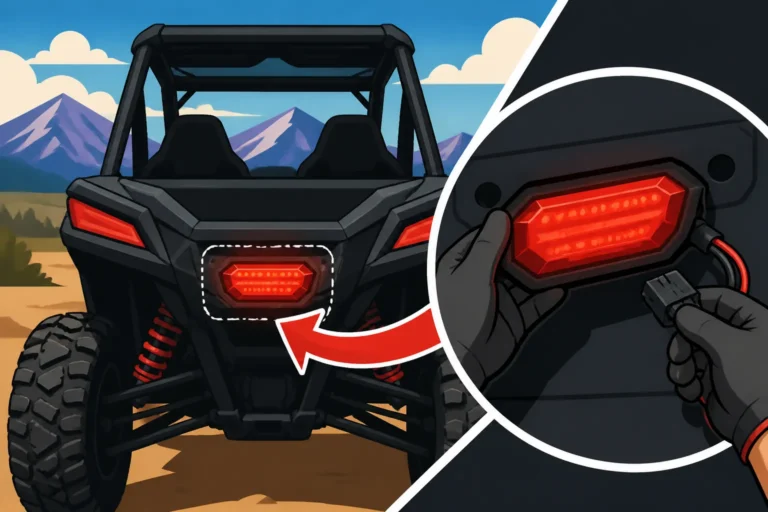
While an ORV permit is critical for the trails, riding on enrolled roads often brings additional gear requirements, even if your machine isn't a full-fledged MPV. At a minimum, you should ensure your machine has functioning headlights and taillights. Many enrolled roads may be ridden at dawn or dusk, or in conditions with reduced visibility, making good lighting essential. While Wyoming doesn't universally require turn signals or brake lights for ORVs on these routes, having them is always a smart choice for safety.
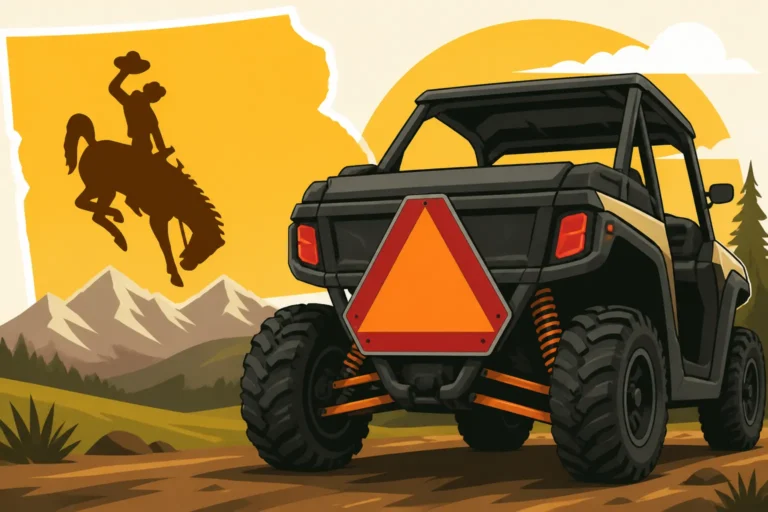
A rearview mirror is also a highly recommended addition, allowing you to monitor traffic behind you. If you're riding an MPV, these items are mandatory for road legality, including a horn, at least one left-side mirror, and a red rear reflector, in addition to headlights and taillights. You can find many aftermarket options to equip your machine properly; for instance, reputable brands like SuperATV offer a wide selection of mirrors and lighting kits that can help improve your visibility and adherence to potential requirements. Remember, the goal is to be seen and to see others.
Helmet Laws and Rider Conduct
Wyoming's helmet laws are specific and crucial, especially when sharing roads. All ORV operators and passengers under the age of 18 are required to wear a helmet when operating on public roads or enrolled trails. If you’re an adult rider (18 and over) operating an ORV on an enrolled road, a helmet is highly recommended, though not legally mandated by the state. However, on an MPV, helmets are required for anyone under 18, and for operators and passengers under 18 if the machine is registered as an MPV and operated on a public highway. The safest bet, regardless of age or machine type, is always to wear a helmet. [Wyoming Helmet Law for ATV Riders] is designed to protect you in case of an accident.
Beyond helmets, rider conduct is key. Always obey posted speed limits, which are often lower for ORVs than for other vehicles. Yield to larger vehicles and give them ample space. Signal your turns if your machine is equipped, or use clear hand signals. Avoid aggressive riding, excessive dust, or anything that might be perceived as reckless or disruptive. Remember, you are an ambassador for the entire riding community, and responsible behavior helps ensure continued access to these valuable routes.
Navigating Interstates and Crossing Highways
This is perhaps the trickiest part of connecting trails: what do you do when an interstate or a major highway stands between you and your destination? The rules here are very strict, and a wrong move can lead to severe penalties.
Interstate Rules: Generally Forbidden, With Key Exceptions
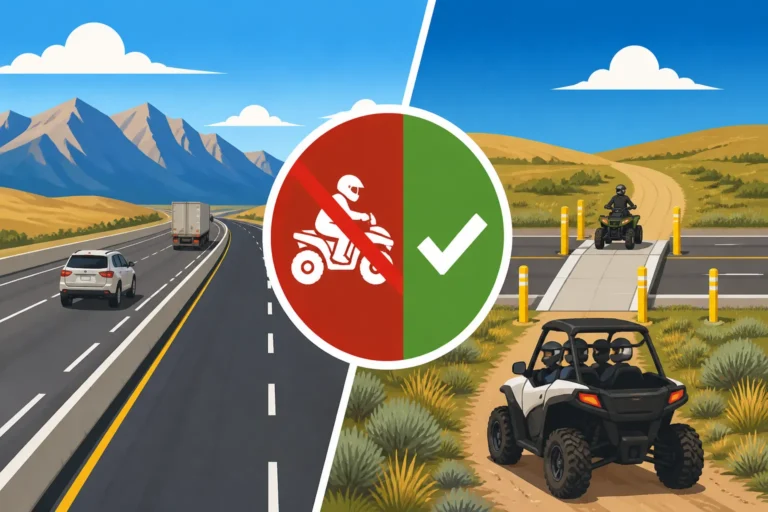
In Wyoming, riding an ORV on an interstate highway is generally prohibited. Interstates are high-speed, multi-lane thoroughfares not designed for off-road vehicles. However, recent legislation has introduced very specific, limited exceptions for crossing interstates. This change, which started around 2023, was primarily driven by local needs in communities like Evanston, which found itself cut off from crucial trail access by I-80.
These exceptions are not blanket permissions. They typically involve designated [Grade-Separated Interstate Crossings] or other approved crossing points where the ORV traffic flow is managed and separated from high-speed interstate traffic. It's crucial to understand that these are specific crossing points, not an invitation to ride parallel to the interstate or to use just any overpass or underpass. Always look for official signage and confirm with local authorities if you plan to use such a crossing. Ignoring these rules can put you and others in extreme danger.
How to Legally Cross a State Highway
Crossing a regular state highway (not an interstate) with an ORV is generally more straightforward, but still comes with rules. You are permitted to cross a highway, but you must do so safely and directly. This means riding at a right angle to the highway, not riding along the shoulder, and making sure you have clear sight lines in both directions before proceeding. You should stop completely before entering the highway, just as you would in a car, and then proceed cautiously when traffic allows.
For MPVs, the rules are similar to any other vehicle, provided the machine is fully titled, registered, and meets all road equipment requirements. For ORVs, this crossing is typically allowed only if you are directly accessing an enrolled road or trail on the other side. Always be aware of traffic, wear your helmet if required, and act defensively. Understanding [Wyoming Rules for Crossing a Highway] is vital for your safety and legal compliance.
Here’s a summary of considerations for road use:
| Scenario | ORV (with permit) | MPV (titled & plated) | Key Considerations | Brand Solutions |
|---|---|---|---|---|
| Enrolled Road Riding | Permitted | Permitted | Obey speed limits, yield to traffic, stay on surface | SuperATV for aftermarket mirrors, lights, horns |
| General Paved Roads | Generally NOT permitted | Permitted | All motor vehicle laws apply | SuperATV for full MPV conversion kits (lights, horn) |
| Crossing Highway | Permitted at right angle, safely, directly | Permitted as any vehicle | Yield to traffic, ensure clear sight lines | Ensure proper lighting for visibility (SuperATV) |
| Interstate Crossing | ONLY at designated, grade-separated points | ONLY at designated, grade-separated points | Very limited, highly regulated | N/A – no equipment helps with legal access here |
| Helmets | Mandatory for under 18 | Mandatory for under 18 | Highly recommended for all riders |
Riding in Wyoming is an incredible experience, but it requires diligent adherence to the rules, especially when you bridge the gap between trail and road. By understanding the distinctions between ORVs and MPVs, knowing how to identify and navigate enrolled roads, properly equipping your machine with help from brands like SuperATV for safety and compliance, and respecting highway crossing regulations, you can ensure your journey to the trailhead is as smooth and legal as the ride itself. Always plan your route, carry your [Wyoming's Annual ORV Permit], and ride safely!
Disclaimer
This article is for general informational purposes only and does not constitute professional advice. Laws, prices and regulations vary by location and change over time. Consult a qualified professional for guidance on your specific situation.