Wyoming Muffler and Spark Arrester Rules
There's nothing quite like the roar of your ATV or UTV echoing through Wyoming's vast landscapes, but that enjoyment comes with a critical responsibility: ensuring your machine meets the state's muffler and spark arrester rules. Many riders feel a real headache trying to decipher these regulations, wondering if their stock exhaust is enough, or if that cool aftermarket pipe they just bought will land them a ticket or, worse, cause a wildfire. This guide will cut through the confusion, explaining exactly what Wyoming expects from your off-road machine to keep you riding safely, legally, and without disturbing the peace or risking our beautiful natural resources.
Why Wyoming Cares So Much About Your Machine's Noise and Fire Safety
It might seem like just another bureaucratic hurdle, but Wyoming's rules regarding mufflers and spark arresters are in place for really important reasons. Our wide-open spaces are incredible, but they're also home to delicate ecosystems, abundant wildlife, and, critically, they're highly susceptible to wildfire. The regulations aren't there to spoil your fun; they're designed to protect the very environment you love to explore and ensure that everyone can enjoy it responsibly.
Protecting the Environment and Wildlife
Imagine riding through a pristine forest or along a quiet two-track and encountering someone whose machine sounds like a jet engine. Not only is it jarring for you, but it's incredibly disruptive to the local wildlife. Excessive noise can stress animals, drive them away from critical feeding or breeding grounds, and interfere with their natural behaviors. Think about the elk grazing peacefully in a meadow or the deer moving through the timber – a sudden, loud burst of engine noise can send them scattering, sometimes into danger. Wyoming has a deep respect for its natural inhabitants, and these rules help minimize the impact of human recreation on their habitat. It's about being a good neighbor to the critters who call these trails home, ensuring that your adventure doesn't come at their expense.
Minimizing Noise Pollution for Other Users and Residents
Our public lands are shared spaces, and while many of us love the thrill of off-road riding, others seek tranquility. Hikers, campers, horseback riders, and even residents living near popular trailheads deserve to enjoy the quiet of nature without constant, intrusive engine noise. When a machine is excessively loud, it creates a less enjoyable experience for everyone else and can even lead to conflicts between different user groups. Nobody wants to be the reason a trail gets closed down because of noise complaints. By adhering to muffler regulations, you're contributing to a more harmonious environment for all outdoor enthusiasts. It's about respecting the diverse ways people choose to experience Wyoming's wilderness, ensuring that your joy doesn't diminish theirs.
Preventing Wildfires: The Critical Role of Spark Arresters
This is perhaps the most crucial reason for spark arrester regulations, especially in a state like Wyoming, which experiences dry conditions and is prone to devastating wildfires. Your ATV or UTV's engine produces hot exhaust gases, and without a functioning spark arrester, tiny, incandescent carbon particles (sparks) can escape the exhaust system. When these hot sparks land on dry grass, leaves, or other flammable materials, they can ignite a fire almost instantly.
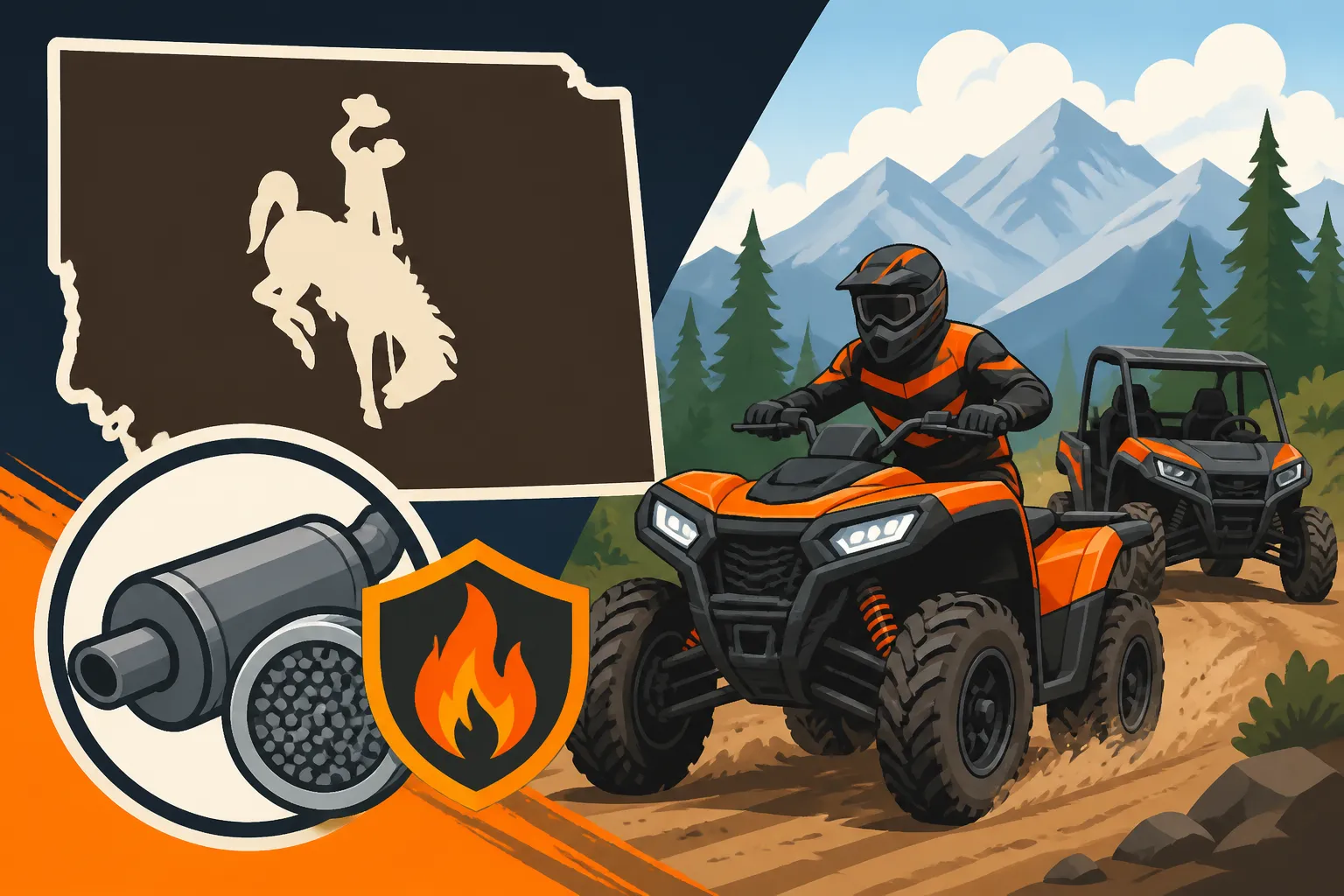
A spark arrester is a simple, yet incredibly effective device that prevents these dangerous particles from leaving the exhaust. It's essentially a screen or a series of baffles designed to capture or cool these sparks before they exit the muffler. In a state where a single spark can turn thousands of acres into ash, often threatening homes and livelihoods, having a properly installed and maintained spark arrester isn't just a rule—it's a critical safety measure. Every rider has a responsibility to prevent wildfires, and ensuring your spark arrester is compliant is a fundamental part of that. [Wyoming Spark Arrester and Sound Rules] are not just suggestions; they are vital for public safety and environmental protection.
Decoding Wyoming's Specific Rules for Mufflers and Spark Arresters
Navigating the exact letter of the law can sometimes feel like a puzzle. Wyoming's regulations are designed to be clear, but understanding what they mean for your specific machine is key. These rules apply broadly across various public lands, including those managed by the Forest Service and the Bureau of Land Management (BLM), which means compliance isn't just for designated ORV parks but for virtually anywhere you choose to ride.
Understanding Decibel Limits and Sound Testing
Wyoming, like many states, has specific decibel (dB) limits for off-road vehicles. While the exact numerical limits can sometimes vary slightly depending on the specific land management agency (e.g., Forest Service vs. BLM) or whether the measurement is a "stationary" or "drive-by" test, the general intent is clear: your machine should not be excessively loud.
Typically, most regulations aim for a sound level below 96 dB when measured at a specific distance and engine RPM. This isn't just about sounding "quiet"; it's about meeting a quantifiable standard that minimizes the impact on the environment and other users. A stock muffler on a modern ATV or UTV is usually designed to meet these requirements. However, if you've installed an aftermarket exhaust system, it's absolutely crucial to ensure it's still compliant. Some performance-oriented systems can push beyond these limits, potentially leading to citations. When purchasing aftermarket parts, like those you might find from companies such as SuperATV, always verify that they explicitly state compliance with federal and state noise regulations if you intend to ride on public lands. [Wyoming Sound Limits on Public Land] are enforced, so a quick check can save you a lot of grief.
The "Forest Service Approved" Spark Arrester Standard
This is a really important detail that often gets overlooked. For riding on most federal lands in Wyoming—which includes vast stretches of National Forests and BLM land—your machine must be equipped with a spark arrester that is "Forest Service Approved" (or "USDA Forest Service Approved"). This isn't just a generic term; it refers to a specific standard and testing protocol that ensures the arrester effectively traps sparks.
You'll usually find this approval stamped directly on the muffler or the spark arrester itself. It might say "USFS Approved" or "Spark Arrestor – Forest Service Approved" along with a model number or code. If your machine's muffler or exhaust system doesn't have this stamping, or if the spark arrester has been removed or modified, you are not compliant. This is particularly relevant for older machines, some racing setups, or if a previous owner did some modifications. Always confirm this stamping is present and legible before heading out. [A Forest Service Rated Arrester in Wyoming] is a must-have for safe and legal riding.
Legal Requirements for Road-Legal Multipurpose Vehicles (MPVs)
While most of this discussion focuses on traditional off-road use, it's worth noting that if you've registered your UTV or a qualifying ATV as a Multipurpose Vehicle (MPV) to ride on designated public roads in Wyoming, some of these rules still apply. An MPV must meet certain road-legal equipment standards, which include specific lighting, mirrors, and a horn. However, the underlying requirements for mufflers and spark arresters for the engine itself still generally adhere to the off-road standards for sound and fire prevention, especially if you plan to transition from an enrolled road segment back onto a designated trail.
Essentially, becoming street legal with an MPV registration doesn't give you a pass on sound or spark arrester rules. In fact, if anything, the expectation for compliant equipment might even be higher due to the proximity to other vehicles and residential areas. [Wyoming MPV Street Legal Requirements] are comprehensive, but fire and noise remain paramount.
How to Ensure Your ATV or UTV Meets Wyoming's Standards
It's one thing to know the rules, and another to make sure your machine actually follows them. Taking proactive steps can save you from potential fines, environmental damage, and the embarrassment of being turned away from a trailhead. A little preparation goes a long way in ensuring your rides are worry-free.
Regular Inspections and Maintenance Checks
The easiest way to stay compliant is through routine checks. Before every major ride, especially at the start of the riding season, give your exhaust system a good once-over.
- Spark Arrester: Locate your spark arrester. It's usually at the end of the exhaust pipe or inside the muffler. Look for the "USFS Approved" stamp. Visually inspect it. Is it clogged with carbon? Is it damaged or missing? Over time, spark arresters can accumulate carbon buildup, which reduces their effectiveness and can restrict engine performance. A clogged arrester needs to be cleaned or replaced. [Replacing a Clogged Spark Arrester] is a common maintenance task, and it's essential.
- Muffler Condition: Check the muffler itself for any cracks, holes, or loose components. Leaks in the exhaust system can significantly increase noise levels and might allow sparks to escape before reaching the arrester. Listen for any unusual sounds while the engine is running.
- Mounting Hardware: Ensure all mounting bolts and clamps are secure. Vibrations from riding can loosen parts, leading to rattles and potential leaks.
These simple checks take minutes but can prevent major problems down the trail.
Upgrading to Compliant Aftermarket Parts
Sometimes, a stock muffler might get damaged, or you might inherit a machine with an aftermarket exhaust that doesn't meet standards. This is where researching and choosing compliant aftermarket parts becomes crucial. There are many reputable manufacturers, like SuperATV, that produce exhaust systems and spark arresters specifically designed to meet or exceed Forest Service and state regulations.
When shopping for an aftermarket muffler or spark arrester:
- Look for USFS Approval: This is non-negotiable for federal lands. If it's not explicitly stated as USFS approved, assume it's not.
- Check Sound Ratings: Reputable manufacturers will often list the decibel rating of their exhaust systems. Compare this to Wyoming's limits.
- Read Reviews and Ask Questions: Don't be afraid to ask your dealer or the manufacturer for documentation proving compliance. Investing in a quality, compliant system is much cheaper than a citation or, worse, being responsible for a wildfire.
Remember, a "performance" exhaust doesn't automatically mean "non-compliant." Many performance systems are engineered to boost power while still adhering to sound and spark arrester rules. The key is verification.
What to Do if Your Machine is Too Loud or Lacks an Arrester
If, after your inspection, you discover your machine is non-compliant, don't ride it on public lands until you fix the issue.
- Too Loud: If your muffler is damaged or you suspect it's too loud, the best course of action is replacement. If you have an aftermarket system, check its specifications. You might need to install a baffle or a quieter insert, or replace the entire system with a compliant one. Many ATV/UTV shops can perform a simple sound test if you're unsure.
- Lacks a Spark Arrester: This is a major issue and must be addressed immediately. Many mufflers have integrated spark arresters, but some might require a separate insert. Consult your machine's manual or a local powersports dealer to find the correct, USFS-approved spark arrester for your make and model. Do not attempt to fabricate one yourself, as it must meet specific engineering standards to be effective.
Taking the time to address these issues is not just about avoiding trouble; it's about being a responsible rider and contributing to the sustainability of our riding areas.
The Real-World Impact of Non-Compliance: Fines and Trail Closures
Ignoring Wyoming's muffler and spark arrester rules isn't just about a potential slap on the wrist. There are tangible consequences that can affect your wallet, your access to trails, and the reputation of the entire off-road riding community. Enforcement officers, whether they're Forest Service rangers, BLM wardens, or state troopers, are trained to look for these issues.
The Cost of a Citation: Fines and Penalties
Getting caught riding a non-compliant machine in Wyoming can be an expensive lesson. Fines for operating an ORV without a proper spark arrester or with an excessively loud muffler can range significantly, but they are rarely cheap. These citations can often be in the hundreds of dollars, depending on the severity of the violation and whether it's a first offense or repeat. Plus, you might face additional charges if the officer deems your equipment a fire hazard or a public nuisance.
Consider the ripple effect: a fine often comes with a court appearance, which means lost time from work or travel expenses. It's a hassle that far outweighs the cost of maintaining or upgrading your exhaust system to meet regulations. Law enforcement officers are vigilant, especially during dry seasons when fire danger is high. Don't risk it. A simple trailside check by a warden could lead to a citation for [Wyoming Spark Arrester Requirement] or [Wyoming Sound Limits on Public Land].
When Non-Compliance Leads to Trail Closures or Restrictions
Beyond individual fines, widespread non-compliance can have a much larger, more detrimental effect on the riding community: the closure of trails and riding areas. Land management agencies and local communities are sensitive to noise complaints and wildfire risks. If certain areas consistently see riders with illegal exhaust systems or machines without spark arresters, it puts pressure on authorities to restrict access or even shut down trails permanently.
This isn't just hypothetical. It happens. When an area gets too many noise complaints, or if there's a history of human-caused fires linked to off-road activities, the public land managers often have little choice but to impose stricter rules or close sections to ORVs entirely. This impacts everyone, even the riders who are diligently following the rules. Protecting our access means being responsible collectively. By ensuring your machine is compliant, you're not just protecting yourself from a fine; you're helping to preserve riding opportunities for future generations. [Wyoming Fines for Riding a Closed Route] are a strong deterrent, but prevention is always better.
The Importance of Responsible Riding for Everyone
Ultimately, these rules boil down to responsible riding. It's about respecting the land, the wildlife, and your fellow outdoor enthusiasts. Wyoming's vast and beautiful backcountry offers incredible experiences, and we all want to keep it that way. Adhering to muffler and spark arrester regulations is a fundamental part of the bigger picture of responsible recreation.
When you ride with compliant equipment, you're setting an example, helping to mitigate environmental impact, and reducing the likelihood of conflicts or closures. It shows that the off-road community is serious about stewardship and safety. So, before you hit the trails, double-check that exhaust. A few minutes of prevention today can ensure years of amazing riding adventures tomorrow.
| Requirement | Description | How to Check |
|---|---|---|
| Muffler Noise | Must meet specific decibel limits, typically below 96 dB (measured at a specific RPM and distance). | Listen for excessive loudness, especially compared to stock machines. Check for exhaust leaks, cracks, or missing baffles. If aftermarket, verify its dB rating with manufacturer specs. |
| Spark Arrester | Must be "Forest Service Approved" (USFS Approved) to prevent hot carbon particles from escaping and starting fires. | Look for "USFS Approved" or "Spark Arrestor – Forest Service Approved" stamped on the muffler or arrester itself. Ensure it's not clogged with carbon, damaged, or missing. |
| Condition | Muffler and spark arrester should be in good working order, free from damage, and securely attached. | Visually inspect the entire exhaust system. Check for loose bolts, cracks, holes, or rust that could compromise integrity. |
| Modification | Any aftermarket exhaust or spark arrester must also meet federal and state compliance standards. | When buying aftermarket parts, specifically seek out those that are advertised as USFS approved and meet sound limits. Brands like SuperATV often offer compliant upgrade options. Avoid unapproved modifications. |
Disclaimer
This article is for general informational purposes only and does not constitute professional advice. Laws, prices and regulations vary by location and change over time. Consult a qualified professional for guidance on your specific situation.