Wyoming Rules for a Child Passenger
Riding the vast, beautiful landscapes of Wyoming on an ATV or UTV is an incredible experience for many families. However, when you want to bring children along, it's easy to get lost in a tangle of questions about what's legal, what's safe, and what rules actually apply. This guide will cut through that confusion, giving you a clear understanding of Wyoming's regulations for child passengers on off-road vehicles and offering practical advice to keep everyone safe.
Understanding Wyoming's Core Passenger Rules for Off-Road Vehicles
Navigating the rules for child passengers on ATVs and UTVs in Wyoming can feel a bit like trying to read a map with smudged ink. The state doesn't have a single, straightforward "no child under X age" rule that covers every situation. Instead, the regulations often depend on the type of machine you're operating, whether it's on a designated trail or a public road, and the age and licensing of the operator. This nuanced approach means you need to understand a few key distinctions to ensure you're compliant and, most importantly, keeping your young passengers safe. It's not just about what the law says you can do, but what good sense dictates you should do.
Age and Supervision on Designated Trails
When you're out on Wyoming's incredible network of designated trails, the primary focus for children is often on who is operating the machine rather than strictly who can be a passenger. Generally, Wyoming law allows children as young as 10 to operate an ORV on public lands and designated trails, provided they are under the direct supervision of a parent or guardian. This supervision is crucial, and it means the adult needs to be readily available to assist and monitor the child's riding.
However, when it comes to being a passenger, the rules are less about an explicit age minimum for the passenger themselves and more about the vehicle's design and the operator's capability. If a machine is designed to carry a passenger, and the operator meets the age and licensing requirements (which can vary, as discussed below), then a child may often ride along. The law places a strong emphasis on the safety and operational capacity of the machine and the rider in charge. You'll want to remember that [Wyoming Rules for a Rider Under 16 on a Trail] still apply, ensuring the operator is capable and responsible.
It's a common misconception that if a child can reach the footrests and hold on, they're good to go. While physical capability is important, the legal framework is more about the machine's design for passengers and the operator's adherence to those guidelines. On state and federal lands, authorities want to see that you're operating within the spirit of safety, which includes not overloading a vehicle or having passengers on a machine not built for them.
Machine-Specific Passenger Capacity
This is perhaps the most critical distinction when considering child passengers: is your machine designed to carry a passenger? This isn't just a suggestion; it's a fundamental safety and legal requirement.
ATVs (All-Terrain Vehicles): For most traditional, single-seat ATVs, the answer is a resounding "no." These machines are designed for one rider only. The rider's weight and movements are integral to controlling the ATV, and adding a passenger, especially a child, can severely compromise stability, steering, and braking. It can lead to rollovers, loss of control, and serious injury. Wyoming law, like most states, prohibits carrying passengers on ATVs not specifically designed for two people. If your ATV has a single saddle seat, it's a single-rider machine, no matter how small your child is. Trying to squeeze a child on the back of a single-seat ATV, even for a short, slow ride, is not only dangerous but also illegal. For more detailed information, consider checking out the [Wyoming Passenger Rules on an ATV].
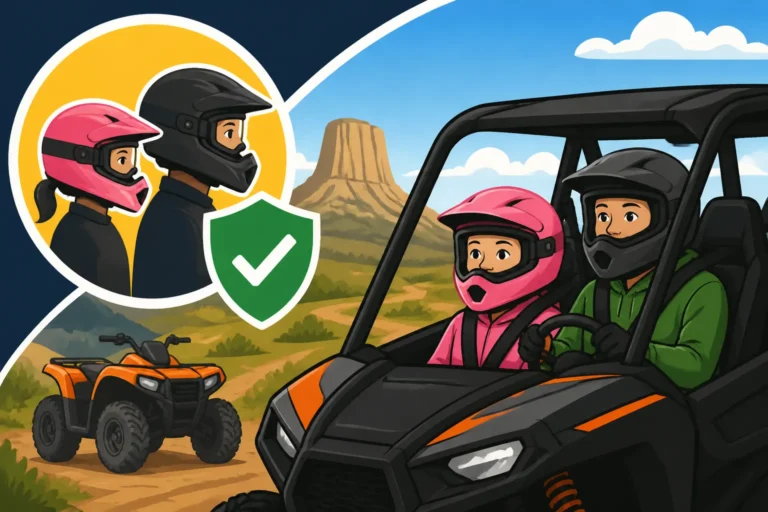
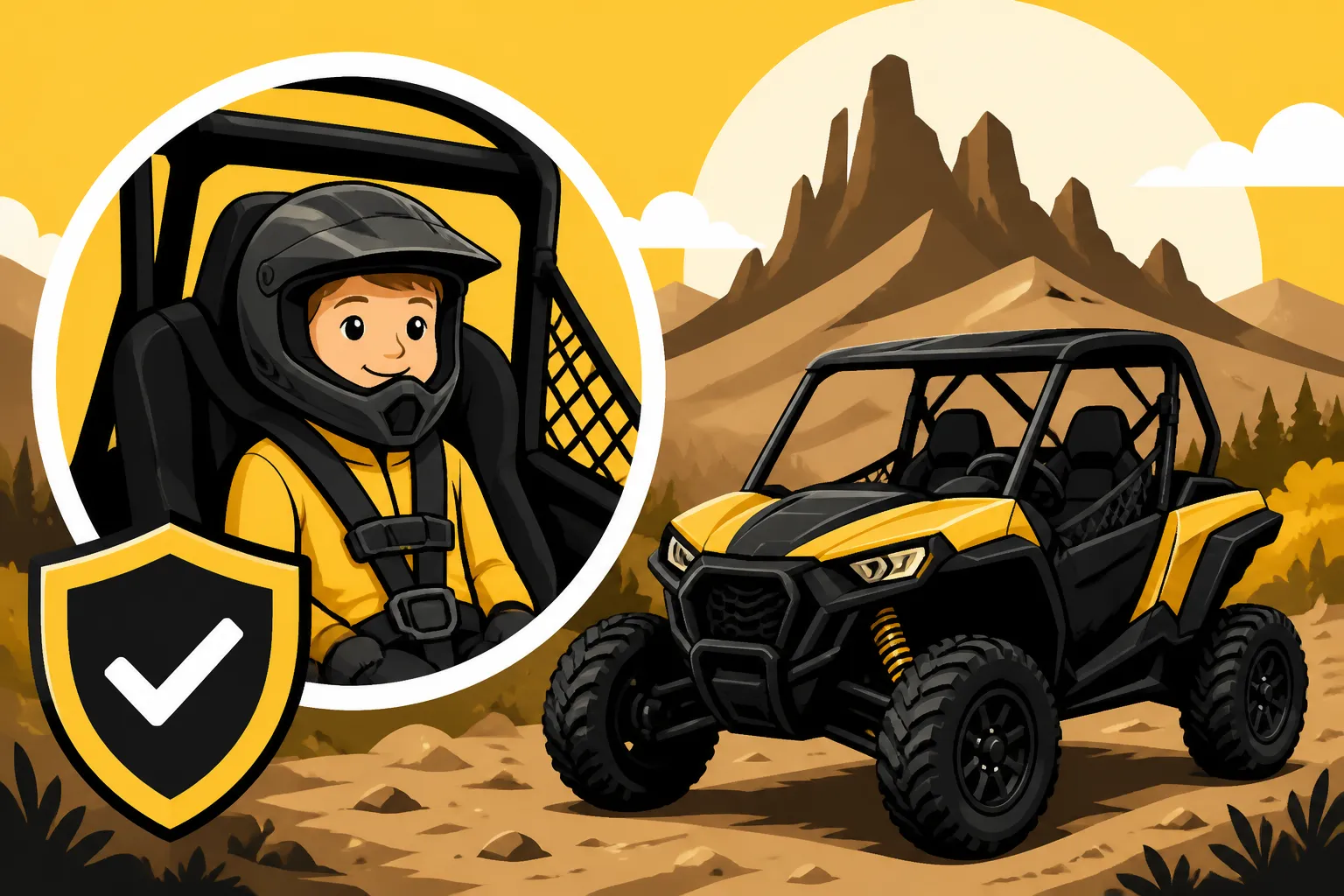
UTVs (Utility Terrain Vehicles) or Side-by-Sides: These machines are a different story. UTVs are designed with multiple seats, often bench-style or bucket seats, and come equipped with seatbelts, roll cages, and sometimes even doors. They are inherently built to carry passengers. If your UTV has designated seating for two, four, or even six people, then it is legally permissible to carry passengers, including children, up to its manufacturer-specified capacity. However, even with a UTV, you must ensure that each passenger has their own designated seat and is properly restrained with a seatbelt. Overloading a UTV is just as dangerous as putting a passenger on a single-seat ATV. Always consult your owner's manual for specific capacity limits and safety recommendations. This foundational rule is key to understanding Wyoming Rules for a Child Passenger.
Specific Rules for Child Passengers on Road-Legal MPVs
Wyoming offers a pathway for some off-road vehicles to become "street legal" by classifying them as Multipurpose Vehicles (MPVs). This opens up new avenues for riding, but it also brings a new set of rules, particularly concerning child passengers, that align more closely with traditional vehicle laws. If you're planning to take your machine on county roads or designated state routes, understanding the MPV designation is absolutely crucial.
The Multipurpose Vehicle (MPV) Distinction
A Multipurpose Vehicle (MPV) in Wyoming is essentially an ORV that has been modified and registered to meet specific criteria, allowing it to be driven on certain public roads. This isn't just a matter of slapping a license plate on your side-by-side; it involves a detailed inspection and ensuring your machine has all the necessary road-going equipment like headlights, taillights, brake lights, mirrors, and a horn. The MPV classification is defined by specific physical characteristics, such as weight, seat height, and tire pressure, as well as the requirement for a valid title and license plate.
Once your UTV or even a specific type of ATV (if it meets the stringent MPV criteria for weight and seat configuration) is registered as an MPV, it's no longer just an "off-road vehicle" in the eyes of the law when operating on enrolled roads. It's now a vehicle with responsibilities similar to a car or truck regarding passengers and safety. This distinction is vital because the rules governing child passengers on an MPV on a public road are generally stricter and more aligned with conventional motor vehicle laws than the more lenient rules for off-road trails. To dive deeper into what your machine needs, look into the [Wyoming MPV Street Legal Requirements].
Seatbelt and Age Requirements for MPV Passengers on Roads
When an MPV is being operated on an enrolled public road in Wyoming, the game changes for child passengers. Just like in a car, every occupant in an MPV must wear a seatbelt, regardless of age. This means if your side-by-side has three seats, and you have two adult passengers and a child, all three must be belted in. This is non-negotiable for road safety and compliance.
Furthermore, Wyoming's child restraint laws, which apply to all motor vehicles, extend to MPVs when they are being driven on public roads. These laws dictate specific car seat, booster seat, and seatbelt requirements based on a child's age, weight, and height. For example, infants and toddlers typically require a federally approved car seat, while older children may need a booster seat until they are tall enough for the vehicle's seatbelt to fit properly. This is where you might find yourself needing to install a child car seat in your side-by-side if you plan to use it as an MPV on the road with very young children. In addition to seatbelts, remember that [Wyoming Helmet Law for Passengers] still applies for all passengers under the age of 18 in an MPV, even on the road.
This means you need to be prepared to not only ensure your child is belted but also potentially meet specific child restraint standards. This is a significant difference from off-road trail riding, where car seat requirements are generally not enforced in the same way. It's also worth noting that the operator of an MPV on a road must hold a valid driver's license with the appropriate endorsement. You can learn more about this by researching [Wyoming Minimum Age to Ride a Road] and [Wyoming Driver's License Rules for ORVs].
Safety Considerations Beyond the Law for Young Riders
While understanding and adhering to Wyoming's laws for child passengers on ATVs and UTVs is absolutely essential, legal compliance is just the baseline. True safety goes far beyond simply checking off boxes on a government checklist. As a parent or guardian, you have a deeper responsibility to evaluate risks, equip your riders properly, and make informed decisions that prioritize the well-being of the children in your care. Sometimes, what's technically legal might not be the smartest or safest choice for a particular child or riding condition.
Essential Safety Gear for All Ages
No matter the legal requirement for helmets in a specific area or for a specific age, there's one piece of safety gear that should never be optional for any rider or passenger, especially a child: a properly fitted, DOT-approved helmet. A helmet is your child's first line of defense against head injuries, which can be devastating. Investing in a high-quality helmet that fits snugly and comfortably, without wobbling, is paramount. Brands like SuperATV often carry a range of helmets suitable for various riders, emphasizing safety alongside style. Make sure it's not too heavy for their neck and that the chin strap is always secured. For adults, too, a helmet is a smart choice, even if you’re over 18. This helps set a great example and ensures you’re protected. [Wyoming Helmet Law for ATV Riders] outlines the state's legal requirements, but remember, personal safety goes beyond minimums.
Beyond helmets, eye protection is crucial. Goggles or a full-face helmet visor protect against dust, debris, insects, and low-hanging branches. Long-sleeved shirts and pants, preferably durable denim or specialized riding gear, will guard against scrapes, scratches, and sun exposure. Sturdy over-the-ankle boots are also vital to protect feet from injury and provide good grip on footrests. Gloves can prevent blisters and improve grip. Dressing in layers is always a good idea in Wyoming's unpredictable climate, ensuring comfort in varying temperatures.
Rider Readiness and Terrain Awareness
Just because a child meets the age requirement or your UTV has enough seats doesn't mean every ride is suitable for them. A child's maturity, attention span, and physical development play a huge role in their safety as a passenger. Can they hold on securely for the entire ride? Do they understand and follow instructions? Are they prone to fidgeting or getting distracted? These are important questions to ask before heading out. The younger the child, the more crucial these considerations become.
Furthermore, consider the terrain. A smooth, flat gravel road is vastly different from a rocky, rutted, or steep trail. What might be an enjoyable, easy ride for adults could be jarring, frightening, or even dangerous for a small child. Avoid overly technical or challenging terrain when you have young passengers. Even with robust roll cages and upgraded suspension from companies like SuperATV, knowing the limits of your machine and your passengers is crucial. Starting with easy, predictable trails and gradually increasing difficulty as the child gains experience and comfort is a wise approach. If a child seems uncomfortable or scared, it's time to stop and reassess, perhaps choosing a different, calmer route or postponing the ride for another day. This awareness ties back to the broader Wyoming Rules for a Child Passenger.
Communication and Supervision
Effective communication is the cornerstone of safe riding with child passengers. Before you even start the engine, talk to your child about what to expect. Explain the importance of keeping their hands inside the vehicle, staying seated, and holding on. Establish clear signals for "slow down," "stop," or "I need a break." Check in with them regularly during the ride, especially on longer excursions, to make sure they're comfortable, not too hot or cold, and not getting fatigued.
Constant, vigilant supervision is also non-negotiable. As the operator, you are responsible for everyone on your machine. This means always being aware of your surroundings, driving defensively, and making conservative choices. Never push your limits or take unnecessary risks when children are onboard. Remember, children often learn by example. Your adherence to safety rules, your careful operation of the vehicle, and your respectful interaction with other riders and the environment will teach them valuable lessons about responsible off-road recreation. Regularly reviewing safety procedures and having quick access to a first-aid kit are also vital parts of this supervision.
Common Misconceptions and Practical Advice
When it comes to riding ATVs and UTVs in Wyoming, particularly with children, there are a few common misunderstandings that can trip up even the most well-intentioned riders. Dispelling these myths and offering some practical, real-world advice can help ensure your family's adventures are both enjoyable and compliant with the Cowboy State's unique regulations.
"No Reciprocity" for Passenger Rules
This is a big one. Just as Wyoming does not honor out-of-state ORV registrations or decals, it also does not grant reciprocity for other states' rules regarding child passengers. What might be legal for a child passenger in Colorado, Montana, or Utah might not be legal or appropriate in Wyoming. The moment you cross the state line into Wyoming, you are subject to Wyoming's laws and regulations for off-road vehicles and their occupants. This includes all aspects of operation, safety gear, and passenger rules, regardless of where your machine is registered or where you call home.
This means you can't rely on the "way we do it back home." Before planning a trip, especially with young children, it is imperative to research Wyoming's specific requirements. This applies to everything from helmet laws to passenger age limits (where applicable) to machine capacity. Don't assume. Always verify. This concept is thoroughly explained when discussing [Wyoming ORV Reciprocity Rules] and is a crucial mindset for any visiting rider.
Private Land vs. Public Land
Another frequent source of confusion is the distinction between riding on private land and public land (such as National Forests, BLM land, or State Parks). While private landowners have the right to set their own rules for their property, state laws pertaining to vehicle operation, safety equipment, and passenger restraints often still apply, particularly in cases of accidents or liability. For instance, even if a rancher gives you permission to ride on their property without helmets, if a child under 18 sustains a head injury and wasn't wearing one, Wyoming's helmet law may still be a factor in any legal proceedings.
On public lands, the rules are clear and strictly enforced. Federal and state agencies work to ensure consistency across designated trails and roads. Always assume that all Wyoming state laws and federal land agency regulations (like those of the Forest Service or BLM) apply universally on public land. Even if a private landowner allows practices that bend the rules, it's always safest to adhere to state regulations, especially when it comes to children. This approach protects your family and respects the broader safety framework.
What a Warden Checks
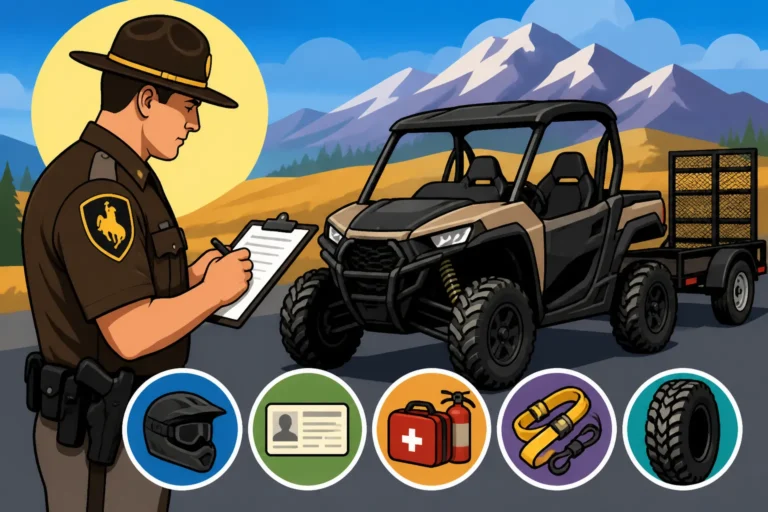
If you're riding on public land in Wyoming, there's a good chance you'll encounter a game warden, Forest Service officer, or BLM ranger at some point. These officials are tasked with ensuring compliance with all ORV regulations, and they are usually quite thorough. When they stop you, they're not just looking for a valid permit or decal; they're also checking several other key areas, especially when children are present. You can gain more insight into this by reading [What a Warden Checks at a Trailhead].
Here's what they will typically check:
- ORV Permit/Decal: Is your machine properly registered with a current Wyoming ORV permit decal?
- Operator Age and License: Is the driver of the machine of legal age, and do they have the appropriate license or endorsement if on a public road?
- Machine Capacity: If you're on an ATV, are you riding solo? If on a UTV, are you within the manufacturer's passenger limits?
- Child Restraints: If on an MPV on a public road, are all children properly secured in seatbelts and any required child safety seats?
- Helmet Use: Are all riders and passengers under the age of 18 wearing DOT-approved helmets? For MPVs on roads, even if over 18, a helmet is highly recommended and often a good idea for additional safety.
- Spark Arrester/Muffler: Is your machine equipped with a spark arrester and a functioning muffler to prevent fires and excessive noise?
Being prepared for these checks means you can enjoy your ride without worrying about citations or interruptions. It's about demonstrating a commitment to safety and responsible recreation, which wardens appreciate.
Summary of Child Passenger Rules in Wyoming
Here's a quick overview of the key considerations for child passengers in Wyoming:
| Feature/Area | Traditional Single-Seat ATV (Off-Road) | Multi-Seat UTV (Off-Road) | MPV (Street-Legal UTV on Enrolled Roads) |
|---|---|---|---|
| Passenger Legality | Illegal for any passenger. Designed for one rider only. | Legal, up to manufacturer's capacity. Each passenger must have a designated seat. | Legal, up to manufacturer's capacity. Each passenger must have a designated seat. |
| Operator Age | 10+ with direct supervision (public land); 16+ on roads if MPV eligible. | 10+ with direct supervision (public land); 16+ on roads if MPV eligible. | 16+ with valid driver's license (or 15 with learner's permit and licensed driver supervision). |
| Helmet Requirement | Mandatory for operators & passengers under 18. Strongly recommended for all. | Mandatory for operators & passengers under 18. Strongly recommended for all. | Mandatory for operators & passengers under 18. Strongly recommended for all. |
| Seatbelt Requirement | N/A (single-rider machine). | Recommended, if available. | Mandatory for all occupants, regardless of age. Wyoming child restraint laws apply. |
| Child Restraint Seats | N/A | Not typically required, but use good judgment for very young children. | Mandatory for children meeting specific age/weight/height criteria (as per Wyo. state law). |
| Examples of Machines | Most sport ATVs, utility quads. | Polaris RZR, Can-Am Maverick, Kawasaki Teryx, Yamaha Wolverine. | MPV-registered Polaris Ranger, Can-Am Defender, etc. |
This table provides a generalized guide. Always consult the specific laws and regulations, as well as your vehicle's owner's manual, for the most accurate and up-to-date information.
Riding in Wyoming with your family can create some of the most cherished memories, but it comes with a responsibility to know and follow the rules, especially when it comes to the safety of your youngest passengers. By understanding the distinctions between machine types, operating environments, and the specific requirements for seatbelts and helmets, you can ensure that your adventures are not only thrilling but also safe and fully compliant. Always prioritize safety over convenience, and when in doubt, err on the side of caution.
Disclaimer
This article is for general informational purposes only and does not constitute professional advice. Laws, prices and regulations vary by location and change over time. Consult a qualified professional for guidance on your specific situation.