Sight Distance Before a Crossing
One of the most heart-stopping moments for any off-road enthusiast in Wyoming, whether you're on an ATV, UTV, or dirt bike, can be approaching a road crossing. You're cruising along a beautiful, dusty trail, enjoying the freedom of the open range or the quiet of the forest, and suddenly, you see a paved or gravel road ahead. The challenge isn't just knowing the rules for [Wyoming Rules for Crossing a Highway]; it's the incredibly real and often overlooked danger of limited sight distance. This guide is here to walk you through exactly why sight distance is such a big deal when you're preparing to cross a road in Wyoming and what you can do to keep yourself and your riding buddies safe.
Understanding Wyoming's Crossing Rules and the Need for Clear Vision
Crossing any public road, even those designated for off-road vehicles, introduces a level of risk that requires your absolute best judgment and caution. Wyoming has its own set of guidelines for where and how you can operate your machine, and while some roads are [Wyoming's Designated ORV Roads], actually crossing a major highway or busy county road is a different beast entirely.
Why Sight Distance is Paramount
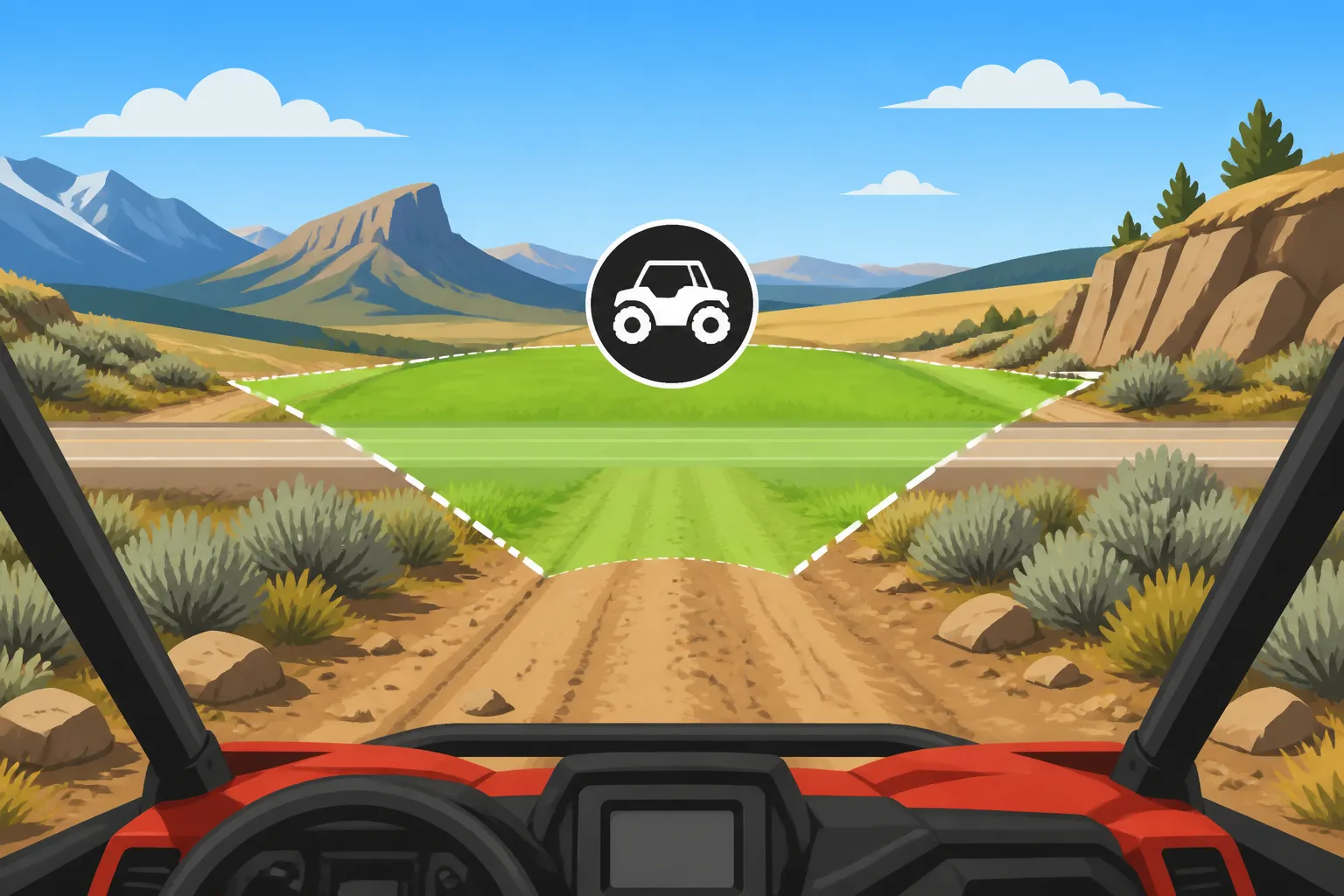
Imagine this: You're in a side-by-side, maybe a rig you've customized with some SuperATV accessories, rolling up to a two-lane county road. The sun is shining, but a small rise in the terrain or a clump of sagebrush obscures your view down the road. You can't see what's coming, and more importantly, drivers on that road might not be able to see you. This isn't just an inconvenience; it's a recipe for disaster.
Road traffic, especially on highways like US-191 or state routes, moves at much higher speeds than you're likely traveling on the trail. A car or truck traveling at 60 or 70 mph covers a huge amount of ground in a very short time. Your off-road machine, while powerful, isn't built for quick acceleration onto a busy road or immediate braking once you're halfway across. If you don't have enough sight distance, you don't have enough time to react, and neither does the oncoming driver. It's a fundamental physics problem, and the off-road vehicle often comes out on the losing end. Validating this frustration, many riders have shared stories of near-misses simply because they couldn't see what was coming around a bend until it was too late. It’s why proper [Wyoming Lighting Requirements for ORVs] are so vital, not just for night riding, but for day visibility too.
The Role of Enrolled Roads and Crossings
Wyoming has put a lot of effort into creating a system of [Wyoming's Enrolled Roads and Trails] where ORVs are permitted. These are often marked, and you'll find them on travel management maps from the Forest Service or BLM. However, even on these enrolled routes, you'll frequently encounter situations where an ORV trail needs to cross a different class of road, or even a highway, to continue on its path.
A classic example is when you're riding a fantastic trail system in the Bighorn Mountains or the Medicine Bow National Forest, and suddenly you hit a section where the trail either dead-ends at a paved road or requires you to cross it to pick up another segment. These crossings are rarely marked with traffic lights or stop signs specifically for ORVs. They're often just a "yield" situation for you. Even major interstates like I-80 and I-25 have specific, very limited, and carefully planned crossing points, like those detailed in [Wyoming Rules for Crossing an Interstate]. These aren't casual decisions; they are carefully orchestrated to minimize risk. But for the vast majority of county roads, forest roads, and state highways, the onus is entirely on the rider to ensure a safe crossing.
Factors Affecting Sight Distance for Off-Road Riders
When you're out on the trails, your focus is often on the immediate terrain – rocks, ruts, mud, or sand. But when a road crossing approaches, you need to shift your focus to a wider view, anticipating potential hazards from every direction. Many things can conspire to reduce your sight distance, making a crossing much more dangerous.
Natural Obstacles and Terrain
Wyoming's stunning landscapes are also its biggest challenge when it comes to visibility. Imagine you're riding through rolling hills of sagebrush in the Red Desert or a dense pine forest in the Snowy Range.
- Hills and Bends: Approaching a road at the crest of a hill or around a blind corner is incredibly risky. You can't see oncoming traffic, and they can't see you until the very last second. This is especially true on two-track roads that might merge onto a paved surface with no clear line of sight.
- Vegetation: Dense stands of trees, tall prairie grass, or even thick sagebrush can completely block your view of an approaching vehicle. This is a common issue in rural areas where roads aren't always cleared wide enough to offer good sightlines. What looks like a clear path often isn't, especially from the lower perspective of an ATV or UTV. A SuperATV lift kit might give you a bit more height, but it's rarely enough to overcome truly dense foliage.
- Weather Conditions: Fog, heavy rain, snow, or even a dust storm can dramatically reduce visibility for both you and road traffic. In these conditions, what was once a clear crossing becomes incredibly hazardous. Always assess the weather before deciding to cross a busy road.
- Seasonal Changes: Vegetation that's sparse in spring might be dense and tall in mid-summer. Snowbanks in winter can create virtual walls, making it impossible to see or be seen, even on roads that are usually clear. [Riding Snow-Covered Roads in November] brings its own set of unique visibility challenges.
Man-Made Obstacles
It's not just nature working against you; human development also plays a role in limiting sight distance.
- Buildings and Structures: Barns, houses, businesses, or even small outbuildings located near a road intersection can completely block your view of traffic. This is particularly prevalent in small towns or agricultural areas where roads crisscross private property.
- Fences and Guardrails: While often necessary for safety or property delineation, fences, especially solid wooden ones, or long stretches of guardrail can create visual barriers. You might have to creep your machine forward, risking your front tires on the pavement, just to get a glimpse of the road.
- Parked Vehicles or Equipment: A large semi-truck, an RV, or farm equipment parked near a crossing can create a temporary but dangerous blind spot. This is one of those unexpected hazards that you need to be constantly scanning for as you approach any road.
- Road Furniture: Large road signs, utility poles, or even large culvert markers can obscure a small segment of the road, potentially hiding an oncoming motorcycle or smaller vehicle.
Vehicle Characteristics
Believe it or not, your own machine can also contribute to poor sight distance.
- Seating Position: On many ATVs and UTVs, you sit relatively low to the ground compared to a car or truck driver. This low vantage point means that small rises or obstacles that wouldn't affect a truck driver's view can completely block yours. You're effectively seeing the world from a lower perspective, which shortens your line of sight over terrain.
- Machine Size and Type: While a side-by-side offers a more stable platform than an ATV, its wider stance means you might need to commit more of the machine to the edge of the road to get a clear view, increasing your exposure time. Conversely, a dirt bike rider has a higher seating position but is also more vulnerable in a collision.
- Aftermarket Modifications: While many modifications enhance performance or utility (like those from SuperATV), some can inadvertently affect visibility. For instance, overly tall cargo racks or custom roofs might slightly impede your upward or peripheral vision, though this is usually less of an issue than natural terrain.
Practical Strategies for Safe Road Crossings
Given all the potential hazards, crossing a road on your ORV demands a methodical and disciplined approach. You can't just barrel across; you need a strategy.
The "Stop, Look, Listen" Method (and Beyond)
You've probably heard "Stop, Look, Listen" since you were a child crossing the street. For ORV riders in Wyoming, it's not just a suggestion; it's a lifeline, and you need to take it to the next level.
- Stop Completely: Don't just slow down; come to a full, absolute stop before the road. Do not let your tires touch the pavement or gravel of the main road until you are absolutely sure it's safe.
- Look Aggressively: Don't just glance. Turn your head, left, then right, then left again. Scan for anything approaching – not just cars, but motorcycles, bicycles, pedestrians, and even slow-moving farm equipment. Look for dust plumes in the distance on gravel roads, or listen for the faint hum of a diesel engine. Pay attention to the speed of approaching vehicles; what looks distant can be upon you in seconds.
- Listen Intently: Kill your engine if you're alone, or at least put it in neutral and let it idle quietly. Take off your helmet (if safe to do so) or lift your visor. Listen for the sound of engines, tires on pavement, or even horns. Sound can often travel further than sight, especially around blind corners or over hills.
- Wait: If there's any doubt, wait. It's always better to lose a few minutes waiting for traffic to clear than to risk a collision. This isn't a race; it's about getting home safely.
Positioning Your Machine for Optimal View
Where you stop your machine is crucial for maximizing your sight distance.
- Edge of the Road, Not On It: Pull your machine as close to the edge of the road as safely possible without entering the flow of traffic. This allows you to get the widest possible view down the road in both directions without exposing your vehicle to oncoming cars.
- Angle for Visibility: Sometimes, angling your machine slightly can give you a better line of sight, especially if there's a dip or rise. However, be careful not to angle it so much that you're presenting a wider profile to traffic.
- Clear Line of Sight: If a specific bush or fence post is blocking your view, see if you can safely adjust your position a few feet in either direction to get a clearer line. Often, a small shift makes a big difference.
Enhancing Your Visibility to Others
It's not just about what you can see; it's also about making sure others can see you.
- Wear Bright Colors: Fluorescent yellow, orange, or bright green riding gear stands out dramatically, especially against natural backgrounds. Avoid camouflage or dark colors when operating near roads.
- Use Your Headlights and Taillights: Even in broad daylight, turn on your headlights. The distinct light can catch a driver's eye much sooner than your vehicle's profile alone. Make sure your [Wyoming Lighting Requirements for ORVs] are met and functioning.
- Consider a Flag: For dune riding or areas with highly variable terrain, a tall, brightly colored safety flag (like those often used at Killpecker Sand Dunes) can make you visible over obstacles before your machine itself is.
- Be Predictable: When you do decide to cross, do so decisively and in a straight line. Hesitating or weaving makes you unpredictable to oncoming drivers.
Group Riding Considerations
Riding with a group adds another layer of complexity to road crossings. Clear communication is key for [Wyoming Rules for a Group Ride].
- Designate a Leader: The lead rider should be responsible for assessing the crossing and signaling when it's clear and safe to proceed.
- Single File Crossing: Have the group cross one machine at a time, allowing each rider to focus on their own safe passage. Don't rush or try to cross two abreast.
- Hand Signals and Radios: Use clear, agreed-upon hand signals (or two-way radios if your group has them) to communicate "stop," "clear left," "clear right," and "go."
- Maintain Spacing: Leave enough space between machines during the crossing so that if one rider encounters an issue, the next isn't immediately exposed.
What to Do When Sight Distance is Poor
Sometimes, no matter how much you stop, look, and listen, the sight distance is just plain awful. It's frustrating, especially when you're keen to keep riding. But this is where judgment and prioritizing safety above all else comes in.
When to Seek an Alternative Route
This is the hardest pill to swallow for many riders, but if you truly cannot get a clear, safe line of sight, turn around or find another way. Seriously. There are thousands of miles of trails and roads in Wyoming, and no single section is worth risking your life over. Check your map – often, there's another trail, a designated ORV road nearby, or a less-trafficked crossing point further down the line. It might add a few miles or an extra hour to your ride, but it's a small price to pay for safety. Don't be afraid to pull out your MVUM (Motor Vehicle Use Map) to find [Wyoming's Enrolled Roads and Trails] that might bypass the hazardous crossing.
Utilizing Spotters
If you're riding with a group and face a particularly tricky crossing with severely limited visibility, a spotter can be your best asset.
- Position the Spotter: Have one rider dismount and walk to a point where they have a clear view of traffic in both directions. They should stand in a safe, visible location, preferably with bright gear.
- Clear Signals: Establish clear hand signals or radio communication between the spotter and the lead rider. "All clear," "stop," "vehicle left," "vehicle right."
- Controlled Crossing: The spotter signals when it's truly safe for one machine at a time to cross. The spotter remains in position until the entire group has made it across safely. This is a common practice on [Wyoming Rules for a Group Ride] and can be invaluable.
Communication with Other Riders
Beyond using a spotter, general communication within a group is essential, especially at crossings.
- Verbal Cues: Call out "Road ahead!" or "Crossing!" well in advance so everyone can prepare.
- Point Out Hazards: If you spot a specific obstruction to sight distance (e.g., "Tall sagebrush on the left!"), point it out to others in the group.
- Be Patient: Ensure everyone in the group has had their turn to safely assess and cross. Never pressure a fellow rider to cross before they are comfortable.
Remember, the goal is always to have a fun, safe ride. Taking an extra minute or two at a road crossing isn't just about following rules; it's about personal responsibility and looking out for your fellow riders.
Safe Crossing Practices: A Quick Reference
To help you keep these critical safety points in mind, here’s a quick summary of what to do and what to avoid when you approach a road crossing in Wyoming.
| Safe Crossing Practices | Risky Behaviors to Avoid |
|---|---|
| Stop Completely before the road's edge. | Rolling slowly onto the road without a full stop. |
| Turn your head 180 degrees, left-right-left. | Only glancing quickly or relying on peripheral vision. |
| Listen intently, engine off or idling quietly. | Keeping your engine revving or relying solely on sight. |
| Wait for a clear, substantial gap in traffic. | Rushing a crossing or trying to beat oncoming vehicles. |
| Position machine at the edge for max visibility. | Allowing tires to touch the road or blocking the shoulder. |
| Use headlights and wear bright clothing. | Relying on your machine's natural visibility (which is low). |
| Use a spotter for blind crossings in groups. | Crossing blind, hoping for the best, or no group communication. |
| Seek alternative routes if visibility is unsafe. | Insisting on crossing a clearly dangerous intersection. |
| Cross decisively and in a straight line. | Hesitating mid-crossing or weaving on the road. |
| Communicate clearly within your group. | Assuming others see the same hazards or know your intentions. |
Crossing roads on your off-road machine in Wyoming is often a necessary part of exploring this incredible state. But it's also one of the riskiest maneuvers you'll perform. By understanding the factors that limit your sight distance and diligently applying these safety strategies, you can dramatically reduce your risk and ensure that your riding adventures remain thrilling for all the right reasons. Always ride smart, stay alert, and prioritize safety above all else.
Disclaimer
This article is for general informational purposes only and does not constitute professional advice. Laws, prices and regulations vary by location and change over time. Consult a qualified professional for guidance on your specific situation.