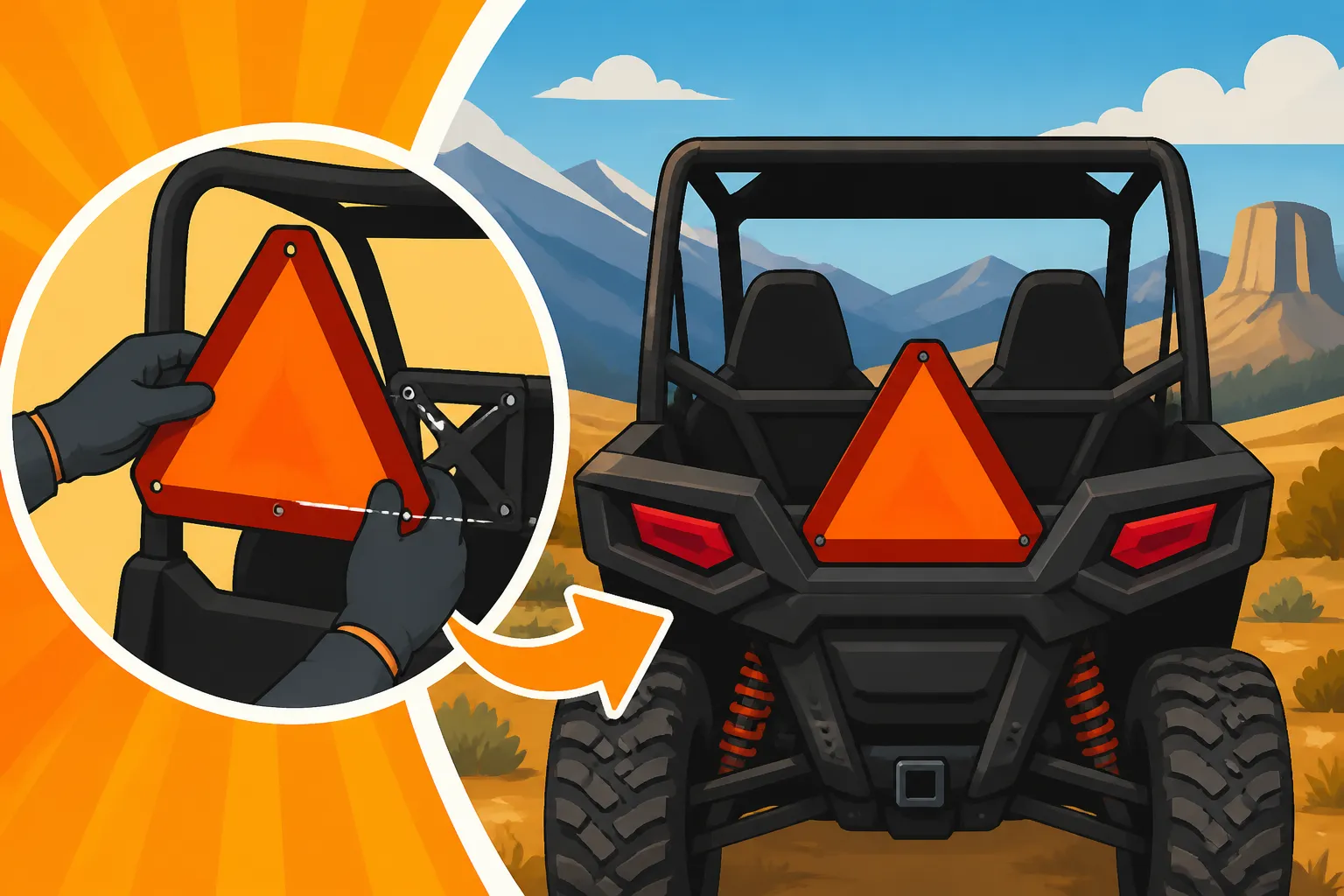
Mounting the Orange Triangle on the Back
Navigating the rules for riding your ATV or UTV on Wyoming's roads can feel like a maze, and one small, bright piece of equipment often causes confusion: the orange triangle. You might see it on farm equipment, but does your side-by-side really need it? This guide is here to untangle the mystery, explaining exactly why, when, and how you should mount that crucial slow-moving vehicle (SMV) emblem on the back of your machine to stay safe and legal on the Cowboy State's public thoroughfares.
Understanding Wyoming's Slow-Moving Vehicle Emblem Requirement
It's easy to dismiss what seems like a small detail, but that bright orange triangle is a critical piece of safety equipment, especially when your off-road machine ventures onto paved or gravel roads in Wyoming. This isn't just a suggestion; it's a specific requirement rooted in highway safety.
Why the Orange Triangle?
Imagine you're driving your truck down a winding county road, and ahead of you is a large piece of farm equipment or, increasingly often, a side-by-side that's licensed for road use. The difference in speed can be significant. That's where the orange triangle comes into play. Its primary purpose is to act as an immediate, universal visual cue to drivers approaching from the rear. It screams, "Hey, I'm going slower than you might expect, so be prepared to slow down or pass carefully!"
This emblem isn't just about indicating slowness; it's about preventing dangerous rear-end collisions. On roads where traffic can flow at 55 mph or more, a vehicle traveling at 25 mph or less poses a serious hazard if its speed isn't clearly communicated. The fluorescent orange makes it highly visible in daylight, while the reflective red border ensures it stands out when headlights hit it after dusk. It’s a simple, yet incredibly effective, safety device that has been proven to reduce accidents involving slower vehicles. Without it, you're essentially gambling with your safety and the safety of others every time your machine hits a public road where speeds differ.
What is a Slow-Moving Vehicle?
In Wyoming, and generally across the country, a slow-moving vehicle (SMV) is officially defined as any vehicle designed to operate at speeds of 25 miles per hour or less. This definition isn't just for classic farm tractors puttering down a field road; it extends to a variety of machinery, including your beloved ATV or UTV, especially when it's operating on public roadways. While your side-by-side might be capable of hitting much higher speeds, many riders often travel at lower speeds on public roads, particularly if they're just connecting between trails or cruising through a small town. When your machine is operating below that 25 mph threshold on a public road, regardless of its maximum capability, it's considered an SMV and needs that emblem.
This rule exists because the human eye and brain are accustomed to judging distances and speeds based on typical road traffic. When an unexpected slow vehicle appears, it can take precious seconds for a following driver to register the speed difference and react appropriately. The SMV emblem cuts through that potential confusion, providing an instant visual warning. It's not about shaming your machine for being slow; it's about ensuring everyone sharing the road has the information they need to drive safely. You can find more specific details on what Wyoming considers a slow machine on the road in resources like [Wyoming Rules for a Slow Machine on a Road].
When Your Machine Needs the SMV Emblem in Wyoming
It's common for riders to think their ATV or UTV is purely an off-road machine, and for much of its life, that's true. However, Wyoming offers a fantastic pathway for many of these machines to become street-legal through its Multipurpose Vehicle (MPV) classification. When you go down that path, the rules of the road—including the SMV emblem—suddenly become very relevant.
The MPV Connection to Road Use
The orange triangle isn't typically something you need when you're tearing up a designated trail in the Medicine Bow-Routt National Forest or exploring the vast expanse of BLM lands. It's specifically tied to operating your machine on public roadways. In Wyoming, many ATVs and UTVs can qualify as Multipurpose Vehicles (MPVs) if they meet certain criteria like weight, seat height, and equipage with lights, mirrors, and a horn. Once your machine is registered and titled as an MPV, and you've got your county plate, you're officially cleared to ride on many public roads. This is where the SMV emblem becomes non-negotiable.
When your MPV is on any public road—be it a county road, a state highway where permitted, or a designated ORV route—and it's traveling at a speed of 25 mph or less, the law requires you to display that emblem. Even if your side-by-side has plenty of horsepower and can easily exceed 25 mph, the potential for it to travel slower than regular traffic means the emblem is still a requirement for safety and legal compliance. Think of it as a universal caution sign for other drivers. It's part of the comprehensive effort to safely integrate these versatile machines into the broader road network. For a full rundown on making your machine street-legal, check out [Wyoming's MPV Path to the Road].
Specific Road Types and Scenarios
The beauty of having an MPV in Wyoming is the expanded access to a vast network of roads. This access, however, comes with responsibilities, one of the most visible being the SMV emblem. Whether you're riding a county road to get from your campsite to a trailhead, crossing a state highway to access another section of forest, or simply cruising through a small town on a designated route, if your machine is moving slowly, that orange triangle needs to be prominently displayed.
Consider these common scenarios:
- Connecting Trails: Many riders use county roads to link up different segments of trails. These roads often have speed limits of 45 mph or higher, meaning your MPV, even if it's capable of 40 mph, will still be a slower vehicle relative to most traffic.
- Crossing Highways: In certain areas, you might need to cross a state highway to continue your adventure. While these crossings are often quick, they expose you to high-speed traffic, making the SMV emblem critical for visibility. Detailed rules for these maneuvers can be found in [Wyoming Rules for Crossing a Highway].
- Local Cruising: Some towns in Wyoming have "enrolled" roads or specific city ordinances that allow MPVs. Even on these typically lower-speed roads, if your MPV is moving at 25 mph or under, the emblem is a must. [Wyoming Rules for Riding a County Road] further explain permissible road types.
The bottom line is that if your MPV is on any public thoroughfare in Wyoming where it might encounter faster-moving vehicles, and it's operating under 25 mph, the SMV emblem is legally required. This rule is designed for everyone's safety. Many riders find that a well-placed, high-quality emblem is a small price to pay for that peace of mind. For those looking for robust and reliable mounting solutions for these emblems, it's worth noting that SuperATV offers a range of accessories that can help riders comply easily and effectively, ensuring their emblem stays securely attached and visible no matter the terrain or weather.
Proper Placement and Specifications of the SMV Emblem
Having the right emblem is only half the battle; knowing where and how to mount it correctly is just as important. A poorly placed or obscured emblem defeats its entire purpose, putting you and others at risk, and potentially earning you a citation.
Where to Mount the Triangle
The proper placement of your slow-moving vehicle emblem is paramount for its effectiveness. The law is quite specific here, and for good reason: it needs to be seen, clearly and without obstruction, by any driver approaching from the rear.
Here's the breakdown:
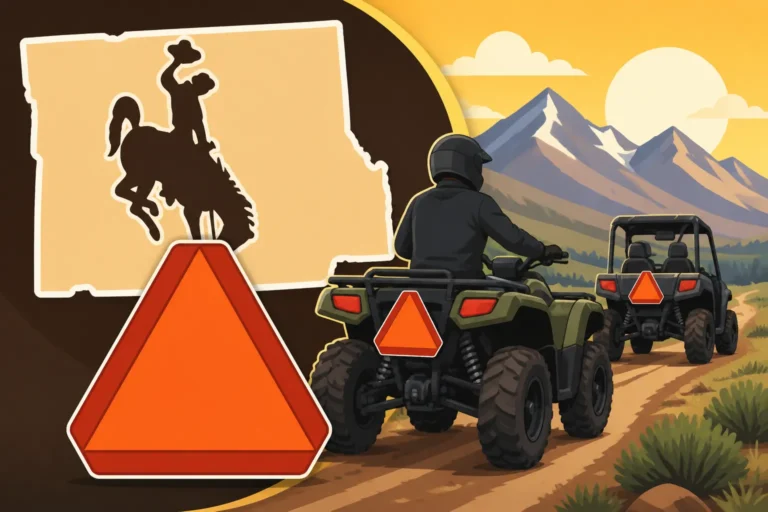
- Location: The emblem must be mounted on the extreme rear of your ATV or UTV. Think about what a driver behind you will see first. It should be as close to the center of the machine as possible. This ensures it's not off to one side and easily missed, especially in varying light conditions or around curves.
- Height: The vertical placement is also critical. The emblem should be mounted no less than 2 feet (24 inches) above the ground, and no more than 6 feet (72 inches) above the ground. This range puts it within the typical sightlines of most passenger vehicles, pickups, and even larger trucks. Too low, and it might be obscured by bumps or other vehicles. Too high, and it might be outside a following driver's immediate field of vision.
- Visibility: This is arguably the most important rule. The emblem must be unobstructed. This means no cargo racks, coolers, spare tires, or even passengers should block any part of the triangle. If you have a cargo box, you might need to mount the emblem on the box itself, or on an extension that clears the box. If you have a rear-facing seat, ensure the emblem is mounted above the heads of any passengers. The emblem should also face squarely to the rear, not angled. You want maximum surface area visible to anyone behind you.
For UTVs, the roll cage often provides an excellent mounting point, either directly or with a bracket. For ATVs, the rear rack is usually the best bet. There are various aftermarket brackets and clamps available that can make securing the emblem straightforward, ensuring it's durable enough to withstand the vibrations and elements of off-road and on-road riding.
Emblem Specifications and Compliance
The slow-moving vehicle emblem isn't just any old orange triangle; it has specific design features that are standardized for maximum effectiveness. Understanding these specifications is key to ensuring you're compliant with Wyoming law. The emblem is typically a universally recognized shape: an equilateral triangle.
Here are its key characteristics:
- Fluorescent Orange Center: The main body of the triangle is a vibrant, fluorescent yellow-orange material. This color is chosen for its extreme visibility in daylight conditions. Fluorescent materials absorb ultraviolet light and re-emit it as visible light, making them appear brighter than conventional colors, especially at dawn, dusk, or on overcast days.
- Dark Red Reflective Border: The outer edge of the triangle is bordered by a distinct dark red reflective strip. This reflective material is crucial for nighttime visibility. When headlights from a following vehicle strike this border, it illuminates brightly, outlining the slow-moving vehicle even in complete darkness, providing a critical warning.
- Standard Size: While exact dimensions can sometimes vary slightly by manufacturer, these emblems adhere to standard sizes, usually around 14 inches high. This size ensures they are large enough to be easily seen from a distance but not so large as to be impractical for mounting on smaller vehicles.
These specifications are not arbitrary; they are typically governed by national standards, such as those set by the American Society of Agricultural and Biological Engineers (ASABE) or the American National Standards Institute (ANSI). Adhering to these standards ensures uniformity and immediate recognition for all drivers. When purchasing an SMV emblem, always look for one that explicitly states compliance with these standards.
Given Wyoming's diverse weather conditions, from bright summer sun to heavy snow and ice, it's essential to choose a durable, weather-resistant emblem that won't fade or peel quickly. A quality emblem will have a sturdy backing (often aluminum or plastic) and durable reflective and fluorescent materials. Many reputable aftermarket parts suppliers, like SuperATV, offer emblems and mounting kits that are built to last and meet these critical specifications. This peace of mind, knowing your emblem is compliant and visible, is truly invaluable. Make sure to consult [Wyoming Slow-Moving Vehicle Emblem Rules] for any updated state-specific nuances.
Beyond the Triangle: Other Road-Legal Equipment Considerations
While the orange triangle is a critical component for road-legal ATVs and UTVs in Wyoming, it's really just one piece of a much larger puzzle. To fully comply with the state's Multipurpose Vehicle (MPV) laws and safely share the road, your machine needs a suite of other equipment. Thinking beyond just the triangle will save you headaches, fines, and most importantly, keep you and others safer.
Comprehensive MPV Equipment List
When you commit to making your ATV or UTV street legal as an MPV in Wyoming, you're signing up for a complete safety overhaul. The state wants to ensure that these machines, originally designed for off-road, can operate predictably and safely in traffic alongside cars and trucks. The SMV emblem handles the "I'm slow" message, but other equipment addresses visibility, signaling, and control.
Here's a rundown of other essential items your MPV will need:
- Headlights: You'll need at least one, but usually two, working headlights that meet specific brightness and aim requirements, especially for [Wyoming Rules for Riding After Dark]. These aren't just for seeing the trail; they're for being seen by oncoming traffic.
- Taillights and Brake Lights: A red taillight is required, visible from the rear, and it must illuminate brighter as a brake light when you apply the brakes. This is fundamental for signaling your presence and intentions to following drivers.
- Turn Signals: While some ATVs might get by with hand signals in certain low-speed contexts, most UTVs aspiring to be MPVs benefit greatly from proper turn signals (front amber, rear red or amber) for clear communication of turns and lane changes.
- Mirrors: A left-side mirror is legally required, allowing the driver to see traffic approaching from the rear. Many riders opt for a rearview mirror as well for enhanced situational awareness. See [Wyoming Mirror Requirements for Road Use] for specifics.
- Horn: A working horn is absolutely essential for warning pedestrians or other drivers of your presence, particularly in tight spots or when unexpected hazards arise. Refer to [Wyoming Horn Requirement on a Road Machine] for details.
- Windshield: While not always explicitly required for all MPVs, a windshield (or eye protection) is highly recommended for driver safety on the road.
- Muffler and Spark Arrester: These are generally required for all ORV operation, including MPVs on the road, to control noise and prevent wildfires. [Wyoming Muffler and Spark Arrester Rules] lays this out.
- Seat Belts/Restraints: If your machine came with them, they must be functional and used by all occupants.
- Tires: Your tires must be DOT-approved for street use.
You can find a more extensive list of these requirements in articles like [Wyoming MPV Street Legal Requirements]. This comprehensive approach ensures that once titled as an MPV, your machine is a fully functional and visible vehicle on public roads.
The Importance of a Complete Setup
It's tempting to cut corners when outfitting your machine, but when it comes to road legality in Wyoming, a complete setup isn't just about avoiding a ticket—it's about genuine safety. Law enforcement officers, whether it's a Wyoming Highway Patrol trooper, a county sheriff, or even a Forest Service ranger on an enrolled road, are trained to look for all required equipment, not just the SMV emblem. Getting pulled over and issued a citation for missing equipment like a mirror or a working brake light can quickly turn an enjoyable ride into a costly hassle. Information on potential penalties can be found in [Wyoming Fines for Riding a Closed Road], which often extend to improperly equipped vehicles.
Beyond the legal aspect, consider the peace of mind and enhanced safety that comes with a fully compliant machine. When you have all the necessary lights, mirrors, and signaling devices, you're not guessing if other drivers see you or understand your intentions. This significantly reduces the risk of accidents and makes for a much more relaxed and enjoyable riding experience. Many riders invest in high-quality aftermarket parts not just for compliance, but for improved performance and durability. For instance, SuperATV is a widely recognized brand that offers a vast array of UTV and ATV accessories, including light kits, mirrors, horns, and even full street-legal kits, making it a convenient one-stop shop for riders looking to equip their machines properly for Wyoming's roads. Don't just get the triangle; ensure your entire machine meets the robust standards set for MPVs, so you can ride with confidence and legality across the Cowboy State.
| Aspect | Requirement/Detail | Why It Matters |
|---|---|---|
| Purpose | Warns following vehicles of slow speed (<25 mph) | Prevents rear-end collisions, enhances safety |
| Appearance | Fluorescent orange triangle with red reflective border | Day and night visibility |
| Placement | Rear of vehicle, centered as much as possible | Maximum visibility to traffic behind |
| Height | 2 to 6 feet above ground | Optimal sightline for other drivers |
| Visibility | Unobstructed by cargo, riders, or machine parts | Ensures emblem is always seen |
| When Needed | Operating an MPV on any public roadway in Wyoming | Required by law for vehicles traveling below typical road speeds |
Disclaimer
This article is for general informational purposes only and does not constitute professional advice. Laws, prices and regulations vary by location and change over time. Consult a qualified professional for guidance on your specific situation.