How to Cross I-80 Legally on an ATV
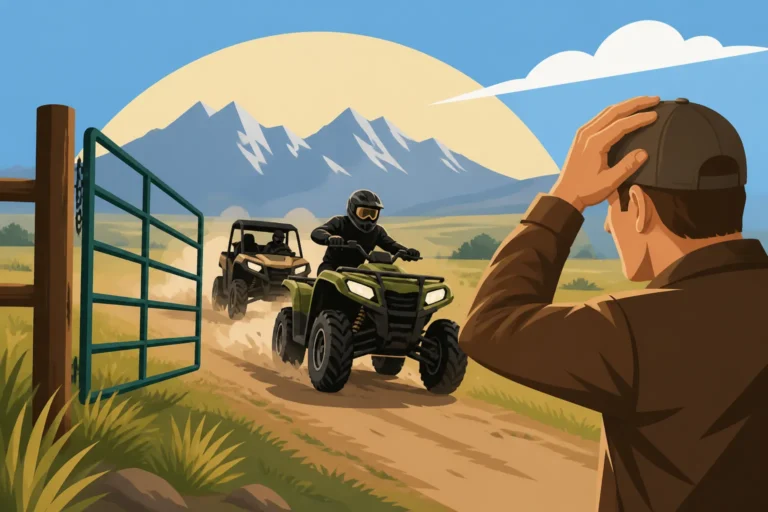
It's incredibly frustrating when you're out enjoying Wyoming's vast, open country on your ATV or UTV, only to find your path—or access to a favorite riding area—cut clean in half by the mighty ribbon of Interstate 80. Many riders feel like they're constantly navigating around this massive barrier, sometimes having to load up the trailer for a five-minute drive just to get to the other side. This guide is all about helping you understand exactly how to legally and safely cross I-80 in Wyoming, taking the mystery and the hassle out of those crucial connections between trails.
The Frustration of a Divided Landscape: Why I-80 is a Barrier
Interstate 80 is an undeniable lifeline for commerce and travel across Wyoming, but for off-road enthusiasts, it often feels more like a giant, impassable wall. We've all been there—staring across at what looks like perfectly good riding country, separated by concrete and high-speed traffic, wondering if there's any way to bridge the gap without breaking the law or risking life and limb.
The Interstate's Impact on Trail Access
Imagine you're deep in the sagebrush flats or winding through a canyon, following a fantastic two-track that suddenly dead-ends at an I-80 fence. You know the trails continue on the other side, perhaps leading to a favorite camping spot, a different forest service road, or even just a cooler, higher elevation. This isn't just an inconvenience; it can completely dictate your ride plan, forcing detours or prematurely ending an adventure. The interstate often bisects areas that were once contiguous, making a seamless, long-distance ride a logistical headache. It feels counterintuitive to have to load a machine onto a trailer for a short hop across the highway when you've just ridden it for miles. It takes you out of the moment, and frankly, it's just a buzzkill.
Wyoming's Unique Approach to ORV Roads
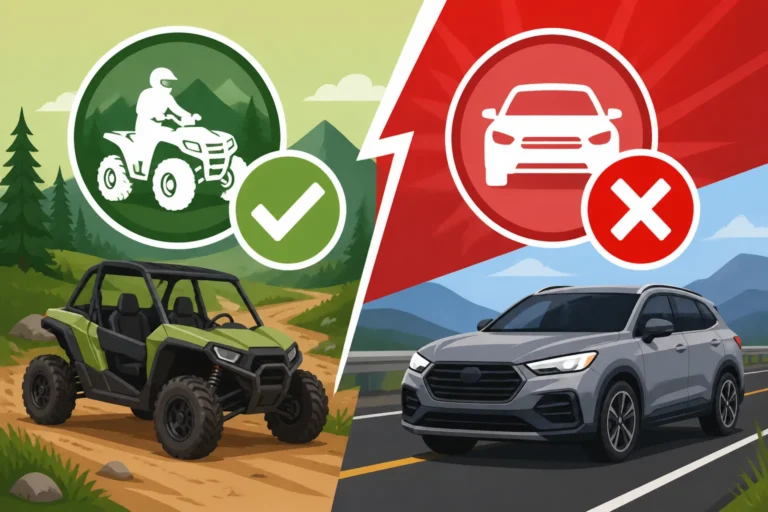
While it might seem like a lost cause, Wyoming has actually made provisions for off-road vehicles to use certain public roads, including specific crossings of I-80. This isn't a free-for-all, though. It relies on a specific classification: the "Multipurpose Vehicle," or MPV. Your standard ORV permit, which is essential for riding most public trails, doesn't automatically grant you the right to hit the pavement or cross an interstate. Instead, the machine itself needs to meet specific criteria and be properly registered, titled, and plated as an MPV. This distinction is crucial because without it, even a brief moment on the interstate right-of-way could land you a hefty fine. We're going to dive into what that means for your machine and how Wyoming has worked to create designated crossings for riders.
Understanding Wyoming's MPV Designation for Road Use
Before you even think about approaching an interstate, your off-road machine needs to be legally recognized as capable of road travel in Wyoming. This isn't about making your dirt bike or quad fully "street legal" in the same way a car is, but rather meeting the specific requirements for an MPV, which then allows you to ride on designated public roads and, critically, use those I-80 crossings.
What Makes an ORV an MPV?
Wyoming has a very clear definition of what constitutes a Multipurpose Vehicle (MPV), and it's not as simple as just adding a few lights. To qualify as an MPV, your machine needs to meet several specific criteria outlined in state law. First off, it must be designed to travel on four or more wheels, which covers most side-by-sides and many ATVs. The machine also needs to weigh between 300 and 3,000 pounds, unladen. This excludes lighter youth machines and heavier, specialized equipment. Another critical requirement is seat height: at least one seat must be at least 24 inches from the ground. This usually means a side-by-side or a larger ATV, as many sport quads sit lower.
If your machine meets these physical requirements, you can then proceed with the legal paperwork. This involves a special process with the county clerk to get a title and then with the county treasurer for the license plate. It's a two-step dance. You'll need to fill out a specific checklist form that confirms your machine meets all the MPV criteria. This form is essential for the county clerk to [Titling a Multipurpose Vehicle in Wyoming] and then for the treasurer to issue your [Plates From a Wyoming County Treasurer]. It's a bit of paperwork, but it's the gateway to legal road use for your machine. You can find the exact details in [Wyoming's MPV Definition in W.S. 31-1-101] and on the [What the MPV and ORV-MC Checklist Form Asks].
Essential Equipment for Road-Legal MPVs
Once your machine qualifies as an MPV and is titled and plated, it still needs to be outfitted with the correct safety equipment to be truly road-legal. This isn't just for show; these items are critical for your safety and the safety of others on shared roadways, even for brief crossings.
Here's a quick rundown of the must-have equipment:
- Headlights: At least one, producing a white light visible from 500 feet.
- Taillights: At least one, emitting a red light visible from 500 feet to the rear.
- Stop Lamp: A red or amber light, activated by the brake, visible from 100 feet.
- Red Rear Reflector: A red reflector visible from 50 to 300 feet.
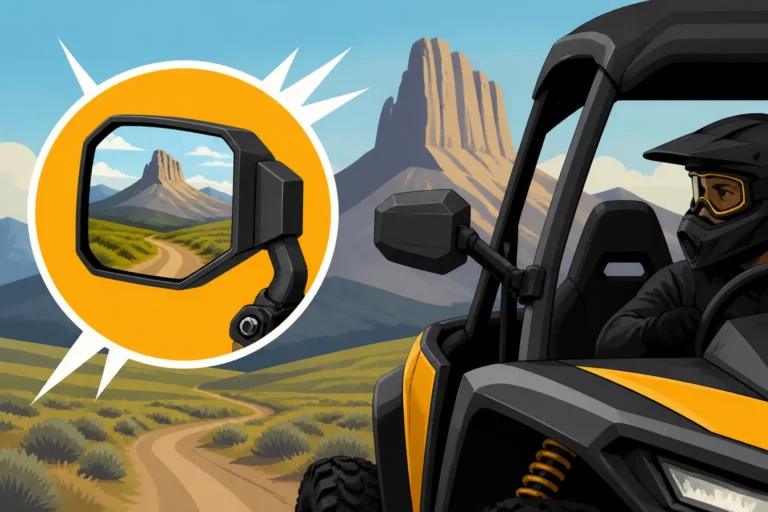
- Left-Side Mirror: A mirror mounted on the left side, providing a clear view to the rear for at least 200 feet.
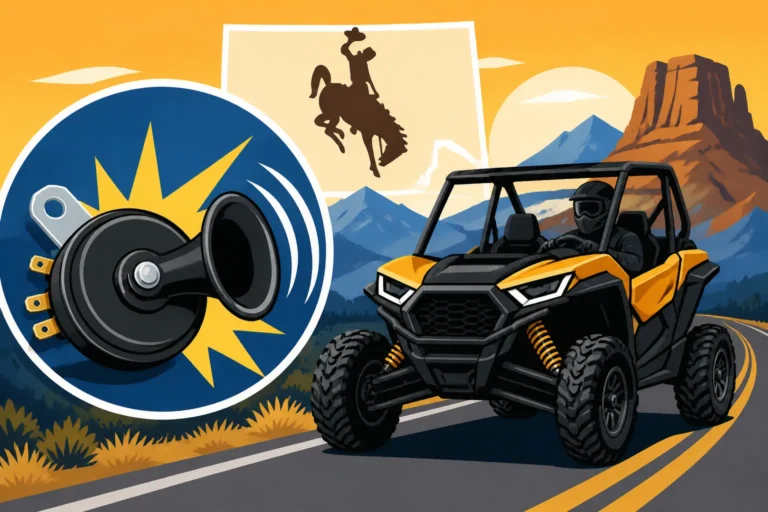
- Horn: A working horn or warning device audible from 200 feet.
- Muffler & Spark Arrester: Your machine needs an adequate muffler to prevent excessive noise, and a U.S. Forest Service-approved spark arrester to prevent wildfires.
You can often find these necessary components, like mirrors, horns, and lighting kits, through aftermarket suppliers. Companies like SuperATV, for instance, offer a wide range of accessories designed to help riders make their machines compliant with various state road laws. Many of these kits are designed for relatively easy installation, transforming your trail machine into a road-ready MPV. Always double-check that the specific products you choose meet Wyoming's legal requirements for visibility and function. Details on these requirements can be found in [Wyoming Lighting Requirements for ORVs], [Wyoming Mirror Requirements for Road Use], and [Wyoming Horn Requirement on a Road Machine].
Navigating the I-80 Crossing Rules and Locations
Now that your machine is properly classified and equipped as an MPV, you're ready to tackle the specific rules for crossing I-80. This isn't a scenario where you can simply look for a gap in traffic and make a dash. Wyoming has established very particular legal crossing points, and understanding them is key to a smooth, legal, and safe journey.
Designated Crossing Points: Not Just Anywhere
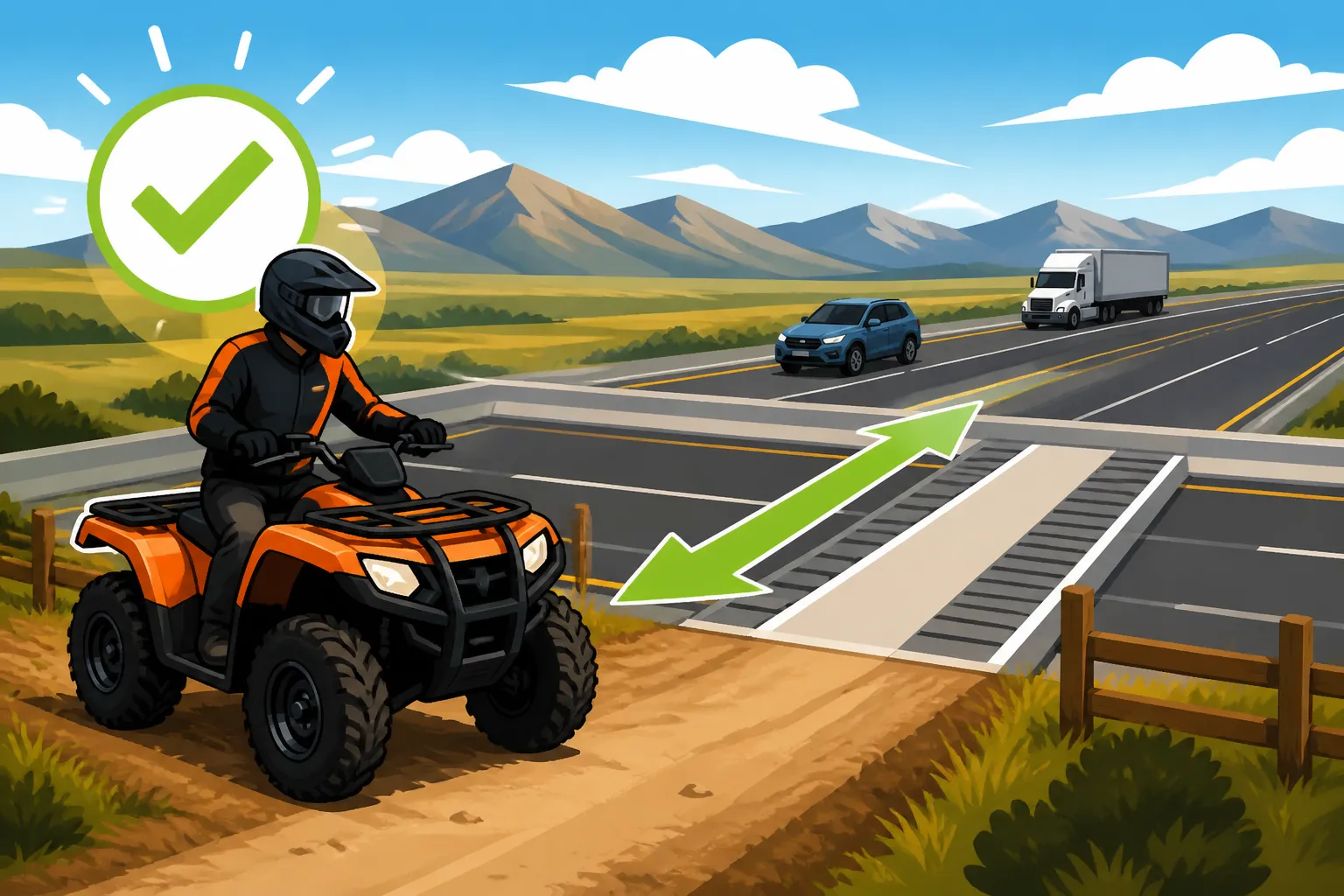
This is arguably the most critical piece of information: you cannot just cross I-80 anywhere. Wyoming has specific, designated crossing points for MPVs. These are not open to standard ORVs, and they are definitely not open to illegal crossings. Most of these designated crossings are "grade-separated," meaning they utilize existing underpasses or overpasses. This allows riders to cross the interstate without ever directly entering the flow of high-speed highway traffic, which is a massive safety improvement.
For example, in areas like Evanston, where I-80 famously split the community from some of its prime recreational lands, the city and state worked hard to establish legal crossings. These dedicated routes are a testament to the collaborative efforts to keep our riding access viable. Riders in Evanston now have specific, marked routes to use. It's truly a game-changer for those who felt like [How the Interstate Cut Evanston Off From Its Trails]. Always look for official signage and consult current maps. You can't just assume an underpass is a legal crossing. For a deeper dive, check out How to Cross I-80 Legally on an ATV and [Grade-Separated Interstate Crossings].
The Importance of Local & State Approval
The establishment of these designated crossing points isn't a spur-of-the-moment decision. It's the result of extensive planning and agreement between multiple agencies. Typically, a county or local government needs to initiate the request, often driven by local rider groups or communities. Then, the Wyoming Department of State Parks, Historic Sites and Trails works with the county and the Wyoming Department of Transportation (WYDOT) to evaluate potential crossing locations. This multi-agency consent is vital because it ensures that safety, environmental impact, and traffic flow are all considered. This is why a county must often "say yes" first, enrolling a road into the state's system. [Why a County Must Say Yes First].
The process can be lengthy, as seen in the advocacy for crossings around Evanston, where the community really pushed for solutions. [Why Evanston Pushed for the Rule]. There are also considerations like annual caps on crossings in some areas, designed to manage impact. For example, some grade-separated crossings have an annual limit on the number of machines that can use them. [Why Each Interstate Crossing Is Capped at 1,000 Machines]. This highlights the careful management involved to balance recreational access with infrastructure preservation and safety.
Rules of the Road During an Interstate Crossing
Even when using a legal, designated crossing, you're still on a public road, and there are specific rules you need to follow to ensure your safety and legality. Think of it as a brief, but serious, interaction with the state's traffic laws.
Here's what you need to remember:
- Stay Alert: Always be highly aware of your surroundings, even if you're only on an underpass or a short section of frontage road. You might encounter other vehicles, pedestrians, or even wildlife.
- Stop Before the Shoulder: If your crossing involves a short segment of road that parallels the interstate before going under or over, you need to be cautious. When crossing a state highway, for example, you must stop completely before entering the shoulder, check for traffic, and then proceed directly across at a right angle. Don't linger.
- Yield to Traffic: While using a designated crossing, you are often entering a public roadway. Always yield to existing traffic. Your MPV status gives you permission to be there, but it doesn't give you automatic right-of-way over other vehicles.
- Carry Your Paperwork: Always have proof of your MPV registration, title, and insurance with you. You'll also need a valid driver's license with the appropriate endorsement (an "M" for motorcycle, or an "MR" restricted motorcycle endorsement for MPVs). [Wyoming Motorcycle Endorsement for an MPV], [Proof of Insurance on a Wyoming Road]. A Wyoming Trooper might check your documentation during a roadside stop. [What a Wyoming Trooper Checks Roadside].
- Follow Posted Speed Limits: Even if it's a short stretch, obey any posted speed limits.
- No Reckless Behavior: Common sense dictates that you shouldn't be riding recklessly or creating a hazard. This is especially true when briefly on or near major roadways.
Ignoring these rules, even at a designated crossing, can result in citations and fines, potentially ruining your ride. [Wyoming Fines for Riding Without a Permit]. Remember, safety is paramount.
Planning Your I-80 Crossing and Avoiding Pitfalls
Successfully and legally crossing I-80 with your MPV takes more than just having the right machine. It requires diligent planning, knowing your route, and understanding the local nuances. There's nothing worse than thinking you've got it all figured out, only to hit a roadblock or get a citation because of an oversight.
Checking Maps and Local Regulations
The single most important tool in your planning arsenal is a current, official map. This isn't the time for guesswork or relying on old memory. You need to consult travel management maps issued by the U.S. Forest Service, the Bureau of Land Management (BLM), and Wyoming State Parks. These maps clearly delineate which roads and trails are open to which types of vehicles and, crucially, where those designated I-80 crossings are. [Wyoming's Enrolled Roads and Trails] are typically marked on these maps.
Remember, conditions on the ground can change. A road or crossing might be seasonally closed, or fire restrictions could temporarily impact access. Always look for physical signage at trailheads or entry points. If a sign on the ground says "closed" but your map shows it open, the sign on the ground always takes precedence. These maps are dynamic documents, so always check for the most recent version. A great resource is often found at local ranger stations or BLM field offices, or online on their respective websites. You can often find an [Finding an Enrolled Road on a Forest Map] this way. Don't rely on generic GPS apps; use the specific, official OHV maps.
Being Prepared for a Roadside Check
Even with all your ducks in a row, it's possible you might encounter a Wyoming State Trooper, Forest Service officer, or BLM ranger, especially if you're briefly on a paved road or a designated crossing. These officers are doing their job to ensure everyone's safety and compliance with the law. Being prepared can save you a lot of hassle and potential fines.
During a roadside check, an officer will likely be looking for:
- Valid Driver's License: Do you have the proper M or MR endorsement?
- MPV Title and Registration: Is your machine properly titled and plated?
- Proof of Insurance: Is your MPV insured for road use?
- Wyoming ORV Permit: While not for the road itself, you'll need this for the trails you're accessing.
- Required Equipment: Do you have a working headlight, taillight, brake light, horn, left-side mirror, and spark arrester? For specific needs for accessories, remember that companies like SuperATV offer a range of products to help you meet these requirements.
- Proper Decal Placement: If you have an ORV permit, is the decal correctly placed? [Where the Wyoming Decal Goes on a Machine].
If you're found to be riding on an unauthorized road, or without the proper permits or equipment, the consequences can range from a warning to significant [Wyoming Fines for Riding Without a Permit] or citations for [Wyoming Fines for Riding a Closed Road]. It's far better to spend a little time verifying your compliance than to face a ticket or, worse, put yourself or others at risk.
Gear and Safety Considerations
Riding an MPV on a public road, even for a short interstate crossing, introduces different risks than riding solely on a trail. While trails might have obstacles and varying terrain, roads have high-speed traffic, larger vehicles, and different surface conditions.
Here are some safety considerations:
- Helmets are Key: While Wyoming's helmet law primarily focuses on riders under 18, it's always a good idea to wear a helmet, regardless of your age, especially when interacting with road traffic. [Wyoming Helmet Law for ATV Riders] outlines the specific requirements. Protect your head!
- Visible Clothing: Wear brightly colored clothing or high-visibility gear, especially if the crossing is near dawn or dusk, or in less-than-ideal weather conditions. Make yourself as noticeable as possible to other drivers.
- Stay Focused: When on a road, even for a moment, your attention needs to be fully on the road and surrounding traffic. Avoid distractions.
- Passenger Safety: If carrying passengers, ensure they meet age requirements (if any for road use) and are also wearing appropriate safety gear. [Wyoming Passenger Rules on an ATV].
- Anticipate Road Conditions: Paved roads might have potholes, gravel, or even ice, depending on the season. Be prepared for how your tires will handle these different surfaces compared to dirt trails.
- Emergency Kit: Always have a basic emergency kit, including a first-aid kit, tool kit, and possibly a satellite messenger, especially if your crossing connects to remote areas.
By preparing your machine, knowing the rules, and riding responsibly, you can successfully navigate Wyoming's I-80 crossings and continue to enjoy the incredible riding opportunities this state has to offer.
Disclaimer
This article is for general informational purposes only and does not constitute professional advice. Laws, prices and regulations vary by location and change over time. Consult a qualified professional for guidance on your specific situation.