Are ATVs Street Legal in Wyoming?
For many off-road enthusiasts in Wyoming, the dream of riding their ATV or side-by-side directly from camp to town, or linking up distant trails via a short road stretch, is a persistent one. But the question, "Are ATVs street legal in Wyoming?" often brings more confusion than clarity, leading to frustration for riders eager to explore. The truth is, it's not a simple yes or no, but rather a nuanced set of rules distinguishing between different types of off-road machines and the specific roads they're allowed on. This guide will unravel the intricacies, helping you understand Wyoming's specific classifications, what it takes to get your machine road-ready, and exactly where you can legally ride.
Decoding Wyoming's Vehicle Classifications: ORV vs. MPV
Before we can even talk about riding on roads, it's absolutely crucial to understand how Wyoming law categorizes your machine. This distinction is the bedrock of all street legality discussions, and misunderstanding it can lead to tickets, frustration, and missed opportunities to enjoy our incredible landscape. Most riders think of "ATV" as a catch-all term, but the state sees things differently when it comes to pavement.
What Defines an Off-Road Vehicle (ORV) in Wyoming?
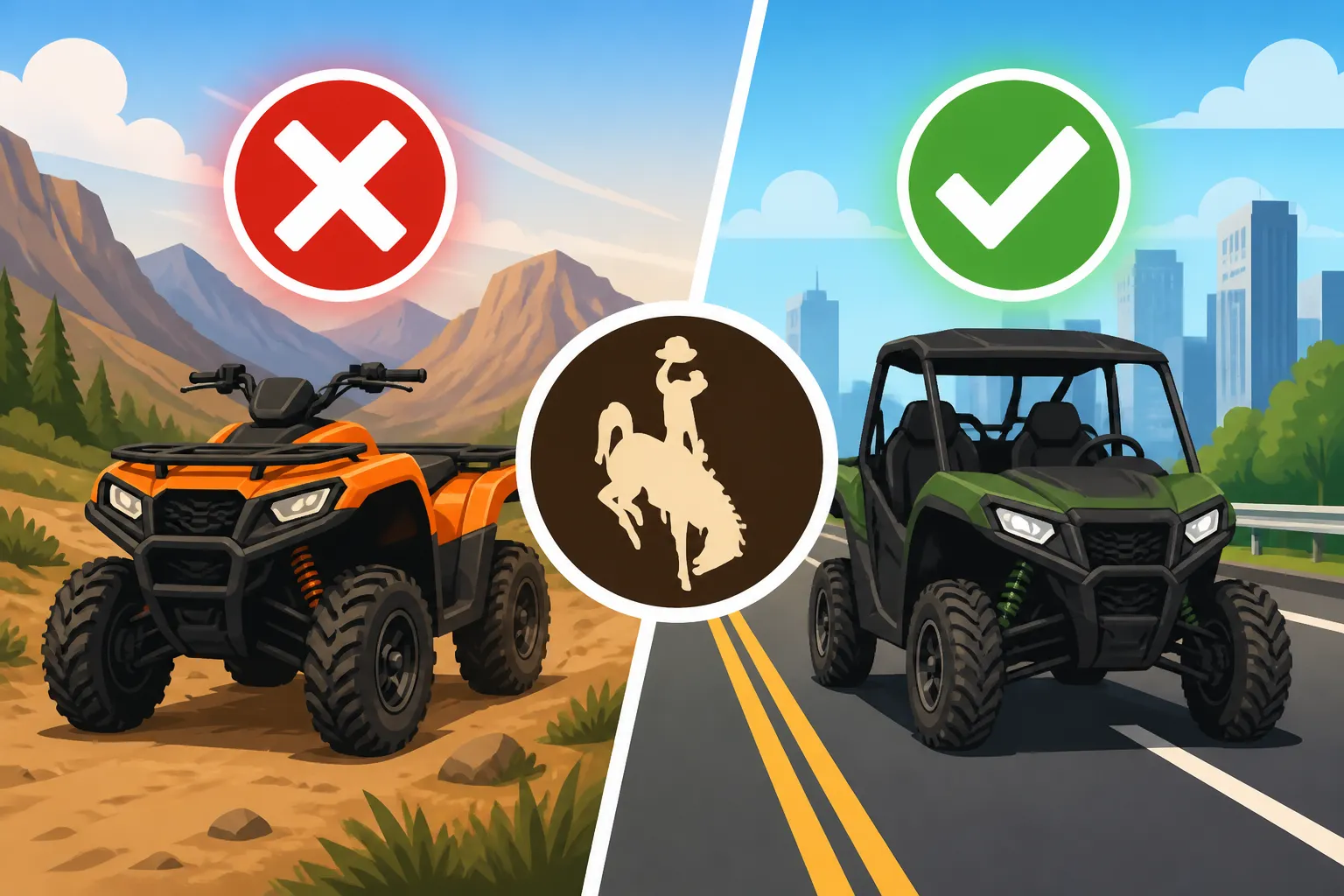
In Wyoming, an Off-Road Recreational Vehicle, or ORV, is the broad category that most of our beloved quads, dirt bikes, and side-by-sides fall into. These machines are designed and primarily intended for off-highway use, whether that's tearing up the dunes at Killpecker or navigating the technical trails in the Bighorns. They are fantastic for what they're built for: adventure off the beaten path. These machines are typically registered with an ORV permit, which allows them to ride on designated trails and off-road areas. You'll recognize them by their [Wyoming's Annual ORV Permit] decal, which you should affix prominently.
However, a standard ORV permit explicitly does not grant you permission to operate on public roads, streets, or highways that are open to conventional vehicle traffic. This is a common pitfall for new riders or those visiting from other states that might have different reciprocity rules. No matter how many fancy accessories you bolt on, if your machine is only an ORV in the eyes of Wyoming law, it's generally restricted to trails, private land with permission, and specially designated off-road areas. Thinking you can just slap a decal on and hit the highway is a recipe for a conversation with a local law enforcement officer.
Introducing the Multipurpose Vehicle (MPV) Class
Here's where the possibility of street legality begins to emerge. Wyoming introduced the Multipurpose Vehicle (MPV) class to address the growing popularity of side-by-sides and larger utility vehicles that bridge the gap between traditional ATVs and small cars. An MPV is specifically defined in Wyoming statutes, and it's these machines that have the potential to be legally ridden on certain public roads. It's a game-changer for many, allowing a more integrated riding experience.
To qualify as an MPV, a machine must meet several specific criteria. It needs to be less than 65 inches wide, weigh between 300 and 3,000 pounds, and have a seat at least 24 inches high. Most modern side-by-sides, like a Polaris RZR or Can-Am Maverick, easily meet the width and seat height requirements, and many fall within that weight range. This classification carved out a legal pathway for these machines that were proving too capable for just off-road use, but not quite meeting the stringent requirements of traditional motor vehicles. You can dive deeper into the specifics of [Wyoming's Multipurpose Vehicle Class] for all the details.
Why This Distinction Matters for Road Use
The difference between an ORV and an MPV is everything when it comes to road legality. If your machine only qualifies as an ORV, it generally cannot be operated on public roads, with very few exceptions like crossing a highway at a designated intersection. Trying to ride your standard ATV down Main Street, even for a short hop, without proper MPV classification and equipment, is against the law. You'd be risking a citation for riding a closed road, or worse, for an uninsured or unregistered vehicle on a public thoroughfare.
On the other hand, if your side-by-side or qualifying ATV can be registered as an MPV, you open up a whole new world of riding opportunities. This classification means your machine is treated more like a mini-car for specific road use, allowing you to connect trails, access services, and explore routes that would otherwise be off-limits. It's a crucial distinction, and understanding whether your machine fits the MPV definition is the very first step toward making it street legal in Wyoming. Without that, you're looking at a completely different set of rules and limitations.
The Road to Legality: Making Your Machine Street-Ready
So, you've determined your machine meets the criteria to be classified as an MPV. That's fantastic! But simply qualifying isn't enough; there's a significant amount of work to do to actually make it legal for road use. This involves adding specific equipment, going through a different registration and titling process than a standard ORV, and ensuring you as the rider meet certain qualifications. It's more involved than just buying a permit, but the payoff in terms of flexibility is immense.
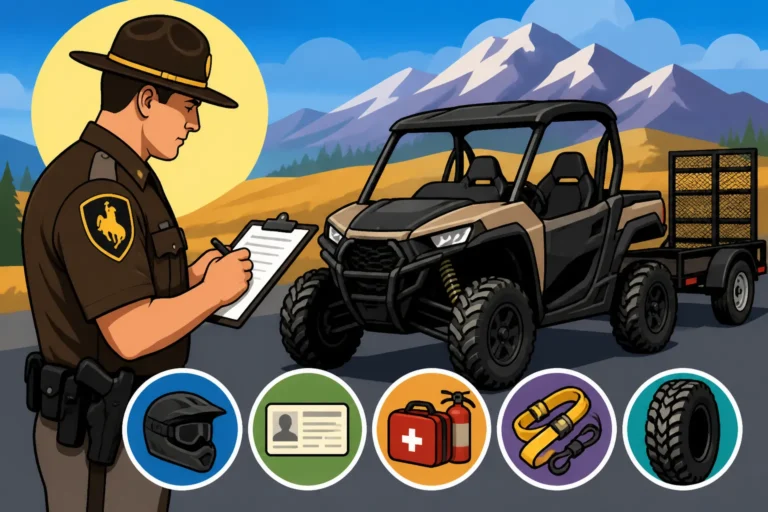
Essential Equipment for MPV Road Compliance
Converting your MPV from a trail-only machine to one that can legally traverse enrolled roads requires specific safety equipment, much like a regular car. This isn't just about good ideas; these are mandated by Wyoming statute. You'll need at least one headlamp, taillamp, and a stop lamp (brake light). A red rear reflector is also a must, ensuring you're visible from behind. Many manufacturers, like SuperATV, offer aftermarket kits that include these essential lighting components, making the conversion much easier than trying to piece it together yourself. You'll find a wide range of headlights, taillights, and turn signal kits that are designed to withstand the rigors of off-road use while meeting road legal standards.
Beyond lighting, you'll need a horn, a left-side mirror, and an exhaust system equipped with a spark arrester. A functional muffler is also required to keep sound within acceptable limits. Remember, these additions aren't optional if you want to be street legal; they are prerequisites for registration and for passing any roadside inspection. Getting these items installed correctly is key, and some riders opt for professional installation to ensure everything is up to snuff. Always double-check [Wyoming Lighting Requirements for ORVs], [Wyoming Mirror Requirements for Road Use], and [Wyoming Horn Requirement on a Road Machine] for the exact specifications.
Here's a quick overview of the required equipment for an MPV:
| Component | Requirement |
|---|---|
| Headlamp | At least one, fully operational |
| Taillamp | At least one, fully operational |
| Stop Lamp (Brake Light) | Fully operational, illuminates when brakes are applied |
| Red Rear Reflector | Visible from behind |
| Horn | Audible from at least 200 feet |
| Left-Side Mirror | Provides a clear view to the rear |
| Muffler | Effective in reducing exhaust noise |
| Spark Arrester | United States Forest Service approved |
| Slow-Moving Vehicle Emblem | If traveling under 25 mph on certain roads (as applicable) |
Registration, Titling, and Plating Your MPV
Unlike a standard ORV, which only requires a permit decal, an MPV destined for road use needs to go through a more formal process akin to registering a car. First, your MPV will need a title. This is handled at your local [Titling a Multipurpose Vehicle in Wyoming] at the County Clerk's office. This step confirms ownership and establishes your machine as a legitimate vehicle under state law. It's a critical difference from most traditional ATVs, which often don't have titles in Wyoming unless they fall into this specific MPV category.
Once your MPV is titled, you'll then proceed to the County Treasurer's office to [Wyoming MPV Plate Requirements]. This is where you'll get a license plate and annual registration, just like any other motor vehicle. The process usually involves showing your title, proof of insurance, and paying the necessary fees. Without a valid license plate, even with all the proper equipment, your MPV cannot legally be operated on enrolled roads. This dual process ensures that MPVs are properly tracked and meet the administrative standards for road-going vehicles.
Rider Requirements for Operating an MPV on Roads
It's not just about the machine; the operator also has specific requirements when riding an MPV on Wyoming's public roads. First and foremost, you must possess a valid driver's license, often with an M (motorcycle) or MR (motorcycle-restricted) endorsement. This means that if you're accustomed to just riding your ORV on trails without a driver's license, you'll need to get one to legally operate an MPV on the road. For specific details, check [Wyoming Driver's License Rules for ORVs].
Furthermore, Wyoming law mandates that all passengers under the age of 18 must wear a helmet when riding an MPV on a public road. While helmets are always a good idea for any rider, regardless of age or location, this becomes a legal requirement for younger passengers in a road-going MPV. Beyond that, proof of liability insurance is mandatory for any MPV operated on a public road. This is standard for any vehicle on public roads and provides crucial protection in case of an accident. Always carry your proof of insurance with you, along with your driver's license, whenever you're out on the road.
Navigating Wyoming's Roads: Where Can You Actually Ride?
Okay, so your machine is an MPV, it's fully equipped, titled, registered, plated, and you meet all the rider requirements. You're ready to roll! But where exactly can you go? Even with full street legality, MPVs aren't free to roam every single road in Wyoming. There are specific designations and restrictions you need to be aware of to ensure your ride stays legal and enjoyable. This is where many riders get tripped up, thinking "street legal" means "any road," which isn't quite the case in our vast state.
Designated and Enrolled Roads: The Green Light
The most important concept to grasp is that MPVs are generally allowed on designated or enrolled public roads. What does that mean? It means a county, city, or state agency, in cooperation with the Wyoming State Parks, Historic Sites, and Trails Division, has specifically identified and approved a road segment for MPV use. These roads are typically county roads, forest roads, or BLM roads, and they are crucial for linking trail systems or accessing services. You might hear locals refer to them as "county roads" or "two-tracks." You can check out [Wyoming Rules for Riding a County Road] or [Wyoming Rules for Riding a Forest Road] for more specific guidance.
It's vital to remember that not all county or forest roads are automatically open to MPVs. Each segment must be specifically designated. The best way to know for sure is to consult official maps, like those provided by the Forest Service (Motor Vehicle Use Maps, or MVUMs) or the BLM, which will clearly mark which roads are open to different vehicle types. Sometimes, there will also be signage on the ground. These enrolled segments are your green light for legal road travel. Many riders use apps or GPS devices that show these designated routes, sometimes enhanced with accessories from brands like SuperATV that integrate navigation directly into your machine's dash.
Restricted Areas: Where ORVs and MPVs Are Banned
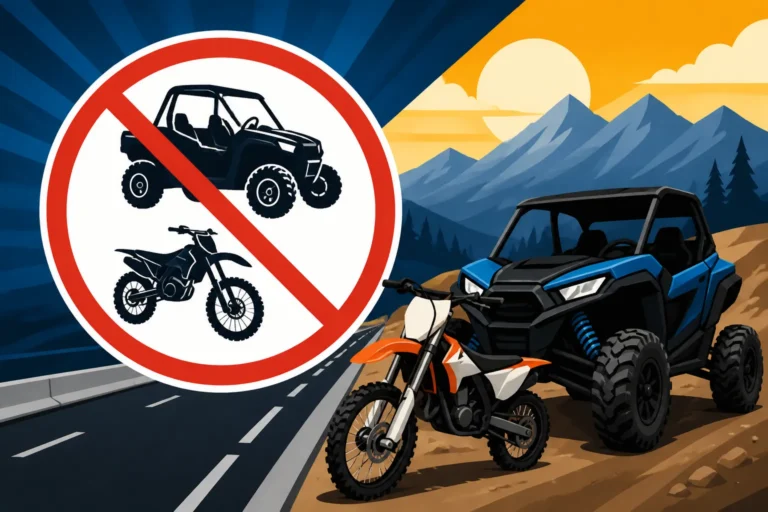
While MPVs can access enrolled roads, there are significant restrictions. The most prominent is that MPVs are generally prohibited on interstate highways (like I-80 or I-25). Even a fully street-legal MPV cannot just merge onto the interstate. There are extremely limited exceptions for grade-separated crossings of interstates in very specific, designated locations, but these are rare and highly regulated. For most intents and purposes, consider interstates off-limits. You can learn more about [Wyoming Rules for Crossing an Interstate] to understand the nuances of this rule.
Furthermore, MPVs are typically not allowed on state highways (those marked with a numerical shield, like US-26 or WY-789) unless they are specifically enrolled segments, which is less common than for county or forest roads. City streets can also be a mixed bag; some towns have ordinances allowing MPVs on certain streets, while others strictly prohibit them. Always check local regulations before riding an MPV within city limits. Riding off an enrolled route or in a restricted area can lead to hefty fines, so always err on the side of caution and verify your route beforehand.
Special Circumstances: Crossing Highways and Interstate Rules
There are times when you might need to cross a highway to get from one enrolled segment to another. Wyoming law generally allows for direct, perpendicular crossings of state highways and non-interstate federal highways, provided you yield to all traffic, come to a complete stop, and have a clear line of sight. This is not for prolonged travel on the highway, but purely for crossing. You can't just drive a mile down the highway to the next intersection.
It's important to differentiate between crossing a highway and riding on a highway. Unless a specific segment of a state highway is officially enrolled as an MPV route (which, again, is rare), you cannot use it for travel. The rules are designed to facilitate access, not to turn MPVs into regular road vehicles for extended trips on high-speed roads. Always be extra cautious when making a highway crossing; the speed difference and visibility can be significant challenges.
Disclaimer
This article is for general informational purposes only and does not constitute professional advice. Laws, prices and regulations vary by location and change over time. Consult a qualified professional for guidance on your specific situation.