Riding a Grazing Lease You Do Not Hold
A Wyoming ORV permit can make a machine eligible for certain designated routes, but it does not give you permission to cross a grazing lease you do not hold. Before riding, you need to know who controls access, whether your route is open to motorized use, and what to do when a map or boundary is unclear.
A permit is not permission to cross a grazing lease
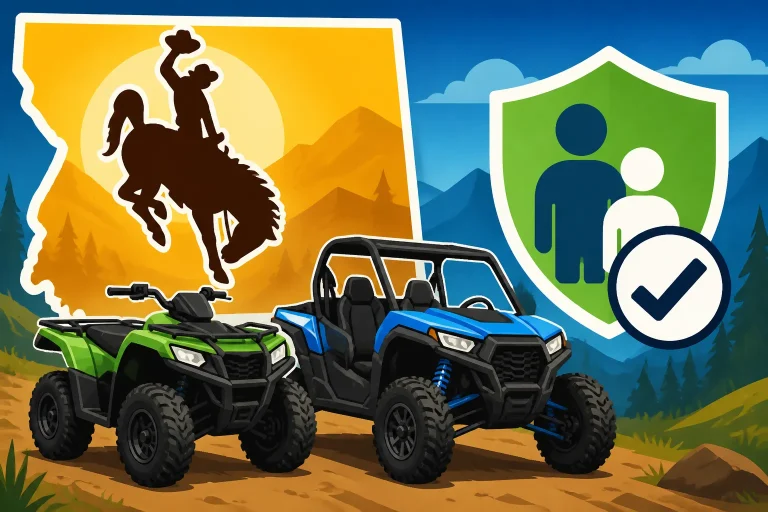
A grazing lease and an ORV permit address different things. The permit is a state registration requirement for eligible ORV use on designated routes; permission to enter land is an access question. Having a current decal does not, by itself, authorize you to ride a grazing lease you do not hold.
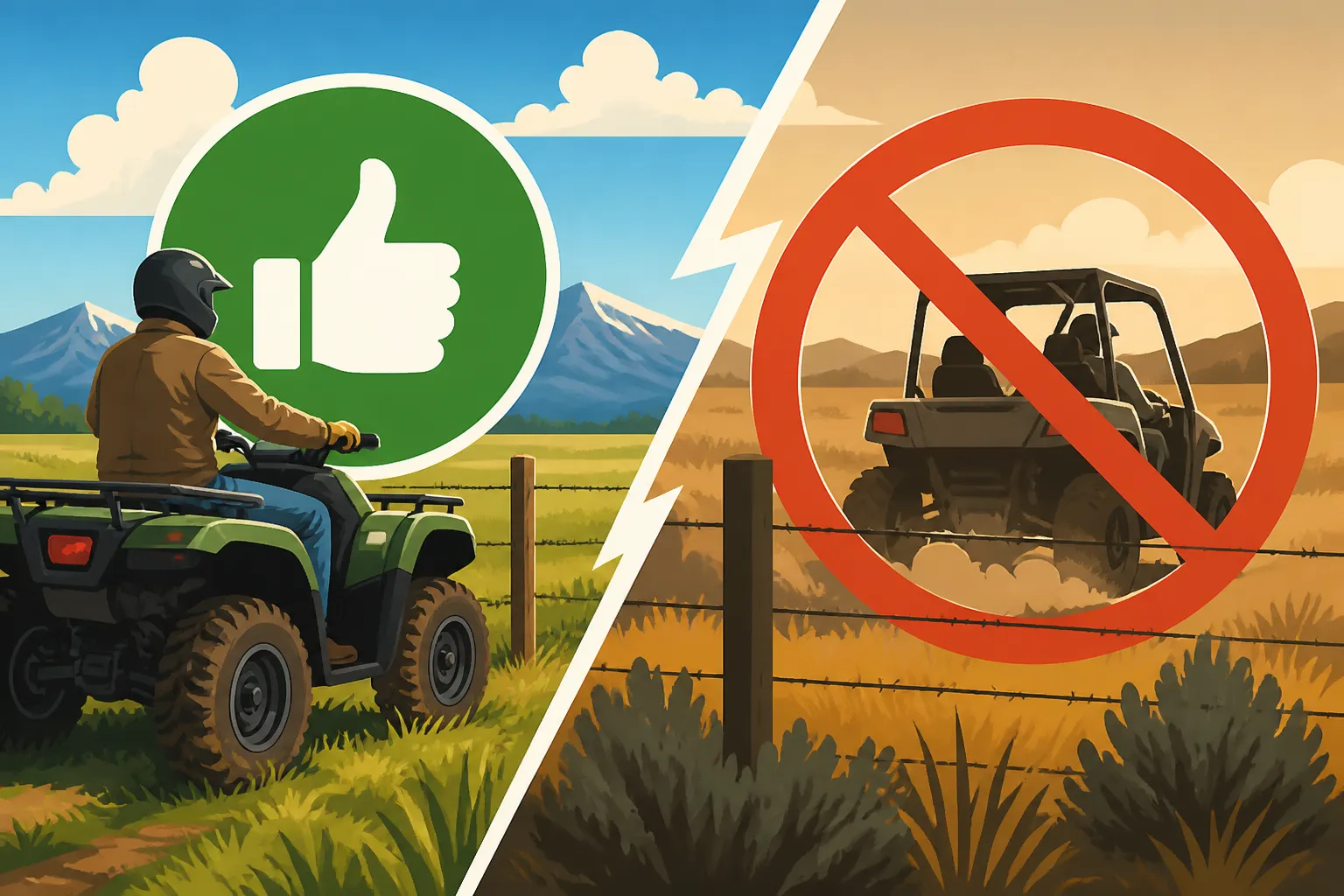
The Wyoming Legislature says that riding an off-road vehicle on a private grazing lease or private land without authorization constitutes criminal trespass. Civil liability may also apply if your riding causes property damage. The practical takeaway is simple: do not assume a public-land setting, an existing two-track, or a valid permit gives you access across a lease.
Before you enter, identify who has authority to grant permission. Depending on the property and lease, that may involve the landowner, the leaseholder, or another authorized manager. If you cannot confirm who can approve access, do not treat silence or an open gate as permission. Ask before riding, and keep a record of any authorization, including where it applies and whether it covers motorized travel.
For more detail on this distinction, see Wyoming Landowner Permission Rules, Wyoming Rules for Crossing Private Ground, and Wyoming Rules for Riding a Grazing Lease. Those access questions are separate from the state permit rules explained in Wyoming ORV Permits Explained.
| Situation | What it means for your ride |
|---|---|
| You have a current Wyoming ORV permit | It may satisfy the state permit requirement for applicable designated routes, but it does not grant access to a grazing lease. |
| A route appears on a map | Check that the route is currently open to motorized travel and confirm whether it crosses land where you need permission. |
| A gate is open | An open gate is not, on its own, proof that you are authorized to enter or ride through. |
| You have permission for one area | Confirm the permission covers your machine, the route, and the area you plan to use. |
| You are unsure who controls access | Stop and ask the appropriate land manager or an authorized person before proceeding. |
Trespass can have consequences beyond being asked to turn around. As of November 2026, the Wyoming Legislature states that unauthorized ORV riding on a private grazing lease or private land is a misdemeanor punishable by imprisonment for up to six months, a fine of up to $750, or both; civil liability for resulting property damage can also apply. Do not rely on an assumption about who owns the land or who has authority to let you in.
Check route status, land access, and permit requirements separately
A reliable pre-ride check answers three different questions:
- Is the route designated for ORV travel? A visible track on the ground is not enough. Wyoming State Parks, Historic Sites, & Trails says ORVs may be operated only on roads, trails, or areas designated as open by the appropriate local land manager. Stay on routes designated for motorized travel, and do not create a shortcut across a pasture or around a closure.
- Do you have permission for the land you will enter? Route designation and access authorization are not interchangeable. If your route reaches or crosses a grazing lease, confirm that you are allowed to ride there.
- Does your machine have the required Wyoming permit or road credentials? Wyoming State Parks, Historic Sites, & Trails says the state does not have reciprocity for out-of-state ORV or OHV registrations. Nonresidents generally need a Wyoming ORV permit when operating in Wyoming, subject to the rules for street-legal vehicles and the type of route.
According to Wyoming State Parks, Historic Sites, & Trails, a Wyoming ORV permit is required on enrolled roads, routes, and trails of 50 inches or less designated for ORV use. Designated trails enrolled in the program require a state ORV sticker even if the machine is street legal. The program’s rules also distinguish enrolled roads from other roads: an enrolled road may have requirements for either a street-legal vehicle or an ORV displaying a state sticker, while an un-enrolled road requires a current license plate and a street-legal machine.
That distinction matters when planning a route near a lease. A road may look public or appear to connect two open areas, but its status and permitted uses still need to be checked. Wyoming State Parks, Historic Sites, & Trails says all ORV travel must remain on enrolled roads and travel routes, and ORVs may be used only where the appropriate land manager has designated the route open. A permit does not let you leave the route to skirt a locked gate, avoid a muddy section, or reach a point across private land.
For route planning, start with the applicable land manager’s current travel map and information. Wyoming State Parks, Historic Sites, & Trails recommends carrying a travel management map, and the Forest Service advises visitors to obtain a Bighorn Motorized Vehicle Use Map when riding in the Bighorn National Forest. A map can help you identify designated routes, but it does not replace permission where access is restricted or unclear. If a sign on the ground indicates a closure, do not assume that a route shown elsewhere is still open; confirm the current status before continuing.
If your trip includes a rental or a borrowed ATV, do not assume the machine’s existing decal settles every issue. Check that the permit is current, that the route is open to that kind of machine, and that you have access permission for any leased or private land. The same applies when a friend says a route is “usually fine.” Ask what route they mean and who authorized access. For visitor-specific permit details, see Wyoming ORV Permit for a Visiting Rider and Wyoming ORV Reciprocity Rules.
What to do when a boundary or route is unclear
Leases, fences, gates, signs, and map lines can be difficult to interpret from a machine. Treat uncertainty as a reason to pause, not as an invitation to continue until someone stops you. A careful check before the ride is easier than sorting out a dispute after crossing a boundary.
Before you leave
Plan the route using current information from the land manager responsible for the area. Check where designated routes begin and end, whether there are temporary closures, and whether any segment crosses land where you need separate authorization. If access depends on permission, contact the person with authority before setting out rather than trying to resolve it at the gate.
When permission is granted, make sure you understand its scope. Ask which entrance and route to use, whether you must stay on an existing road, and whether there are conditions such as closing gates behind you. Do not treat permission for one parcel or trip as permission for neighboring land or a different route.
Carry the relevant map and keep your permit affixed to the machine as required. Wyoming State Parks, Historic Sites, & Trails says ORVs must display the Wyoming permit while operating on public lands and other designated roads, trails, or areas. A phone image or an old receipt may help you find your purchase information, but it should not be treated as a substitute for displaying the required decal.
At a gate, fence, or unclear junction
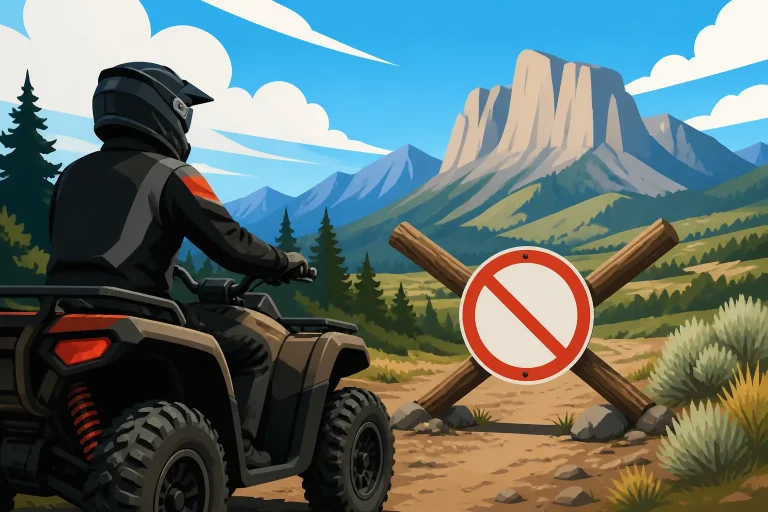
Stop before crossing. Look for signs and route markers, but do not infer authorization from the absence of a warning sign. A gate left open may have been opened for livestock or another authorized user. Unless you have permission or clear confirmation that the route is open for your use, turn back and check with the appropriate contact.
If you encounter a locked gate or a marked closure, do not bypass it by riding along a fence or cutting across the lease. That can turn a route problem into an access and property-damage problem. Do not assume that a fence line or a track through a field identifies a public route.
When a map and sign seem to conflict, stop and seek current guidance from the relevant land manager. The map may not show a newer closure, or the sign may apply only to a particular segment. Until you have clear information, the safer choice is not to proceed into the uncertain area. For related route-checking advice, see When a Map and a Sign Disagree, Wyoming’s Enrolled Roads and Trails, and Wyoming Rules for Riding a Designated Route.
If you realize you entered without permission
Do not continue deeper into the lease or attempt to hide the mistake. Turn around using the route you came in on, avoid livestock and property, and leave without causing damage. If a gate was moved, follow the directions posted there or contact the responsible person for instructions; do not leave it in a condition that could let livestock escape.
If you damaged a fence, gate, or other property, report it promptly to the landowner or authorized manager. A permit does not remove responsibility for damage, and Wyoming law may allow civil liability for property damage resulting from unauthorized riding. If someone asks you to leave, comply and clarify access before returning.
A simple pre-ride decision
Before riding a route near a grazing lease you do not hold, work through this sequence:
- Identify the route and its manager. Find out whether the road or trail is designated for ORV travel and currently open.
- Identify the land and access authority. Determine whether the route crosses a grazing lease or other private land, and who can authorize entry.
- Get clear permission where needed. Confirm that permission covers your planned route and motorized use. If you cannot confirm it, choose another route.
- Check the vehicle requirements. Confirm that your machine has the appropriate Wyoming permit or road credentials for the route. An out-of-state sticker alone does not replace the Wyoming permit requirement, according to Wyoming State Parks, Historic Sites, & Trails.
- Stay on the authorized route. Do not ride around closures, cross a pasture to save time, or assume a track is open because another rider used it.
- Stop when information is uncertain. Contact the relevant land manager or authorized person before proceeding.
The main point is that route access and vehicle registration are separate checks. A current permit may be necessary for your ride, but it cannot replace the landowner’s or authorized leaseholder’s permission. When you cannot verify that permission, turn around and use a route you know is open and authorized.
Sources
- Wyoming State Parks, Historic Sites, & Trails — Wyoming State Parks, Historic Sites, & Trails – ORV Rules & Regulations – Trails (checked November 3, 2026)
- Wyoming State Parks, Historic Sites, & Trails — Wyoming State Parks, Historic Sites, & Trails – ORV Requirements – Trails (checked November 3, 2026)
- Wyoming Legislature — Title 6 Crimes and Offenses – Wyoming Legislature (checked November 3, 2026)
Disclaimer
This article is for general informational purposes only and does not constitute professional advice. Laws, prices and regulations vary by location and change over time. Consult a qualified professional for guidance on your specific situation.