Wyoming Permits for a Rental Fleet
Managing an ORV rental fleet in Wyoming comes with its own unique set of headaches, especially when it comes to permits. You're not just getting one sticker for your personal side-by-side; you're trying to keep a dozen, maybe even a hundred, machines compliant so your customers can enjoy our incredible trails legally. This guide is here to walk you through everything you need to know about navigating Wyoming's ORV permit system for your rental fleet, ensuring smooth operations and happy riders.
Why Every Rental Machine Needs a Wyoming ORV Permit
It can be a real head-scratcher when you're running a business that relies on off-road vehicles. You might think, "My machines are registered in Colorado," or "They're titled in Utah, so that should cover it." But when it comes to Wyoming, there's a distinct difference, and it's a critical one for rental operators. Every single machine in your fleet, regardless of its home state or any other registration it carries, needs a specific Wyoming ORV permit if it's going to touch public land here.
The "No Reciprocity" Rule for Rental Fleets
This is perhaps the most important thing for any rental business to understand upfront: Wyoming operates on a strict "no reciprocity" policy when it comes to ORV permits. What does that mean for you? It means that sticker from Montana, or the plate from Idaho, simply won't cut it on our trails. Each ATV, UTV, or dirt bike in your rental fleet that will be used on Wyoming's enrolled trails and public lands must display a current Wyoming ORV decal. There's no getting around this. It's not about making things difficult; it's about ensuring all users contribute equally to the maintenance and development of the very trail system everyone enjoys. For a deeper dive into this, you might want to read [Why Wyoming Honors No Other State's Registration].
Imagine a scenario: You've got a busy weekend coming up, and a group is eager to hit the trails near Medicine Bow. They've rented five side-by-sides from your shop, and you've dutifully checked each one to make sure it's in top mechanical condition. But if even one of those machines doesn't have a valid Wyoming ORV decal affixed, that group could be stopped by a game warden or a Forest Service ranger before they even make it far down the trail. It's a frustrating situation for everyone involved, but the rule is clear: Wyoming's public lands require Wyoming's decal.
This isn't just about avoiding a minor inconvenience. It's about operating your business legitimately within the state's framework. Thinking you can slide by with out-of-state paperwork puts your entire operation at risk. It also puts your customers in a tough spot, potentially getting them fined for something that should have been handled by the rental company.
Ensuring Legal Operation and Avoiding Fines
Operating without the proper permits isn't just a minor oversight; it carries real consequences. For a rental business, this can hit hard in terms of both finances and reputation. If your machines are found on public land without the correct Wyoming ORV permit, you, or your customer, could be facing a citation. These fines can add up quickly, especially if multiple machines in your fleet are caught without the proper decals. You definitely don't want to get a call from a frustrated customer who just got a ticket.
Consider the ripple effect: a customer gets fined because your rental machine wasn't properly permitted. They're unlikely to come back, and worse, they're likely to share their negative experience online or with friends. In the world of rental businesses, word-of-mouth and online reviews are king, and a reputation for cutting corners on legal requirements can severely damage your bottom line. It's far easier and more cost-effective to ensure every machine is properly permitted from the start. You can find more information about the penalties in [Wyoming Fines for Riding Without a Permit].
Beyond the monetary fines and reputational damage, there's also the potential for your machines to be impounded in more egregious or repeated offenses, though this is rare for a first offense. The hassle, expense, and interruption to your business operations that such an event would cause would be immense. It's simply not worth the risk. Ensuring every machine has its permit is a fundamental aspect of responsible business practice in the off-road recreation industry in Wyoming. It protects your business, your customers, and the integrity of the sport.
Contributing to the Wyoming Trails Program
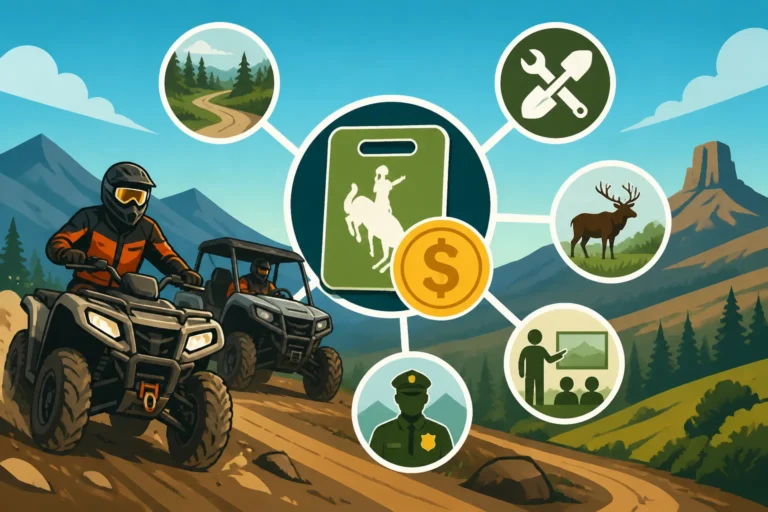
When you purchase a Wyoming ORV permit for your rental fleet, you're not just buying a sticker to avoid a fine. You're directly investing in the future of Wyoming's incredible trail system. The money collected from these permits doesn't just disappear into a general fund; it's specifically earmarked for the Wyoming Trails Program. This program is vital for maintaining, improving, and expanding the very trails your customers love to ride.
Think about it: those well-maintained trails, clear signage, improved staging areas, and even the clean vault toilets at popular trailheads are all often funded by ORV permit fees. When you ensure your entire fleet is permitted, you're helping to pay for the continuous effort required to keep those trails rideable and enjoyable. This makes your business an integral part of the sustainable recreation economy in Wyoming. You're a stakeholder, and your contribution helps create the infrastructure that draws your customers to the state. For details on how these funds are allocated, check out [Where Wyoming Permit Money Is Spent].
This direct funding mechanism creates a win-win situation. Your rental customers get to experience fantastic, well-cared-for trails, and your business contributes to the very resource that brings them to your door. It's a cycle of investment and enjoyment. When a customer sees that bright orange decal, they're not just seeing a permit; they're seeing a commitment to the quality of their riding experience and the conservation of Wyoming's natural beauty. It's something you can even highlight in your customer communications – letting them know that part of their rental fee, through the permit, helps maintain the trails they'll be exploring.
The Process of Obtaining Permits for a Rental Fleet
Navigating the permit process for a single personal ORV is one thing, but when you're responsible for a whole fleet, efficiency and organization become paramount. You don't want to be scrambling at the last minute or dealing with stacks of individual forms. Fortunately, Wyoming offers methods that can streamline this for rental operators, but it still requires careful planning.
Bulk Purchasing and Annual Renewal
The Wyoming ORV permit operates on a calendar year, meaning it's valid from January 1st through December 31st, regardless of when you purchase it. This is crucial for rental fleet management because it means you'll have a single, predictable renewal period for all your machines. Instead of staggered expiration dates, you can plan to renew your entire fleet at the end of the year or early in the new year. This predictability is a huge advantage for businesses. You can set aside a specific time each year to handle this administrative task. More on the annual nature can be found in [Wyoming's Calendar-Year Permit].
For rental businesses, purchasing permits in bulk is often the most sensible approach. While the state doesn't offer a specific "fleet discount" (everyone pays the same flat fee per machine), buying multiple decals at once simplifies the transaction process. You can acquire all the necessary decals in one go, rather than individual trips or orders. It’s about making one large transaction instead of many small ones. When it comes time for renewal, you'll need to go through the process again for each machine that will continue to be part of your active rental fleet. Keeping a roster of your machines and their corresponding decal numbers can make this annual task much smoother. For help with future renewals, see [Wyoming ORV Permit Renewal].
It's wise to begin the renewal process well before the end of the year, especially if you anticipate a busy start to the riding season. Waiting until January 1st means you could be without valid permits for a period if there are any processing or mailing delays. Proactive renewal ensures your fleet is ready to roll as soon as the weather breaks or as soon as new year's bookings start coming in.
Where to Buy Permits for Multiple Machines
Rental fleet operators have several convenient options for purchasing permits, and the best choice often depends on your location and operational preferences. You can purchase permits directly through the Wyoming State Parks, Historic Sites & Trails website. This is often the most efficient method for bulk purchasing, allowing you to order multiple decals and have them mailed to your business. This method avoids the need to travel and can be handled from your office. To learn more about this process, refer to [Buying a Wyoming Permit Online].
Alternatively, you can purchase permits in person at various authorized vendors across the state. These include numerous sporting goods stores, powersports dealerships, state park offices, and even some Forest Service and BLM offices. If you prefer a hands-on approach or need permits quickly, visiting a local vendor might be beneficial. However, for a very large fleet, placing a bulk online order and having them shipped is often less time-consuming. You can find a list of locations in [Where Wyoming Sells ORV Permits].
Some businesses find it helpful to establish a relationship with a local vendor who understands their needs as a fleet operator. This might mean placing a large order in person annually or having a point of contact for any questions that arise. Regardless of the method you choose, always keep good records of your purchases, including receipts and the decal numbers issued to your business. This will be invaluable for tracking and compliance.
Managing Decal Placement and Tracking
Once you have a stack of shiny new Wyoming ORV decals, the next challenge is accurately applying them to your fleet and maintaining a system for tracking. The decal must be affixed to the left-front fender or other visible location on the left side of the machine. It needs to be clean, visible, and permanently attached. This isn't just a suggestion; it's a requirement. For a rental fleet, consistency is key, so having a standard location for all decals makes it easier for your staff to apply them and for authorities to spot them during checks. For specific guidance on placement, see [Wyoming ORV Decal Placement].
Developing a robust tracking system for your rental fleet's permits is non-negotiable. This could be a simple spreadsheet that lists each machine by its VIN, make, model, and corresponding Wyoming ORV decal number and expiration date. Or, for larger operations, you might integrate this into your existing fleet management software. The important thing is to have an easily accessible record that allows you to:
- Quickly identify which decal belongs to which machine.
- Verify the validity of a decal at a glance.
- Track when each machine's permit was last renewed.
- Reference decal numbers if a replacement is needed.
This tracking system becomes invaluable for internal audits, quick checks before a machine goes out for rent, and for providing information to law enforcement if questions arise. It’s also crucial for managing your annual renewal process efficiently. Don't underestimate the importance of this organizational step; it can save you significant headaches down the line.
Specific Considerations for Rental Fleet Operations
Running an ORV rental fleet means you're dealing with a dynamic situation: new customers, different machines, and the constant ebb and flow of business. Beyond just securing the permits, there are several other operational aspects that require careful attention to ensure legality, safety, and customer satisfaction.
Rental Agreements and Permit Responsibility
Your rental agreement isn't just paperwork; it's the foundation of your customer relationship and legal protection. For an ORV rental business in Wyoming, this agreement should clearly outline the responsibilities related to the ORV permit. While it's your responsibility as the rental operator to ensure the machine is properly permitted before it leaves your lot, it's beneficial to include language that educates the customer.
The agreement should confirm that the machine is supplied with a valid Wyoming ORV decal and explain that this decal must remain on the machine and visible throughout the rental period. It can also briefly explain why the permit is necessary (e.g., to ride on public lands) and emphasize the importance of adhering to all state and federal regulations while riding. This acts as a protective measure for your business and an educational tool for your customers.
Consider using a service like LawDepot to help customize your rental agreements. They offer templates and tools that allow you to draft comprehensive documents, ensuring you cover all necessary legal points, including permit responsibility, damage waivers, and usage policies tailored to your specific fleet and Wyoming's regulations. Clear, well-structured agreements prevent misunderstandings and provide a legal framework if issues arise.
Insurance and Liability for Rental Fleets
Operating an ORV rental fleet inherently comes with significant liability. Unlike a personal machine, where one individual is typically responsible, a rental fleet means many different operators on many different machines. Comprehensive insurance coverage is not just recommended; it's absolutely essential. This goes far beyond the basic liability insurance often required for road-legal vehicles.
Your insurance policy should be specifically designed for a commercial ORV rental operation. This typically includes:
- General Liability: To cover claims for bodily injury or property damage to third parties.
- Property Insurance: To protect your fleet of machines from damage, theft, or other losses.
- Commercial Auto (if applicable): If you're transporting machines on public roads with your own vehicles.
- Waivers and Release Forms: While not insurance, robust waivers (which, again, tools like LawDepot can help you draft) are crucial for mitigating risk by clearly outlining customer responsibilities and releasing your business from certain liabilities.
It’s important to understand that the Wyoming ORV permit itself is not an insurance policy. It's an access fee for public land. While [Wyoming ORV Permit and Insurance] might discuss general insurance for riders, your business needs a specialized commercial policy. Review your policy regularly with a qualified insurance broker who specializes in adventure tourism or recreational vehicle rentals to ensure you have adequate coverage for the unique risks associated with off-road vehicle rentals.
Age and Licensing Requirements for Rental Customers
Another vital aspect of responsible rental operation is adhering to Wyoming's age and licensing requirements for ORV operators. You cannot simply hand the keys to anyone who walks in the door. Wyoming has specific rules for who can ride on public lands and, if your machines are registered as Multipurpose Vehicles (MPVs) for road use, who can drive them on enrolled roads.
For riding on public lands and trails (which is what your ORV permit covers), Wyoming generally has a minimum age. While there might not be a specific license required for trail use, you must ensure your rental customers meet the age criteria. Often, minors riding ORVs require adult supervision. For more details, consult [Wyoming Minimum Age to Ride Public Land].
If your rental fleet includes machines that are registered as MPVs (street-legal side-by-sides, for example) and you intend for customers to use them on enrolled public roads, the rules become stricter. Operators of MPVs on public roads must typically possess a valid driver's license, and in some cases, a motorcycle endorsement (M or MR) might be necessary, depending on the machine's classification. For specifics on these requirements, particularly for street-legal rentals, see [Wyoming UTV Rental License Requirements]. It's your responsibility to verify your customers' age and licensing before allowing them to rent a machine. This often involves checking their driver's license and ensuring they understand the legal limitations based on their age and experience.
Special Scenarios and Challenges for Rental Businesses
Even with the best planning, specific situations can arise that require quick thinking and a clear understanding of the rules. For a rental fleet, these special scenarios often revolve around the practicalities of a high-use environment.
Dealing with Lost or Damaged Decals
It's almost inevitable: a decal will get peeled off by brush, scraped by a branch, or simply fall victim to sun and weather. For a single machine, it's an annoyance. For a rental fleet, it can be a constant battle. A machine with a missing or unreadable decal is, for all intents and purposes, unpermitted in the eyes of a game warden. This means your customer could be riding illegally, potentially leading to fines or stops.
The process for replacing a lost or damaged decal is straightforward, but it does require action. You'll typically need to contact Wyoming State Parks, Historic Sites & Trails to request a replacement. There might be a small fee involved, and you'll likely need to provide the original decal number and the VIN of the machine. The key is to have a system in place to quickly identify when a decal is missing or damaged during pre-rental checks or post-rental inspections. Prompt replacement is crucial to keep your fleet fully compliant. You can learn more about this process in [Replacing a Lost Wyoming Decal].
A good practice is to keep a small inventory of spare decals (if allowed, or be prepared to order them quickly) or at least have the replacement process clearly documented for your staff. Training your team to identify and report missing or damaged decals immediately will minimize downtime for the machine and reduce the risk of non-compliance.
Outfitter and Guide Services with Rentals
Many businesses in Wyoming blend ORV rentals with guided tour services. If your operation falls into this category, you're not only dealing with rental fleet permits but also with the regulations governing commercial guiding on public lands. This adds another layer of complexity that requires careful attention.
As an outfitter or guide, you'll need to ensure you have the appropriate permits from the land management agencies (like the Forest Service or BLM) for commercial operations on their respective lands. These permits are separate from the individual ORV permits for your machines. While your rental machines will still need their Wyoming ORV decals, your business itself will need a commercial use authorization or a special use permit for guided activities. This is distinct from simply renting a machine.
Your guides will also need to be aware of all ORV regulations, local rules, and safety protocols, as they are responsible for their group. This includes ensuring all machines in the guided tour have valid ORV permits. Understanding the nuances of operating as a commercial guide, alongside your rental fleet, is critical to avoid legal issues. For more specific information, you can read [Wyoming Rules for a Commercial Guide]. It's a dual responsibility: your machines are permitted, and your commercial guiding operation is authorized by the land managers.
Fleet Maintenance and Inspection Requirements
While not strictly about permits, rigorous fleet maintenance and inspection are intrinsically linked to legal operation and customer safety. Wyoming law requires ORVs to meet certain equipment standards for public land use, and ensuring your rental machines comply is part of your responsibility. This includes things like working headlights and taillights, functional brakes, and crucially, a properly functioning spark arrester and a muffler that keeps noise within acceptable limits.
Spark arresters are mandatory on all ORVs operating on public land in Wyoming. These devices prevent hot carbon particles from escaping the exhaust and potentially igniting wildfires, which are a serious concern in our arid environment. Regularly inspect and clean the spark arresters on your rental machines. Similarly, excessive noise from a modified or damaged muffler can lead to citations and is generally frowned upon by other trail users and land managers. Maintain your mufflers to ensure compliance with sound limits. For detailed information, see [Wyoming Spark Arrester and Sound Rules].
Beyond legal requirements, regular maintenance ensures your machines are reliable and safe for your customers. A well-maintained fleet leads to fewer breakdowns on the trail, which translates to happier customers and less hassle for your business in terms of recoveries and repairs. Implement a comprehensive maintenance schedule and a pre-rental inspection checklist for every machine before it leaves your lot. This covers both safety and legal compliance, ensuring your customers have the best possible experience.
Leveraging Resources for Smooth Operations
Running a successful ORV rental fleet in Wyoming means staying organized, informed, and connected. There are many resources available that can help streamline your operations and ensure you're always on the right side of the law.
Utilizing Digital Tools for Fleet Management
In today's digital age, relying solely on paper logs for a rental fleet can be incredibly cumbersome. Digital tools, from simple spreadsheets to dedicated fleet management software, can revolutionize how you track permits, maintenance schedules, and machine assignments. Imagine having a digital dashboard where you can see, at a glance, which machines have current Wyoming ORV permits, which are due for maintenance, and which are currently out on rental.
You could use a cloud-based spreadsheet program to list each machine's VIN, decal number, purchase date, and renewal date. Set up automated reminders for permit renewals or maintenance tasks. For more advanced needs, there are commercial fleet management software solutions that can track GPS location, usage hours, and even integrate with your booking system.
Beyond internal fleet management, think about how digital tools can help with customer-facing documentation. As mentioned earlier, services like LawDepot can be invaluable. You can use their platform to create custom digital rental agreements, liability waivers, and even pre-ride safety checklists that your customers can review and sign electronically. This not only makes your operation more efficient but also ensures that critical legal documents are consistently applied and securely stored. By embracing technology, you can reduce administrative burdens and focus more on providing excellent customer service.
Staying Updated on Regulations
Wyoming's ORV regulations, while generally stable, can change. New roads might be enrolled for MPV use, seasonal closures might be adjusted, or even permit requirements could see minor tweaks. For a rental business, staying abreast of these changes isn't just a good idea; it's a necessity. Ignorance of a new rule is no excuse, and a change in regulation could directly impact your operations.
Make it a habit to regularly check the official websites of Wyoming State Parks, Historic Sites & Trails, the Wyoming Game and Fish Department, and relevant federal land management agencies like the Forest Service and BLM. Sign up for newsletters or email alerts from these organizations if they offer them. Follow reputable Wyoming ORV advocacy groups or industry associations, as they often disseminate information about upcoming changes.
Schedule a quarterly or semi-annual review of relevant regulations for your staff. Discuss any changes and how they impact your rental agreements, customer briefings, or operational procedures. Being proactive about staying informed will prevent unwelcome surprises and demonstrate your commitment to operating a legitimate and responsible business.
Connecting with Local Authorities and Trail Programs
Building relationships with local land managers and the Wyoming Trails Program can be an incredibly valuable asset for your rental business. These are the people who are directly involved in managing the trails your customers ride, enforcing regulations, and making decisions about future trail development.
Don't see them just as regulators; view them as partners. Attend local public meetings related to trail planning, reach out to your local Forest Service or BLM ranger district office, and make contact with representatives from the Wyoming Trails Program. Introducing yourself as a local rental business owner demonstrates your commitment to the community and responsible recreation. This engagement can provide you with:
- Early warnings about trail closures: Knowing about seasonal closures, wildfire restrictions, or maintenance projects in advance allows you to inform your customers and adjust your booking schedule.
- Insights into future trail development: Understanding where new trails might be built or existing ones improved can help you plan your marketing and even fleet expansion.
- Opportunities for collaboration: You might be able to participate in trail maintenance days, further solidifying your business's reputation as a community-minded operator.
The Wyoming Trails Program contact information is readily available, and reaching out can provide you with direct answers to specific questions you might have about fleet permitting or trail access. This kind of proactive relationship-building benefits not only your business but the entire off-road riding community in Wyoming. For contact details, look up [Wyoming Trails Program Contact].
Key Documents for a Wyoming ORV Rental Fleet
To summarize, here are some of the critical documents and items you'll need to manage effectively for your Wyoming ORV rental fleet:
| Document/Item | Purpose | Key Details |
|---|---|---|
| Wyoming ORV Permit Decal | Legal access to public ORV trails and lands for each machine. | Must be affixed to each machine's left-front fender (or visible left side). Valid January 1 – December 31. No reciprocity for out-of-state permits. |
| Fleet Tracking System | Internal record-keeping for all machines and their permits. | Digital spreadsheet or software tracking VIN, make/model, decal number, expiration date, maintenance schedule. Critical for bulk renewals. |
| Rental Agreement | Legal contract with customers. | Must clearly outline customer responsibilities, permit display, damage waivers, age/licensing rules, and usage policies. LawDepot can assist with customization. |
| Proof of Commercial Insurance | Essential for mitigating business liability. | Specialized policy for commercial ORV rental operations, covering general liability, property, and potentially commercial auto. Regularly reviewed by an expert broker. |
| Operator Licenses | Verification of customer's legal ability to operate. | Check valid driver's license for MPVs on roads; verify age and supervision rules for ORV trail use (especially for minors). |
| Land Use Permits (if guiding) | Authorization for commercial guiding operations on public lands. | Separate from ORV permits; required from Forest Service/BLM for commercial tours. Ensures your guiding service is legally sanctioned. |
| Maintenance Records | Ensures machines are safe and legally compliant (e.g., spark arresters). | Documentation of regular maintenance, safety checks, and spark arrester inspections. Crucial for customer safety and avoiding equipment-related citations. |
| Wyoming Trail Maps/MVUMs | Guides for legal riding areas and routes. | Provide to customers or have readily available. Show enrolled trails, seasonal closures, and restricted areas. Essential for compliance and a good customer experience. |
Disclaimer
This article is for general informational purposes only and does not constitute professional advice. Laws, prices and regulations vary by location and change over time. Consult a qualified professional for guidance on your specific situation.