Camping at a Wyoming Riding Area
Camping in Wyoming beside an ATV or UTV trail takes more planning than simply finding a flat place to park. A campsite may be close to a route but still fall under different land-use rules, seasonal closures, fire restrictions, or vehicle limits. This guide helps you choose a legal, practical base camp, prepare for Wyoming’s remote conditions, and avoid common problems once you arrive.
Choose a camping setup that fits the ride
Stay at a developed campground when convenience matters
A developed campground can make a Wyoming riding trip much easier, particularly if you’re traveling with children, a larger group, or a rig that needs a predictable place to park. These sites may offer facilities such as toilets, designated spaces, picnic tables, or fire rings. The exact amenities vary, though, so don’t assume a campground has drinking water, hookups, or room for a truck, trailer, and UTV just because it appears on a map.
Think through the whole setup, not only the tent or RV. Could your truck and trailer fit without blocking another site? Is there room to unload a machine safely? If you’re bringing a larger motorhome, can it reach the campground without a rough or narrow final stretch? A place that works well for a tent and ATV may be awkward for a long trailer combination.
A developed site can also reduce uncertainty after a long day on the trail. You may have a clear place to cook, rest, and organize riding gear rather than searching for a legal spot as daylight fades. For a comparison of places to begin your search, see [Wyoming OHV Camping Spots] and [Camping Near Wyoming Trailheads]. Confirm access and amenities with the site’s managing agency before you travel.
Use dispersed camping only where it is allowed
Dispersed camping can put you closer to the ride and give your group more privacy, but “open land” does not automatically mean “camp anywhere.” Public land may have designated camping areas, distance requirements from roads or water, seasonal closures, or restrictions on where vehicles can travel. Private land, state trust land, and leased grazing ground have their own access rules. If you can’t establish that overnight camping is allowed, don’t treat a quiet pullout as permission.
A common mistake is driving off a route to find a more level place for the trailer. That can create a problem even when the spot looks harmless: the ground may be fragile, the area may be closed to cross-country travel, or the turnout may belong to a different land manager than the nearby road. Park only where the rules allow, and keep the vehicle and camp within the designated or previously disturbed area when required.
Before the trip, look up the rules for the specific parcel and road system you plan to use. [Wyoming Dispersed Camping for Riders] is a useful related topic, but the final check should be tied to your actual destination. A land-management map, posted signs, or direct guidance from the responsible office can help resolve questions that a general map app can’t answer.
Match the campsite to your machine and group
A camp that is comfortable for one ATV and two riders may not work for a group with several side-by-sides, support vehicles, and trailers. Count the complete footprint: tow vehicles, trailers, machines, tents, cooking space, and a safe path for people moving around camp. If everyone has to squeeze between a trailer and a fire ring, the site is probably too small.
Also consider how your group will handle noise, dust, and early starts. A campsite close to the trail may save loading time, but it can also put you beside passing traffic. In a shared campground, warming up machines before others are awake or driving through camp faster than necessary can quickly sour the experience. Agree on a quiet-hours routine and a low-speed plan before the first evening.
For a mixed group, ask whether anyone needs a shorter route back, a quiet place to rest, or an easier approach road. A campsite that is technically near a trailhead may still involve a tiring drive over washboard gravel. When booking or choosing a site, describe the vehicles honestly and ask about trailer parking rather than assuming it will be available.
Compare Wyoming riding areas before you book
Killpecker Sand Dunes
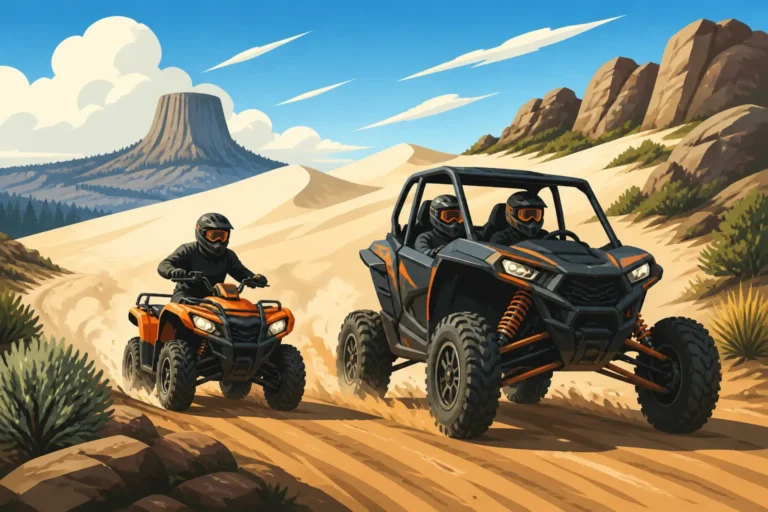
Killpecker Sand Dunes in southwest Wyoming can be a striking place to base a riding trip, but sand riding makes camp logistics especially important. Sand can work its way into gear, vehicles, and food, and wind can turn an ordinary meal into a gritty chore. Pack food in sealed containers, keep sleeping bags protected during the day, and have a way to clean goggles and air filters without blowing dust into the camp kitchen.
The camping area below the dunes is basic. Plan to be self-sufficient rather than counting on services at the riding area. In particular, bring drinking water, food, and a way to manage waste. Even if a vault toilet is available, it does not mean there is potable water or a place to dump an RV. Check the current site information before you go, and use [Free Camping at Wyoming's Killpecker Dunes] as a starting point for learning about the area’s simple camping setup.
Wind can change what feels like a comfortable campsite. A sheltered spot may be more pleasant for a tent, but do not drive off an authorized area or disturb vegetation to find one. Secure lightweight equipment, close vehicle doors when possible, and keep sand away from food and bedding. If you’re new to the area, read [Riding the Dunes at Killpecker] and check route access separately from camping arrangements.
Poison Spider and the Casper area
Poison Spider OHV Park, outside Casper, gives riders a convenient place to explore an established riding area, but don’t assume that the riding area itself is also an overnight campground. Camping permissions can differ from riding permissions, and a nearby parcel may be managed under separate rules. Decide where you’ll sleep before unloading, and verify that the campsite is open to overnight use and suitable for your vehicle combination.
A practical plan may involve camping at an authorized nearby site and trailering to the riding area. That means checking the driving route, parking space, and turnaround options before you arrive with a long trailer. If the approach includes a narrow or rough section, a site that looks close on a map may not be the best choice for a large rig. See [Poison Spider OHV Park Outside Casper] for more about the riding destination, then separately confirm where camping is allowed.
Casper can be a useful place to handle errands before or after a remote ride, but don’t rely on town services as a substitute for being prepared at camp. Carry enough water and fuel for the day, and have a plan for food, waste, and overnight security. A quick town stop is helpful; it doesn’t change the rules for the land where you park or ride.
Forest and mountain trailheads
Campgrounds near the Medicine Bow National Forest, the Bighorn National Forest, and other mountain riding areas can make it easier to reach routes early in the day. They also bring seasonal variables: a road or campground may remain difficult to reach after snow, and a trail that is open on one date may be closed on another. Check the relevant forest’s travel information rather than assuming a familiar summer route is passable.
Mountain camps require a different kind of preparation from lower-elevation sites. Nights can be cold even after a sunny afternoon, weather can change quickly, and a shaded campsite may stay damp. Bring warm layers, dry sleeping gear, and a backup plan if the road to your intended site is blocked. The general guidance in [Wyoming Trails Closed by Snow] can help you think about access, but confirm the status of the specific road and campground before departure.
Check the map for both the trailhead and the legal camping area. A campsite may be close by straight-line distance while requiring a long drive over a different road network. Also look for width limits and machine restrictions on the route you intend to ride; the fact that a trailhead is accessible to a truck does not mean every trail from it is suitable for a wide side-by-side.
| Camping setup | Often works well for | Main thing to verify | Common planning mistake |
|---|---|---|---|
| Developed campground | Families, RVs, and groups wanting designated sites | Amenities, trailer space, and seasonal access | Assuming water or hookups are available |
| Dispersed site | Self-sufficient riders seeking a quieter base | Land-manager rules and exact location | Treating an open-looking pullout as an approved campsite |
| Basic area near dunes | Riders prepared to bring their own supplies | Current camping access, water, and waste options | Arriving without enough water or dust protection |
| Campground near a forest trailhead | Mountain rides and early starts | Road, campground, and trail status | Assuming the route is open because it was open on a previous trip |
Check access, maps, and closures before leaving
Confirm camping permission and riding permission separately
Camping and riding are not interchangeable permissions. A place may allow you to ride an authorized route without allowing you to camp beside it. Another site may allow overnight camping but require you to trailer your machine to a legal riding route. Make a separate check for where you can sleep, where you can park, and where your machine can travel.
This distinction matters around boundaries. A road can cross land managed by different agencies or pass between public and private parcels. A broad map view may not show every restriction clearly. If a campsite sits near a boundary, confirm which agency or landowner controls the exact location, and don’t assume that a nearby public road grants permission to camp on adjoining ground.
Before heading out, identify the office or land manager responsible for the destination and check for posted notices or travel updates. The related guides [Wyoming Rules for Riding National Forest Ground] and [Wyoming Rules for Riding BLM Ground] can help frame the questions to ask. If there is a conflict between an app map and a sign on the ground, take the restriction seriously and seek clarification before proceeding.
Carry a travel map and know how to read it
A route that appears as a line on a digital map is not necessarily open to your machine. Travel maps can distinguish between routes for different vehicle types, seasonal routes, and routes that are closed. Learn the map legend before you leave service, and make sure the map covers the area you’ll actually ride rather than only the campsite and main highway.
onX Offroad can be useful for researching routes and saving map information for offline use, especially when you expect to lose cell coverage. Still, use it as a planning aid, not as a substitute for official travel information or signs. Check that your saved map is available offline before leaving town, and understand that a phone battery, damaged screen, or outdated downloaded layer can leave you without a reliable reference.
Keep an official or land-manager map available where practical, and show someone in your group how to read it. A single person holding all the route information is a weak plan if that rider gets separated or has a mechanical problem. For additional context, see [Wyoming Trail Maps and MVUMs]. When reading any map, confirm both the route’s status and whether its width or vehicle rules fit your machine.
Build flexibility into seasonal plans
Wyoming riding conditions vary by elevation and weather. A low-elevation route can be dry while a mountain road remains muddy or snow-covered. A campground may be accessible while a connecting trail is closed, or the reverse may be true. Check the status of the road into camp, the overnight site, and each intended route as separate parts of the trip.
Give yourself a backup destination. If the road is blocked, the campground is full, or a seasonal closure affects the ride, having a second legal option can prevent a rushed decision at dusk. A backup should be a real plan with a known access road and camping rules—not simply “we’ll find somewhere.” If your group is traveling a long distance, build enough flexibility into the schedule to change the route or shorten the ride.
Weather also affects whether a route is safe to use, even when it is technically open. Rain can make some soils difficult to cross, while snowmelt can raise creek crossings. Wind and storms can create exposed conditions on ridgelines. Choose a turnaround point in advance and be willing to use it. Getting back to camp safely is more important than completing a loop.
Prepare camp for Wyoming’s remote conditions
Bring more water and food than you expect to need
At a remote riding area, drinking water is one of the most important parts of your camp plan. Do not assume a campground has a working tap, or that a water source is treated and safe. Carry enough for drinking, cooking, and the needs of everyone in your group, with an extra reserve for a delay or a change of plan. If you’re bringing an RV, verify the available fill and dump options before relying on them.
Estimate water by looking at the whole day, not just time spent at camp. Riders may need more during dusty, windy, or hot conditions, and you may use additional water for cooking or basic cleanup. Keep drinking water separate from water used for washing equipment. Secure containers in the vehicle so they cannot tip or become contaminated during the drive.
Food planning should account for dust, wildlife, and a late return. Store dry goods in sealed containers and avoid leaving food, coolers, or trash unattended. Pack a meal that can be prepared without elaborate cleanup if your ride runs long. If you are camping in an area without services, [Wyoming Riding Areas With No Water] offers a relevant reminder to plan for self-sufficiency rather than counting on supplies at the trailhead.
Plan for toilets, trash, and washing up
A basic campground may have a vault toilet, but many remote sites have few or no facilities. Find out what is available before you arrive, and plan for the situation if toilets are absent or closed. Follow the land manager’s sanitation rules, carry the appropriate supplies, and keep waste away from water, campsites, and riding routes. Don’t leave toilet paper or hygiene items behind.
Trash deserves a similar plan. Bring bags that can be secured in the vehicle, and take out everything you bring in unless the site provides a clearly designated disposal option. Wind can scatter wrappers and lightweight packaging in minutes. Keep food scraps contained, and don’t burn trash in a campfire; it can leave residue, create smoke, and attract wildlife.
Mud and dust can make it tempting to wash a machine beside camp or in a stream. Avoid washing vehicles where runoff can reach water or sensitive ground, and follow local restrictions. A brush, small towel, and careful cleanup at the trailer can be more practical than trying to rinse everything at the site. Keeping a separate bag for dirty gloves and dusty riding layers also makes the sleeping area more comfortable.
Secure fuel, equipment, and food
Bring only the fuel you need and store it in approved containers, secured upright and away from heat or ignition sources. Check the container before the trip and again after driving rough roads. A leak in a trailer or tent area can turn a manageable problem into a serious hazard. Keep fuel handling away from cooking equipment and campfires, and follow any additional site rules.
At night, store gear so wind cannot carry it away and people can walk safely around camp. Put tools and riding equipment in a truck, trailer, or secured storage rather than leaving expensive items scattered beside the tent. Make a habit of doing a quick walk-around before bed: check that cooking equipment is off, fuel containers are closed, food is secured, and the machine is parked where it won’t roll or block an exit.
Wildlife precautions depend on the location, but food and scented items should not be left loose around camp. Keep coolers closed and follow local guidance for food storage, especially in areas where bears are present. Don’t feed wildlife or approach animals for photographs. A clean, orderly camp is easier to manage and less likely to create problems for your group, other visitors, or the animals that live nearby.
Make your campsite safe and comfortable
Prepare for wind, cold, and sudden weather
Wyoming’s open country can be windy, and a pleasant afternoon doesn’t guarantee a calm night. Use a tent suited to the conditions, secure it carefully, and avoid setting up where runoff could collect. A low spot may seem sheltered but can become uncomfortable or unsafe during rain. Check the forecast and the terrain, then choose a site that gives you a reasonable balance of drainage, shelter, and legal access.
Temperature changes can catch riders off guard, especially at higher elevations. Pack warm layers even if the drive in feels mild, and keep dry sleepwear separate from sweaty riding clothes. A damp sleeping bag or an unprotected change of clothes can make a cold night much harder. If someone in the group gets chilled, tired, or wet, shorten the ride and return to camp before the problem escalates.
Secure loose items before a storm. Chairs, tarps, lightweight cooking gear, and empty containers can blow away or become hazards. Keep a headlamp where it is easy to find and store a warm layer in the machine for each rider. Planning for ordinary discomfort may feel like extra work at home, but it matters when camp is far from a store or a heated building.
Handle campfires cautiously
A fire ring at a campsite does not mean a fire is permitted under every condition. Restrictions can change with dry weather, wind, and local fire danger. Check the rules for the specific area shortly before your trip, and obey posted closures or instructions from the land manager. [Wyoming Fire Restrictions That Close Trails] is a useful related topic, but fire restrictions should be checked for the precise location and date of your stay.
If fires are allowed, keep the fire small and attended, use the provided ring where required, and have water or another approved extinguishing method ready. Never leave a fire unattended, even if it looks almost out. Wind can move embers into grass or brush, and a fire that appears harmless at dusk can become a serious problem overnight. Put it out completely before leaving camp or going to sleep.
A stove may be a simpler cooking option than an open fire, but it still needs careful placement and proper handling. Keep it away from tents, dry vegetation, fuel, and loose fabric. Don’t cook inside a tent or enclosed vehicle. If restrictions prohibit an activity, switch to a permitted alternative rather than trying to interpret the rule in the most convenient way.
Set clear routines for a group camp
Agree on a few simple routines before your first ride. Decide where machines will be parked, where food and fuel will be stored, who has the first-aid kit, and how the group will communicate if riders become separated. The point is not to turn a weekend away into a formal operation; it is to make sure everyone knows what to do when someone needs help or the weather changes.
A basic check-in plan can reduce confusion. Before leaving camp, identify the route, expected return window, and a backup meeting point. Keep a paper note or shared message with the same information, and make sure someone outside the riding group knows your general plan if you’re far from service. If the group has different skill levels, choose routes and turnaround points that allow everyone to return safely.
At camp, protect the comfort of other visitors. Keep machine speeds low, reduce unnecessary engine noise, and avoid using headlights to illuminate other people’s sites. Give neighboring campers space, and keep children away from trailers and moving machines. Small courtesies matter more at a remote campground, where everyone may be relying on the same limited facilities.
Build a practical arrival and riding routine
Arrive with enough daylight to set up
Try to reach camp with enough daylight to find your site, unload safely, and identify the access road. Arriving in the dark makes it harder to notice soft ground, rocks, drainage channels, or a trailer angle that will be difficult to reverse out of. It also increases the chance of driving into a site that is closed or already occupied.
Before unloading, walk the site and look for obvious hazards. Check the parking surface, the route back to the main road, and the space needed to turn around. If the site is unsuitable for your vehicle, move on rather than forcing a tight maneuver that could damage the ground or your trailer. Keep the machine parked in a stable place, use the parking brake as appropriate, and avoid leaving it where people will cross in the dark.
Once camp is set, confirm that your phone or GPS has the information you need for the next morning. Downloaded maps, written directions, and a charged power bank are more dependable than hoping for a signal. If you’re using onX Offroad for route planning, save the relevant area before leaving coverage and cross-check it against official land-manager information.
Make the machine ready without disturbing camp
A quick inspection at camp can prevent a small problem from becoming a long walk back. Check tires, visible damage, lights, fuel, and essential controls before the ride. Carry tools and recovery equipment appropriate to the route and your machine. Avoid lengthy, noisy maintenance during campground quiet hours; if the machine needs major work, move to a suitable repair area or postpone the ride.
Pack supplies for the day separately from camp supplies. Water, food, first aid, warm layers, navigation, and a way to communicate should travel with the riders rather than remain in the truck. If one vehicle breaks down, the group should still have enough essentials to wait safely or return to camp. Keep a basic repair kit for likely issues, but don’t attempt a repair that exceeds your skills or creates a bigger safety risk.
Before leaving, tell someone at camp where you’re headed and when you expect to return. If the whole group is riding, leave the plan with a person who is not on the ride when possible. Take a moment to check the route status and weather once more. Conditions can shift between the planning stage and the trailhead, and a last-minute closure or storm warning should change the day’s plan.
Return thoughtfully and leave the site clean
When you return, keep speeds low and watch for people, pets, and children near camp. Park in the same authorized area you used earlier, and let the machine cool before covering or storing it. If you’ve been riding in sand or dust, keep contaminated gear away from sleeping areas and food. A small amount of organization at the end of the day makes the next morning much easier.
Do a camp cleanup before departure, not only a quick glance from the truck. Check under vehicles and around the fire ring for small items, food packaging, and tools. Remove all trash, extinguish any permitted fire completely, and leave the site in the condition required by the land manager. If you discover damage or a safety issue, report it to the appropriate site contact rather than leaving it for the next visitor.
Finally, take your own notes. Record which access road worked for your trailer, where you found water or services, and what you would pack differently next time. Note any confusing signs or route intersections so you can verify them before a return trip. That simple record can save hours of uncertainty on your next Wyoming ride—and help you choose a campsite that fits the group better.
Disclaimer
This article is for general informational purposes only and does not constitute professional advice. Laws, prices and regulations vary by location and change over time. Consult a qualified professional for guidance on your specific situation.