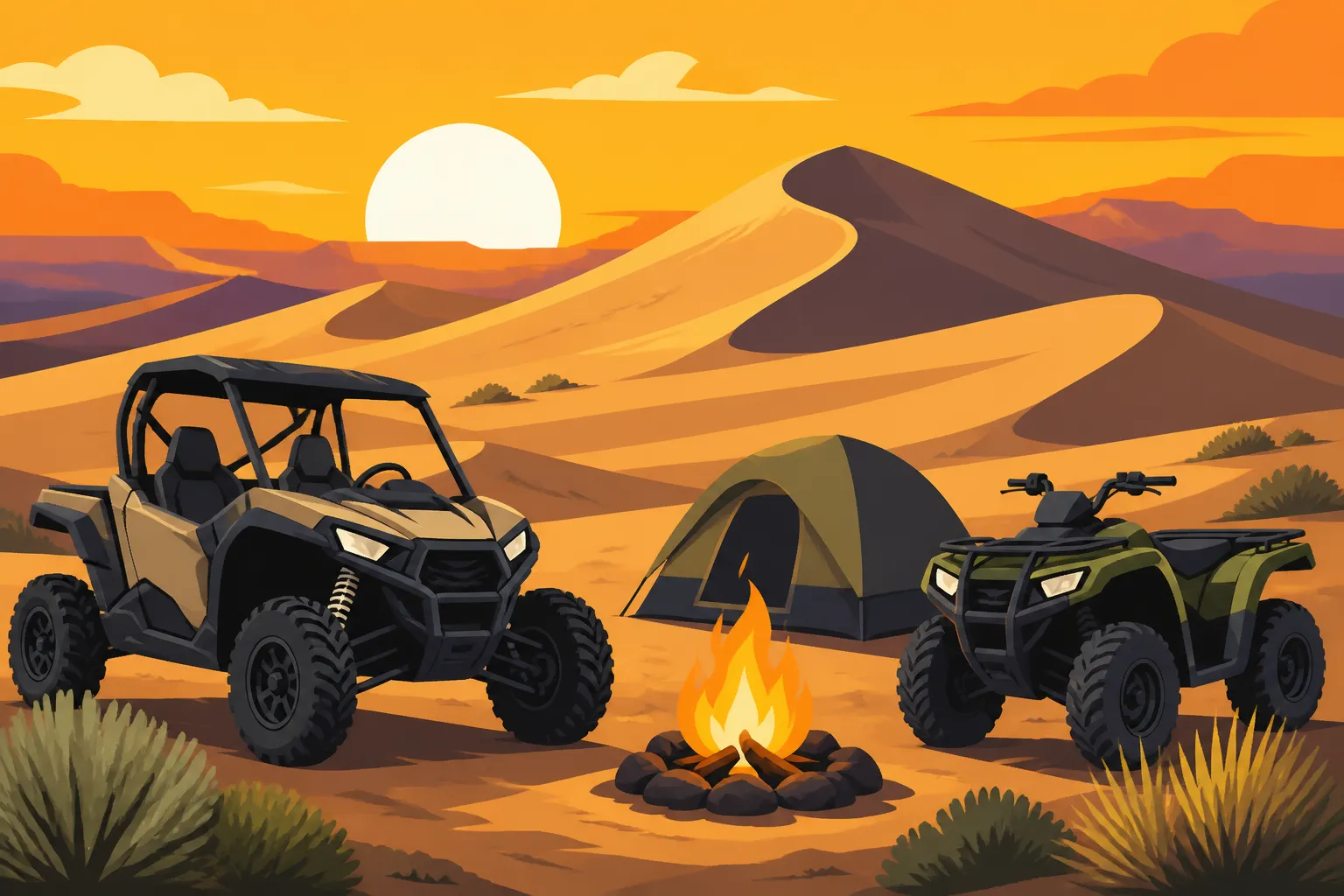
Free Camping at Wyoming’s Killpecker Dunes
Camping near Killpecker Sand Dunes can look wonderfully simple: find a spot, unload the machines, and ride. The catch is that this is a remote, exposed area where water, reliable cell service, and clear route information may be limited. This guide explains how to plan a free camping trip near the dunes, what to bring, and how to ride responsibly once you arrive.
What to expect from camping at Killpecker Dunes
A basic camp near a remote riding area
Killpecker Sand Dunes sit in southwest Wyoming, not far from Rock Springs. The area draws ATV and UTV riders for its open sand and broad landscapes, but camping here is best approached as a simple, self-sufficient outdoor stay—not a full-service campground holiday. Expect a setting where you provide your own drinking water, food, fuel, and backup plans, and where wind and changing weather can shape the experience as much as the riding.
Free camping options are associated with the area below the dunes. Before you settle in, read the signs at the site and check current land-management guidance. A place that looks like an established pullout is not automatically an authorized campsite, and a prior visitor’s fire ring does not, by itself, confirm that fires are allowed. For a closer look at the camping area, see [Free Camping Below the Dunes].
Treat the camp as a staging point rather than as a promise that every nearby track is open to motorized use. The dunes and surrounding public lands have rules, and boundaries or closures can matter even when the terrain looks wide open. If you are travelling with a group, decide where vehicles will park, where tents or trailers will go, and how you will keep the riding area clear before everyone starts unloading.
Facilities and the self-sufficiency question
The practical question is not just whether camping is free. It is whether the facilities match what your group needs. The camping area is described as having two vault toilets and little else, so plan as if you will not have drinking water, electrical hookups, showers, rubbish collection, or a convenient place to buy supplies at camp. Facility conditions can change, so confirm what is available before relying on any amenity.
That sparse setup can be a genuine advantage if you want a quiet, uncomplicated base near the riding area. It can also catch people off guard when they arrive after a long drive with empty water containers or a meal plan that depends on a nearby store. Bring enough potable water for drinking, cooking, and basic cleanup, plus more than you expect to use if the weather is hot or windy. Pack out your rubbish and secure food and supplies against wind.
A small amount of preparation makes the difference between a relaxing rustic stay and a frustrating one. Bring a camp toilet plan that follows posted requirements, a way to wash hands, a first-aid kit, headlamps, and spare batteries. If your group needs accessible facilities or dependable services, check options around Rock Springs before you leave town rather than assuming they will be available at the dunes. The site’s minimal setup is summarized in [Two Vault Toilets and Nothing Else].
| Trip need | Plan for a primitive camp | Why it matters |
|---|---|---|
| Drinking water | Bring your own supply for the stay and an emergency reserve | Do not count on a water source at camp |
| Toilets | Check the condition and availability of vault toilets; bring a backup plan | Facilities may be limited or unavailable |
| Rubbish | Pack out trash and food scraps | Do not assume there is collection on site |
| Power and signal | Charge devices before leaving town and carry offline information | Connectivity and charging options may be limited |
| Fire | Check current restrictions and posted rules before lighting one | Conditions and rules can change |
| Riding routes | Confirm that the route is open and suitable for your machine | Nearby tracks are not automatically legal routes |
Getting there and choosing a campsite
Plan the approach before you tow in
Many visitors approach the dunes from the Rock Springs area, using local roads to reach the riding and camping zone. The final stretch can feel very different from highway driving: loose surfaces, dust, rough patches, and changing conditions may affect the tow vehicle and trailer. A route that appears straightforward on a map can take longer than expected when you are towing, navigating unfamiliar turns, or waiting for dust to clear.
Check the intended approach before you leave town, and make sure the directions are suitable for your vehicle and trailer. [Driving County Road 4-17 to the Sand] is a useful starting point for thinking through the drive toward the dunes, but do not rely on a saved route alone. Follow current signs and land-management instructions on the ground. If the road surface or weather has changed, a route that worked on a previous visit may not be the right choice today.
Arriving with daylight left gives you room to find the camping area, inspect the ground, and set up without rushing. That matters when you are towing a wide UTV trailer or travelling with children. Before you pull into a soft or uneven spot, walk it if needed and check for deep sand, ruts, hidden rocks, or a slope that could make parking awkward. Avoid blocking access roads or turning areas; another visitor may need room to pass or maneuver.
Choose a spot with wind, sand, and access in mind
A campsite can look sheltered when you arrive and feel exposed once the wind picks up. At Killpecker, blowing sand is part of the landscape, so think about tent orientation, trailer doors, cooking gear, and where you will leave helmets and goggles. Keep loose items inside a vehicle or secured under cover. A simple groundsheet or storage bin can help keep sand out of sleeping gear and food, though it will not eliminate it.
Give yourself enough space to park and unload without spreading equipment into the driving area. Separate camp activity from machine loading, and keep children and pets away from moving vehicles. If you are arriving with a group, agree on a shared layout instead of letting each rig claim the easiest-looking patch. Keep roads, access points, and other people’s campsites unobstructed, and leave room for emergency or service vehicles if they need to get through.
Do not camp wherever a tire track leads simply because the ground seems firm. Check for signs, barriers, habitat protections, and any posted restrictions, and avoid trampling fragile vegetation. If the surface is soft or visibly disturbed, choose a more durable spot rather than widening the impact. For broader trip-planning considerations, [Camping Near Wyoming Trailheads] can help you think through the needs of a riding-based campsite. At Killpecker, a little restraint helps preserve the open character that makes the area appealing.
Preparing for a safe and comfortable stay
Water, food, fuel, and essential gear
The most useful packing decision is to plan around the services you may not find. Bring drinking water for every person, plus extra for cooking and basic cleanup. Do not build your plan around finding water at the campsite or along a ride. Keep a reserve separate from the everyday supply, so a delayed return or a spilled container does not leave the group short.
Fuel planning deserves the same attention. Arrive with enough fuel for the machines and the tow vehicle, and do not assume a convenient refill will be available close to the riding area. Estimate how much your route may use, then add a sensible margin for detours, soft sand, idling, and changing conditions. Carry fuel only in approved containers and secure it appropriately; never store it beside a stove, fire, or other ignition source.
Pack food that can handle a dusty, windy camp without elaborate preparation. Lidded containers protect meals from grit, and a cooler or sealed storage bin keeps supplies organized. Keep rubbish and food scraps contained rather than leaving them where wind can scatter them. A basic repair kit, tire-repair supplies suited to your machines, a compressor or inflation option, and recovery gear can also be valuable when riding away from town. Match your tools and recovery equipment to the machines and terrain, and make sure someone in the group knows how to use them.
Weather, communication, and an exit plan
The open landscape can make weather feel more intense. Wind can blow dust into camp, reduce visibility, and make riding uncomfortable; a storm can change the ground and your plans quickly. Check the forecast before leaving, then pay attention to conditions once you arrive. Have a place to shelter, secure awnings and lightweight gear, and be willing to pause or end a ride if wind, lightning, or visibility makes it unsafe.
Do not assume your phone will provide dependable navigation or emergency contact everywhere around the dunes. Download maps before the trip, tell someone at home where you are going, and agree on a check-in plan. An offline map app such as onX Offroad can help you prepare by keeping route information available when a connection is poor, but treat any digital map as one planning tool—not proof that a route is open. Pair it with land-manager maps and posted signs.
Before a ride, tell someone in camp which direction you intend to travel and when you expect to return. Establish a meeting point in case riders become separated, and decide what to do if a machine breaks down. If a group includes beginners or young riders, keep the route conservative and make sure everyone understands how to stop, signal, and regroup. A plan that accounts for a late return, a mechanical issue, or worsening weather is more useful than assuming every ride will go exactly as expected.
Riding from camp without harming the area
Check routes, boundaries, and machine access
A camp near the dunes does not mean every visible route is open to ATVs or UTVs. Before riding, confirm where motorized travel is allowed, whether a route is designated for your machine, and whether any seasonal or temporary restrictions apply. Pay attention to signs and barriers on the ground, especially where a track approaches private land, a protected area, or a route that appears to continue beyond an open segment.
Use current land-management information as part of your planning. [Wyoming Trail Maps and MVUMs] explains why maps matter when choosing routes, and [Wyoming Rules for Riding BLM Land] is relevant when your trip crosses Bureau of Land Management ground. A navigation app can make it easier to follow your intended route, but an app’s line should not override a closure sign or an official map. If the map and the on-site sign appear to disagree, stop and seek clarification rather than guessing.
At the dunes, riders may be tempted to treat open terrain as an invitation to ride anywhere. Resist that impulse. Stay within areas open to your machine, avoid widening existing tracks, and do not cut around a closure. [Riding the Open Play Area at Killpecker Dunes] provides a useful way to focus on the designated riding area. If you are uncertain whether a particular route is permitted, ask before riding it. A short check can prevent a costly mistake and help protect access for future visitors.
Permits, etiquette, and responsible vehicle use
Wyoming’s off-road permit rules are a separate issue from whether a campsite is free. Before riding, check the permit requirement for each machine and make sure the appropriate decal is displayed as required. A registration or sticker from another state may not substitute for the Wyoming requirement. Start with [Wyoming ORV Permits Explained] and confirm the details that apply to your machine and trip.
Ride at a pace that leaves room to react to other visitors, changing sand, and limited visibility. Give people walking near camp plenty of space, avoid kicking sand toward tents and vehicles, and slow down around intersections or parked rigs. If you are riding with a mixed group, keep the less experienced riders in a position where they can stay with the group and receive help. Agree on signals and stopping points before leaving camp, rather than trying to coordinate over engine noise.
Noise, waste, and fires also affect everyone sharing the area. Keep machines in good working order, respect any sound or equipment rules that apply, and carry out every item you bring in. Check current fire restrictions before using a fire ring or building any fire; a ring does not guarantee that fires are permitted under current conditions. [Wyoming Fire Restrictions That Close Trails] is a helpful reminder that fire-related conditions can affect access as well as camp plans. See [Fire Rings at the Killpecker Campground] for context on the camping area, but use current posted rules to decide what is allowed.
Building a practical Killpecker weekend plan
A simple arrival-to-departure checklist
Before leaving Rock Springs, confirm your route, weather, fuel, water, and permit needs. Make sure the trailer is secure, tie-downs are in good condition, and the machines are ready for sand and dust. Save maps for offline use and share your plan with someone who is not travelling with you. If you are arriving near dusk, keep the first evening simple: find an appropriate place to camp, set up safely, and save route exploration for daylight.
Once you arrive, look over the campsite and the surrounding signs before unloading. Check for closures, choose a durable place to park, and set up so that other visitors can move through the area. Keep food and rubbish contained, secure loose items against wind, and make sure each rider knows where the group will meet if separated. If conditions are not suitable—whether because of wind, surface conditions, or a crowded site—be prepared to adjust your plan.
On the day you leave, do a slow walk around camp before loading. Look for small rubbish, dropped straps, food scraps, and anything that could blow away after you depart. Confirm that the fire is fully out if a fire was permitted and used, and follow the site’s rules for waste and sanitation. Check the machines and trailer before pulling out, and leave the campsite in a condition that does not create extra work for the next visitor.
When another plan may suit your group better
Free camping is a good fit for riders who are comfortable with limited facilities and can carry what they need. It may not be the best choice for someone who needs reliable power, readily available water, showers, or a more developed campsite. It may also be less comfortable for a first-time camper who expects a staffed facility or easy access to supplies. Decide based on your group’s needs, not just the appeal of a no-cost site.
A family with young children might choose to keep the first trip short, bring extra warm layers and familiar meals, and establish clear boundaries around parked machines. A group travelling in several trailers may need to arrive early enough to find a suitable layout without blocking access. A solo rider should give extra attention to communication and breakdown planning. The same campsite can feel easy for one group and stressful for another, depending on preparation and experience.
If the area is busy, conditions are poor, or the facilities do not meet your needs, consider changing your overnight plan rather than forcing the trip. You can still make the dunes part of a day ride from a more developed base near town. The best trip is not necessarily the one that spends the most time at the campsite; it is the one that matches your comfort level, respects local rules, and lets you enjoy the riding without taking avoidable risks.
Disclaimer
This article is for general informational purposes only and does not constitute professional advice. Laws, prices and regulations vary by location and change over time. Consult a qualified professional for guidance on your specific situation.