15 mph in a Wyoming Campground
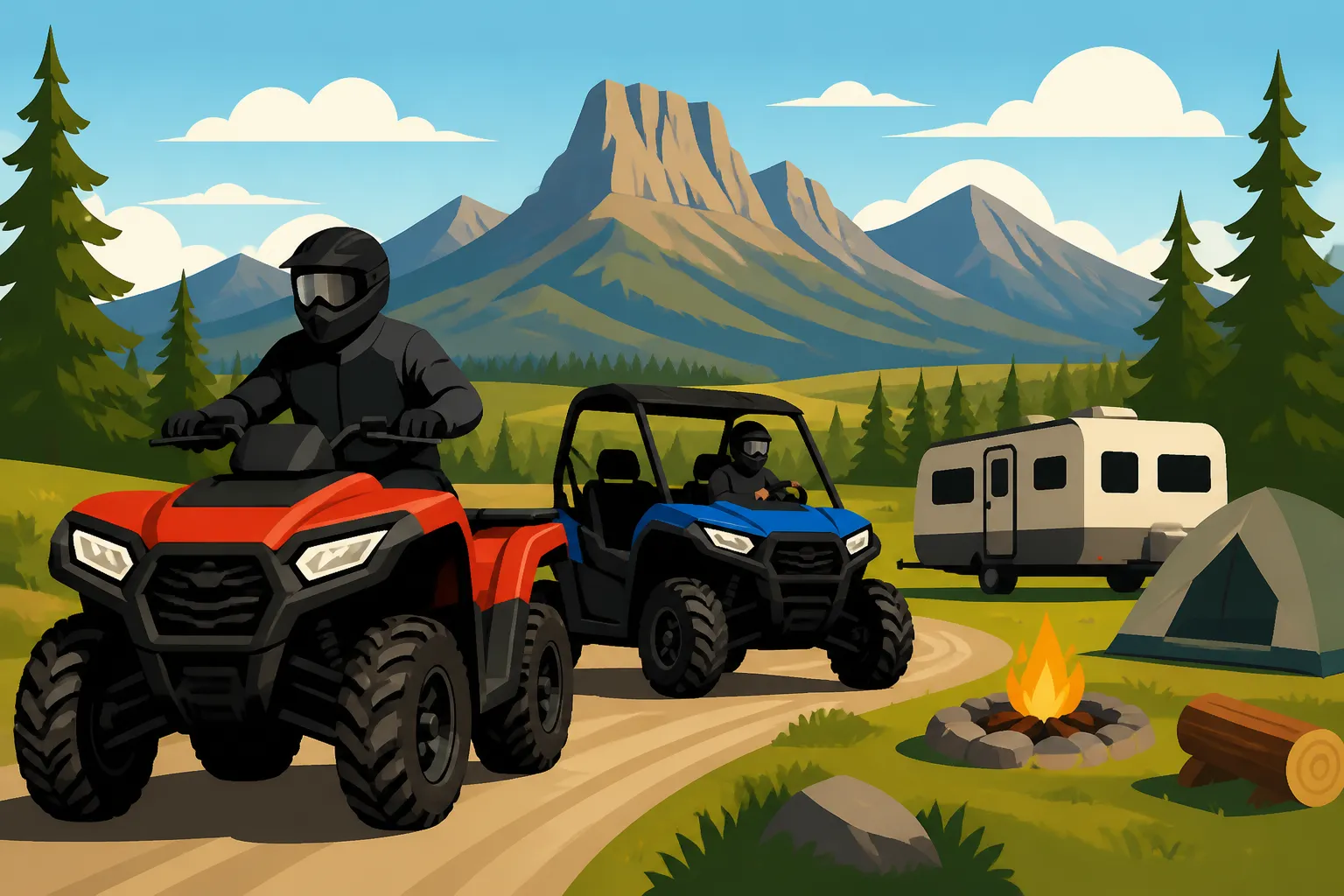
A 15 mph campground limit can feel almost comically slow when you have spent the day crossing open sand or forest roads. But near tents, parked trailers, and people walking between campsites, a short burst of speed can create a real hazard. This guide explains how to interpret the limit, ride responsibly around camp, and plan a Wyoming ATV or UTV trip without confusing campground rules with trail rules.
What the 15 mph campground limit means
Treat it as a posted campground rule, not a trail speed
A 15 mph sign in a Wyoming campground applies to the campground area identified by the sign or its surrounding rules. It is not automatically a speed limit for every road, trail, or open riding area nearby. The important distinction is that campground roads are shared spaces: a child may step out from behind a vehicle, someone may be backing a trailer, or a dog may be moving between campsites.
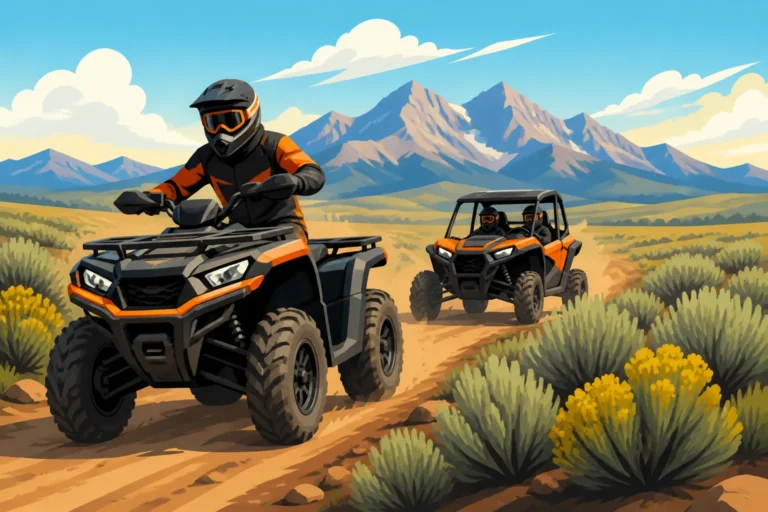
At Killpecker Dunes, outside Rock Springs, riders may move from a quiet camping area to a broad landscape of sand and open riding. That change in surroundings can make it tempting to carry trail speed through camp. Resist that impulse. Slow down before entering the campground, follow signs as posted, and keep your speed low until you are clearly back on a route where riding is allowed.
A posted limit is also a ceiling, not a target. If a pedestrian, tight turn, dust cloud, parked rig, or uneven surface makes 15 mph feel too fast, slow further. The same goes for UTVs with passengers or a loaded ATV towing a small trailer: the machine may need more room to stop than it did on an empty stretch of trail.
Why a low speed matters around campsites
Campgrounds can be busy even when they look quiet from the access road. A person may be crouched beside a tent, a child may dart between parked vehicles, or another rider may be maneuvering a trailer into a site. People often assume that vehicles inside camp will move slowly, which means they may not be watching for a fast-moving ATV or UTV.
Dust is another practical concern, especially in dry conditions. A rider who accelerates hard through camp can send dust across neighboring campsites, food, bedding, and open vehicle doors. Keeping a steady, restrained pace helps everyone—including your own group—settle in without turning the campground into an extension of the riding area.
Noise and visibility matter too. A large UTV can obscure a smaller rider or someone walking behind a parked truck. Going slowly gives you time to notice movement and lets other people understand where you are headed. If sight lines are blocked, ease off the throttle rather than assuming the road is clear.
Riding between camp and the trail
Know when you are still in the campground
The transition between a campsite and a riding route is not always obvious. A broad, unpaved lane can look like an invitation to ride faster, but it may still be a campground access road. Follow posted signs, observe any barriers or marked route entrances, and do not treat open-looking ground as permission to ride wherever you choose.
Before unloading, take a few minutes to understand how the camp connects to the riding area. At Killpecker, for example, the approach and staging experience can be part of the trip itself; see [Driving County Road 4-17 to the Sand] and [Free Camping at Wyoming's Killpecker Dunes] when planning how your group will arrive and set up. Keep the campground and riding area distinct in your mind, even if they are close together.
If a marked route runs near camp, use the designated connection rather than cutting across another campsite or choosing a shortcut through vegetation. A route that appears convenient may cross private land, sensitive ground, or an area closed to vehicles. The nearby landscape does not become an approved route simply because it is visible from your camp.
Make a slow, predictable departure
Before starting your machine, check that passengers are seated, helmets and other gear are secure, and no one is standing close to the tires or exhaust. A quick walk-around can catch a loose strap, an open storage lid, or a child lingering behind the machine. Starting carefully is especially helpful in a tight campground where several families may be moving around at once.
When leaving, accelerate gradually and keep your line predictable. Avoid sudden turns, revving, or spinning tires near tents and vehicles. If your group is traveling together, agree in advance to move at campground speed and regroup only after reaching an appropriate stopping place—not in the middle of a narrow access lane.
When returning, slow down before you reach camp rather than braking hard at the last moment. Give pedestrians room, yield when someone is backing into a site, and wait patiently if a vehicle or trailer blocks the lane. The few minutes this may add are usually less stressful than trying to squeeze past people in a dusty, crowded space.
Planning a Wyoming riding-area campsite
Check the campground’s facilities and limitations
A campsite near an ATV or UTV area may offer fewer facilities than a developed campground. Before you commit, find out what is available, whether there are designated camping locations, and how far your group will need to travel for water, fuel, or supplies. The practical details can shape the whole trip, particularly when children or first-time riders are coming along.
For Killpecker Dunes, review [Two Vault Toilets and Nothing Else] and [Fire Rings at the Killpecker Campground] before packing. Details like toilet access and fire facilities affect what you need to bring and how you should manage waste, food, and evening plans. Do not assume that a convenient riding destination has drinking water, electrical hookups, or services close by.
A good checklist starts with drinking water, food storage, a first-aid kit, headlamps, warm layers, and a way to handle vehicle trouble. Wyoming weather can shift quickly, and a campsite that feels comfortable in the afternoon may be cold or windy after dark. Secure lightweight gear so it does not blow into neighboring sites or onto a road.
| Before you go | Why it matters | What to do |
|---|---|---|
| Campground rules and speed signs | Local requirements can vary by location | Read signs at the entrance and in camp |
| Riding access | Not every visible track is an open route | Confirm the route on the relevant land-management map |
| Water and sanitation | Remote sites may have limited facilities | Bring what your group needs and pack out waste as required |
| Weather and fire conditions | Wind, heat, and fire restrictions can affect plans | Check conditions and follow local orders |
| Machine and safety gear | A breakdown can be difficult to manage far from services | Inspect machines and carry basic repair and emergency supplies |
Use maps carefully and confirm conditions on the ground
A digital map can help you understand the general layout of a riding area, but it should not be the only authority you rely on. Routes can have seasonal closures, machine-width restrictions, or land-management rules that are not obvious from a screen. Use official travel-management information where available, and pay attention to signs and barriers when you arrive.
Tools such as onX Offroad can help you review route options and orient yourself before a ride. Download the information you need before heading into an area with weak cell coverage, and compare it with the land manager’s current map or posted notices. A line displayed on a map should not be treated as proof that a route is open to your particular machine.
For additional planning, see [Wyoming Trail Maps and MVUMs] and [Wyoming Rules for Riding a Designated Route]. If a map and a sign appear to disagree, do not assume the more permissive interpretation is correct. Stop, check for a current notice or ask the responsible land manager, and choose a route you can confirm is open.
Keeping campground riding safe and considerate
Protect pedestrians, other riders, and parked equipment
At 15 mph, a rider still needs to scan ahead and be prepared to stop. Keep extra space around people walking, especially children, older visitors, and anyone carrying gear who may not hear an approaching machine. If people are gathered near the road, slow down further or wait until there is room to pass safely.
Parked vehicles and trailers create blind spots. A person can step from between two rigs with little warning, and a driver backing a trailer may not see a small ATV behind them. Give vehicles room to maneuver, avoid passing through tight gaps, and never assume another person has noticed your machine.
If you are riding with a group, do not let the last rider feel pressured to catch up through camp. Keep the group together at a safe pace and choose a clear, permitted spot outside the traffic lane to regroup. A few minutes of separation is better than a hurried pass near tents, fire rings, or parked machines.
Keep the campground from becoming a play area
Campgrounds are places to rest, cook, and move around on foot—not places to test acceleration or practice tight turns. Avoid unnecessary laps, engine revving, tire spinning, and repeated trips through other people’s sites. If a young rider needs practice, find an area where riding is allowed and where there is enough open space to supervise safely.
Keep machines on established roads and designated routes. Do not cut between campsites, drive around barriers, or cross vegetation to reach the trail more quickly. Following campground access roads also helps limit erosion and protects the ground around sites that may be especially vulnerable when dry or muddy.
This kind of courtesy matters beyond camp. The same respect for shared spaces applies on Wyoming routes and around ranches, livestock, and other trail users. [Wyoming Trail Etiquette With Ranchers] offers related guidance, while [Camping at a Wyoming Riding Area] can help you think through campsite choices that fit your riding plans.
Permits, route rules, and common misunderstandings
A campground speed limit does not answer every riding question
The 15 mph campground rule does not tell you whether your ATV or UTV may use a nearby trail, whether a route is open to your machine, or whether you need a state permit. Those are separate questions. Before riding, check the area’s access rules, the type of route, any seasonal restrictions, and whether your machine fits any width or vehicle-class limits.
Wyoming’s off-road permit requirements are also distinct from campground speed signs. Do not assume that an out-of-state registration or sticker automatically covers a Wyoming ride. Review [Wyoming ORV Permits Explained] and confirm what applies to your machine and the land where you plan to ride.
The responsible land manager’s information should guide your route choices. A road may be open to some vehicles but closed to others, or it may have a seasonal restriction. If you cannot confirm whether a route is open, do not use it simply because another rider has gone that way or because the track appears on a general map.
Common mistakes to avoid
One common mistake is treating a campground sign as if it applies only when staff are present. The safer approach is to obey posted rules whenever you are in the marked campground, not just when it looks busy. Another is assuming the speed limit is irrelevant because the road is dirt. Surface type does not change the need to protect pedestrians or comply with posted restrictions.
A second mistake is confusing nearby open riding terrain with permission to travel anywhere between camp and the trail. Route access depends on where you are and what is designated or allowed. A shortcut across an unmarked area can create problems even if it seems harmless in the moment, so stay on established, permitted routes and obey closures.
Finally, riders sometimes focus on the number on the sign while overlooking the conditions. Fifteen miles per hour may still be too fast when dust blocks the view, a trailer is backing, or a child is close to the road. Read the situation, slow down early, and make safety—not the maximum posted speed—the goal.
Disclaimer
This article is for general informational purposes only and does not constitute professional advice. Laws, prices and regulations vary by location and change over time. Consult a qualified professional for guidance on your specific situation.