Grizzly Country in the Northwest
Riding an ATV or UTV in northwest Wyoming can mean sharing a trail with grizzly bears, especially around the Greater Yellowstone and Absaroka regions. That possibility can make even a familiar route feel different. This guide explains how to plan a ride, reduce the chance of a close encounter, carry bear spray accessibly, and respond calmly if you see a bear.
Where grizzly country overlaps with Wyoming riding areas
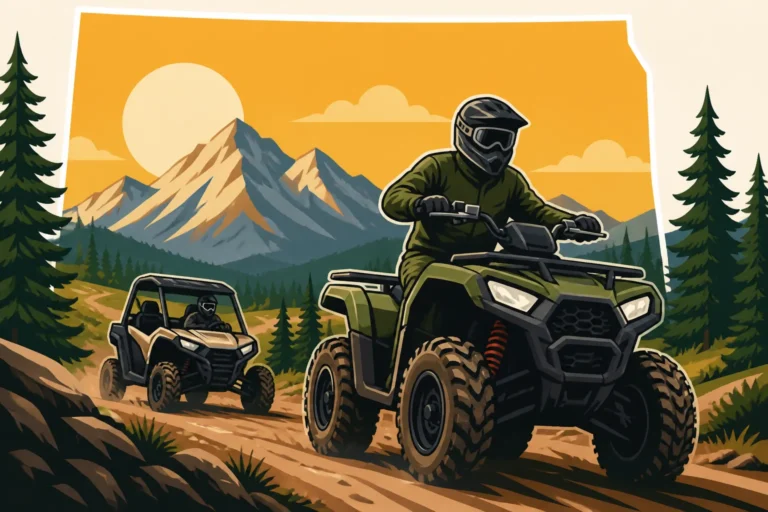
Northwest Wyoming includes landscapes where grizzlies live and move, including areas around Yellowstone National Park, the Absaroka Range, and parts of the Shoshone National Forest. That does not mean every ride will involve seeing a bear. It does mean riders should treat bear safety as part of trip planning, not an emergency detail to consider only after spotting one.
Understand the kind of country you are entering
Routes outside Cody, near Dubois, and along forested mountain corridors can pass through habitat used by bears. Forest edges, creek bottoms, berry patches, and areas with limited visibility deserve particular attention. A trail that looks open on a map may narrow into brush or cross a drainage where you cannot see far ahead.
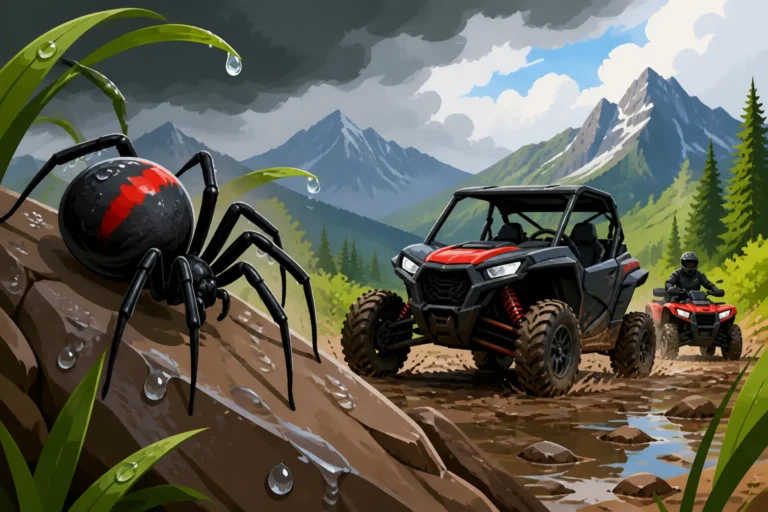
An ATV or UTV changes how you move through that country, but it does not remove the chance of an encounter. A bear may be feeding, traveling, or resting near a route, and vegetation or terrain can limit how much warning you get. Plan on encountering wildlife even when the trail is busy, the engine is running, or you have ridden the route before.
Before choosing a route, check current land-manager information and the map for the area you intend to ride. A route shown on an app is not automatically open to motorized travel. Use official travel-management information to confirm where riding is allowed, and review Wyoming Trail Maps and MVUMs before heading out. An app such as onX Offroad can help you study routes and terrain, but it should not replace the applicable official map or closure notice.
Choose routes with visibility and conditions in mind
A wide, open road may offer more time to notice wildlife than a tight, brushy two-track, but no route is bear-proof. Think about what the terrain will let you see around corners, over rises, and beside streams. If the route has blind bends or dense vegetation, slow down enough to react safely rather than relying on the engine to warn animals ahead.
Weather and trail conditions also affect the ride. Rain, snowmelt, or recent storms can make a route difficult and may leave you focused on ruts, mud, or creek crossings instead of the surrounding landscape. Check access and seasonal information before departure, and be prepared to turn around if conditions, closures, or visibility make the route a poor choice. For a broader look at local planning, see Riding Out of Cody Toward the Forest.
Prepare your ATV or UTV and group before departure
Bear safety is easier to manage when the group has discussed it before anyone starts the engine. A quick conversation at the staging area can prevent confusion later: everyone should know where the bear spray is, who has it, and what the group will do if a bear is spotted.
Carry bear spray where you can reach it
Bear spray is useful only if it is accessible quickly. Keep it on your person in a holster or another secure, reachable position rather than buried in a storage box, strapped to the rear rack, or stowed under cargo. If you ride a UTV, make sure the canister is within reach of the people who may need it, not just the driver.
Check that the canister is in usable condition, that you understand its instructions, and that it is carried in a way that will not be knocked loose during a rough ride. Avoid placing it where heat, dirt, or gear could make it difficult to access. Do not treat a handlebar mount or vehicle compartment as a substitute for having spray immediately available on your person. For practical carrying considerations, read Bear Spray on a Machine.
Before the ride, talk through how to remove the spray from its holster and operate it. That discussion can be brief, but it matters: fumbling with unfamiliar equipment during a stressful encounter is not the time to learn how it works. Keep the canister’s instructions available and follow them.
Keep the group together and make your presence known
Riding in a group can help people notice wildlife and look out for one another, but only if riders stay coordinated. Agree on a lead rider and a last rider, keep a safe distance that allows everyone to stop, and use planned regrouping points. A rider who disappears around a blind bend may meet wildlife before the rest of the group knows anything has happened.
Talk normally when stopped in thick cover, near running water, or where visibility is poor. On the machine, reduce speed in blind areas and be ready to stop. Do not assume engine noise guarantees a bear will move away; an animal may not hear you clearly, may be accustomed to sounds, or may be occupied with food.
Avoid riding so close together that one person’s sudden stop causes a collision. At the same time, do not let the group stretch out until the last rider is isolated. A planned pace and simple check-ins are especially helpful when the route is unfamiliar or cell service is limited. If you want a fuller checklist for remote outings, Breaking Down Far From Help covers the kind of preparation that matters when assistance is not nearby.
How to respond if you see a bear
Seeing a bear from a machine can be startling. The safest response depends on the animal’s behavior, your distance, and the terrain, so avoid rushing toward it or assuming it will react in one predictable way. Keep the group calm and make space rather than trying to get a closer look.
Stop at a safe distance and give the bear room
If you spot a bear ahead, slow down and stop where you can do so without blocking its escape route. Keep the group together and avoid surrounding the animal. Do not ride toward it, follow it, or try to pass close by for a photograph. If the bear is far away and moving off, give it time and space to leave.
If the bear is close, surprised, or behaving in a way that makes you uneasy, do not make sudden movements or rev the engine to provoke a response. Follow the guidance you learned for bear encounters and keep bear spray ready. Use it only as directed and when the situation warrants it. There is no single response that fits every encounter, which is why learning local recommendations before the ride is worthwhile.
If you are unsure whether the bear has left the route, wait in a safe place rather than continuing into a blind area. Do not split the group to investigate. A short delay is frustrating, but it is better than surprising an animal at close range or putting another rider in a position where they cannot react.
Leave the area without crowding the animal
Once the route is clear and you can move away without approaching the bear, leave calmly and give it a wide berth. Do not stop nearby to watch, take pictures, or encourage the group to gather. If the bear remains near the route, back away or choose another way to travel, provided that alternative is legal and open.
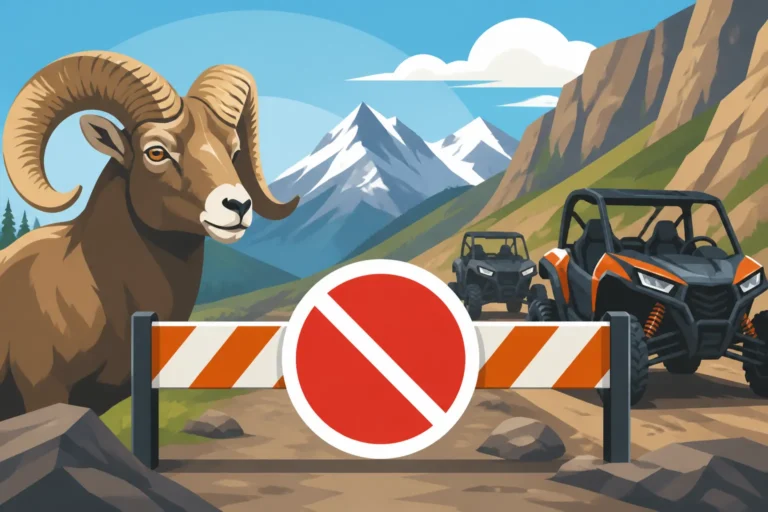
Do not ride off the designated route to get around an animal. That can damage the land, create a new trail, or put you into even less visible terrain. If you cannot pass safely, turn back and report the obstruction or wildlife concern through the appropriate land-management channel when practical. The same discipline applies to other closures and restrictions covered in [Wyoming Rules for Riding in Grizzly Country].
| Situation | Safer approach | Avoid |
|---|---|---|
| Bear visible ahead at a distance | Stop, keep the group together, and allow it to move away | Riding closer for a better view |
| Bear near a blind corner or brushy section | Wait or retreat until you can proceed without crowding it | Sending one rider ahead to check |
| Bear remains on the route | Turn back or wait for a safe, legal option | Creating a new trail around it |
| Group becomes separated | Regroup in a safe location and account for everyone | Continuing while someone is missing |
| Food or scented items are stored at camp | Follow the site’s food-storage rules and secure items appropriately | Leaving food or garbage exposed |
Food, camp, and post-ride habits that matter
A ride does not end when the machines are parked. Food, garbage, coolers, and scented items can attract wildlife to a staging area or campsite. Good habits help protect people, bears, and the next group arriving at the same place.
Keep food and scented items secured
At a trailhead or campsite, do not leave food, wrappers, garbage, or cooking supplies scattered around. Follow the rules posted for that specific location. Storage requirements can differ by site, so do not assume that the setup you used at one campground is suitable at another. Food Storage Rules at a Trailhead is useful background for thinking through what needs to be secured.
Keep the riding area tidy, and pack out trash rather than leaving it beside a fire ring or in a vehicle bed. Store toiletries and other scented products as directed by the land manager. A cooler in the back of a truck or on a trailer should not be treated as secure simply because it has a lid.
If you are stopping for lunch, take a moment to choose a sensible spot and keep the group together. Avoid leaving food unattended while riders wander away to explore. These small routines can feel fussy on a short outing, but they help keep a quick break from turning into an avoidable wildlife problem.
Build a practical pre-ride checklist
Before leaving, check that each rider has suitable clothing, water, a way to communicate within the group, and access to bear spray. Confirm that everyone knows the route, the regrouping plan, and what to do if the group encounters wildlife or becomes separated. If cell service may be unreliable, share the trip plan with someone who is not riding.
Use a current official map to verify the route’s motorized status, closures, and restrictions. An app such as onX Offroad can make it easier to review route options and orient yourself, but download or carry the information you need before leaving an area with service. A paper map can be a useful backup if a phone battery runs low or the device is damaged.
A simple checklist can help make preparation repeatable:
- Confirm that the route is open to the type of machine you are riding.
- Check weather, access, and land-manager notices.
- Tell someone where you are going and when you expect to return.
- Make sure bear spray is accessible and everyone knows who is carrying it.
- Agree on group spacing, stop signals, and regrouping points.
- Secure food, garbage, and scented items at the trailhead or camp.
- Carry enough water, fuel, and basic repair supplies for the planned route.
Finally, stay flexible. A planned ride is not a commitment to finish every mile. If a closure, storm, poor visibility, wildlife encounter, or mechanical issue changes the risk, turn around and choose a safer option. Respecting the route and the animals that use it is part of responsible riding in northwest Wyoming. For more on sharing the landscape with working ranches and public-land users, see Wyoming Trail Etiquette With Ranchers.
Disclaimer
This article is for general informational purposes only and does not constitute professional advice. Laws, prices and regulations vary by location and change over time. Consult a qualified professional for guidance on your specific situation.