Poison Spider After Rain
Rain can turn Poison Spider’s dry-looking trail surface into sticky, wheel-grabbing mud, and a route that felt manageable on the way in may be much harder on the way out. This guide explains what to expect after rain near Casper, Wyoming, how to decide whether to ride, and how to reduce the risk of getting stuck or damaging the trail.
Why rain changes Poison Spider so quickly
Bentonite mud can be more than a minor inconvenience
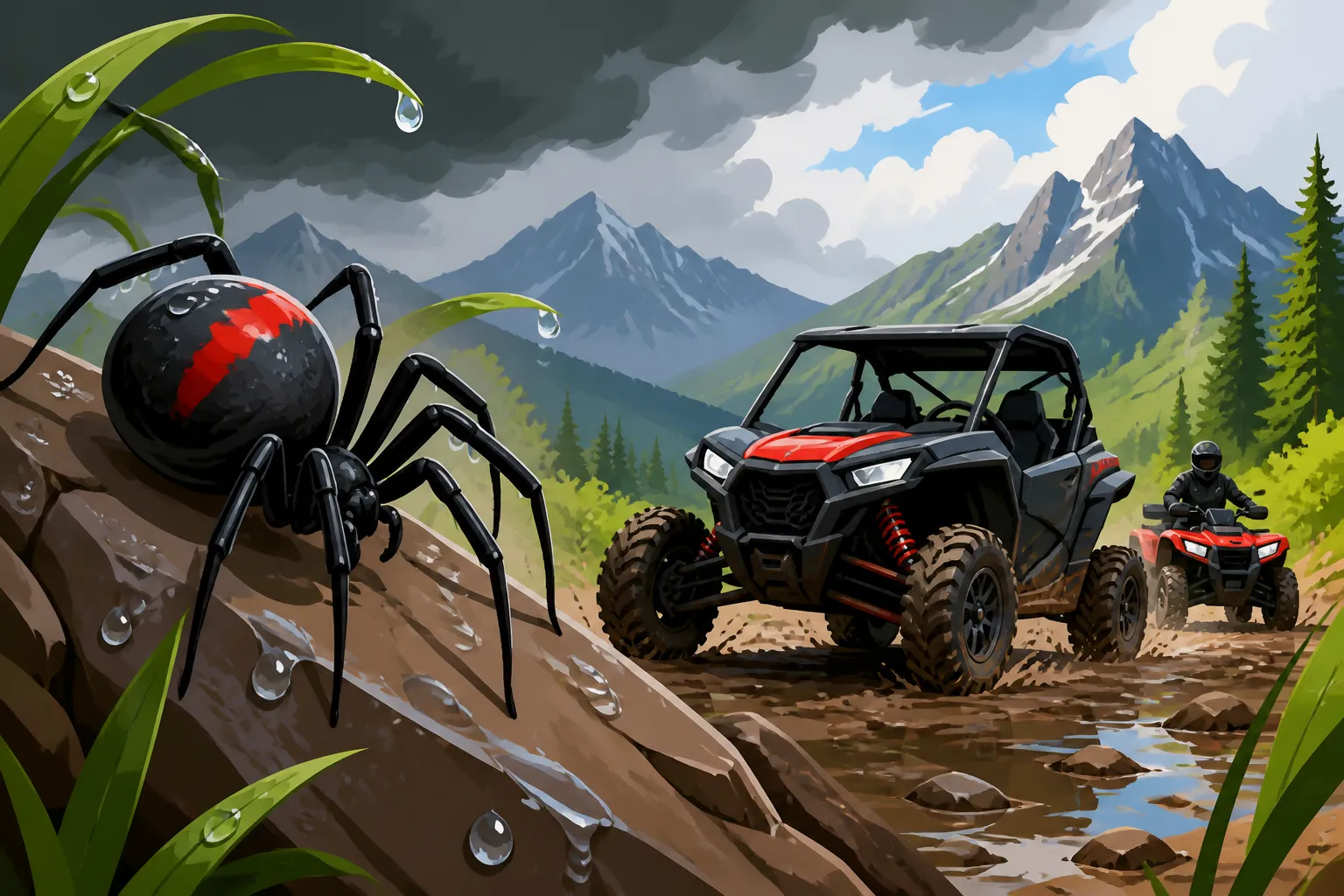
Poison Spider’s terrain includes bentonite, a clay that can become extremely sticky when wet. Instead of breaking apart like loose dirt, wet clay can cling to tires, fenders, and undercarriages. As it builds up, it may reduce traction and make steering unpredictable. A machine can feel as though it has suddenly become heavier, especially when packed mud fills the tread.
That change can happen even when the ground doesn’t look deeply flooded. A route may have a damp surface, while the clay underneath is soft enough to grab at tires. A few tracks through a wet patch can also churn the surface into a slick, rutted mess. For a closer look at the problem, see [Bentonite Mud and Why It Stops You].
The difficulty is not just getting through one muddy section. Mud can affect the rest of the ride by coating tires and making it harder to climb, turn, or stop on firmer ground. A machine that makes it across a wet patch may struggle on the next incline or bend. That’s one reason a trail that seemed rideable at the entrance can become a poor choice after conditions change.
Rain can leave trouble behind after the sky clears
Blue sky does not necessarily mean the trails have dried out. Clay can stay wet after rainfall, particularly in shaded spots, low areas, and places where water collects or drains slowly. Conditions may vary from one section to another, so the dry ground near the staging area may not tell you much about the route farther in.
Even a short shower can change the feel of a trail. Recent rain, overnight moisture, and the amount of traffic through a wet section all matter. As machines pass, tires may push soft ground into deeper ruts. If you reach a patch that is already being churned up, turning around early can be the most sensible choice.
Before heading out, check local conditions and closures rather than relying only on a forecast or a photo from another day. [Poison Spider OHV Park Outside Casper] is a useful starting point for learning about the riding area, while [Wyoming Trail Closures to Check First] can help frame the importance of confirming access before you unload.
How to decide whether to ride after rain
Check more than the weather app
A forecast tells you about expected weather, not the condition of every trail. Look for recent information from the relevant land manager or official riding-area channels, and pay attention to posted signs at the site. If access is restricted or a route is closed, do not assume that a dry stretch nearby makes it acceptable to continue.
Maps are useful for planning, but they do not replace current signs or local direction. Use a current route map to understand where you are and what options may be available, then compare it with conditions on the ground. Tools such as onX Offroad can help riders review mapped routes and plan where they might turn around. Downloading maps for offline use before leaving reliable service can also be useful, but a digital map does not establish that a muddy route is open or safe to ride.
For additional planning context, read [Wyoming Trail Maps and MVUMs]. If the map and a closure sign appear to disagree, respect the posted closure and check with the responsible land manager before proceeding. A route line on a screen is not permission to ride it in current conditions.
Make a conservative call at the trailhead
When you arrive, look at the surface, drainage, and signs of recent traffic. If the ground is visibly soft, tires are already collecting thick clay, or riders are turning around, treat those as meaningful warnings. Avoid testing a questionable section just to see whether the machine can make it. Once the tires are coated and the trail is rutted, backing out may be harder than making the cautious decision to stay off it.
A simple decision table can help organize the choice, but it should not replace judgment or local closures.
| What you find | Safer choice |
|---|---|
| Official closure or restriction | Do not ride the affected route |
| Sticky clay building up on tires | Turn around before continuing |
| Deep or growing ruts | Avoid the section and do not add more damage |
| Conditions are unclear | Ask the land manager or choose another plan |
| Surface is firm and routes are confirmed open | Ride cautiously and reassess as conditions change |
If the signs are mixed, choose the less risky option. That may mean shortening the outing, returning to the staging area, or postponing the ride. The drive to Poison Spider can make it tempting to ride no matter what, but a completed trip is not worth a damaged machine, a recovery problem, or avoidable trail damage.
Riding responsibly when conditions are damp
Protect the trail as well as your machine
Riding a wet route can deepen ruts and widen the track as riders try to steer around soft spots. That damage can affect the next person and make the route harder to maintain. If the trail is too wet to ride without tearing it up, turn around rather than trying to find a new line beside it. Going around a muddy section can create an unauthorized route and disturb nearby ground.
Avoid spinning the tires to push through. Wheelspin can dig holes quickly, and it may leave your machine more stuck than before. If you see fresh damage or a section becoming impassable, don’t encourage other riders to follow you through it. Share factual condition information through appropriate channels, without presenting a personal observation as an official closure.
onX Offroad can be helpful for keeping track of a planned route and locating your position when cell service is weak. Use it as a planning aid, not a substitute for signs, land-manager instructions, or careful judgment. A mapped route that looks straightforward on a screen can still be unsuitable when the ground is wet.
Give yourself a way to turn back
Before riding, agree with your group on a point where everyone will reassess conditions. That prevents the common “just a little farther” problem, where each rider continues because nobody wants to be the first to call it. If one machine is struggling or the surface is deteriorating, pause the group and decide together rather than leaving a rider to manage the problem alone.
Plan the return before you commit to a route. Ask whether the way back includes the same soft areas, steep spots, or narrow sections. Keep enough fuel and daylight for an early return, and carry basic recovery equipment suited to your machine and group. A phone may not be reliable everywhere, so tell someone where you plan to ride and when you expect to be back.
For more on the limits of a remote ride, see [Breaking Down Far From Help]. If the weather is unsettled, consider a shorter outing close to the staging area instead of committing to a route where turning around could be difficult. [Poison Spider for an Afternoon] offers a useful reminder that a ride can be enjoyable without trying to cover as much ground as possible.
Practical preparation for a wet-weather visit
Choose gear and machine checks with mud in mind
Before leaving home, check tire condition, steering, brakes, and the machine’s cooling system. Mud can collect around moving parts and under the bodywork, so it’s worth knowing where to look and how to clean your machine safely afterward. Bring drinking water, appropriate clothing for changing weather, and gloves that remain useful when wet or dirty. Pack tools and recovery items you know how to use.
A simple rinse plan can save frustration after the ride. Mud left to dry may be harder to remove, and a heavy coating can hide damage that needs attention. Clean the machine in an appropriate place and avoid washing sediment into drains or waterways. If you need to inspect a stuck machine, keep people clear of tensioned recovery gear and follow the equipment maker’s safety instructions.
Weather can change quickly in Wyoming, so don’t treat a warm start as a promise that the whole outing will stay comfortable. Carry a layer for wind or a sudden shower, and leave room in your plan to return early. A little preparation is less aggravating than discovering at the trailhead that the gear you counted on is buried under mud or left at home.
Make the drive and staging part of the plan
Poison Spider is outside Casper, and riders commonly approach via Poison Spider Road. Check the access route and conditions before departing, particularly after storms. A road that is passable in one vehicle may feel different when wet, and a machine transported on a trailer adds its own loading and parking considerations. For route-planning context, see [Driving Poison Spider Road Out of Casper].
If you’re using a digital map, download the area before leaving service and make sure you know how to read it offline. onX Offroad may help you keep a route reference available, but do not let navigation distract you while operating a machine. Stop in a safe place before checking your screen, and keep the route information consistent with posted signs and current land-manager guidance.
Also, be ready to change plans. If the road or riding area is muddy, closed, or showing signs of damage, choosing another activity is part of responsible riding. Local access can change with weather and land-management decisions, so confirm before you go and again when you arrive. A patient decision today can mean a better ride when conditions improve.
What to remember before setting out
Poison Spider after rain calls for a conservative approach. Bentonite can cling to tires, reduce traction, and turn a short muddy section into a difficult recovery. Check current access information, read signs, inspect conditions before committing, and turn around if the ground is soft or the trail is being damaged. Maps and apps can support planning, but they cannot tell you that every route is suitable in the moment.
The most useful question is not simply whether your ATV or UTV can push through. Ask whether the route is open, whether you can return safely, and whether riding it will leave lasting damage. If any answer is uncertain, waiting for firmer conditions is often the better ride.
Disclaimer
This article is for general informational purposes only and does not constitute professional advice. Laws, prices and regulations vary by location and change over time. Consult a qualified professional for guidance on your specific situation.