Cattle Strung Across a Forest Road
A line of cattle can turn an easy Wyoming forest-road ride into a slow, uncertain wait, especially when animals block the road or gather around a gate. The safest response is usually to stop, give the herd room, and avoid trying to push through or around it. This guide explains what to do, how to plan ahead, and when to turn back.
When cattle block a Wyoming forest road
Stop early and give the herd space
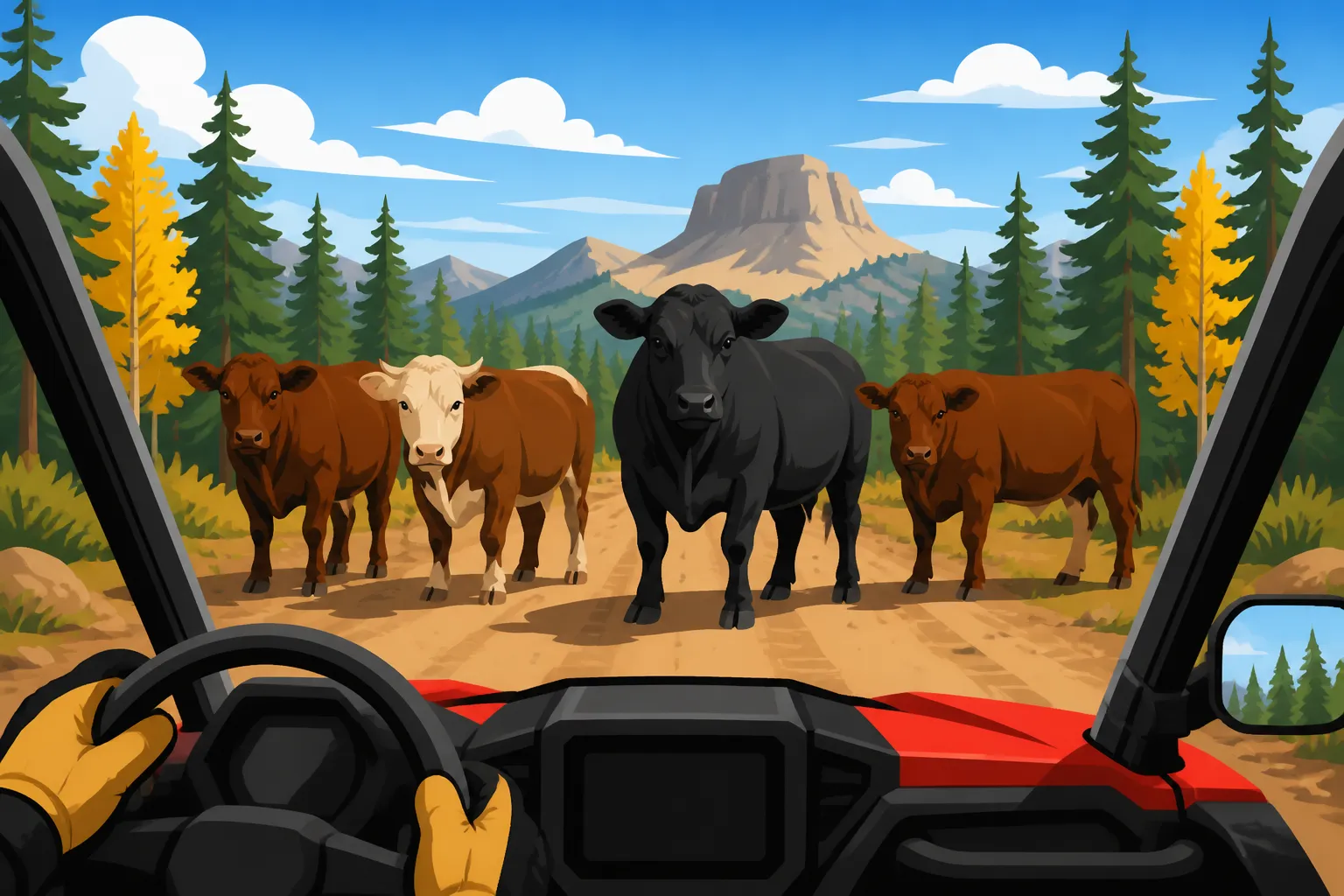
If cattle are on the road ahead, ease off the throttle and stop while you still have room to wait. A loud engine, sudden acceleration, or a vehicle moving straight into the herd can spook animals and send them running in unpredictable directions. On a narrow road, that can put both riders and livestock at risk.
Keep a generous distance, especially if the herd includes calves. Cows may react defensively when they think their young are threatened, and calves can dart across the road or become separated from the group. Don’t ride between a cow and calf, squeeze through the middle of a herd, or try to split the animals so your group can pass.
If the herd is moving slowly in the direction you need to go, don’t follow close behind it. Wait for a clear opportunity to pass without crowding the animals—or wait for the herd to move off the road. That may take longer than you hoped. It is still better than startling cattle on a steep, dusty, or confined stretch.
Keep noise and movement predictable
A stopped ATV or UTV can feel awkward when other riders are behind you, but a calm pause is better than revving the engine to make cattle move. Tell the rest of your group to stop as well, leave space between machines, and avoid unnecessary horn use, shouting, or sudden movements. If the herd appears unsettled, stay put and let it settle before deciding what to do.
Think about the road from the animals’ point of view. A machine that creeps forward, stops, then revs and advances again can feel like a threat. If you need to reposition, do it slowly and only when you can do so without closing the gap. Keep children and passengers seated, and make sure everyone knows not to walk toward the cattle to shoo them away.
A simple rule for a group ride is to agree in advance that the lead rider will stop at the first safe place and signal the others to wait. Riders should not fan out along the road or attempt to flank the herd. For more on respectful encounters, see Wyoming Trail Etiquette With Ranchers and Wyoming Rules for Riding Near Livestock.
How to handle gates, narrow roads, and blocked routes
Don’t bypass the herd off the road
It can be tempting to ride around cattle through grass, timber, or an open-looking field. Resist that urge. The area beside a forest road may be sensitive ground, private property, a grazing allotment, or land where off-route travel is not allowed. Going around the herd can also spread the animals farther from the road or separate them from calves.
If there is no safe, clearly permitted way through, wait. If the herd does not move and you cannot safely continue, turn around when you have enough room to do so without disturbing the animals. Don’t assume a parallel track is open just because it looks well used. Route access and travel rules can differ between nearby roads and trails. [Wyoming Rules for Riding a National Forest] and Wyoming Rules for Riding a Grazing Allotment are useful background when planning a ride through working-land areas.
A narrow road can make turning around difficult, particularly with a trailer-sized UTV or a group of machines. Before backing or turning, check for a safe shoulder, firm ground, and a clear view. Avoid hurried maneuvers near a drop-off, ditch, blind bend, or soft roadside soil. If the road is too tight to turn around safely, wait for the herd to clear rather than forcing a risky maneuver.
Treat gates as part of the route
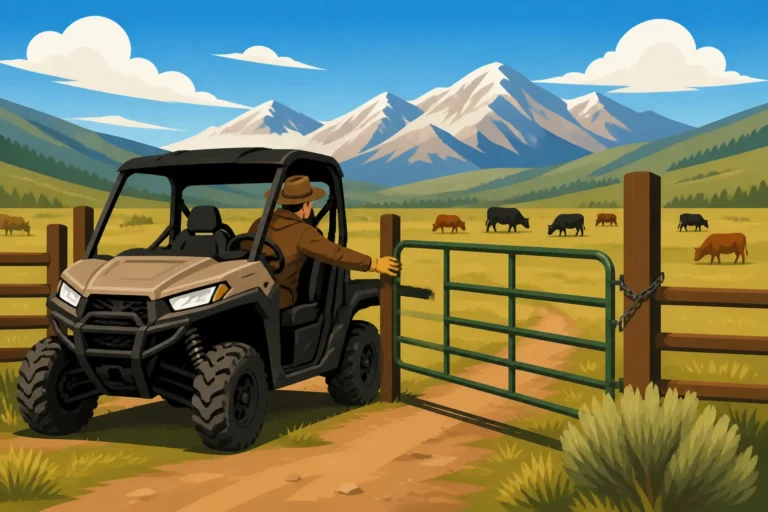
A gate is not an invitation to leave it open while you wait for cattle to pass. If you come to a gate, follow its instructions and leave it in the position you found it unless a sign or responsible land manager directs otherwise. A gate left open can allow livestock to move into an area where they are not meant to be.
If cattle are gathered at the gate, don’t ride into the group to open it. Give the animals time and room to move away. If you can’t get to the gate without putting yourself or the herd in a tight spot, back off and wait. If the situation remains blocked, retreat along the route if it is safe to do so.
Be especially careful not to make assumptions about who is responsible for moving livestock. Riders should not attempt to herd cattle, chase them with a machine, or use a vehicle to direct them through a gate. For more on gate etiquette, read Which Gates You Are Required to Close and What Happens If You Leave a Gate Open.
| Situation | Safer response | Avoid |
|---|---|---|
| Cattle are spread across the road | Stop well back and wait quietly | Revving, honking, or riding into the herd |
| A cow and calf are near each other | Give them extra room and don’t pass between them | Separating the calf from the cow |
| Cattle are gathered at a gate | Wait until the gate can be approached safely | Pushing animals through or leaving the gate open |
| The road is blocked for an extended time | Turn back if you can do so safely | Creating an off-road bypass |
| You are unsure whether a side route is open | Stay on the known route and check the map or signs | Assuming a visible track is legal to ride |
Plan for livestock before you leave
Check the route, not just the destination
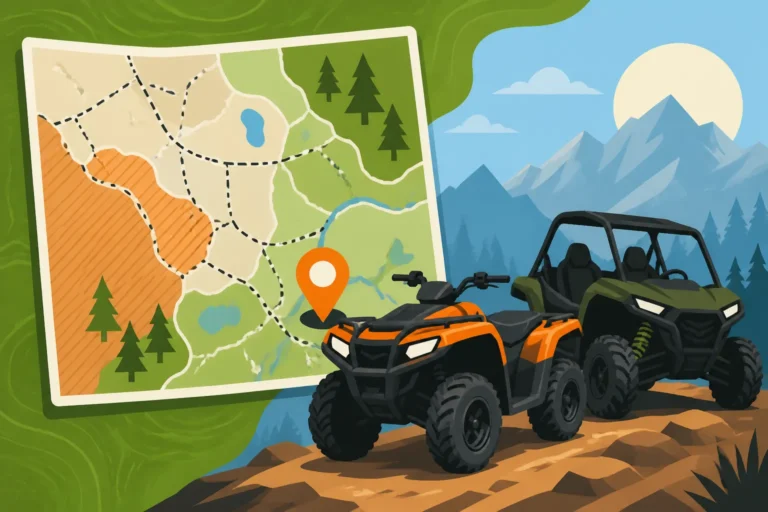
A ride plan should include the roads and trail segments you intend to use, not just the name of a forest or riding area. Check the relevant land manager’s travel information and look for route-specific restrictions, closures, and seasonal conditions. A route shown on a general navigation app is not, by itself, proof that it is open to motorized travel.
Digital tools can help you follow your planned route and notice when you have drifted from it. For example, onX Offroad can be part of a route-planning setup, but pair any app with official travel maps and signs on the ground. Save maps for offline use where available, since cell service can be unreliable in remote riding areas. Wyoming Trail Maps and MVUMs and Carrying a Travel Management Map in Wyoming cover why checking the right map matters.
Before the ride, tell your group that livestock may be on forest roads and agree on how you’ll respond. Make sure everyone knows the lead rider will stop, the rest of the group will stay together, and nobody will try to pass through the herd alone. A little preparation can prevent a tense moment from turning into a scattered group, a frightened animal, or a damaged machine.
Leave room in the schedule for delays
Cattle don’t move on a rider’s timetable. Build extra time into your plan, especially if you’re traveling with children, have a rental return deadline, or need to reach a trailhead before dark. A road that looks short on a map can take much longer if you encounter a herd, a gate, mud, or another obstruction.
Keep enough fuel and supplies for a slower trip. In remote country, don’t plan a route so tightly that a wait leaves you racing to get back before sunset. If your intended road becomes impassable, the best alternative may be to return to a known junction rather than improvise a shortcut. Wyoming Trail Closures to Check First is another helpful planning topic, particularly when conditions or access can change along the way.
It is also worth checking whether your group has a way to communicate if riders become separated or need help. Agree on a meeting point at a known junction, and don’t let one rider move ahead to scout around cattle while the others wait elsewhere. Keeping the group together makes it easier to turn back calmly if the road remains blocked.
When to wait, retreat, or report a problem
Wait when the herd can move safely
Waiting makes sense when you have a safe place to stop, the cattle are moving or grazing calmly, and there is no immediate danger. Stay on the road, keep your distance, and give the herd time to clear the route on its own. If the animals begin moving, let them choose their direction rather than trying to steer them with your machine.
Use patience if the herd is spread across a long section. Passing one or two animals only to find more around the next bend can put you back in the same situation with less room to stop. Wait until you can see that the route ahead is clear enough to continue without crowding the cattle.
Retreat when continuing would create risk
Turn back if animals are agitated, the road is too narrow to pass safely, a calf is separated, or the only apparent way forward requires leaving the route. Also retreat if you cannot reach a gate safely or if poor visibility makes it hard to judge where cattle are moving. Don’t let a planned destination or a tight schedule pressure you into making the situation worse.
If you encounter a hazard that appears to need attention, such as a damaged gate or animals trapped in a dangerous place, use the appropriate land-manager or local contact when practical. Avoid approaching livestock to inspect, move, or handle them yourself. If you’re uncertain whether a road is open or who manages it, return to a known junction and check the official map or posted information rather than guessing.
A cattle encounter may add time to a ride, but it does not have to become a confrontation. Stop early, keep your group calm, respect the animals’ space, and stay on routes that are open to your machine. Those habits make the ride safer for everyone who uses the road, including the people who work the land.
Disclaimer
This article is for general informational purposes only and does not constitute professional advice. Laws, prices and regulations vary by location and change over time. Consult a qualified professional for guidance on your specific situation.