Crossing a Creek Running High With Snowmelt
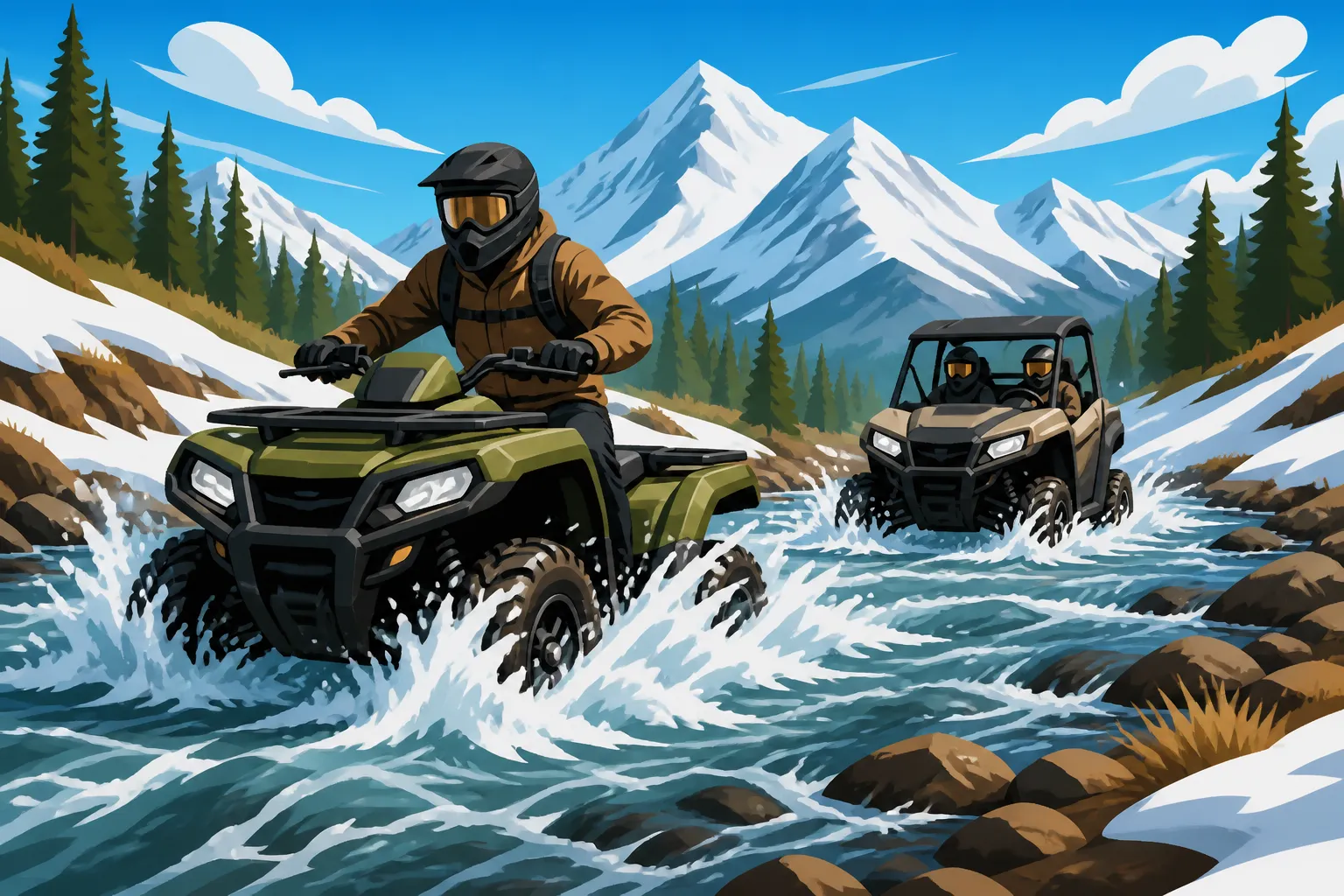
Spring snowmelt can turn a familiar Wyoming two-track creek crossing into a fast, cloudy channel with hidden rocks and a soft bottom. The hard part is knowing when a crossing is merely inconvenient and when it is unsafe to attempt. This guide explains how to assess conditions, protect your ATV or UTV, and choose a safer plan when water is running high.
Why snowmelt creek crossings can be dangerous
Water depth is only part of the risk
A creek may look manageable from the bank, but depth is only one factor. Current can push a machine sideways, especially where the channel is wider or the bed is uneven. Cold, fast-moving water can also make it difficult for a rider to stay upright or reach shore if the machine tips or stalls.
Snowmelt can rise quickly as temperatures warm, and a crossing that seemed passable earlier in the day may change after more runoff reaches the channel. Water also hides rocks, holes, branches, and abrupt drop-offs. A shallow-looking edge does not tell you what the center or far bank is like.
That uncertainty matters on an ATV or UTV. A machine may lose traction on slick stones, settle into soft sediment, or be carried off its intended line. If the wheels lose contact with the bottom, the vehicle can float or drift rather than respond normally to steering. A UTV’s weight does not make it immune to current, and a larger machine can be harder to recover if it becomes stuck.
The crossing may damage the machine even if you get through
Water entering an engine intake can cause severe engine damage. Water can also affect electrical components, brakes, wheel bearings, and drivetrain parts. On many side-by-sides, a wet belt or clutch system may affect performance, while mud and debris can make the problem worse after the crossing.
The damage may not be obvious right away. A machine might start and move after a crossing, then develop trouble later. That is a poor trade for reaching a route that can be revisited when conditions are safer. If you suspect water entered the intake or engine, do not keep trying to start the machine; follow the manufacturer’s recovery guidance and get qualified help.
Before a ride, know where the air intake and other vulnerable components are, and check the owner’s manual for the machine’s operating limits. Those details vary by model. Do not assume another rider’s successful crossing proves your machine can handle the same water.
Spring conditions can change the whole day’s route
High water is one of several early-season hazards. Snow can remain on shaded slopes and high forest roads while lower elevations are already muddy or wet. A route can also be affected by seasonal closures, soft trail surfaces, fallen debris, or weather that changes during the ride.
If you are planning a ride in spring, build flexibility into the day. Read Wyoming Riding in Early Spring and check Wyoming Trail Closures to Check First before leaving. Routes around the Bighorns or Snowy Range, for example, can have very different conditions from lower-elevation riding areas. A map line alone cannot tell you whether a particular creek is safe today.
How to assess a creek before you commit
Stop well back from the water
When you reach a creek, stop before the bank becomes soft or steep. Keep people and machines away from the edge while you look. A saturated bank may crumble under a tire, and an ATV or UTV close to the water can be difficult to control if the ground gives way.
Take time to observe the whole crossing, not just the first few feet. Look for the entry and exit points, the shape of the channel, the flow direction, and possible downstream hazards such as logs, undercut banks, rocks, or narrow bends. If you cannot see the bottom or the far side clearly, that uncertainty is a reason to turn around—not a reason to guess.
Never judge the crossing solely by watching someone else ride through. Their machine, line, experience, and timing may be different. Water conditions can also shift between attempts. If someone has already crossed, that does not guarantee a safe return crossing later.
Check more than the surface
A careful assessment includes questions that are easy to overlook when a group is eager to continue:
- Is the current moving quickly enough to push against your legs or a stick? This is not a reliable test of whether a machine can cross, but it can make obvious force easier to recognize.
- Can you see the bed and identify a stable route across?
- Is there a firm, gradual entry and exit, or a steep bank that could trap the machine?
- Are there obstacles downstream that could catch a rider or vehicle?
- Is the water rising, becoming cloudier, or carrying more debris?
- Can you turn around safely without backing toward the edge?
- If the machine stalls, is there a safe way to retreat without entering the current?
Do not wade into fast or cold water to measure depth or inspect the bottom. A person can lose footing quickly, and a walking test still does not show how a machine will respond. If the creek’s depth, current, or bed is uncertain, treat the crossing as beyond your safe limit.
| What you notice | Why it matters | Safer choice |
|---|---|---|
| Fast, forceful, or rising water | Current can push a machine off line and conditions may worsen | Do not enter; turn around |
| Cloudy water or a hidden bottom | Rocks, holes, and soft sediment are difficult to detect | Avoid guessing at depth or footing |
| Steep, undercut, or crumbling banks | The machine may lose traction or become trapped at entry or exit | Find another route or return later |
| Logs, debris, or hazards downstream | A stalled or displaced machine could be carried into them | Do not attempt the crossing |
| No safe place to turn around | A failed approach could leave you committed at the edge | Stop farther back and plan a retreat |
| Conditions beyond your machine’s manual limits | Water may reach vulnerable components | Follow the manufacturer’s guidance and do not exceed it |
Use maps to plan around the crossing, not to approve it
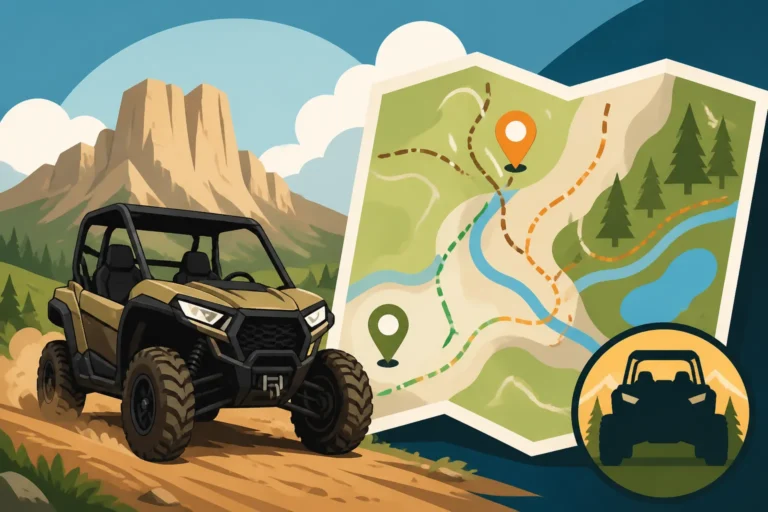
A route map can help you identify alternate roads, trail connections, and possible ways back to a staging area. It cannot certify that a creek is passable. For public routes, consult the relevant land manager’s travel map and check whether the route is open to your type of machine. Wyoming Trail Maps and MVUMs and [Wyoming Rules for Riding a Designated Route] are useful starting points for understanding that distinction.
Some riders use onX Offroad to review route options and save maps for areas where cell service may be limited. Treat it as a planning aid, not a live confirmation of water conditions or route access. Compare it with the applicable land manager’s current information, and make the decision at the creek based on what you can safely observe.
If you are exploring a two-track, remember that a visible track on the ground does not automatically mean it is open for public motorized travel. Check Wyoming Rules for Riding a Two-Track and obey posted closures. If a route ends at a creek that is too high, do not create a new bypass through vegetation or around a closure.
What to do when the water is too high
Turn around early and make the decision calmly
Turning back is often the safest and least expensive option. It can be frustrating to retreat after hauling a machine and riding for miles, especially when the crossing is close to the day’s destination. But reaching the far bank is not worth risking injury, a stranded vehicle, or a difficult recovery in cold water.
Make the choice before anyone enters the channel. Tell the group plainly that the crossing is not safe under the conditions you can see. Avoid letting the first rider become an unplanned test case. If there is a known alternate route, use it only after confirming it is open and suitable for your machine. Otherwise, return along the route you already know.
A route plan should include a turnaround point and enough fuel and daylight to get back. If the creek is rising or weather is deteriorating, do not wait at the bank hoping the water will settle. Snowmelt flow can vary through the day, and waiting does not make a crossing predictable.
Do not try to solve a bad crossing with speed or a rushed recovery
A fast approach does not make a hazardous crossing safer. It can reduce your ability to respond to hidden rocks or a sudden change in depth, and it may send the machine farther into the channel if traction disappears. Avoid riding close behind another machine, too; a stalled vehicle can leave the rider behind it with little room to stop.
A winch is useful equipment, but it does not make high water safe. Recovery lines can load suddenly, anchors can fail, and a person near moving water can be pulled into danger. Do not stand in the current or place yourself downstream of a machine that could shift. If you cannot set up a recovery from stable ground, stop and seek help rather than improvising beside the creek.
If a machine becomes stranded, prioritize people over equipment. Do not enter dangerous water to retrieve a vehicle. Move to a safe location, communicate your position, and contact appropriate assistance if needed. On remote rides, a communication plan matters because cell service may be absent; Breaking Down Far From Help covers the value of preparing for a mechanical problem away from easy access.
Respect closures and protect the route
A flooded crossing may be part of a route that is seasonally closed or otherwise restricted. Do not bypass a closure by crossing private land, cutting around a barrier, or making a new track beside the creek. Closures may protect riders, wildlife, fragile soil, or trail infrastructure, and a detour can create lasting damage.
Check land-manager notices before you head out and again when plans change. If signs on the ground indicate a closure, follow them even if an app or older map appears to show the route as open. Use Wyoming Trails Closed by Snow as a reminder that seasonal access can affect spring ride plans. Near forest routes, local conditions and current management information should guide your decision, not last season’s experience.
How to prepare for safer Wyoming spring rides
Choose routes with realistic alternatives
Before setting out, identify more than one way to finish the ride. Look for loops or out-and-back routes that do not depend on a single creek crossing. If your trip includes a crossing, decide in advance what conditions would make you turn around. A clear rule agreed on before the group arrives can prevent pressure and second-guessing at the bank.
Study the route’s elevation and terrain, and consider where snowmelt is likely to affect drainage. A creek below a snow-covered slope may be running hard even when the trailhead is dry. Ask local land managers or knowledgeable local contacts about general seasonal access, but still inspect conditions yourself when you arrive. For examples of how spring timing affects access in different regions, see Riding the Bighorns From Buffalo and Snowy Range Trails Out of Laramie, Wyoming.
When using onX Offroad or another mapping tool, download the maps you need before losing service and mark a practical turnaround option. Keep the land manager’s travel map available as well. A phone battery can fail, a route can be closed, and a map cannot show the current speed or depth of a creek.
Set your group up to make a safe call
Agree on riding order, spacing, and communication before leaving the staging area. Riders should know that anyone can call for a stop without having to defend the decision. Keep inexperienced riders away from pressure to follow a more capable machine into uncertain water.
Carry basic recovery and emergency gear appropriate to the trip, and know how to use it before you need it. Keep essential items secured against water and dust, and tell someone outside the group where you are going and when you expect to return. On a remote ride, that small planning step can matter more than carrying another accessory.
Finally, remember that a creek is not a test of courage or skill. Conditions can exceed the safe limits of even a well-maintained machine and a confident rider. If you cannot clearly establish a safe crossing, turn around, choose a verified alternate route, or return when runoff has eased. The best spring ride is the one where everyone—and every machine—gets home.
Disclaimer
This article is for general informational purposes only and does not constitute professional advice. Laws, prices and regulations vary by location and change over time. Consult a qualified professional for guidance on your specific situation.