Riding an Old Mine Bench
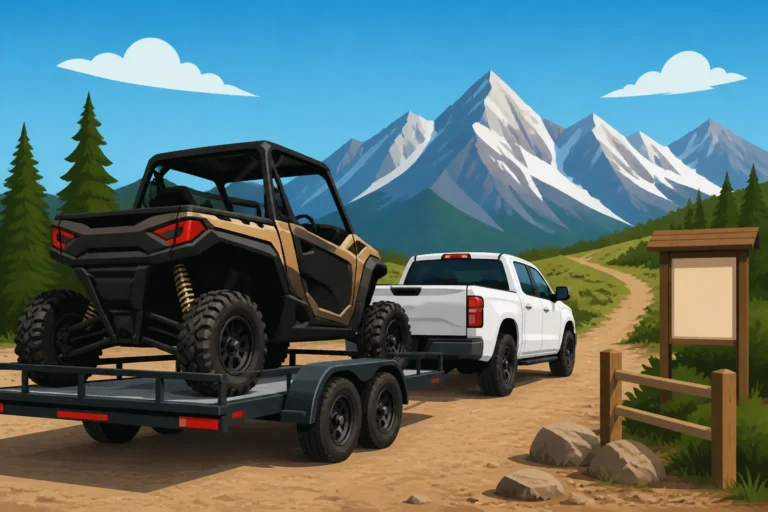
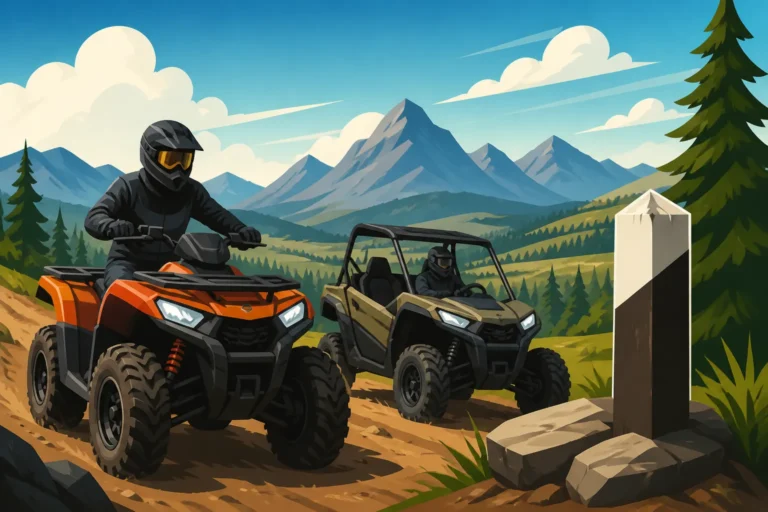
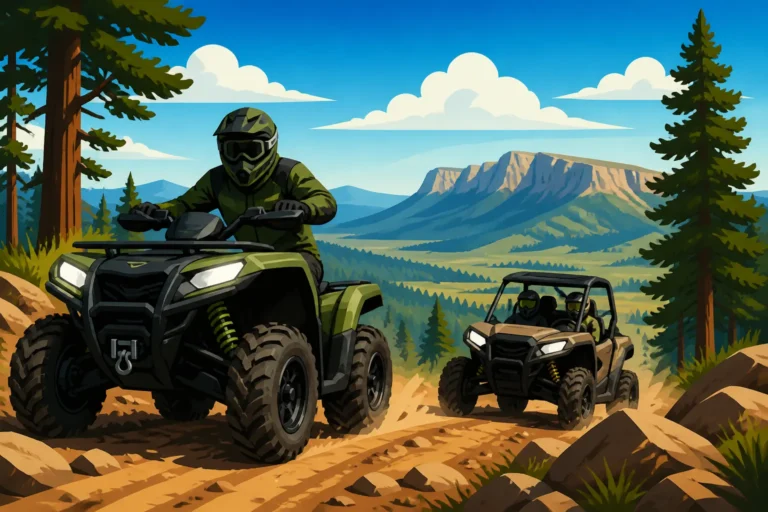
An old mine bench can look like an easy shortcut across a Wyoming hillside: a broad, nearly level shelf with a steep drop on one side. But loose rock, eroded edges, mining debris, and uncertainty about whether the route is open can turn a casual ride into a serious problem. This guide explains how to assess a bench, prepare your ATV or UTV, and ride it responsibly.
What an old mine bench is and why it needs care
How a mine bench differs from an ordinary trail
A mine bench is a shelf cut into a slope, often to give vehicles or equipment access to a mining area. Unlike a purpose-built recreation trail, it may have been created for industrial work rather than enjoyable, predictable riding. Its surface can be wide and firm in one spot, then narrow, broken, or tilted where erosion has taken hold.
The level appearance can be misleading. A bench may slope outward toward a drop, or it may be cut into soft material that crumbles under a tire. Water can wash channels across the route, while rocks displaced by weather or earlier vehicle traffic can make the usable line much narrower than it first appears.
In the Casper area, riders may encounter old mine features around riding areas such as [Poison Spider OHV Park Outside Casper]. The fact that a route looks established, or that it appears on an older map, does not by itself mean it is open to motorized travel. Check the current land-management information and signs before riding onto a bench.
Why old mine ground can be unpredictable
Mining areas can contain hazards that are easy to miss from the seat. Watch for loose fill, exposed edges, old equipment or scrap, deep ruts, hidden holes, and unstable slopes. A route can also change quickly after rain or snowmelt. Fine-grained material may look dry on top while remaining soft underneath, and a small washout can leave little room to turn around.
Do not treat an old cut as a place to explore beyond the marked route. Some mine features may be unstable or restricted, and traveling off an established route can damage fragile ground or create a dangerous situation. If you cannot tell where the authorized route continues, stop somewhere safe and confirm it rather than following tire tracks into an uncertain area.
Check access before you unload
Before leaving home, identify the land manager and the route you plan to use. A trail map, a posted sign, and the actual conditions on the ground should all point to the same answer. [Reading a Wyoming Travel Management Map] can help you understand how routes are shown, but a map is not a substitute for observing closure signs or checking for changed conditions.
A mapping app such as onX Offroad can help you plan a route and keep track of your position, especially where mine roads and recreation routes appear close together. Use it as a navigation aid, not as permission to ride. Download the information you need before heading out, since cell service can be limited, and compare the map with land-manager notices and signs at the access point.
How to assess a bench before riding onto it
Stop and look at the whole section
Before committing to a narrow or exposed stretch, stop in a safe, level place where you will not block other riders. Look ahead for the line of travel, the surface condition, the outside edge, and a place to turn around. Ask yourself whether your machine can pass without putting a tire near the edge, and whether there is enough room to stop if the surface changes.
If the route disappears around a blind bend, do not rush into it just to see what is next. A passenger can get off in a safe spot and look ahead on foot, provided doing so does not require walking along an unstable edge. If the route is too narrow to turn around comfortably, treat that as a reason to pause before entering rather than discovering it after you are committed.
| What you see | Why it matters | Safer response |
|---|---|---|
| Crumbling outer edge | The bench may not support a tire near the drop | Keep well away from the edge or turn around |
| Fresh washout or deep rut | The surface may be weaker beyond the visible damage | Stop and assess from a stable position |
| Loose rock on a sloped surface | Tires can slide sideways or lose traction | Use a controlled pace and avoid abrupt steering |
| Unclear route or missing markers | You may be near a closed or unauthorized track | Confirm the route before continuing |
| Recent rain, snowmelt, or standing water | Soft ground can conceal weak spots | Wait for safer conditions if the surface is uncertain |
Match the machine to the route
A narrow bench can be a poor fit for a wide side-by-side, even when the route itself is open. Measure your machine’s actual width, including tires and accessories, and consider how much clearance you need to steer without putting a wheel near the edge. A route that is manageable on a compact ATV may feel uncomfortably tight in a wider UTV.
Width is not the only issue. A long wheelbase can make a tight turn harder, while a high center of gravity can increase concern on a side slope. Tires with suitable tread and condition matter too, but no tire makes loose, crumbling ground safe. If a route looks too narrow or steep for your machine, do not rely on momentum to get through it. Find a wider designated route instead.
Wyoming’s width limits can also depend on the specific trail or route. Before planning a ride with a wide machine, review [Wyoming's 50-Inch Trail Limit] and confirm that your intended route permits your vehicle’s width. Never assume that a road open to one kind of machine is open to every ATV or UTV.
Use a conservative riding technique
Approach a bench slowly enough that you can stop within the distance you can see. Make smooth steering and throttle inputs, and avoid sudden braking or sharp turns on loose or sloping material. Keep your tires on the most stable part of the traveled surface rather than riding the outside edge to get around an obstacle.
Leave room between machines so the rider ahead has space to respond to a hazard. On a narrow section, agree in advance about where the group will stop if someone needs help. Do not try to pass another vehicle where the bench has no safe extra width. If you meet oncoming riders, use a wider turnout if one exists rather than edging toward a drop or soft shoulder.
How to prepare your ATV or UTV and your group
Do a practical pre-ride check
A machine that feels fine on a flat road may reveal a problem on rocky, uneven ground. Check tire condition and pressure, brakes, steering, throttle return, lights, and the basic fasteners or accessories that could work loose. Make sure your fuel range suits the full route, including the return trip and a reasonable margin for detours or delays.
Carry water, warm layers, basic first-aid supplies, and tools suited to your machine. A spare tire or repair supplies may be useful depending on the route and your vehicle. Tell someone where you expect to ride and when you plan to return, especially if you are heading into an area with limited service. For more planning around a breakdown, see [Breaking Down Far From Help].
Wyoming’s public-land requirements matter, too. Confirm that each machine has the required permit or decal for the places where you plan to ride. A permit does not make a closed route legal, and it does not replace checking route designations. [Wyoming ORV Permits Explained] is a useful starting point for understanding the permit side of a public-land ride.
Keep the group small enough to manage
A long line of machines can make a narrow bench more stressful. Riders may lose sight of one another around bends, and dust can reduce visibility. Keep a sensible gap, regroup at broad, stable locations, and make sure the last rider knows the planned route and meeting points. Avoid bunching up on an exposed shelf where there is little room to stop.
Choose a pace that suits the least experienced rider in the group. Before the ride, explain how you will handle a narrow stretch, an oncoming vehicle, or a machine that needs to turn back. If someone is uneasy, take that seriously. A rider who feels pressured to continue may make a rushed decision in exactly the place where careful control matters most.
Leave old mine features alone
Do not climb on, enter, or drive through abandoned structures, mine openings, or equipment. They may be unstable, and a quick look can expose a rider to a fall, collapse, or other injury. Leave artifacts and debris in place, and do not widen a route by pushing rocks or vegetation aside.
Ride only on designated routes and avoid creating new tracks across the slope. That protects the landscape and reduces the chance that other riders mistake an unauthorized line for an approved route. Where public access crosses working or private land, respect signs, gates, and permission requirements. [Wyoming Trail Etiquette With Ranchers] offers useful reminders for keeping access respectful beyond the mine area itself.
When to turn around and how to choose another route
Treat changing conditions as a reason to reassess
Weather can change a bench’s surface faster than it changes the broader trail network. After rain, snowmelt, or a strong storm, look for fresh erosion, slumping edges, and water flowing across the route. If your tires are sinking, sliding, or cutting into the surface, stop before the damage gets worse.
Conditions can vary over a short distance. A dry approach does not guarantee that a shaded section or drainage crossing is firm. Be especially cautious where the route runs along a slope and there is little room to recover from a slide. If you cannot evaluate the next section from a stable position, turn around while you still have room.
Turn back when the route is beyond your comfort level
Turning around is a sound decision when the edge is crumbling, the route is too narrow for your machine, or you cannot see a safe way through. It is also the right call when a route is unsigned or its legal status is unclear. Riding farther in to “see whether it gets better” can leave you with fewer options and a more difficult turnaround.
Make the decision early. Choose a firm, wide spot to turn around, and have one person guide the maneuver if visibility is limited. Do not reverse blindly along a narrow bench. If there is no safe place to turn, stop and consider whether walking to assess the route or contacting the land manager is more sensible than continuing on the machine.
Have a backup plan
A good outing does not depend on one particular mine road being passable. Pick a second route or riding area before you leave, and check for closures that could affect either option. Wyoming route conditions can vary by land manager and season, so review [Wyoming Trail Closures to Check First] before setting out.
If the bench is unsuitable, return to a clearly designated route and keep the day manageable. Around Casper, riders can compare other established options and access details in [Poison Spider for an Afternoon]. When selecting an alternative, check its route designation, width suitability, current conditions, and any required permit. A shorter ride on a route that fits your machine is usually more enjoyable than pushing into a bench that has already raised doubts.
Disclaimer
This article is for general informational purposes only and does not constitute professional advice. Laws, prices and regulations vary by location and change over time. Consult a qualified professional for guidance on your specific situation.