Hypothermia on a Summer Ride
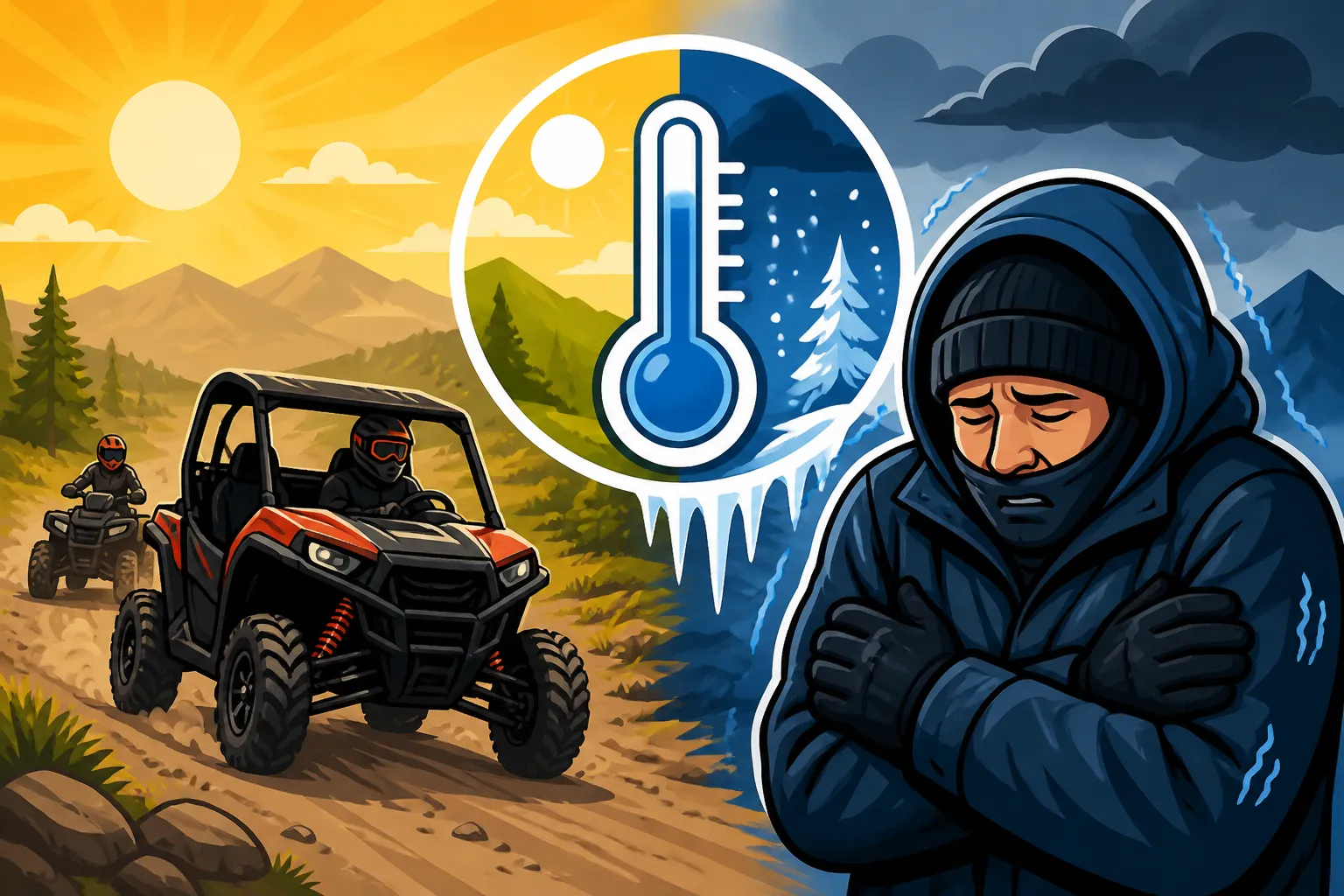
A sunny Wyoming trailhead can turn cold fast once a storm rolls in, wind picks up, or a rider gets soaked crossing a creek. Hypothermia is possible even in summer, especially at elevation and far from shelter. This guide explains how to recognize the warning signs, what to do if someone becomes dangerously cold, and how to plan an ATV or UTV ride to lower the risk.
Why hypothermia can happen on a Wyoming summer ride
Sun at the trailhead does not guarantee warmth on the trail
Hypothermia occurs when the body loses heat faster than it can produce it. Cold weather is an obvious risk, but it is not a requirement. Wet clothing, wind, exhaustion, and long stretches without shelter can cool a rider even when the day began warm.
That mismatch is familiar in Wyoming. You might leave a parking area near Casper or Laramie in a T-shirt, then climb toward higher ground where the air is colder and exposed ridgelines catch the wind. A thunderstorm can soak a group before anyone has time to pull on a rain shell. Even without a storm, sweat under a jacket can leave clothing damp, and that moisture can chill you when you stop moving.
A machine adds its own complications. A UTV may offer some protection from wind, but it is not a heated shelter. On an ATV, riders are especially exposed to wind chill while traveling. If a machine breaks down or someone is injured, the group may be sitting still for a long time. That is when damp clothes and a dropped body temperature can become serious.
Elevation, wind, and rain work together
The risk is not just about the thermometer. Wind moves warm air away from the skin and can make a rider lose heat faster. Rain and creek water can soak through clothing, while sweat can leave base layers damp underneath protective gear. At higher elevations, conditions can be colder than at the starting point, and a sudden change in weather can catch a group far from its vehicles.
Routes in the Snowy Range, the Medicine Bow National Forest, or the Bighorn Mountains can involve long stretches where a rider cannot quickly duck into a building or warm vehicle. That does not mean every ride in those areas is dangerous. It means riders should plan for the conditions they could encounter along the route, not only the weather at the trailhead.
Before setting out, check the forecast for the terrain and elevation you expect to ride, and pay attention to the possibility of rain, wind, and thunderstorms. Check for route and seasonal information as well. Wyoming Trails Closed by Snow and Wyoming Fire Season and Trail Access cover conditions that can affect access and trip planning. A map app such as onX Offroad can help you review routes and save mapping information for areas where phone service may be limited, but it should not replace checking official land-manager information or carrying a backup navigation option.
How to recognize hypothermia before it becomes an emergency
Early signs can look like ordinary fatigue
The first clues may be easy to dismiss. A rider might say they are “just cold,” become unusually quiet, or struggle to keep up with the group. Shivering is common, but it is not the only sign. Look for poor coordination, fumbling with gloves or zippers, unusual tiredness, slurred speech, or trouble concentrating.
A practical example: one person in your group starts missing simple steps while putting gear away, then keeps dropping a water bottle. It is tempting to blame cold fingers or a long day. But if that person is wet, shivering, and acting differently than usual, stop and check on them rather than continuing toward the next waypoint.
Do not rely on the person who may be affected to judge how serious the problem is. Confusion and poor judgment can be part of hypothermia, so someone may insist they are fine while having difficulty speaking clearly or following a basic conversation. Ask another rider to stay with them and watch for changes.
More serious symptoms call for urgent help
As hypothermia worsens, shivering may become intense or, in severe cases, stop. The person may become confused, very drowsy, clumsy, or unresponsive. Breathing and movement can slow. These are emergency signs, not something to “ride out” until the group reaches camp.
| What you notice | Why it matters | What to do |
|---|---|---|
| Shivering, cold or wet clothing, mild tiredness | Early heat loss may be underway | Stop, get out of wind and rain, change wet layers if possible, and insulate the person |
| Poor coordination, fumbling, unusual behavior, slurred speech | The person may be becoming confused or less able to care for themselves | Treat it as urgent, keep them with a responsible adult, and arrange help if symptoms persist or worsen |
| Severe confusion, extreme drowsiness, little or no shivering, or unresponsiveness | Possible severe hypothermia | Call emergency services, protect the person from further heat loss, and avoid unnecessary movement |
The table is a practical field guide, not a substitute for medical assessment. If you are unsure how severe the situation is, err on the side of treating it as serious. In a remote area, use the most reliable available means to call for help, such as a mobile phone where service exists or a satellite communicator carried by the group.
When mapping a ride, consider how the group would get help if someone became ill or a machine stopped working. onX Offroad can be one part of that preparation when used to review routes and keep useful mapping information available offline. Tell someone outside the group where you plan to ride and when you expect to return, too. A saved map is helpful, but it does not summon assistance on its own.
What to do if someone becomes dangerously cold
Stop the heat loss and get the person sheltered
Move the person out of wind and precipitation as soon as you safely can. A UTV cab or a sheltered spot may help, but avoid leaving the person alone while others ride ahead for help. If the machine is disabled, use a tarp, emergency blanket, spare jacket, or other available material as a wind barrier. Insulate the person from cold ground as well as from the air.
If wet clothing can be removed without exposing the person to more cold, replace it with dry layers. If removing it would mean stripping them outdoors in wind or rain, prioritize shelter and cover them with dry insulation first. Wrap the head and torso while leaving the face clear. Handle someone with suspected moderate or severe hypothermia gently, and avoid making them walk or ride if they are confused, very weak, or unsteady.
Call emergency services if symptoms are severe, worsening, or not improving with shelter and insulation. Give the dispatcher clear information: your location, the person’s condition, the route you took, and any landmarks or access points you can identify. If you have navigation information saved in onX Offroad or another map, use it to communicate your position, but do not assume a trail name alone will be enough for rescuers to find you.
Warm the person carefully while help is on the way
Focus on gradual warming, especially around the chest, neck, and torso. Use dry blankets, insulated clothing, or warm—not hot—packs wrapped in cloth. Do not place a heat source directly against bare skin, and do not use intense heat that could burn someone who is confused or numb. Avoid rubbing their arms or legs, and do not try to warm the limbs aggressively.
If the person is fully alert and can swallow normally, offer a warm, sweet, nonalcoholic drink. Do not give food or drink to someone who is very drowsy, confused, or unconscious, because they could choke. Alcohol is not a warming treatment and can make the situation worse.
Keep monitoring their breathing, alertness, and shivering. If they become less responsive or stop breathing normally, follow the emergency dispatcher’s instructions. If trained to do so, provide appropriate first aid or CPR. Do not delay contacting emergency services while trying to manage a severe case on your own.
A common mistake is to keep riding because the group is “only a little ways” from the trailhead. That can expose the cold rider to more wind, delay treatment, and increase the chance of a crash. Stop, assess, and choose the safest way to get help rather than assuming the person will warm up once the ride is over.
How to reduce the risk before leaving the trailhead
Pack for a weather change, not just the forecast at camp
Wear layers that can manage sweat and add insulation when you stop. A moisture-managing base layer, a warm mid-layer, and a windproof or waterproof outer layer are more adaptable than a single heavy coat. Bring dry socks and gloves in a sealed bag, plus a hat or other head covering. A spare layer for each rider can make a long delay much safer.
Keep rain protection accessible rather than buried beneath gear that is difficult to reach. A compact emergency blanket or bivy, a small tarp, and a way to start a fire where legally and safely permitted can add options, but they are not replacements for warm clothing or a plan to get help. Avoid relying on a campfire as your only heat source; wind, wet conditions, fire restrictions, and terrain can make it impractical or unsafe.
Plan food and water as well. Riders who are hungry, dehydrated, or exhausted may be less able to cope with a long, cold delay. Take breaks before people are depleted, and pay attention to a rider who is unusually quiet or falling behind. Hypothermia on a Summer Ride is worth discussing with the group before departure, especially when children or less experienced riders are along.
Build a ride plan that includes a turnaround decision
Agree on a route, a reasonable return time, and a point at which the group will turn back if weather deteriorates. Make sure everyone knows the plan; a rider who becomes separated should not have to guess which fork the group chose. Use a current land-manager map to confirm that the route is open and suitable for your machine. Wyoming Trail Maps and MVUMs and Wyoming’s Enrolled Roads and Trails can help riders understand the importance of checking route information before heading out.
Before starting, tell someone who is not on the ride where you are going and when to expect a check-in. If the group’s return is delayed, that person can raise the alarm with useful details instead of simply knowing that you are “somewhere near the mountains.” Carry a charged phone, but do not treat cellular coverage as guaranteed. If your route is remote, consider a satellite messenger or another communication device appropriate for the trip.
Keep the group together, especially when the weather is changing. A faster rider racing ahead can leave someone cold and alone if their machine has a problem. For wider-route planning and offline navigation, onX Offroad may help riders organize route information, but pair it with a backup map and a clear communication plan. Also review practical guidance such as Breaking Down Far From Help, Loading Up Before an Afternoon Storm, and Wyoming Riding at Altitude. Those preparations matter because hypothermia risk often starts with a small problem—a sudden shower, a stalled machine, or one rider who gets too cold while everyone else is focused on the route.
Disclaimer
This article is for general informational purposes only and does not constitute professional advice. Laws, prices and regulations vary by location and change over time. Consult a qualified professional for guidance on your specific situation.