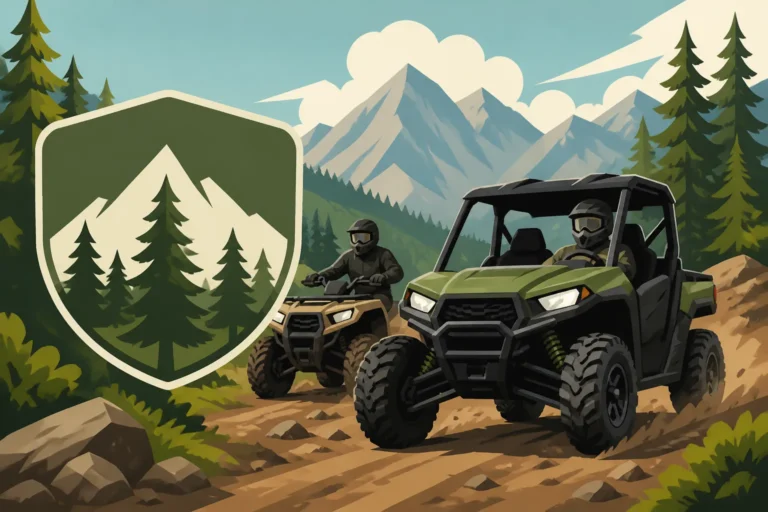
Wyoming Riding in October
October can be a great time to ride an ATV or UTV in Wyoming, but it is also when a sunny morning can turn into a cold, snowy afternoon. This guide helps you choose lower-elevation routes, check seasonal access, prepare for changing weather, and avoid arriving at a trailhead only to find the road closed.
What October riding in Wyoming is really like
Expect different conditions at different elevations
Wyoming’s elevation makes October riding hard to plan by calendar alone. A route near town or in a lower basin might be dry and comfortable while a forest road higher up is muddy, snow-covered, or already closed for the season. Even within one riding area, shaded north-facing slopes can hold snow while exposed sections remain clear.
That variability matters when you are planning a day around a specific trail. A forecast for a nearby town is useful, but it does not tell you exactly what the road will be like several thousand feet higher. Check conditions for the riding area itself, and be ready to change plans if snow, mud, or wind makes the route unsafe.
Cold mornings and evenings are normal considerations, even when daytime temperatures feel pleasant. Wear layers you can adjust, and bring warm gloves and a dry layer in a protected bag. If you are riding with children or passengers, remember that they can get cold quickly when sitting still or exposed to wind.
Plan for shorter daylight and quicker weather changes
October days are shorter than summer days, which leaves less room for a slow start, an unexpected detour, or a mechanical problem. Set a turnaround time before you leave the trailhead—not just a destination. If your group is moving slowly, conditions are worsening, or you are farther from the trailer than expected, turn back while you still have comfortable daylight.
A useful plan is to tell someone where you expect to ride and when you expect to return. Carry water, food, basic repair supplies, and an extra warm layer even for a route that looks like a short outing on the map. A puncture or stuck machine can turn a quick ride into a long wait, especially if the group has to walk out or assist another rider.
The shoulder-season tradeoff is simple: fewer summer crowds can make for a quieter ride, but you have less daylight and less predictable weather to work with. For more seasonal planning, see [Wyoming Riding in Late Autumn] and [Wyoming Trails Closed by Snow].
How to choose an October route
Start with access status, not the map’s appearance
A visible road or trail is not necessarily open to motorized use. In Wyoming, access can depend on land ownership, route designation, seasonal restrictions, and current closures. A line on a general map should not be treated as permission to ride it. Before loading up, confirm that the exact route is open to your type of machine and that any connecting roads are open too.
Look for current information from the land manager responsible for the area. On national forest land, consult the applicable Motor Vehicle Use Map, often called an MVUM, and check for notices about seasonal closures or temporary restrictions. For other public lands, use the managing agency’s route information and follow signs at the trailhead. If a map and an on-the-ground closure sign appear to conflict, do not assume the route is open; stop and clarify with the land manager.
Digital mapping tools can help you understand route connections and plan alternatives. For example, onX Offroad can be useful for reviewing mapped routes and organizing a trip, but use it alongside official land-manager maps and current closure notices. The legal status of a route should come from the applicable land manager, not from a map display alone. See [Wyoming Trail Maps and MVUMs] and [Wyoming Trail Closures to Check First].
Favor lower-elevation options when high routes become uncertain
When snow begins to affect high country, lower-elevation routes may offer a more practical backup. That does not mean every lower road is open or suitable for ATVs and UTVs; you still need to verify the route’s designation and any local restrictions. It does mean you should build flexibility into your plan instead of counting on a single high-elevation destination.
For example, a group heading toward the Bighorns might discover that a planned forest route is closed or difficult to reach in fresh snow. Rather than pushing on and hoping the conditions improve, the group can switch to a confirmed open route at a lower elevation—or call the ride off. Local route details matter, so use area-specific information such as [Riding the Bighorns From Buffalo] and [Where to Ride Near Pinedale] as starting points for planning, then confirm current access directly.
A practical October plan has a primary route and at least one alternative. Choose options that are genuinely usable by your machine, reachable with your trailer, and open under the same land-management rules. Check fuel and turnaround points for both routes before leaving home. If the backup is far away or requires a different permit or access arrangement, it may not be a real backup after all.
| October condition | What it can mean for your ride | A sensible response |
|---|---|---|
| Snow at higher elevations | Slower travel, reduced traction, or a closed route | Check current access and consider a lower-elevation alternative |
| Mud or soft ground | Poor traction and a greater chance of damaging the route | Turn around rather than spinning tires or widening the track |
| Short daylight | Less time to complete a route or recover from a problem | Set a firm turnaround time and start early |
| Cold wind or falling temperatures | Passengers can become chilled during stops or breakdowns | Pack warm layers and protect spare clothing from water |
| Seasonal or temporary closure | A route shown on a map may not be legally open | Follow current land-manager information and posted signs |
Prepare your machine and group for fall conditions
Check the machine before you leave
Before an October ride, inspect the basics that are easy to overlook when a machine has been sitting between outings. Check tire condition and pressure, brakes, lights, battery, fuel level, and any visible leaks or loose parts. Cold weather can make a weak battery more noticeable, and a lighting issue is especially inconvenient when daylight is limited.
Carry tools and supplies suited to your machine and the route. A tire repair kit, inflation method, basic hand tools, and a way to contact help are sensible starting points. Pack any gear you need to keep it warm and dry; a phone or electronic device is less helpful if its battery dies in the cold or it gets soaked. If your plan includes remote riding, think through what you would do if the machine could not continue.
Also check equipment requirements and public-land rules that apply to the area. Spark-arrester, sound, and route-width rules can matter on public land, and a machine that is permitted on one route may not be allowed on another. Review [Wyoming Rules for Riding a National Forest] or [Wyoming Rules for Riding BLM Land] as relevant to your destination, and confirm the specific rules with the land manager.
Pack for a ride that lasts longer than planned
It is tempting to pack light for a short October ride, especially when the forecast looks calm. But a delayed group, a wrong turn, a flat tire, or a route that takes longer than expected can leave you out after temperatures drop. Bring more water and food than you expect to need, plus warm layers, gloves, and a waterproof outer layer. Keep spare clothing protected from dust and moisture.
Plan for communication before you lose signal. Cell coverage can be inconsistent in remote areas, so tell someone your route and expected return time. If your riding area is beyond reliable coverage, consider what backup communication option suits your trip. Make sure someone at home knows what to do if you miss your check-in.
For an overnight or multi-day outing, account for colder nights and changing access conditions. Confirm that your chosen camping area is permitted, that your route to camp is open, and that you have a plan if snow or weather makes it difficult to continue. [Camping Near Wyoming Trailheads] and [Wyoming Riding at Altitude] can help you think through those parts of the trip.
A practical October ride plan
Use a simple pre-trip sequence
A little preparation can save a lot of frustration at the trailhead. The night before, check the forecast for the riding area, not just the nearest town. Then review the land manager’s current route information and any seasonal or temporary closure notices. If the plan depends on a high pass or a narrow weather window, be especially willing to change destinations.
Before loading the machines, make sure every rider knows the route, the turnaround time, and the backup plan. Confirm that each machine has any required permit for the area and that the group understands where motorized travel is allowed. Wyoming access rules and permit needs depend on where and how you ride, so do not assume that a decal, registration, or map from another state settles the question. For general seasonal context, see [Wyoming Fire Season and Trail Access].
At the trailhead, read posted signs and look for conditions that have changed since you planned the trip. Snow, washouts, a closed gate, or soft ground can make yesterday’s plan a poor choice today. If the conditions do not match what you expected, it is reasonable to choose the backup or head home. A good October ride is one where everyone returns safely, not one where the group forces a route simply because it was the original plan.
Know when to turn around
Turn back if visibility drops, snow or ice makes the route difficult to control, or mud is causing the machine to spin and cut into the trail. Do the same if the group is running behind your planned schedule or a passenger is getting cold. Continuing “just a little farther” can leave you with a longer return in worse conditions and less daylight.
Be considerate of the land and other users. Avoid creating a new track around mud, snow, or a closure, and do not ride off-route to get around an obstacle. In October, wet ground can be particularly vulnerable to damage. Respect gates and posted restrictions, and leave the route as you found it.
Finally, make the return trip part of the plan from the beginning. Keep enough fuel and daylight in reserve to get back without rushing. If the weather changes, the route is closed, or the group’s condition deteriorates, choose the safer option—even if that means a shorter ride than you hoped for.
Disclaimer
This article is for general informational purposes only and does not constitute professional advice. Laws, prices and regulations vary by location and change over time. Consult a qualified professional for guidance on your specific situation.