Two Vault Toilets and Nothing Else
Camping near Killpecker Sand Dunes can look wonderfully simple: park, set up camp, and ride. Then you realize there’s no water tap, trash bin, shower, or store waiting at the campground. If you’re heading out from Rock Springs, this guide explains what to expect from a site with two vault toilets and little else—and how to prepare so the lack of amenities doesn’t catch you off guard.
What “two vault toilets and nothing else” means
Plan for a primitive camping stay
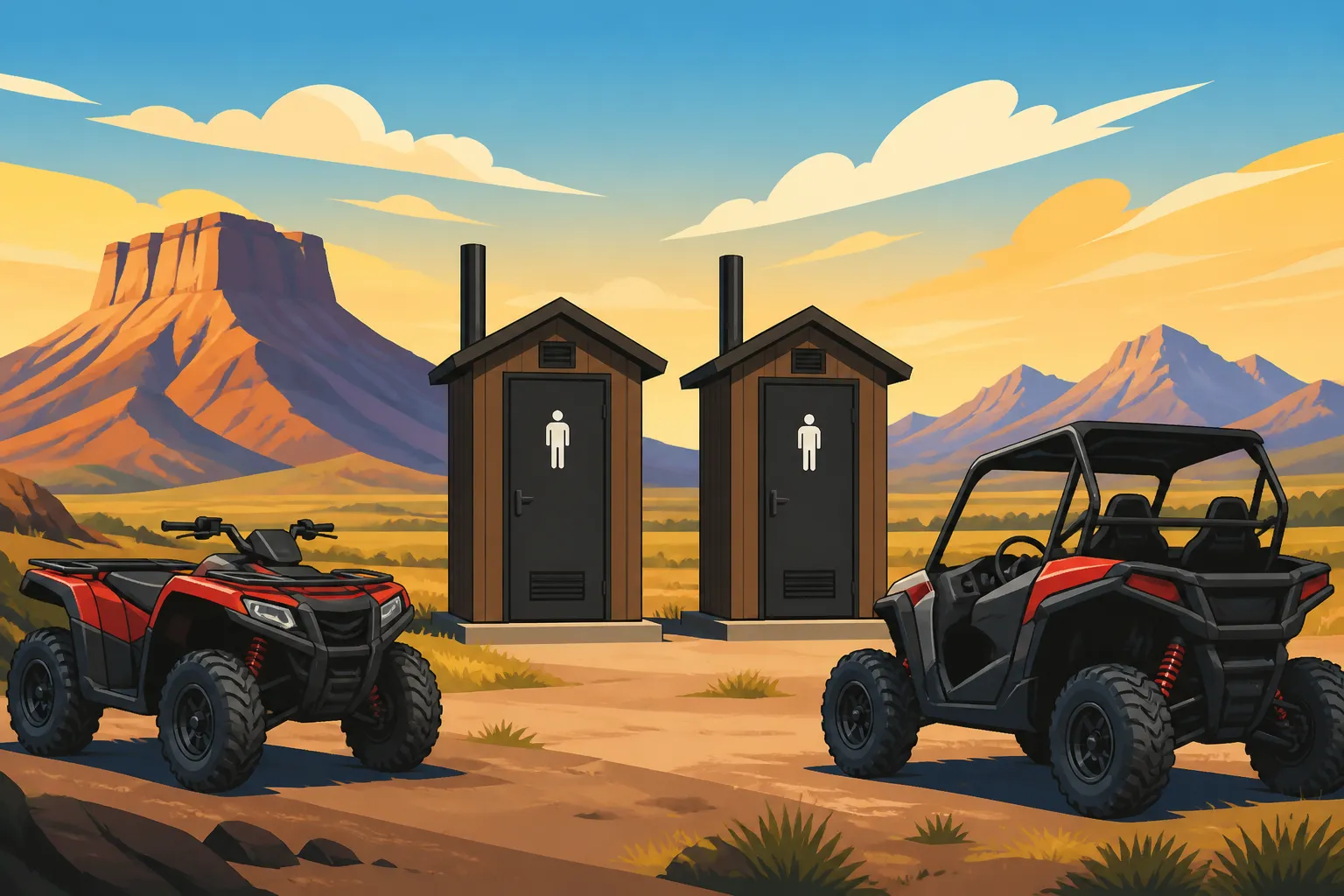
The camping area below the dunes is a place to bring your own essentials, not a developed campground with a full list of services. The two vault toilets can be a welcome convenience, but they don’t provide drinking water, electricity, showers, or a place to dispose of household rubbish. There may be fire rings at some campsites, but don’t assume a ring means a fire is allowed that day.
That distinction matters most when you arrive late. If you’ve planned to fill water bottles at camp, buy ice nearby, or plug in a refrigerator, you may have to change plans. Pack as if you’ll be self-sufficient from the moment you leave town, and treat any available facility as a bonus rather than something your trip depends on.
Know what to bring before leaving town
Bring drinking water for everyone in your group, plus extra for cooking, washing hands, and rinsing dusty gear. In warm, windy weather, riding and camp chores can make you thirsty faster than expected. A refillable bottle for each rider is useful, but a larger supply stored securely at camp gives you a backup if the day runs long.
Plan meals that don’t require a complicated kitchen. A camp stove, fuel, cookware, lighter, and washing basin can make dinner easier, while shelf-stable snacks help if a ride runs past lunchtime. Pack rubbish bags and a way to secure food and waste. If there are no bins, the practical plan is to take your rubbish with you when you leave.
| Need | What to plan for | Why it matters |
|---|---|---|
| Drinking water | Bring enough for camp and riding, with a reserve | There may be no dependable refill point at the campground |
| Food and ice | Pack meals and snacks before driving out | Nearby services may not be convenient once you’re set up |
| Power | Bring charged devices and suitable backup power | Don’t count on electrical hookups |
| Waste | Pack rubbish bags and take your trash out | A primitive site may not have waste collection |
| Toiletries | Bring toilet paper, hand sanitizer, and personal supplies | Vault toilets are basic facilities, not full-service restrooms |
| Fire supplies | Bring appropriate equipment and check restrictions | A fire ring does not guarantee fires are permitted |
Set realistic expectations about the toilets
Vault toilets are a basic amenity. They can make a primitive camp more comfortable, but they are not the same as a restroom building with running water, sinks, lighting, or a cleaning station. Bring toilet paper and hand sanitizer, and keep your own supplies accessible rather than buried under riding gear.
For families or larger groups, it helps to agree on a simple routine before arriving. Keep a small toiletry kit near the camp kitchen, make sure children know where the facilities are, and carry a flashlight or headlamp for nighttime trips. These small preparations are easy to overlook when you’re focused on loading machines, but they can prevent a frustrating first evening.
Preparing for camp near Killpecker Sand Dunes
Arrive with your camp plan already in mind
Killpecker is in southwest Wyoming, near Rock Springs, and the dunes are a destination where wind, sand, and distance can shape the day. Before leaving town, decide where you’ll camp, what you’ll do if your preferred spot is occupied, and how you’ll handle a late arrival. Keep the essentials—water, food, lights, and a first-aid kit—easy to reach instead of packed beneath everything else.
It’s also sensible to check your route and land-access information before setting out. A mapping app such as onX Offroad can be one way to review your planned route and keep relevant map information available on your phone. Download or save what you need before you lose reliable service, and carry a backup option if your phone battery dies or reception is poor.
When you’re considering a route, don’t treat every visible two-track as an invitation to ride. Use current land-manager information and posted signs to confirm where riding is allowed. The basics are covered in [Wyoming's Enrolled Roads and Trails] and [Wyoming Rules for Riding Federal Land].
Pack for sand, wind, and changing conditions
Sand can work its way into zippers, food containers, and machine components, while wind can make an otherwise comfortable campsite unpleasant. Use sealable bags or containers for food and small gear, and secure lightweight items before stepping away from camp. A tent that is easy to pitch is not necessarily a tent that will stay secure in exposed conditions, so bring suitable stakes and use them properly.
Think through how your camp will function in gusty weather. Keep a jacket within reach, store loose paper and napkins, and avoid leaving a stove or cooking supplies unattended. A tarp or shelter can help with shade, but it needs to be anchored securely and used in a way that does not create a hazard for other campers.
A spare headlamp, a charged phone, and a power bank can make a real difference after dark. Keep devices protected from sand and conserve battery when you’re away from camp. If you use onX Offroad for navigation, make sure you can still access the route information you need without depending on a live signal.
Make a plan for rubbish and food
In a campground with few services, waste management is part of packing. Bring enough rubbish bags for the entire group, and keep one in a predictable place so it doesn’t end up mixed with clean supplies. Don’t leave food scraps or packaging at camp, even if they seem harmless. Wind can scatter light rubbish quickly, and it’s easy to forget a small wrapper after a long ride.
Keep food sealed and stored sensibly, especially if you’re camping with children or pets. Put away leftovers after meals, and don’t leave snacks in open containers while everyone heads out. Before leaving, walk through the campsite once more and check around the fire area, cooking spot, and vehicle parking area.
Riding and camping without avoidable surprises
Confirm machine permits and route access
Camping at a riding area and riding legally are separate questions. Before unloading, confirm that each machine has the required Wyoming permit and that the route you plan to use is open to that type of machine. A registration sticker from another state may not replace Wyoming’s requirements; see [Wyoming ORV Permits Explained] and [Wyoming ORV Reciprocity Rules] for the permit issue.
If you’re carrying a map, use it alongside signs and current land-management guidance rather than as a substitute for them. Route boundaries can matter, and riding beyond an open route can damage fragile ground or create problems for other users. Review [Wyoming Trail Maps and MVUMs] before you ride, then pay attention to signs at the trailhead and on the ground.
A navigation app can help you keep track of your intended route, but it cannot grant access to a closed or restricted route. For a practical trip, use more than one source of information and make sure everyone in the group knows the plan. If a rider gets separated, a shared route and a clear meeting point are more useful than assuming everyone can follow the lead machine.
Treat the campsite as part of the riding plan
Decide whether you’ll ride from camp or trailer machines to a separate staging point. Secure machines and trailers when you’re away, and avoid blocking access or occupying more space than your group needs. If you’re riding with children or less experienced drivers, explain boundaries before the engines start: where the group will ride, where to stop, and what to do if someone loses sight of the others.
Keep a basic repair kit with your riding gear. A tire repair option, tools suited to your machines, gloves, and a way to contact help can make a minor problem manageable. Carry water and snacks on the machine, not only back at camp, and plan a return time that leaves room for slower travel, a mechanical issue, or a change in weather.
Use fire rings only when conditions allow
A fire ring is not permission to light a fire regardless of conditions. Restrictions can change with weather and fire danger, so check the applicable notices before you build one. If fires are allowed, keep the fire controlled, have water or another appropriate way to put it out, and make sure it is fully extinguished before leaving it unattended.
If restrictions prohibit fires, use a camp stove only where permitted and follow its operating instructions. Wind can turn a small flame into a serious concern, so don’t cook near loose fuel, dry vegetation, or flammable gear. When conditions make cooking outdoors uncomfortable, a simple no-cook meal is a useful backup.
A practical arrival and departure routine
Set up camp before unpacking everything
When you arrive, take a few minutes to look over the site before unloading. Check the ground, the location of the toilets, nearby traffic, and where machines and trailers can be parked without blocking others. Choose a spot for water and food that is easy to reach, then secure tents, shade, and loose items before the wind picks up.
After setting up, confirm that everyone knows the basic layout. Point out the toilets, the water supply, the first-aid kit, and the place where rubbish is stored. If you’re riding in a group, settle on a meeting point and a simple check-in plan. A little organization at camp can prevent unnecessary searching once it gets dark or dusty.
Leave the site clean and ready for the next group
Before packing, check the campsite carefully for rubbish, food scraps, and small items. Look around the cooking area, under chairs, near tires, and wherever children or pets spent time. If you used a fire ring, follow local guidance for making sure it is completely out; if fire restrictions apply, leave it unused.
Finally, check that machines and trailers are secured for the drive back, and that nothing has been left near the toilets or along the road. The simplest rule for a primitive campground is to leave it as clean as you would hope to find it. That matters even more at a place where there may be no staff or waste service to handle what campers leave behind.
A stay at Killpecker’s basic camping area can work well if you treat it as a self-contained trip: bring your own water and supplies, confirm access and riding rules, prepare for wind and sand, and don’t count on services beyond the toilets. For a broader look at nearby riding, see [Riding the Dunes at Killpecker] and [Free Camping at Wyoming's Killpecker Dunes].
Disclaimer
This article is for general informational purposes only and does not constitute professional advice. Laws, prices and regulations vary by location and change over time. Consult a qualified professional for guidance on your specific situation.