Fire Rings at the Killpecker Campground
Camping near Killpecker Sand Dunes can make a riding trip easier, especially when you want to park close to the sand instead of driving back toward Rock Springs after a long day. But finding a fire ring doesn’t automatically mean a campfire is allowed. This guide explains how to use a ring responsibly, check restrictions, and plan for Wyoming’s wind, dry conditions, and changing access.
Using fire rings at the Killpecker campground
A fire ring is a designated spot, not a guarantee
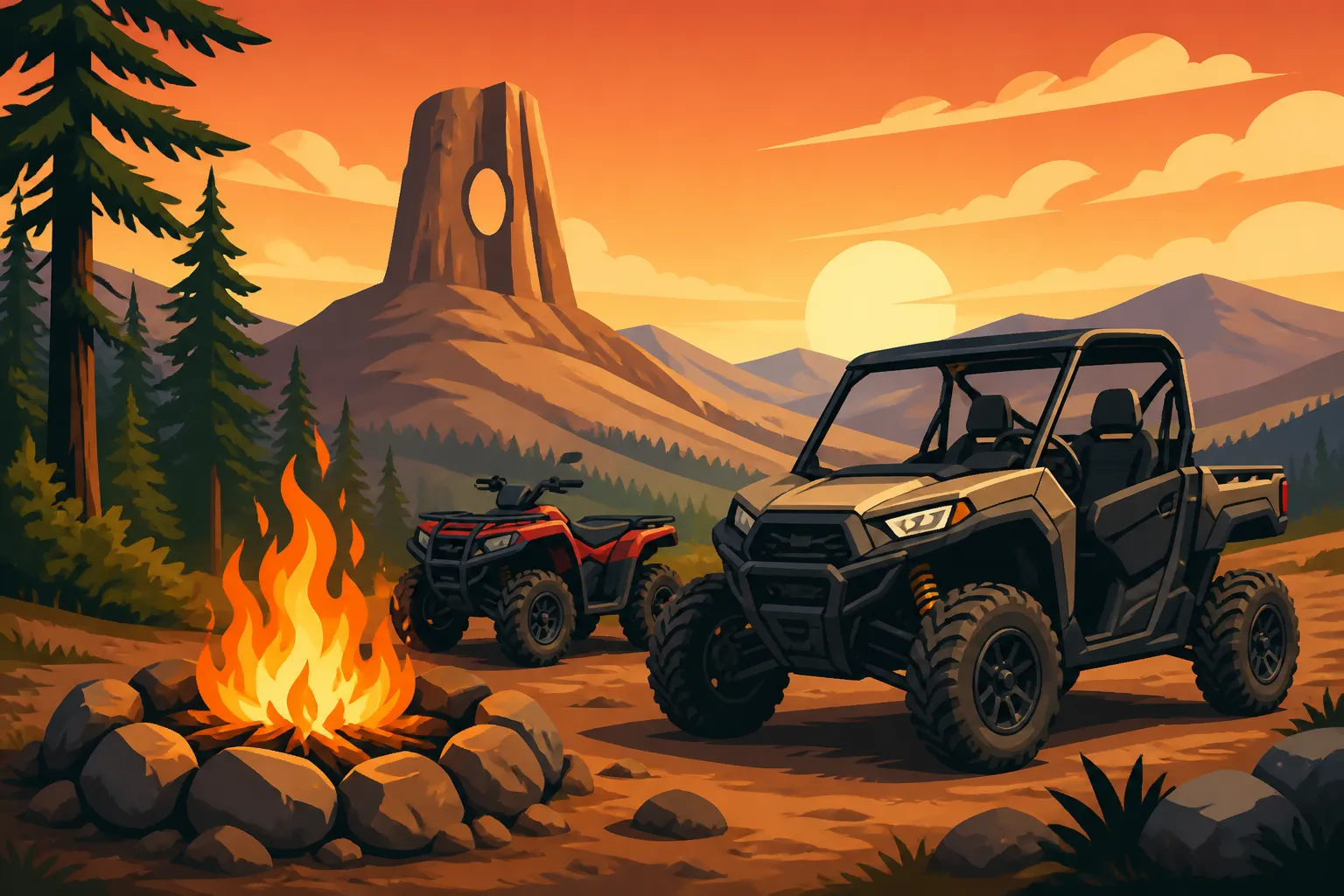
A provided fire ring can help keep a permitted campfire contained and reduce the temptation to build a new fire somewhere else. Use the existing ring rather than making another one, and keep your fire small enough that it stays well inside the ring. If the ring is damaged, full of ash, or surrounded by dry material, choose not to light a fire.
Most importantly, a fire ring does not override a closure or fire restriction. Restrictions can change with conditions, and a site that allowed fires during one visit may not allow them during another. Before traveling, check the current rules from the agency managing the camping area and follow posted notices at the site. When a restriction prohibits wood or charcoal fires, an existing ring is still off-limits.
This can be frustrating when you arrive late, unload the machines, and discover that the evening you pictured around a campfire isn’t possible. It’s still worth planning for that possibility: bring warm layers, a headlamp, and food that can be prepared without an open fire. A camp stove may also be subject to its own rules, so check those separately rather than assuming it is automatically permitted.
Choose a ring carefully and keep the area clear
Before lighting anything, look around the ring. Dry grass, pine needles, brush, tents, trailers, and fuel containers should all be well away from it. That matters at Killpecker, where wind and dry ground can turn a small ember into a much bigger problem. Don’t use a ring as a place to burn trash, packaging, or anything that can spark, melt, or release harmful fumes.
Keep water or another suitable means of extinguishing the fire close by while it is burning. Don’t leave the fire unattended, even for a short ride to retrieve something from the trailer. A gust can lift embers out of a ring, and riders may not notice a problem if they’re away from camp. If the wind is strong or shifting, skipping the fire is the safer choice.
If another group has left a ring full of ash or debris, don’t assume that everything in it is cold. Ash can hide hot coals. Avoid adding fresh fuel until you have assessed the ring safely, and don’t scatter ashes across the campsite.
Check restrictions and conditions before you go
Look for current fire rules before leaving town
Fire restrictions can vary by place and change with weather, drought, and wildfire conditions. Check the relevant land manager’s information before you set out from Rock Springs or Green River, then look again for signs or updates when you arrive. If the campsite and a current official notice seem to conflict, follow the more restrictive direction and ask the managing agency for clarification.
A useful pre-trip check includes both fire rules and route access. A camp area may be reachable while nearby routes are closed, or a fire restriction may apply even when riding remains open. Review [Wyoming Fire Restrictions That Close Trails] and [Wyoming Rules for Campfires at a Trailhead] as part of your planning. For general riding preparation, [Wyoming Fire Season and Trail Access] can help you think through how dry conditions may affect a trip.
| Before you light a fire | What to check |
|---|---|
| Current rules | Whether fires are allowed at the campground and under today’s restrictions |
| Ring condition | Whether it is intact, clear, and suitable for use |
| Nearby ground | Whether dry vegetation, gear, or fuel is too close |
| Weather | Whether wind or dry conditions make a fire unsafe |
| Extinguishing plan | Whether you have enough water or another suitable method to put it out |
| Departure plan | Whether you can fully extinguish it before sleeping or leaving camp |
Don’t rely only on a past visit, an old post, or a map symbol. If you use onX Offroad to plan the approach or save a route, treat it as a navigation aid rather than the final authority on fire rules. Verify restrictions and closures through the responsible land manager.
Wyoming wind can change the decision quickly
A calm afternoon can turn gusty after sunset, and exposed desert camping can make wind feel more intense than it did in town. Wind can carry sparks beyond the ring, blow lightweight items into the fire, or make it difficult to control flames. If you’re having to keep repositioning gear or weighing down loose items, that’s a good reason to leave the fire unlit.
The safest decision is not always the most convenient one. Riders may have driven a long way, set up camp, and planned dinner around the fire. But if the wind is picking up, the ground is dry, or you don’t have enough water to extinguish the fire, don’t light it. A fire that starts safely can become harder to manage as conditions change.
Keep gasoline, spare fuel, oily rags, and machine maintenance supplies away from any flame. Don’t refuel a hot machine beside the ring, and avoid running a generator or cooking equipment in a way that puts exhaust, sparks, or hot surfaces near dry material.
Leave the campsite safe for the next group
Put the fire out completely
A fire is not out just because the flames have disappeared. Before you go to bed, leave the campsite, or load up for a ride, extinguish it completely. Use water carefully, stir the ash and coals, and check for heat. Repeat until the contents are cold—not merely covered with ash or dirt.
Don’t bury hot coals. Soil can insulate them and allow them to smolder, while wind can later expose embers. Don’t leave the ring unattended while it cools. If you’re packing up early for a ride, extinguish the fire before starting the machines and give yourself time to confirm it is fully out.
Make the final check even if someone else in the group says they handled it. At a dusty campsite, a quick visual glance can miss a hot spot beneath the ash. If you can’t confidently confirm the fire is cold, stay and finish extinguishing it.
Keep riding and camp planning connected
Campground fire safety is only one part of a Killpecker trip. Plan where you’ll ride, where you’ll camp, and how you’ll get between them without assuming every visible track is open to motorized travel. Check the appropriate land-management maps and on-the-ground signs before riding. [Wyoming Trail Maps and MVUMs] and [Which Travel Map You Must Carry in Wyoming] are useful starting points for understanding why route verification matters.
If you’re using onX Offroad to save a route or orient yourself around the dunes, compare what you see there with official travel information and posted closures. Apps can help with planning, but the route’s legal status depends on the land manager’s designations and current notices. Keep a map available even if you expect to have phone service, and consider how you’ll navigate if your phone battery runs low.
Respect the campsite as well as the riding area. Pack out food wrappers, cans, and other trash instead of burning them. Keep machines and trailers positioned so they don’t block access or create a hazard around the fire ring. If you arrive to find a problem—such as a damaged ring, scattered ash, or a blocked route—avoid making it worse and report it through the appropriate land-management channel.
A practical fire-ring checklist for a Killpecker trip
Before departure
Check current fire restrictions and camping guidance from the agency responsible for the area. Confirm that your intended route and campsite are accessible, and make a backup plan in case a closure, weather change, or fire restriction alters the trip. Use onX Offroad or another mapping tool for trip planning, but confirm access details with official information.
Pack water for drinking and enough additional water for fire safety if fires are allowed. Bring a headlamp, warm clothing, and food options that don’t depend on an open fire. Store fuel and maintenance supplies securely and away from the cooking and campfire area. If you’re traveling with a group, make sure everyone understands who is responsible for tending and extinguishing the fire.
At camp and before riding out
Use only a designated ring when fires are permitted, and keep the surrounding area free of dry vegetation and gear. Don’t light a fire in strong or shifting wind, and never leave one unattended. Keep water close at hand, monitor conditions, and stop feeding the fire well before you plan to sleep or leave.
Before departing, extinguish the fire, stir the ashes, and check for heat until the coals are cold. Look over the site for trash and loose items, and make sure your departure won’t send dust or debris toward other campers. If conditions don’t feel safe, skipping the fire is a sensible part of a good riding plan—not a failed camping trip.
For more area-specific planning, [Riding the Dunes at Killpecker] covers the riding setting, while [Free Camping at Wyoming's Killpecker Dunes] and [Wyoming Dispersed Camping for Riders] can help you think through camping logistics. Check current agency guidance before relying on any past description of a site or its facilities.
Disclaimer
This article is for general informational purposes only and does not constitute professional advice. Laws, prices and regulations vary by location and change over time. Consult a qualified professional for guidance on your specific situation.