Parking a Rig at a Wyoming Trailhead
A trailhead can look roomy when you arrive, then feel surprisingly tight once a truck and long trailer are in the mix. In Wyoming, the right place to park depends on the site, road conditions, posted rules, and room for other visitors to turn around. This guide explains how to choose a safe staging spot, prepare your rig, and avoid common parking headaches.
Plan Your Wyoming Trailhead Parking Before You Leave
Confirm where the route actually begins
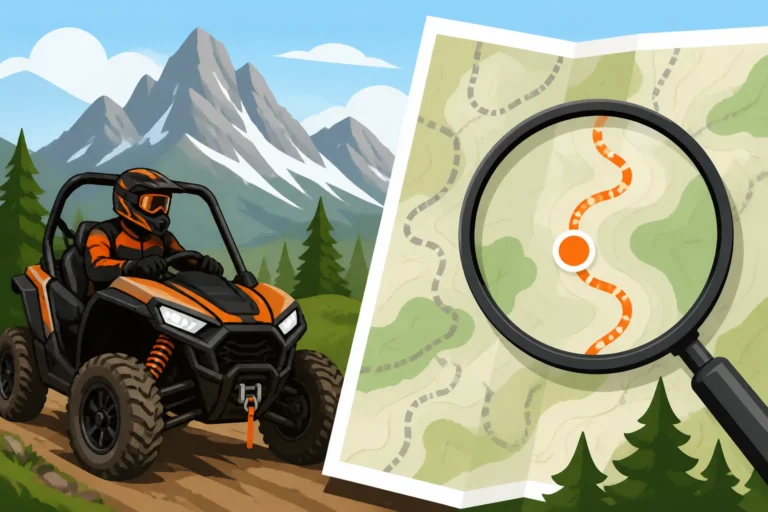
A pin on your phone may mark a trail, road junction, or general recreation area—not a suitable place to leave a truck and trailer. Before setting out, confirm the trailhead or staging area on the relevant land manager’s map. National forests, Bureau of Land Management areas, and state-managed sites can have different route designations and parking arrangements.
This matters around places such as the Medicine Bow National Forest, the Bighorn National Forest, and Killpecker Sand Dunes. A public road leading toward a riding area does not automatically mean every turnout or nearby parcel is open for parking. Check the access route and the final approach, not just the riding destination. Wyoming Trail Maps and MVUMs can help you understand why maps and route designations matter.
Use a route-planning app such as onX Offroad to review the general approach and identify possible staging areas, but treat it as a planning aid rather than permission to park. Compare what you see in the app with current signs and official land-manager information. If a map line and a posted closure seem to conflict, do not assume the app overrides the sign.
Check access for your whole setup
Your truck may reach a trailhead easily while your trailer cannot. Look at the road surface, grade, width, sharp turns, low branches, washouts, and places where oncoming vehicles can pass. A narrow forest road that feels manageable in a pickup can become stressful when you are towing a long trailer and cannot safely back up.
Think through the final turn into the parking area before you commit. Ask yourself whether there is room to swing wide, whether the trailer’s tires will stay on the road, and whether you can turn around without backing a long distance. If you are unsure, stop somewhere safe before the tight section and reassess rather than discovering the problem at a dead end.
Conditions can change quickly with rain, snowmelt, wind, or seasonal closures. A road that was passable on a previous trip may now be muddy, rutted, or blocked. For more on checking access before heading out, see Wyoming Trail Closures to Check First and Riding a Road Instead of a Trail.
Estimate how busy the staging area may be
Parking demand varies by location, season, and day of the week. A popular area near Casper or a well-known destination such as Killpecker can attract multiple trailers, families, and other recreation users. A small pullout that looks adequate on an online map may have little usable space once vehicles are parked.
Plan to arrive with enough time to choose a legal spot without rushing. If the designated area is full, do not create a new parking space by blocking a gate, extending into vegetation, or occupying a turnaround. Consider having a backup staging location identified in advance, while verifying that it is also open and appropriate for your vehicle.
Choose a Safe and Considerate Parking Spot
Use established parking areas and respect closures
Park in a signed or clearly established parking area whenever one is available. Avoid blocking gates, access roads, trail entrances, loading areas, emergency access, or spaces needed by land managers. A vehicle left in the wrong place can prevent others from reaching a route or interfere with maintenance and emergency response.
Do not assume that an open-looking patch beside a road is a parking area. Parking on soft ground can damage plants and soil, and a vehicle may become stuck after rain or snowmelt. Stay on durable, previously disturbed surfaces, and follow signs that restrict parking or close an area. [Wyoming Rules for Riding a National Forest] and [Wyoming Rules for Riding BLM Land] offer useful context on how access rules can differ by land manager.
If a designated route or access road is closed, do not park beyond the closure and continue on foot or by machine unless the land manager explicitly allows that. The closure may apply to the area, not just motorized travel. When a map and a sign disagree, follow the posted restriction and seek clarification from the responsible office.
Leave turning and loading space for everyone
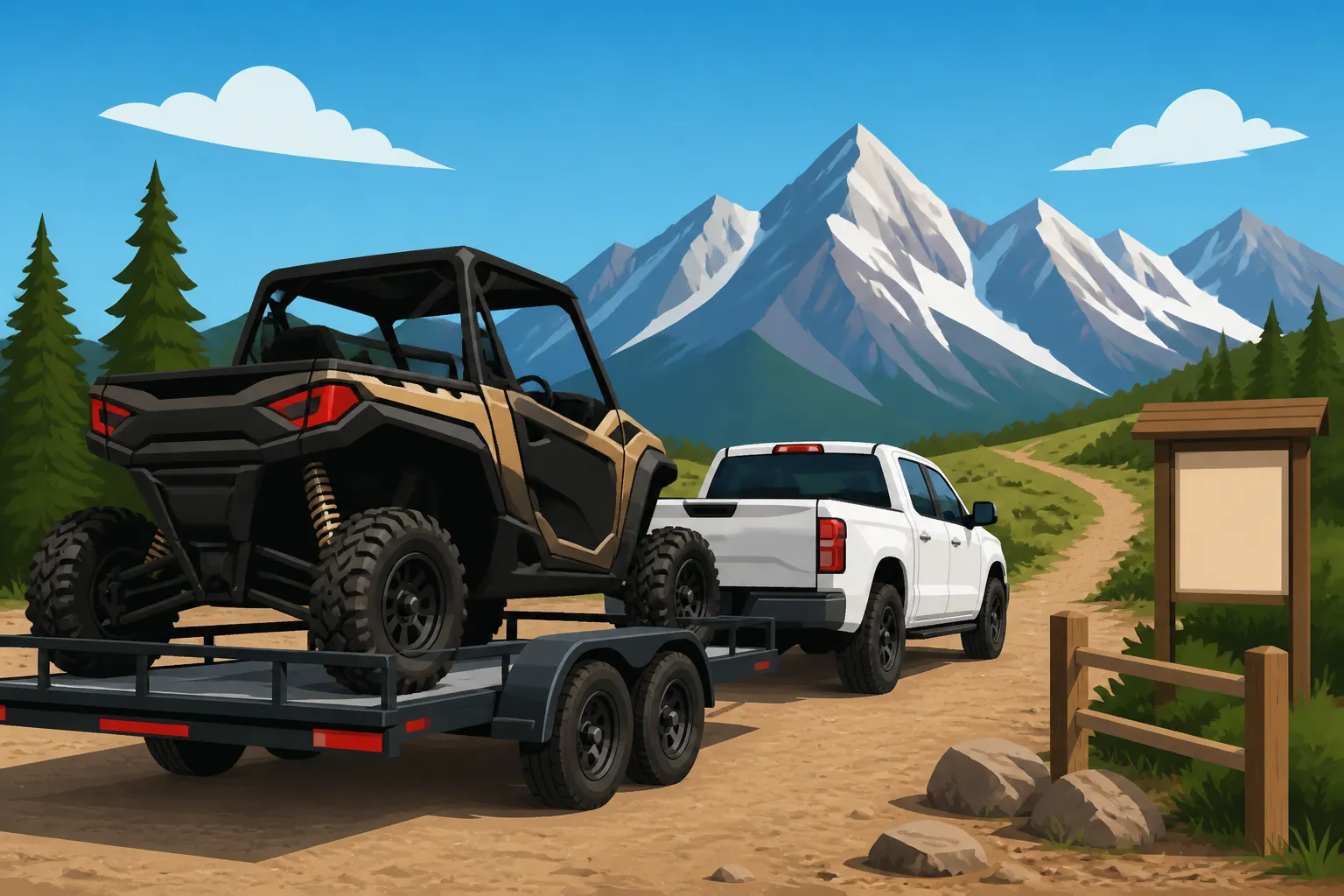
A parking space for a truck and trailer is not just the area the rig occupies. You also need room to maneuver, unload machines, secure ramps, and get back onto the road. Position the rig so that another vehicle can pass and a driver can turn around without crossing into brush or backing into traffic.
Before unloading, check where your machines, ramps, helmets, and gear will sit. Keep equipment out of the travel lane and away from trail entrances. If your trailer doors or loading ramps open into a shared lane, reposition if possible before unloading. A few minutes spent organizing can prevent a bottleneck when other riders arrive.
Be especially considerate where trailers are parked near day-use visitors, hikers, campers, or horse users. Keep noise and dust down, and do not spread gear across neighboring spaces. Wyoming Trail Etiquette With Ranchers is a useful reminder that access depends on treating shared spaces and nearby land users with care.
Protect your vehicle and belongings
Choose a stable, reasonably level surface, then secure the truck and trailer before unloading. Set the parking brake, use wheel chocks where appropriate, and make sure the trailer is not positioned where it could roll into traffic or another vehicle. If the surface is uneven, take extra care when lowering a ramp or moving machines.
Keep valuables out of sight and lock the vehicle when you leave the staging area. Store keys, identification, and essential supplies somewhere secure and accessible. In remote areas, a vehicle may be out of sight for hours, and help can be far away if a door is left open or a key is misplaced.
Wyoming weather can shift from sunny to windy or stormy, especially at elevation. Secure loose covers and lightweight gear so they cannot blow away, and avoid leaving food or scented items accessible in wildlife country. If you are staging near the northwest part of the state, review Bear Spray on a Machine and Food Storage Rules at a Trailhead before deciding what to leave in or around your vehicle.
Prepare Your Truck, Trailer, and Riding Plan
Do a pre-trip rig check
Before leaving home, check that the trailer is roadworthy and that the load is secure. Inspect tires, lights, hitch connections, safety chains, tie-downs, and the condition of ramps. Make sure the trailer is balanced and that the machines cannot shift during braking or on rough roads.
Pack the items that make unloading and a change of plan less stressful: gloves, basic tools, a tire repair kit, a first-aid kit, drinking water, and a way to communicate if cell service is unavailable. Keep frequently needed items where you can reach them without unpacking the entire trailer. For longer or more remote rides, consider how you will handle a breakdown or a late return. Breaking Down Far From Help covers the kind of preparation that can matter when a simple problem happens well beyond town.
If the route to the trailhead includes gravel or dirt, allow more time than a standard navigation estimate suggests. Drive at a speed appropriate to visibility and surface conditions, and leave extra space for dust and oncoming traffic. A trailer’s handling changes on loose gravel, steep grades, and washboard roads.
Make a clear map and communication plan
Download or save the route information you need before losing cell service. Mark the trailhead, your intended riding area, and a reasonable return route. Tell someone where you plan to ride and when you expect to check in. If the group gets separated, agree on where to meet rather than relying on everyone to find the same spot by phone.
onX Offroad can help you review routes and keep useful map information available for trip planning. Still, confirm access using official maps and on-the-ground signs. A navigation app can help you understand where you are; it cannot make a closed route open or guarantee that a road is suitable for a truck and trailer.
Keep your parking location easy to identify. Save a pin or write down a nearby road name, junction, or landmark before you unload. That small step can be surprisingly helpful when several similar pullouts are spread along a forest road.
Have a backup if the lot is full or unsuitable
If the designated area is full, do not park wherever there is open ground. Move on to a verified alternative or reconsider the ride. A crowded staging area is frustrating, particularly after a long drive, but squeezing a trailer into a narrow shoulder can create a hazard for everyone.
If the approach looks worse than expected, turn around at a safe, suitable place rather than pushing on. This may mean choosing a different route, unloading somewhere else that is legally designated, or postponing the ride. Keep enough fuel and time in reserve to make that decision without pressure.
For an area with several access points, compare options before departure. Parking a Rig at a Wyoming Trailhead is the specific question many riders overlook when planning a route; also consider Wyoming Riding Areas Reachable Without a Trailer if you want alternatives that may be easier to reach with a smaller setup.
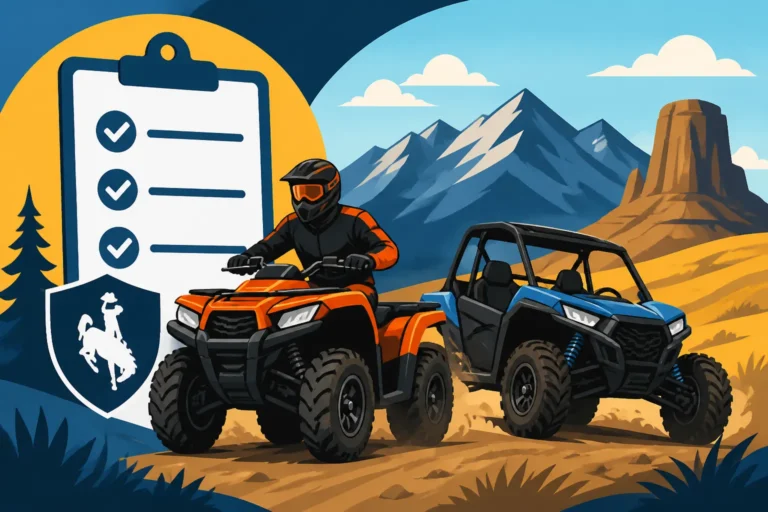
A Simple Trailhead Parking Checklist
| Before you leave | When you arrive | Before you ride |
|---|---|---|
| Confirm the trailhead and land manager | Follow signs and use established parking | Lock the vehicle and secure belongings |
| Check road access for truck and trailer | Leave gates, roads, and turnarounds clear | Save or note the parking location |
| Review closures and route designations | Park on a stable, durable surface | Tell someone your route and return plan |
| Identify a backup staging option | Unload without blocking shared access | Carry the maps and supplies you need |
| Inspect trailer tires, lights, and tie-downs | Keep gear and ramps out of traffic | Recheck weather and trail conditions |
Quick decisions when something feels off
If you arrive and the lot is full, look for another approved staging area rather than taking a shoulder or blocking access. If the road is too narrow or rough for your rig, stop somewhere safe and turn around. If signage is unclear, avoid parking in a questionable location and contact the relevant land manager for guidance.
A little extra planning makes the start of a ride calmer. You will spend less time wrestling a trailer into a tight space and more time focused on the route, your group, and the conditions ahead.
Disclaimer
This article is for general informational purposes only and does not constitute professional advice. Laws, prices and regulations vary by location and change over time. Consult a qualified professional for guidance on your specific situation.