Wyoming ORV Permits Explained
A Wyoming trailhead is a frustrating place to discover that a registration sticker from home does not count as the state’s off-road permit. This guide explains who needs a Wyoming ORV permit, which machines it covers, where to buy and display it, how reciprocity works, and what the decal does—and does not—authorize when you ride.
What a Wyoming ORV permit is
The permit is a trail-use decal, not vehicle registration
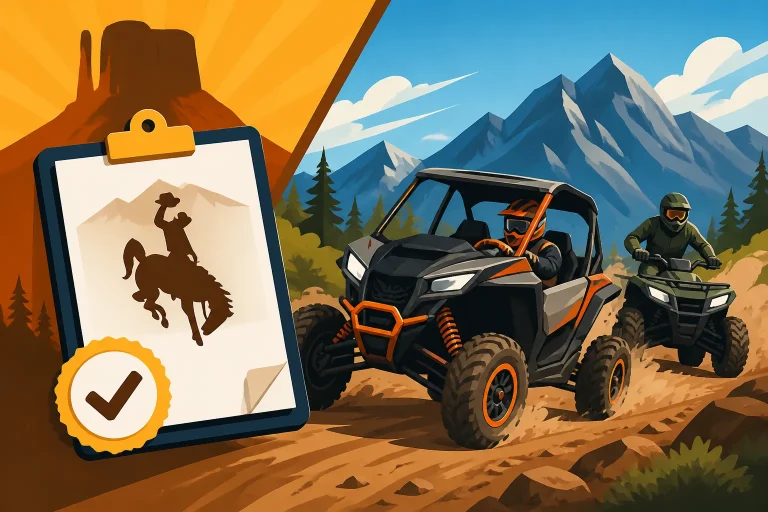
Wyoming’s ORV permit is a decal for qualifying off-road vehicles used on public riding routes and areas where the state permit is required. It is not the same as registering or titling a vehicle, and it is not a road license. Buying a decal does not, by itself, make an ATV or side-by-side legal to drive on a public street.
That distinction matters when you are planning a trip. A machine can be properly permitted for an off-road ride and still be prohibited from traveling along a nearby road. The permit addresses one part of the picture: the state’s ORV permit requirement. Route access, vehicle equipment, age and licensing rules, and land-manager restrictions are separate questions.
It can help to think of the decal as one item on your pre-ride checklist—not a universal pass. Before leaving home, identify the land manager for your destination, check which routes are open to your machine, and confirm whether additional requirements apply. The details in Wyoming ORV Permits Explained are a useful starting point for understanding that system.
Which vehicles generally fall under the ORV permit system
The permit system is relevant to common off-road machines such as ATVs, side-by-sides and dirt bikes when they are used in places where a Wyoming ORV permit is required. The machine’s size, number of wheels or out-of-state registration does not automatically remove the need to check the permit rules.
A dirt bike rider and a family taking a side-by-side onto a public route may have very different equipment and access considerations, but both should check permit requirements before riding. If you are renting or borrowing, do not assume that a permit comes with the machine. Ask the owner or rental company whether a valid Wyoming decal is already displayed, and inspect the vehicle rather than relying on a verbal assumption.
Snowmobiles follow a separate system, so do not treat an ORV decal as a substitute for whatever requirements apply to a snow machine. Similarly, a machine used only on private property may raise different questions from one taken onto public land. When your plans cross between private ground, public roads and designated trails, work out the rules for each part of the route.
A permit does not grant access to every route
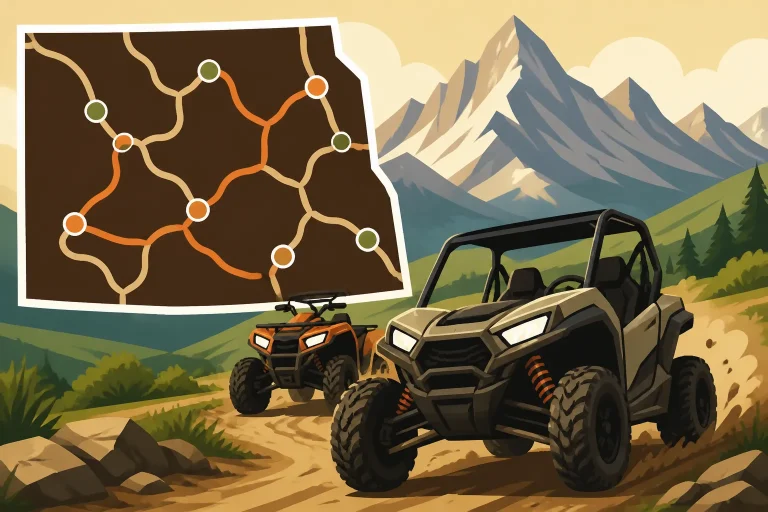
A valid decal does not mean every road, trail or open-looking two-track is available to ride. Public land is managed by different agencies, and access can depend on the route’s designation, seasonal closures, vehicle width, current conditions and other restrictions. A gate, closure sign or posted limitation can apply even when a route appears on a map.
This is one of the most common sources of confusion for visitors. A rider may buy the right permit, arrive with a well-maintained machine and still be on a route that is closed to that vehicle or closed for the season. Permit compliance and route compliance are separate responsibilities.
Check the relevant travel-management map and signs at the riding area, and follow the land manager’s direction if conditions have changed. The guide to [Wyoming Rules for Riding Federal Land] can help you understand why federal-land access rules still matter even when your Wyoming decal is in order.
Who needs a Wyoming ORV permit
Wyoming residents should check the same basics as visitors
Living in Wyoming does not remove the need to check permit requirements. If you take an ATV, UTV or dirt bike onto a public route or riding area where a Wyoming ORV permit is required, make sure the machine has the proper decal before the ride.
That can be easy to overlook when a machine is used mostly around a home, ranch or private property. A rider may have gone months without needing a permit, then decide to join friends on a public trail for a weekend. The intended use has changed, so the rider should check the public-land requirements instead of assuming the machine’s usual setting determines what is needed everywhere.
If your plans include both private property and public trails, treat those as separate situations. Permission from a landowner is important for private ground, but it does not automatically answer what is required once you reach a public route. For a broader look at the resident and visitor fee structure, see Wyoming’s Flat Fee for Residents and Visitors.
Nonresidents need to plan for Wyoming’s permit
Visitors should not assume a home-state plate, registration or off-road sticker will satisfy Wyoming’s permit requirement. If you are trailering a machine from Montana, Colorado, Utah, Idaho or elsewhere, check the Wyoming rules before setting out.
This can feel like an unnecessary extra step when you already paid for a permit or registration at home. The practical issue is that Wyoming’s system does not generally treat another state’s paperwork as a replacement for its own ORV decal. A rider crossing the state line with a machine should plan on meeting Wyoming’s requirements for the places they intend to ride.
A weekend visitor may only need one decal for a particular machine, but that does not mean the decal covers every vehicle in the trailer. Each machine should be checked individually. If you are bringing more than one ATV or side-by-side, make a list by vehicle rather than treating the household or group as having one shared permit.
Borrowed and rented machines need an individual check
Borrowing a friend’s ATV does not make the permit question disappear. Ask whether the machine already has a valid Wyoming decal, whether it is displayed as required and whether the route you plan to ride allows that kind of vehicle. A friend’s assurance that “it’s registered” may refer to paperwork that does not meet the Wyoming ORV requirement.
Rental machines deserve the same check. Some rental providers may supply a permitted vehicle, while others may expect the customer to arrange the permit or may have specific instructions about where the machine can be ridden. Get the answer before you sign or leave the pickup location. Confirm that the permit is for the machine you are taking, not simply another vehicle in the fleet.
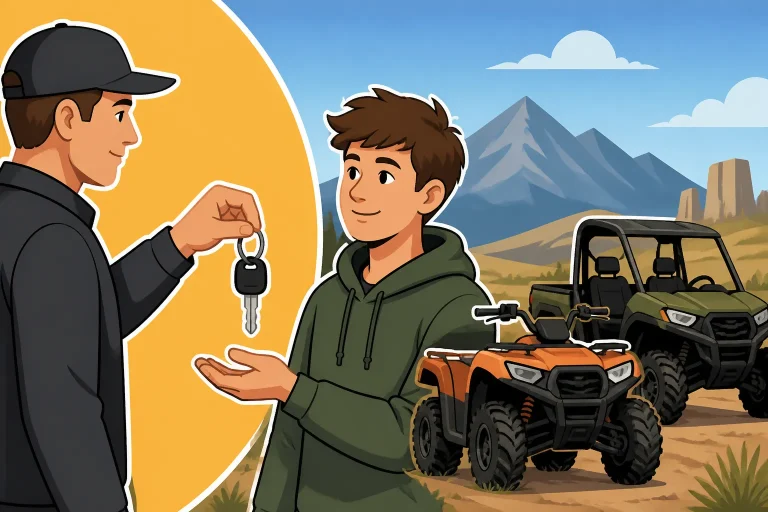
If you are the person lending a machine, make the permit and route expectations clear before handing over the keys. A borrower may not know that a Wyoming decal is required or that a particular route excludes the vehicle. Clear communication is better than trying to sort out a citation or a stranded rider after the trip has begun.
Wyoming permits and out-of-state reciprocity
An out-of-state sticker does not replace Wyoming’s decal
Wyoming does not generally accept another state’s ORV registration or permit in place of its own required permit. That means an out-of-state rider should not rely on a home-state sticker as proof of compliance for riding in Wyoming.
This catches people off guard because “registration” can mean different things from state to state. One state may issue a plate, another may issue a decal, and another may require paperwork that is primarily used within its own system. Even if the document looks official and the vehicle is fully compliant at home, it does not automatically satisfy Wyoming’s separate requirement.
The straightforward approach is to treat Wyoming as its own permit jurisdiction. Before the trip, confirm the Wyoming requirement for the machine and riding area, then buy the Wyoming permit through an authorized option. For a detailed explanation of this issue, read Why Wyoming Honors No Other State’s Registration.
Reciprocity is not the same as being allowed to ride
A rider may have permission to use a machine in their home state and still need a Wyoming decal. Conversely, buying the Wyoming decal does not automatically grant permission to ride on a particular parcel, trail or road. These are two different layers of authorization.
Imagine a visitor from Colorado who has an active home-state registration. That paperwork may be useful for the rider’s home-state obligations, but it should not be treated as the Wyoming permit. After buying the Wyoming decal, the rider still needs to choose routes open to the vehicle and comply with signs, closures and land-manager rules.
This distinction also helps prevent a common paperwork mix-up: confusing a title, a registration card, an insurance card and a trail permit. They serve different purposes. Keep the documents together for convenience if you like, but do not assume one document replaces another just because it identifies the same machine.
Check the rules for every state on a multi-state trip
A ride that crosses a state line may involve more than one permit system. The fact that a machine can legally ride on a route in one state does not establish what is required on the next section. Plan for the rules where the vehicle will actually operate, not only the rules where it was purchased or stored.
This matters on long trips where a route passes through several jurisdictions or where a group meets riders from different states. Put the permit requirements on the trip checklist alongside fuel, route maps and vehicle transport. That small bit of planning can prevent a group from reaching the trailhead and discovering that one machine is missing its Wyoming decal.
For a Wyoming trip, start by identifying which vehicles need a permit and where they will be used. Then check the routes and land-management rules. The guide Wyoming ORV Reciprocity Rules offers more context on why an out-of-state permit should not be treated as a Wyoming substitute.
| Situation | What to check | Common misunderstanding |
|---|---|---|
| Wyoming resident riding a public route | Whether a Wyoming ORV permit is required for that use | Assuming residency removes the permit requirement |
| Visitor bringing an ATV or UTV | Wyoming permit requirements for each machine | Assuming a home-state sticker is enough |
| Borrowed machine | Whether the machine has a valid, properly displayed decal | Assuming the owner’s paperwork covers every use |
| Rental machine | Whether the rental includes the required Wyoming permit and where it may be ridden | Assuming every rental is already permitted |
| Machine used on private property | Landowner permission and any rules that apply to the property | Assuming private use and public-route use have identical requirements |
| Snowmobile | The separate requirements for snow machines | Treating an ORV permit as a snowmobile permit |
| Road travel | Whether the road is open to the machine and what road rules apply | Assuming an ORV decal makes the machine street legal |
How long the permit lasts and what it costs
The permit follows a calendar-year cycle
Wyoming’s ORV permit is associated with a calendar-year cycle and expires at the end of that year. It is not generally a rolling permit that stays valid for twelve months from the day you buy it. A decal purchased late in the year may therefore cover a shorter stretch of time than a rider expects.
That timing can affect travel plans. Someone planning a late-season ride might buy a permit and assume it will carry over into the next riding season. Before relying on an older decal, check its expiration and the current permit requirements for the new year. Do not judge validity by whether the sticker still looks clean or firmly attached.
A practical habit is to add permit renewal to the same seasonal checklist as checking tires, battery condition and trailer lights. If you store the machine over winter, inspect its decal before the first public-land ride of the next season. The related guide A Permit That Ends December 31 explains the calendar-year detail.
The fee is generally a flat amount rather than a vehicle-based calculation
Wyoming’s permit structure is commonly described as a flat fee, rather than a charge that changes according to engine size, machine value or rider residency. The amount can be updated, so confirm the current fee through an authorized seller or official state channel before buying.
The flat-fee approach makes budgeting simpler for a group, but it does not mean one decal covers a whole family’s machines. Think of the requirement as tied to the individual vehicle, not to the household, trailer or group ride. If three separate machines will be used, check the permit status of all three separately.
This is also why it helps to count machines before arriving at a trailhead. A group may have a mix of ATVs and side-by-sides, with one vehicle owned by a visitor and another borrowed from a Wyoming resident. Make a simple list of the vehicles and their decal status so no one has to guess at the counter or roadside.
A decal is not a road-use fee or a complete riding budget
The ORV permit should not be confused with other possible expenses. Depending on the trip, riders may also need to budget for fuel, lodging, camping, machine rental, transport or separate access requirements. The Wyoming permit itself does not convert a trail ride into road travel, nor does it guarantee access to every recreation area.
That matters especially for visitors who are comparing the permit fee with the total cost of a weekend. The decal may be a small part of the trip budget, but forgetting it can create a much bigger inconvenience: a stop at a different seller, a delay for the group or a change in plans.
Check the fee and sales terms where you intend to buy. If a provider lists handling, shipping or other charges, review those before completing the purchase. Avoid relying on an old receipt, a friend’s memory or a screenshot from a prior season when planning the next trip.
Where to buy a Wyoming ORV permit
Buying online can help you prepare before travel
An online purchase can be useful if you want to handle the permit before driving to a trailhead. It gives you time to check the correct vehicle information, review the purchase details and plan for getting the physical decal onto the machine before riding.
The important point is not to assume that an order confirmation is the same as a displayed permit. If the permit is issued as a decal that must be affixed to the vehicle, a receipt on your phone may not satisfy the display requirement. Read the instructions provided with the purchase and allow enough time to receive or collect the decal, as applicable.
Keep the confirmation or receipt with your trip paperwork until the decal is in place. A small waterproof document pouch can help protect receipts, vehicle details and maps from dust and weather; some riders find options at local outdoor or powersports shops, while others look on Amazon. Keep the paperwork separate from the actual decal, and do not cover the sticker in a way that obscures required information.
For the online purchase process, see Buying a Wyoming Permit Online. The state’s ordering instructions should guide what information you need and how the decal will be delivered or made available.
In-person sellers may be more convenient near your trip
Permits may also be available through authorized agents such as participating dealers, shops or other approved locations. This can be practical when you are already traveling through a town near your destination, or when you want to ask a seller a question before heading to the trail.
Availability can vary by location, so do not assume every powersports shop, county office or ranger station sells the permit. Check the specific seller before building your travel schedule around it. A call ahead can save a detour, particularly if you are towing a trailer or arriving outside normal business hours.
If you buy in person, check that you have the correct decal for the machine and understand how it must be displayed. Keep the receipt until you have confirmed the sticker is secure and legible. For seller options, see Where to Buy a Wyoming ORV Permit.
Choose a purchase method that leaves time to display the decal
The most reliable purchase method is the one that lets you have the decal properly displayed before you ride. If you order in advance, confirm delivery details and leave time to attach the sticker. If you plan to buy on the way, identify an authorized seller that is open when you expect to arrive.
Last-minute purchases are especially stressful when a group is already waiting at the trailhead. One rider is trying to find a seller, another is checking a phone for instructions, and everyone else is wondering whether the route plan needs to change. A little advance planning prevents the permit from becoming the bottleneck for the whole day.
Make a quick pre-trip checklist: permit purchased, decal received, decal attached, route checked and paperwork stored. If any of those items is uncertain, resolve it before the group leaves town rather than trying to improvise in a parking area with limited cell service.
Displaying, replacing and keeping track of the decal
Put the decal where the instructions require
A permit purchase is not the end of the process if the decal must be displayed on the vehicle. Follow the instructions that come with the permit for placement. The goal is to keep it securely attached and visible as required, rather than tucked away in a glove box or carried loose with the receipt.
Before applying it, choose a clean, dry surface that matches the placement instructions. Dust, mud, oil and moisture can interfere with adhesion. If the surface needs cleaning, use a method suitable for the vehicle’s finish and allow it to dry fully before applying the sticker. Rushing this step can lead to a decal that peels after the first wash, rainstorm or sandy ride.
Avoid placing the sticker where it is likely to be scraped, folded over an edge or hidden by a removable accessory. Do not laminate or cover it unless the official instructions permit that. A protective document sleeve is useful for paperwork, but it is not a substitute for displaying the decal itself as directed.
Protect the decal without interfering with it
Wyoming’s riding conditions can be hard on stickers. Dust, sand, sun, mud, pressure washing and repeated transport can wear down a decal or loosen its edges. Inspect it before a trip, especially if the machine has been stored outside or hauled through rough weather.
The best protection is usually careful placement and basic maintenance, not an improvised covering that makes the decal hard to read. Wash around it gently, avoid directing high-pressure water at its edges, and check that the identifying details remain visible. If the decal is peeling or damaged, find out whether it needs replacement rather than trying to patch it in a way that obscures information.
For carrying supporting papers, a compact waterproof pouch or a document wallet can keep receipts and maps from turning into a damp, dirt-filled mess. Riders sometimes compare local options with products on Amazon, but whatever you use should protect the paperwork without being mistaken for a permit or attached over the decal.
Replace a lost or damaged decal through the proper process
A decal can be lost during a repair, damaged during cleaning or peeled away by sun and weather. If that happens, do not assume that a photograph of the old sticker or a purchase receipt automatically counts as a replacement. Follow the official replacement process and ask what proof of purchase or vehicle information is needed.
Keep any remaining pieces and your receipt if they may help identify the purchase, but avoid riding on the assumption that a damaged decal is acceptable. The precise replacement steps can depend on how and where the permit was purchased. Check the instructions from the original seller or the responsible state program.
A little documentation helps. Store the receipt, order confirmation and machine details together, and take a clear photo of the decal after it is properly installed. That photo is not a substitute for the physical display requirement, but it can make it easier to confirm what was purchased if the sticker is later damaged. See Wyoming ORV Permit Replacement for more on the replacement issue.
What the permit does not authorize
It does not make an ATV or UTV street legal
A Wyoming ORV permit does not function as a license plate or road registration. If a rider wants to use a machine on a public road, that raises separate questions about whether the vehicle can qualify for road use, what equipment it needs, what endorsements or insurance apply, and whether the particular road is open to that vehicle.
This distinction is easy to blur when a trail connects to a road or when a route briefly crosses pavement. Do not assume that a permit allows you to ride along a shoulder, travel through town or use a road as a shortcut. A designated crossing and an authorized road segment are different from general road access.
Plan the route so you know exactly where trail riding ends and road rules begin. If a road connection is unclear, check with the relevant agency before riding it. Treat the permit as an off-road requirement—not as permission to use streets.
It does not override closures or land-manager rules
A permit cannot open a closed trail. It also cannot override seasonal restrictions, a wildlife closure, a fire-related restriction or a route limitation based on machine size or type. A route that was open on a previous visit may have changed status.
Maps and signs should be treated as part of the ride, not as optional background information. Review the current travel-management information before leaving and pay attention to posted signs once you arrive. Where a route is signed closed, do not use the decal as a reason to continue.
The same caution applies to private land. A permit does not give a rider permission to cross a ranch, use a private road or enter a parcel without authorization. Ask the landowner when access is not clearly open, and respect gates and livestock. A correct permit and a respectful route choice go together.
It does not replace safety, equipment or age requirements
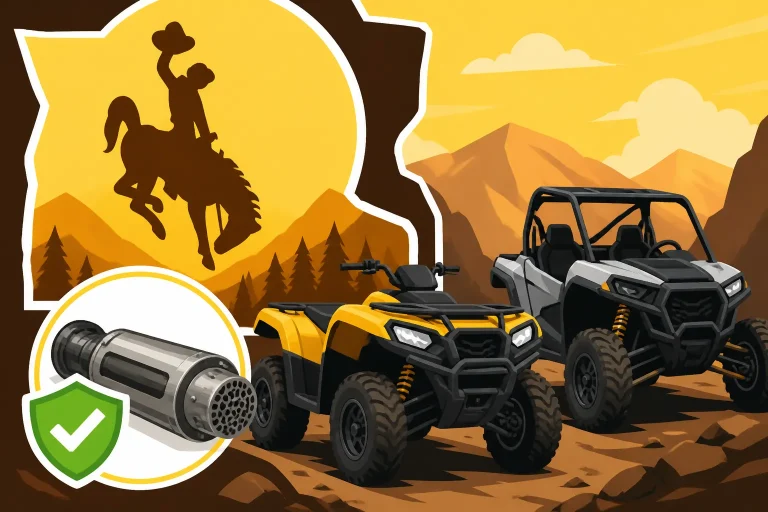
The decal does not certify that a rider is trained, that the machine is mechanically sound or that the vehicle carries required equipment for a particular use. Riders still need to consider helmets, protective clothing, passenger limits, lights, sound and spark-arrester rules, and any age-related restrictions that apply to their machine and location.
For example, a parent who has secured a decal for a youth ATV should still check whether the machine is appropriate for the child and whether supervision or route restrictions apply. A permit is not an endorsement of a rider’s ability or a guarantee that every trail is suitable for a young or inexperienced rider.
Before a longer trip, do a practical safety check: inspect tires and brakes, carry water and basic tools, tell someone where you are going, and keep a route map available. Paperwork gets you through one part of the preparation; sound judgment and safe riding practices matter throughout the trip.
A practical permit checklist before you ride
Confirm the machine and the riding area
Start with the machine, not the group. Write down which ATV, UTV or dirt bike will be used, who owns it and whether it already has a valid Wyoming decal. If the vehicle is rented or borrowed, ask the owner or provider to confirm its permit status before you leave.
Next, identify where you intend to ride. A destination name alone may not tell you whether a route is managed by a federal agency, state agency, county or private landowner. Check the route designation, seasonal status and machine restrictions. A permit can be correctly purchased while the planned route is still unsuitable or closed.
If the day includes several areas, check each one. Do not assume that requirements at one trail system carry over to another. Put the route information somewhere the group can access even if phone reception is unreliable.
Buy, display and document the permit
Once you know what is required, purchase the permit through an authorized option and follow the display instructions. Confirm that the decal belongs to the correct machine, is attached securely and can be seen as required. Keep your purchase confirmation or receipt until you are confident the permit is in order.
Store paperwork where it will not be ruined by dust, rain or spilled water. A small waterproof organizer can hold receipts, emergency contacts and folded route information. If you compare organizers or sleeves online, Amazon may be one place to browse, but the key is choosing something that protects documents without interfering with the decal or vehicle controls.
Do a final visual check before loading the trailer or leaving the staging area. If a decal is missing, damaged or difficult to read, resolve the issue before the ride rather than assuming that a receipt or another rider’s sticker will cover the gap.
Review the rules with everyone in the group
A short group check-in prevents misunderstandings. Confirm that each rider knows which routes are open, where the group will stop, what to do if separated and which roads or private areas are off-limits. Make sure visitors understand that Wyoming’s permit is separate from their home-state registration.
For a mixed group, spell out who is responsible for each machine. The owner may be responsible for the vehicle’s permit status, while the rider still needs to follow access restrictions and safe riding practices. Do not leave those expectations vague, especially when children, guests or rental machines are involved.
Finally, keep the permit in perspective. It is a small but important part of legal trip preparation. Buy the right decal, display it properly, respect route rules and check the requirements again when your plans or destination change.
Disclaimer
This article is for general informational purposes only and does not constitute professional advice. Laws, prices and regulations vary by location and change over time. Consult a qualified professional for guidance on your specific situation.