Thin Air Above 9,000 Feet
Riding an ATV or UTV above 9,000 feet in Wyoming can mean thinner air, slower machine response, steep climbs, and weather that changes quickly. Those conditions can catch riders off guard, especially when a familiar route suddenly feels harder than expected. This guide explains how altitude affects you and your machine, and how to plan a safer high-country ride.
What Thin Air Above 9,000 Feet Means for Riders
Your body may need time to adjust
At higher elevations, there is less oxygen available with each breath. You may notice that walking uphill, lifting gear, or simply keeping pace with a group takes more effort than it would at home. Even riders who are fit can feel the difference, particularly if they have driven from a much lower elevation and head straight onto a demanding trail.
Give yourself time to settle in before tackling long or strenuous routes. A first ride can be shorter and easier, with frequent breaks. Drink water regularly, eat normally, and pay attention to how you feel rather than trying to match the pace of the most experienced rider in the group. A headache, unusual fatigue, dizziness, or nausea can be signs that altitude is affecting you. If symptoms become severe, or someone seems confused or unusually short of breath while resting, stop riding, get help, and move to a lower elevation if it is safe to do so.
A practical approach is to make the first day a check-in rather than a test of endurance. For example, if your group is staying near Laramie and planning a high-elevation ride in the Snowy Range, consider an easier outing first. The elevation and ride conditions can still be demanding even when the trail looks manageable on a map. For more on planning around elevation, see Wyoming Riding at Altitude and Altitude and Carburetion in the Mountains.
Fatigue can affect decisions as well as comfort
Altitude-related tiredness is easy to mistake for ordinary exertion. You might assume you are worn out because of a bumpy trail or a long drive to the trailhead. But fatigue can make it harder to concentrate, judge a slope, or respond calmly when a machine slips or stalls. That matters when you are navigating narrow routes, loose rock, or exposed terrain.
Build in breaks before you feel exhausted. Use them to drink, eat a small snack, check on other riders, and confirm that everyone still feels well enough to continue. If someone is struggling, do not let the group pressure them into pushing on just to reach a planned destination. Turn around or choose a lower, easier route when needed.
Agree on a simple group plan before leaving: who rides in front, who stays at the back, where you will stop, and what everyone should do if the group gets separated. At altitude, a slow, steady ride with good communication is usually a better choice than trying to make up time.
How High Elevation Can Affect an ATV or UTV
The engine may feel less responsive
An engine needs air to run, and thinner air contains less oxygen in a given volume. As a result, a machine may feel less powerful at high elevation than it does at home. You might notice slower acceleration, less pull on a climb, or more difficulty maintaining speed under load. The change varies by machine, engine type, condition, and riding conditions, so there is no single performance adjustment that works for every ATV or UTV.
Fuel-injected machines can adjust fueling to changing conditions, but that does not create more oxygen for the engine to use. Carbureted machines may need different settings for sustained high-elevation use. Before you leave, check the owner’s manual for the manufacturer’s guidance on altitude, fuel, and operating conditions. If you are unsure what your machine needs, ask a qualified powersports mechanic rather than guessing at a trailhead.
A loss of power can be especially noticeable when carrying passengers, cargo, or recovery gear, or when climbing a long grade. Plan for slower progress and avoid relying on a machine’s low-elevation performance as a guarantee of what it will do in the mountains. If you ride a carbureted machine, Altitude and Carburetion in the Mountains can help you think through the issue before you go.
Heat, load, and terrain can compound the problem
A machine that feels fine on a gentle section may struggle when the route steepens, the surface gets loose, or the vehicle is heavily loaded. Higher elevation does not mean every route is difficult, but it can leave less margin for error when your machine is working hard. Slow down before climbs, use the appropriate gear or drive mode, and avoid forcing a vehicle that is losing momentum.
Do not assume a short distance on the map means a quick ride. A rocky climb or a rough, winding track can take far longer than a smooth road. Give your engine time to cool when conditions call for it, and follow the manufacturer’s recommendations for temperature warnings and maintenance. If a warning light comes on or the machine behaves abnormally, stop somewhere safe and investigate instead of continuing uphill.
Before departure, check tires, fluids, belts where applicable, brakes, throttle response, and recovery equipment. A small problem that is easy to handle near town can become a much bigger concern on a remote mountain route. For a realistic sense of what to do if a problem develops far from assistance, read Breaking Down Far From Help.
Planning a High-Country Ride in Wyoming
Check route access, weather, and maps
A route shown on one map is not automatically open to every type of machine or available in every season. Check the relevant land manager’s current travel information, including the official Motor Vehicle Use Map where applicable. Look for seasonal closures, designated routes, machine-width restrictions, and any route-specific instructions. Conditions can change because of snow, mud, fire, wildlife protections, or maintenance.
A mapping app can be useful for planning and for following a route, especially when phone service is unreliable. onX Offroad can help riders prepare offline map coverage before heading into areas with limited reception. Download the map in advance, confirm that the route information matches the land manager’s rules, and bring a paper or other backup map if you can. Do not treat a colored line on a screen as permission to ride a route that is closed or not designated for your machine.
Before you go, check the forecast for the elevations you expect to reach, not just the weather in the nearest town. High-country weather can bring wind, rain, hail, or snow when lower elevations feel mild. Afternoon storms can also make exposed ridges and open terrain uncomfortable or unsafe. Review Wyoming Trail Maps and MVUMs and Afternoon Thunderstorms in the High Country as part of your planning.
| Before the ride | What to check | Why it matters |
|---|---|---|
| Route status | Land-manager maps, closures, and machine restrictions | A route may be closed or unsuitable for your vehicle |
| Weather | Forecasts for the elevation and time of day | Conditions can differ sharply from nearby towns |
| Navigation | Offline maps and a backup map | Phone service may be unavailable |
| Machine | Fluids, tires, brakes, and manufacturer guidance | High-elevation climbs can put extra demand on a vehicle |
| Group plan | Route, turnaround time, and communication plan | Riders can become separated or delayed |
| Emergency gear | First-aid items, warm layers, water, and recovery gear | Help may be a long way away |
onX Offroad is most useful when you prepare before leaving service: save the maps you need, make sure your phone can access them offline, and know how to read your position. Keep your phone protected from cold, impact, and battery drain. A navigation app is a planning aid, not a substitute for checking official access information or carrying supplies.
Plan fuel, time, and a realistic turnaround
Mountain riding can use more fuel than a casual ride on easy terrain. Steep climbs, low-speed maneuvering, soft ground, and repeated stops can all affect consumption. Rather than planning to arrive back with almost no fuel to spare, build in a conservative reserve and identify where you can refuel before you leave town. Distances between services can be substantial, so check the route and fuel options as part of the same plan. See Fuel Range Between Wyoming Towns for additional trip-planning considerations.
Set a turnaround time before you start, even if the group has not reached its intended destination. This helps prevent the familiar trap of continuing because you are “almost there,” then rushing back as weather moves in or daylight fades. If the trail is taking longer than expected, shorten the route. Tell someone outside the group where you are going and when you expect to return.
Carry clothing for conditions that may be colder, wetter, and windier than the trailhead suggests. A lightweight rain layer, warm gloves, and an insulating layer can make a major difference if a ride slows down or a storm arrives. For seasonal changes at elevation, review Snow in September at Elevation and Wyoming Riding in Late Autumn.
Riding More Safely Above 9,000 Feet
Use a pace that leaves room for mistakes
At high elevation, a route can feel demanding even when the terrain is familiar. Keep enough space between machines to see and react to trail obstacles without filling the air with dust. Approach blind corners and steep grades carefully, and stop only in places where other riders can see you and pass safely. On a climb, avoid crowding the machine ahead; a rider who stops or loses traction may need room to recover.
If a machine is struggling, do not keep forcing it simply because the group is moving. Stop in a safe location, let the engine cool if appropriate, and check for warning signs. If the terrain is beyond the ability of a rider or machine, turn around while the route is still manageable. Riding down a difficult slope can be just as demanding as climbing it, so choose a safe route back rather than improvising under pressure.
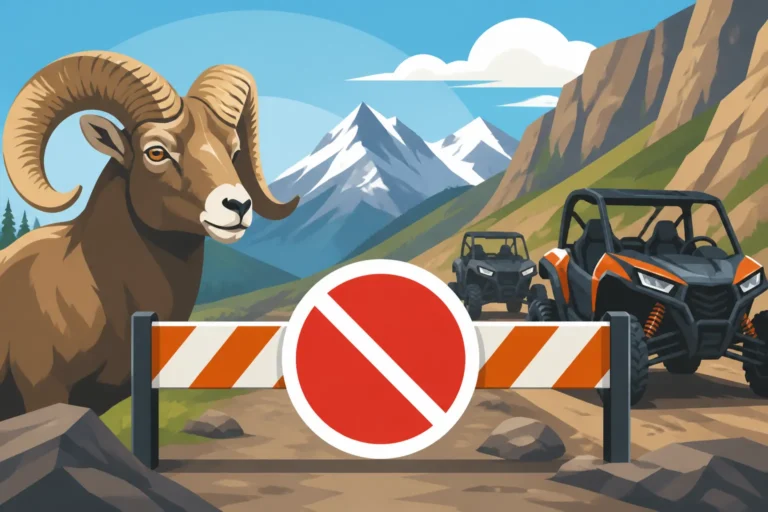
Navigation should support good judgment, not replace it. onX Offroad can help you keep track of a planned route when downloaded maps are available, but riders still need to watch for signs, closures, and changes on the ground. If a sign indicates that a road or trail is closed, do not continue just because your map still shows a line. When a Sign on the Ground Says Closed explains why checking conditions on site matters.
Know when to stop or turn around
Make stopping an ordinary part of the ride, not something reserved for emergencies. Pause if someone develops a headache or dizziness, if the group is falling behind schedule, if weather is worsening, or if a machine shows signs of trouble. Reassess the plan together. A safe decision to head back is not a failed trip; it is often what keeps a small problem from becoming a rescue situation.
Before setting out, decide how you will handle a breakdown or separation. Carry basic first-aid supplies, water, food, warm layers, and the tools or recovery equipment appropriate to your machine and route. Do not assume a mobile phone will work in a remote area. Let a trusted person know your route and expected return, and follow through with a check-in when you are back.
High-country rides are best when you leave enough time and energy to enjoy them without rushing. Choose routes that fit the group’s experience, check access and weather, and respect the limits of both the machine and the people riding it. For more ideas on choosing a manageable outing, see Wyoming Trails for Beginners and Wyoming Trail Closures to Check First.
Disclaimer
This article is for general informational purposes only and does not constitute professional advice. Laws, prices and regulations vary by location and change over time. Consult a qualified professional for guidance on your specific situation.