Wyoming MPV Plate Requirements
Anyone who's ever tried to figure out the rules for riding their ATV or side-by-side in Wyoming knows it can feel like navigating a maze blindfolded. One of the biggest head-scratchers is whether you need a simple trail decal or a full-blown license plate for your machine. This guide is here to untangle that confusion, specifically diving deep into the requirements for getting a Wyoming Multipurpose Vehicle (MPV) plate so you can confidently hit certain roads and trails.
Understanding Wyoming's MPV Designation
Let's start by clearing the air about what an MPV actually is in the eyes of Wyoming law. It's not just another term for an ATV or UTV; it's a specific classification that opens up a whole different world of riding opportunities – namely, the ability to operate your machine on designated public roads.
What Exactly is a Multipurpose Vehicle (MPV)?
In Wyoming, a Multipurpose Vehicle (MPV) is a very specific type of off-road machine that has met certain criteria to be considered "road-legal." Think of it as a bridge between a traditional off-road vehicle (ORV) that’s strictly for trails and a conventional passenger car. An MPV is essentially a machine that started its life as an ORV, but then, through specific modifications and registration, gained the privilege to travel on certain public roadways.
The key to understanding an MPV is its purpose: it’s designed to allow you to connect trails, access remote areas, or even run errands in smaller towns where ORV use is permitted. It's not about replacing your truck for highway driving, but rather enhancing your riding experience by giving you more options beyond purely dirt trails. This designation came into effect with [The MPV Rule That Started in 2008], which laid out the framework for what machines could qualify.
To qualify as an MPV, your machine needs to fit a precise physical description. First, it must have a dry weight that falls within a specific range: [Weight Between 300 and 3,000 Pounds]. This rule immediately excludes some very light youth machines and some of the heaviest, highly modified side-by-sides. If your machine is too light, it's considered a standard ORV. If it's too heavy, it might be classified differently altogether or simply not qualify for MPV status.
Secondly, the vehicle must have a seat height of [A Seat at Least 24 Inches Up] from the ground. This particular requirement is often what differentiates many ATVs from qualifying, as many quads have a lower seat height. This is where side-by-sides, with their car-like seating, often fit the bill perfectly. It’s critical to physically measure your machine to ensure it meets both these specifications before you even consider the titling and plating process. Without meeting these fundamental physical requirements, your machine simply cannot be registered as an MPV, no matter how much you want it to be road-legal.
The Difference Between an ORV Decal and an MPV Plate
This is where a lot of riders get tripped up. Many states offer reciprocity or a single sticker for all off-road use, but Wyoming has distinct systems for ORVs and MPVs, each with its own identification. Knowing the difference is crucial for staying legal on the trails and on the road.
An ORV decal is what most off-road enthusiasts are familiar with in Wyoming. If you plan to ride an ATV, dirt bike, or side-by-side strictly on designated off-road trails, forest service roads not enrolled for MPV use, or BLM routes that don't cross public roads, then an ORV decal is what you need. This decal, which you apply directly to your machine, signifies that you’ve paid your annual fee to use the state's incredible trail system. It’s a simple, straightforward process, usually purchased through an authorized vendor or online. The decal is purely for off-highway use; it grants no privileges to ride on paved public roads. You can learn more about this by reading [Why Wyoming Issues a Decal, Not a Plate].
An MPV plate, on the other hand, is for machines that have gone through the more rigorous process of becoming road-legal. This involves not only meeting the physical criteria we just discussed but also completing a titling and registration process very similar to what you'd do for a car or motorcycle. The plate, which mounts to the rear of your machine, signifies that your MPV is registered with the state, insured, and has met all the requirements to operate on designated public roads. It still requires an annual renewal, but it’s tied to a traditional vehicle registration system, not just a trail permit. This means it comes with additional responsibilities, like carrying proof of insurance and adhering to specific road-use laws. It essentially says, "I'm more than just a trail machine; I can also legally travel on certain roads."
The Path to Getting Your Wyoming MPV Plate
Getting an MPV plate isn't as simple as picking up a sticker at a local dealer. It involves a two-part process that requires interacting with different county offices and ensuring all your paperwork is in order.
Titling Your MPV First
Before your MPV can ever wear a license plate, it absolutely needs a title. This is the first, non-negotiable step in making your off-road machine road-legal in Wyoming. Without a title in your name, you cannot register the vehicle, and without registration, you won't get a plate. Many off-road machines don't traditionally come with a title in Wyoming; they might only have a Manufacturer's Statement of Origin (MSO) or just a bill of sale. However, for MPV status, a title is mandatory.
The process for titling an MPV starts at your local County Clerk's office. This is the office responsible for vehicle titles, deeds, and other official documents. When you visit the County Clerk, you'll need to bring several key documents. If your machine is new, you'll need the MSO from the dealer. If it's a used machine, you'll need the previous owner's title, properly signed over to you. If you've purchased a used machine that has never been titled as an MPV before, you might need a [Wyoming Bill of Sale for an ATV] along with a VIN inspection to confirm the vehicle's identity. This bill of sale should clearly identify the machine and the transaction. Resources like LawDepot can be helpful for creating legally sound documents, such as a bill of sale, if you're buying or selling a used machine and need to ensure all the details are captured correctly for titling purposes.
You'll also need to present a completed "Multipurpose Vehicle (MPV) and Off-Road Vehicle/Motorcycle (ORV-MC) Checklist Form." This form is vital because it's where you formally declare that your machine meets those critical MPV physical requirements—the weight between 300 and 3,000 pounds and the seat height of at least 24 inches. The clerk will review [What the MPV and ORV-MC Checklist Form Asks] to ensure your vehicle theoretically qualifies. Once the County Clerk processes your application and verifies all the details, they will issue you a Wyoming title for your MPV. Remember, the County Clerk handles [Titles From a Wyoming County Clerk], so don't confuse this with the County Treasurer's office, which comes next.
Registering and Plating Your MPV
With your new Wyoming MPV title in hand, you're ready for the second phase: registering your machine and obtaining its license plate. This step happens at a different county office – the County Treasurer's office. It can sometimes feel like a bit of a bureaucratic dance, needing to go to [Two Counters for One Machine], but each office serves a distinct purpose.
At the County Treasurer's office, you will present your newly issued MPV title. This document proves you are the legal owner of the vehicle. You'll also need proof of identity and, critically, proof of liability insurance. Unlike a standard ORV decal, which doesn't require insurance for trail use, an MPV operating on public roads must be insured. This is a non-negotiable safety and legal requirement for any vehicle on the road, even if it's a specialized off-road machine. If you don't have insurance yet, you'll need to secure a policy before you can complete the registration. You can explore [Wyoming ATV Insurance Requirement] for more details on what's needed.
Once the County Treasurer's office verifies your title, identity, and insurance, you will pay the required registration fees. These fees are typically annual and are similar to what you'd pay for car registration, though the exact amount can vary. After payment, you'll be issued your Wyoming MPV license plate. This plate must be securely mounted to the rear of your machine, clearly visible. It’s not a small sticker like the ORV decal; it's a standard-sized license plate. The County Treasurer's office handles [Plates From a Wyoming County Treasurer], so they are your go-to for this part of the process. Make sure to keep your registration document with you when you ride, as it's your official proof that the plate is valid and current.
Maintaining Your MPV Plate and Road Legality
Getting your MPV plate is a fantastic step, but it's not a one-and-done deal. To keep enjoying the freedom of riding your MPV on designated roads, there are ongoing responsibilities and specific rules you need to follow.
Annual Renewal and Ongoing Requirements
Just like your car's registration, your Wyoming MPV plate requires annual renewal. This isn't like the [Wyoming's Calendar-Year Permit] for ORV decals, which typically expire on December 31st regardless of when you bought them. MPV registration renewals are usually based on the month you originally registered your machine. You'll typically receive a renewal notice in the mail from your County Treasurer's office.
During renewal, you'll need to pay the annual registration fee and, once again, provide proof of current liability insurance. This continuous insurance coverage is absolutely vital. If you let your insurance lapse, your MPV is no longer legal for road use, even if your plate is technically "current." Wardens and law enforcement can and will check for valid insurance, and riding without it can lead to significant fines. It's also a good idea to ensure your insurance policy specifically covers your MPV for road use, not just off-road incidents, so double-check with your provider.
Beyond insurance and annual fees, there are specific equipment requirements that your MPV must meet to be considered road-legal. These are similar to those for motorcycles or other street-legal vehicles. For instance, your machine will need proper [Wyoming Lighting Requirements for ORVs], including headlights, taillights, and brake lights, which must be fully operational day and night. It will also need at least one rear-view mirror, specifically a [Wyoming Mirror Requirements for Road Use], to give you a clear view of traffic behind you. And don't forget a working horn! The [Wyoming Horn Requirement on a Road Machine] is there for safety, allowing you to alert other drivers or pedestrians to your presence. Always check that all these components are in good working order before heading out on any public road.
Where You Can Ride with an MPV Plate
Having an MPV plate doesn't mean your side-by-side or qualifying ATV suddenly becomes a car, free to travel on any highway in Wyoming. There are still very specific limitations on where you can and cannot ride. Understanding these boundaries is critical to avoid fines and ensure your safety.
Generally, an MPV plate allows you to operate your machine on roads that have been officially "enrolled" for ORV or MPV use. These typically include many county roads, some Forest Service roads, and certain Bureau of Land Management (BLM) roads. You won't generally be able to just hop on an interstate, although Wyoming has made some specific provisions for crossing interstates in certain designated areas, which you can learn more about by looking into [Wyoming Rules for Crossing an Interstate]. For a broader understanding of road legality, you might find [Street Legal ATVs in Wyoming: The Short Answer] helpful, as it outlines the general landscape of what's allowed.
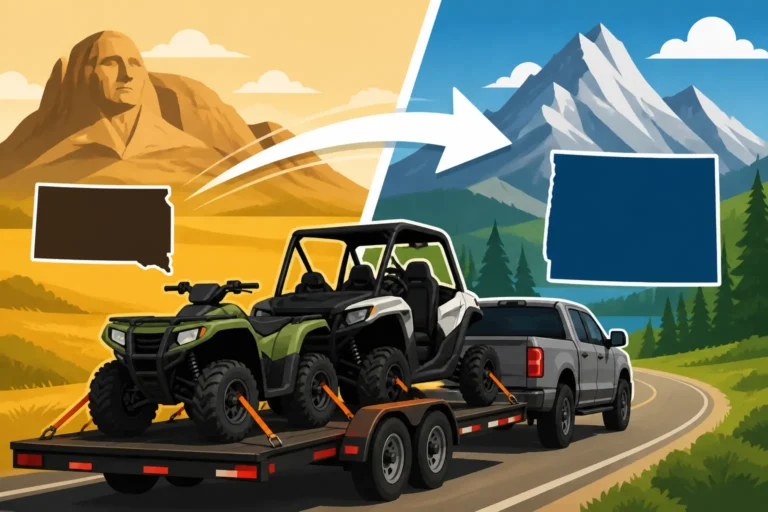
The specific roads that are open to MPVs are usually marked with signage. It’s crucial to pay attention to these signs and to carry a map that clearly designates open routes. Forest Service and BLM offices often provide travel management maps that show which roads and trails are enrolled for MPV use. Remember, even if a road looks like a simple dirt path, it might still be a public thoroughfare with specific rules. The MPV designation truly shines by allowing you to connect various off-road trail systems without having to trailer your machine between segments. This concept is explored further in [Wyoming's MPV Path to the Road].
You'll also need to consider driver's license requirements. While an ORV decal doesn't necessitate a driver's license for riding off-road on designated trails (though age restrictions still apply), operating an MPV on a public road does. You'll typically need a valid driver's license with the appropriate endorsement, often an "M" endorsement for motorcycles or an "MR" endorsement for multipurpose vehicles, depending on your age and machine. Check out [Wyoming Motorcycle Endorsement for an MPV] or [The M or MR Endorsement Wyoming Asks For] for precise details. Always be prepared for a Wyoming Trooper or game warden to check your registration, proof of insurance, and driver's license when you're riding on an enrolled road. Ignorance of the rules is never a valid excuse, so staying informed is your best defense against unexpected citations.
| Feature | ORV Decal | MPV Plate |
|---|---|---|
| Purpose | Off-road trail use | Road-legal use on designated public roads |
| Issued By | Authorized vendors, online, state offices | County Treasurer (after County Clerk titling) |
| Required For | Most ATVs, UTVs, dirt bikes on trails | Specific ATVs/UTVs meeting MPV criteria |
| Physical Reqs. | None beyond machine type | 300-3,000 lbs dry weight, 24"+ seat height |
| Insurance | Not typically required for trail use | Mandatory for road use |
| Title Required? | No (MSO often sufficient for new machine) | Yes, from County Clerk |
| Renewal | Annually, calendar year (Dec 31st) | Annually, based on original registration month |
| Road Use? | No | Yes, on designated public roads |
| Key Documents | Bill of Sale/MSO | Title, Bill of Sale/MSO, Proof of Insurance |
Disclaimer
This article is for general informational purposes only and does not constitute professional advice. Laws, prices and regulations vary by location and change over time. Consult a qualified professional for guidance on your specific situation.