Wyoming Riding Areas That Charge Nothing
Finding a Wyoming riding area with no entrance fee can make a weekend trip more affordable, but “free” does not always mean you can unload and ride without paperwork. Some public areas have no gate charge yet still require a Wyoming ORV permit, route checks, or careful planning. This guide explains where to look, what to confirm, and how to avoid surprise costs.
What “free riding” means in Wyoming
No entrance fee is not the same as no riding costs
A riding area that charges nothing at the entrance can still come with expenses beyond the drive. You may need a Wyoming ORV permit for the machine, fuel, food, camping supplies, and a trailer or recovery gear. Depending on your starting point, the drive across Wyoming can easily become the biggest expense of the outing.
The key distinction is between an access fee charged by a specific site and other requirements that apply to riding. A free-to-enter area does not automatically exempt you from state permit rules, land-manager rules, or restrictions on where you may operate. Read [Wyoming ORV Permits Explained] before setting out, especially if you are bringing a machine from another state.
Free access also does not mean every road, two-track, or open-looking stretch of land is available to ride. Public land is managed for different uses, and an unmarked track may be closed, private, or outside the area where motorized travel is allowed. Follow posted signs and the land manager’s travel map rather than assuming that a visible route is open.
Check permits, routes, and local conditions separately
Before leaving home, confirm three things: whether your machine needs a Wyoming permit, which routes are open to that type of machine, and whether seasonal conditions or closures affect your plan. A legal route for a narrow ATV may not be suitable or open to a wider side-by-side. Likewise, a trail shown on an older map may have changed status.
Wyoming’s public-land rules can vary between federal, state, and local management areas. Start with the relevant land manager’s official information, then compare it with a current travel-management map. A route being physically passable is not proof that it is open to motorized use.
A planning app such as onX Offroad can help you organize routes and see mapped roads and trails, but treat it as a planning aid—not permission to ride. Check the applicable agency map and look for signs at the trailhead. For more on why these distinctions matter, see [Why a Land Manager Must Mark a Route Open] and [Carrying a Travel Management Map in Wyoming].
Wyoming riding areas with no entrance charge
Killpecker Sand Dunes near Rock Springs
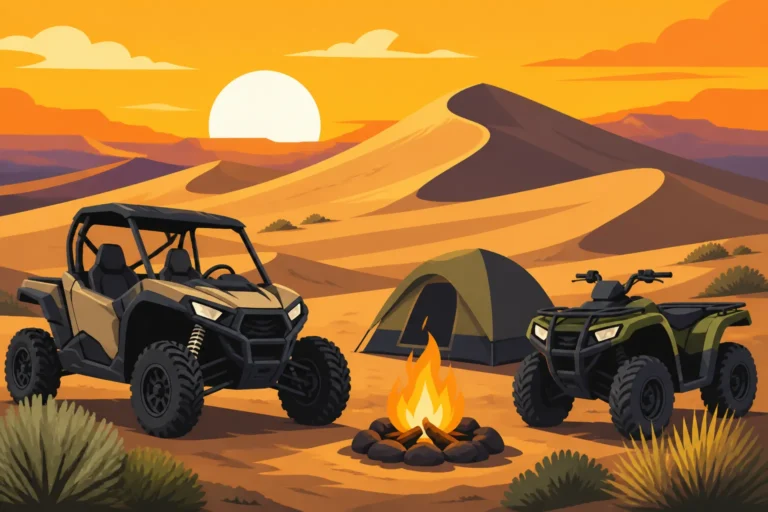
The Killpecker Sand Dunes, northwest of Rock Springs, are a well-known place to ride in southwest Wyoming. The area includes open sand where riders can explore, but dunes demand a different kind of preparation than a forest road. Loose sand can bog down an underpowered or heavily loaded machine, and wind can make visibility and navigation more difficult than expected.
The access area is reached from the Rock Springs region, with County Road 4-17 among the routes used to reach the dunes. Confirm your approach before driving out, and do not rely on a vague pin alone: remote roads can be rough, conditions may change, and cell service can be unreliable. Bring enough fuel for the trip out as well as the ride itself.
The nearby Killpecker campground is known for free camping, but expect a basic, self-sufficient setup rather than a developed campground with full services. Do not count on water, hookups, or a staffed entrance. Pack out trash, secure food, and be ready for wind and shifting sand. If you are comparing the access and camping setup, [Free Camping at Wyoming's Killpecker Dunes] and [Two Vault Toilets and Nothing Else] offer useful related detail.
A no-charge access point does not remove the need to verify permit and route requirements. Check [Riding the Open Play Area at Killpecker Dunes] for area-specific planning, and review current restrictions before riding. Sand conditions, closures, and access can affect how much of the area is practical to explore.
Poison Spider OHV Park outside Casper
Poison Spider OHV Park is a convenient option for riders near Casper who want a designated riding area without an entrance charge. It is an old bentonite mining site that has been adapted for off-highway vehicle use. Its setting makes it a practical choice for a short outing when you do not want to make a long drive into the mountains.
The park offers a compact riding experience rather than a sprawling backcountry trip. That can be a real advantage for newer riders, families, or anyone who wants to test a machine and gear close to town. Still, do not assume every route is beginner-friendly. Look over the terrain before committing, and keep the group together if riders have different experience levels.
Weather matters here, too. Bentonite can become slick and sticky after rain, turning what looked like a manageable route into a frustrating mess. If the ground is wet, consider postponing rather than risking a stuck machine or damaging the surface. [Poison Spider's 284 Acres] and [Bentonite Mud and Why It Stops You] are helpful starting points for understanding what to expect.
Poison Spider is near Casper, but “near town” does not mean you should head out unprepared. Carry water, basic tools, and a charged phone, and tell someone where you plan to ride. Check the area’s rules and current status before departure, including whether any part of the site is temporarily closed.
Public-land roads and routes around Wyoming
Wyoming has extensive public-land road networks, including BLM and national forest routes. Many do not have a booth or entrance charge, but public-land access is not an invitation to ride cross-country. The route must be open to your machine, and the rules can change at boundaries, junctions, and seasonal closures.
For riders who prefer scenery and steady travel over a concentrated OHV play area, an open road can be a good fit. It may also be the better choice for a wider side-by-side that cannot use narrower trails. Confirm the width and vehicle restrictions before planning around a particular route; do not assume that an open-to-vehicles sign covers every machine or every connecting segment.
This is where an onX Offroad route plan can be useful for keeping track of possible roads, junctions, and access points. Cross-check the planned route against the relevant agency’s map, and pay close attention to field signs. If a sign says closed, do not treat a digital map as an override. For more on choosing routes, see [Wyoming's Enrolled Roads and Trails] and [Wyoming Trail Maps and MVUMs].
| Riding option | What may make it a budget-friendly choice | What to verify before you go |
|---|---|---|
| Killpecker Sand Dunes | No entrance charge is generally associated with the riding area, and nearby camping options can keep lodging costs down | Route access, permit needs, sand and wind conditions, available facilities, and current closures |
| Poison Spider OHV Park | A designated riding area near Casper that does not charge an entrance fee | Site status, riding rules, weather, trail difficulty, and machine requirements |
| Public-land roads | Many routes have no entry booth or site fee | Whether each segment is open to motorized use, route width, seasonal closures, and land boundaries |
| Forest routes | Some routes can be accessed without a recreation-area entrance charge | Forest travel map, seasonal opening dates, route designation, and machine-width limits |
How to plan a low-cost ride without getting caught out
Choose the right area for your machine and group
A free riding area is only a good deal if it suits the people and machines going with you. Sand riding at Killpecker can be demanding for a beginner who has never ridden in loose terrain. Poison Spider may be easier to reach from Casper, but wet bentonite can create its own problems. A public road ride may be a calmer choice for a group with mixed experience, provided the route is open to each machine.
Think about the least experienced rider when choosing the day’s plan. A confident adult on a large side-by-side may be comfortable with terrain that overwhelms a young rider on a small quad. Keep the route realistic, agree on a turnaround point, and do not let pressure to “get your money’s worth” push anyone into a section they are not ready to handle.
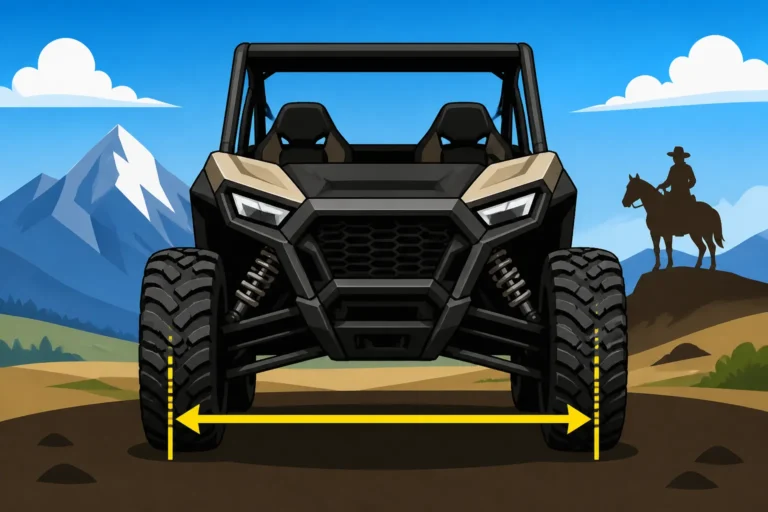
Machine dimensions matter as well. A side-by-side may be too wide for a narrow trail even if the area itself allows OHVs. Review [Wyoming's 50-Inch Trail Limit] and [Wyoming Trails for a Wide Side-by-Side] when deciding whether a route suits your machine. If you are uncertain, choose an open road or another route clearly designated for your vehicle type.
Budget for the costs that do not appear at the entrance
A no-entry-fee destination can still require a meaningful travel budget. Estimate fuel for the tow vehicle and the ATV or UTV, not just the riding portion. Remote areas can be far from fuel, groceries, repair shops, and cell coverage. Carrying extra water and basic recovery equipment may feel like an added expense, but it is better than improvising miles from help.
Plan for the possibility that the intended ride will not happen. Rain can make some terrain unpleasant or unsafe; snow can delay access at elevation; fire restrictions or land-management closures can change plans. Have a backup activity or a second riding area in mind, and check conditions before loading the trailer.
Do not assume that free camping means every nearby place is available for overnight use. Confirm where camping is allowed and whether any stay limits or fire restrictions apply. Keep the campsite tidy, use established areas where required, and take all trash with you. For practical trip preparation, [Camping Near Wyoming Trailheads] and [Wyoming Dispersed Camping for Riders] can help you think through the details.
Use maps and signs together
Before you leave, save the route information you need for offline use. Mobile coverage can disappear once you leave town, and a map that will not load at a junction is not much help. Mark the trailhead, the intended route, fuel stops, and a reasonable turnaround point. Share the plan with someone who is staying behind.
At the riding area, check signs at the entrance and at route intersections. A mapped route may be outdated or may not show a temporary closure. Conversely, a route that looks obvious on the ground might not be designated for motorized travel. When a map and an on-the-ground sign appear to conflict, stop and confirm rather than guessing.
Use onX Offroad or another map tool to support your preparation, but keep the relevant agency map available as well. Take a photo or save the map offline, and keep a paper backup if you are heading somewhere remote. The small effort before departure can prevent a long, expensive detour or an avoidable citation.
A simple pre-ride checklist
Before loading the trailer
- Confirm the area is open and check for temporary or seasonal closures.
- Verify the exact route and whether it is open to your ATV or UTV.
- Check Wyoming permit requirements for each machine.
- Review land-manager maps and note route boundaries.
- Check weather, wind, fire restrictions, and road conditions.
- Confirm fuel range and identify the nearest dependable fuel stop.
- Pack water, food, basic tools, first-aid supplies, and recovery gear.
- Tell someone where you plan to ride and when you expect to return.
At the trailhead
- Read posted rules and closures before unloading.
- Make sure the group understands the planned route and turnaround point.
- Keep to designated routes and respect private-property boundaries.
- Do not ride around a closure sign or create a new route around a difficult obstacle.
- Give other trail users room, and slow down where visibility is limited.
- Leave gates as you found them and pack out all trash.
- Stop if conditions become unsafe, even if you have driven a long way to get there.
“Free” riding in Wyoming is most useful when it means no special entrance charge—not a reason to skip the practical checks. Killpecker, Poison Spider, and open public-land routes can all make rewarding outings, but the right choice depends on your machine, experience, route access, and the conditions on the day. A little homework helps keep the trip affordable and enjoyable.
Disclaimer
This article is for general informational purposes only and does not constitute professional advice. Laws, prices and regulations vary by location and change over time. Consult a qualified professional for guidance on your specific situation.