Wyoming Rules for Riding in Grizzly Country
Wyoming Rules for Riding in Grizzly Country
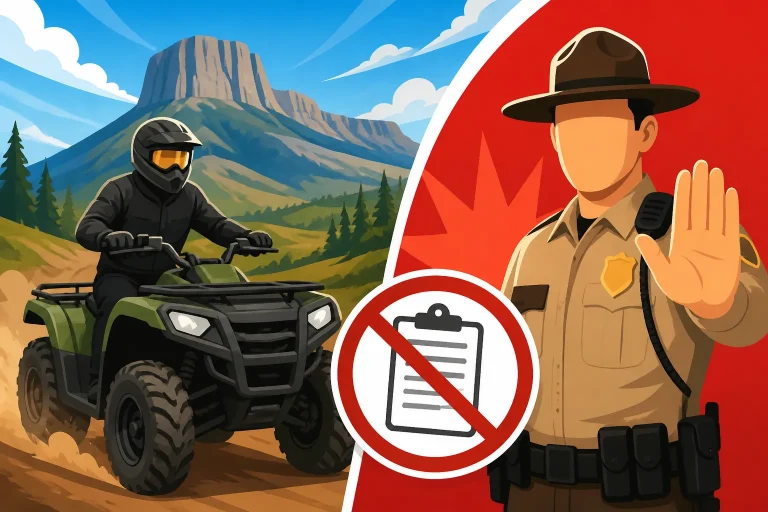
A Wyoming ATV or UTV permit does not make every road or trail open, and a machine offers no special protection if you meet a bear. In grizzly country, riders need to check route access and seasonal closures, keep food and other attractants secured, and know what to do in an encounter. These precautions help you plan a legal ride without treating bear safety as an afterthought.
Understand what rules apply to your ride
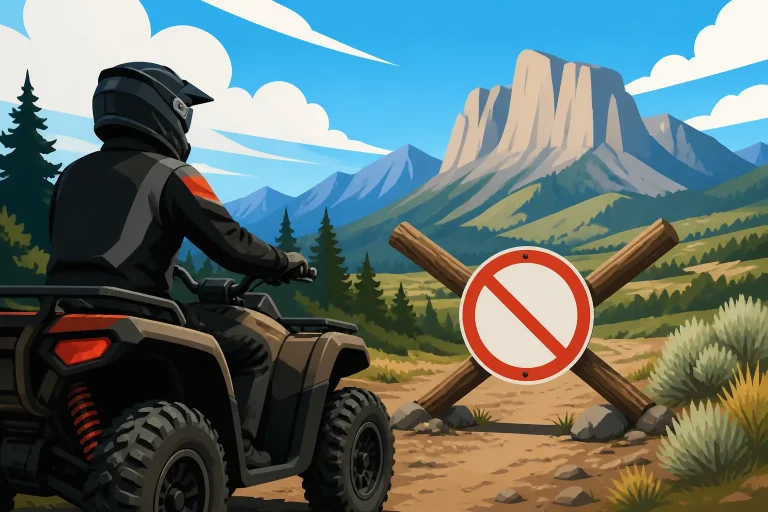
There is no single set of “grizzly country” ATV rules that replaces the rules for the land you are riding on. Your first job is to identify who manages the route and whether motorized travel is allowed there. Bear precautions are important, but they do not give you permission to ride a closed road or leave a designated route.
Wyoming’s ORV permit and the land manager’s access rules address different things. A permit may be required for an off-road machine on routes where Wyoming’s permit program applies. It does not establish that a route is open, grant access across private property, or override a closure. A registration or permit from another state does not automatically settle Wyoming’s requirements either; check Wyoming ORV Reciprocity Rules before travelling.
| What to check | Why it matters |
|---|---|
| Land manager and route designation | Determines whether your machine may use that road or trail |
| Current closures and restrictions | Access can change because of wildlife, fire, weather, or other conditions |
| Wyoming ORV permit requirements | Permit rules are separate from route-access rules |
| Bear notices and food-storage rules | Local guidance can affect where and how you stop or camp |
| Machine and riding conditions | Width, sound, equipment, and rider conduct can matter on public routes |
Identify the land and route
Wyoming riding areas can include national forests, Bureau of Land Management land, state land, private property, and other jurisdictions. A route that looks continuous on the ground may cross boundaries or have different rules along its length. Check the applicable [Wyoming Rules for Riding a National Forest] or [Wyoming Rules for Riding BLM Land], rather than assuming one agency’s map covers the whole trip.
Use current maps and notices to confirm that the route is open to your kind of machine. A trail might be open to motorcycles but not wider ATVs or UTVs, or it might have a seasonal closure. The Wyoming Trail Maps and MVUMs article explains why a route map matters; for a specific ride, use the current map and direction from the land manager responsible for that area.
Do not rely only on an old GPS track, a social media post, or tire marks. A track records where someone went, not whether the trip was permitted. If a sign at the route says it is closed, stop and find an open alternative. When a map and a sign appear to conflict, ask the land manager before continuing.
Keep permits and access separate
A Wyoming decal is not a road license and does not turn a closed route into an open one. It also does not replace a separate permission or permit that may apply to a particular place or activity. Review [Wyoming Rules for Riding a Designated Route] and confirm the permit requirements for your machine and trip.
If you are visiting Wyoming, plan to check the state permit requirement even if your machine carries another state’s sticker or registration. The rules for a visiting rider are covered in Wyoming ORV Permit for a Visiting Rider. Getting the permit handled before leaving for the trailhead avoids a preventable interruption, but route access and bear precautions still need their own checks.
Plan for bears before you start the engine
Grizzly country is not limited to a marked bear-viewing spot. Wildlife can travel across large areas, and a ride may take you through habitat where bears are present even if you do not see a warning sign. Plan as though you could encounter a bear on the route, at a pullout, or near a camp.
Before the trip, look for current notices from the land manager and Wyoming Game and Fish Department. Local information can alert you to a closure, a recent bear activity notice, or area-specific food-storage requirements. Wildlife restrictions can affect access independently of the regular riding season, so check Wyoming Seasonal Closures for Wildlife as part of route planning.
Choose the route and timing carefully
Give yourself time to check the route before you go. In addition to confirming that motorized use is allowed, find out whether the road has narrow sections, blind corners, dense vegetation, or limited space to turn around. Those features can make it harder to see wildlife or keep distance if a bear is nearby.
When conditions are poor for visibility, ride at a pace that lets you stop safely within the distance you can see. Slow down around bends, brush, creek bottoms, and other places where a bear might be close to the route. Avoid charging through vegetation or racing to keep up with a faster group. A slower approach gives riders more time to notice wildlife and respond without sudden movements.
Do not treat a particular season as automatically safe. Bear activity and route conditions vary. Spring conditions can include snow, wet ground, and changing access; later in the year, hunting activity, weather, or wildlife restrictions may affect a route. Check current information rather than assuming that a familiar ride is open and appropriate just because it was accessible on an earlier visit.
Make your group easier to manage
A group that stays together is generally easier to keep track of than riders spread out along a route. Agree on a pace, stopping points, and what to do if someone sees a bear before starting. Make sure riders know how to communicate if they need the group to stop. In a UTV group, passengers can help watch the surroundings, but they should not distract the driver or lean out of the vehicle to get a better look.
Keep children close to responsible adults at stops and camps. Explain that they should not approach wildlife, follow a bear, or run toward an adult who has spotted one. If a group has a rider who is inexperienced in remote terrain, choose a route and pace that allow everyone to stay together.
Be especially attentive when trail conditions limit your view or ability to maneuver. You might need more room to stop on a narrow track or steep slope than on an open road. Do not assume that a UTV’s size or engine noise makes a bear aware of you in time. A bear may be feeding, moving through cover, or otherwise unaware of a machine until it is close.
Carry bear spray where you can reach it
Bear spray is a practical safety tool in bear country, but only if it is accessible and you know how to use it. Keep it on your person in a secure, easy-to-reach holster rather than buried in luggage, a cargo box, or a backpack strapped behind a seat. If a rider is separated from the machine, spray stored on the vehicle may not be available when needed.
Choose a holster that fits the particular canister and keeps it secure while riding. A purpose-made holster from an outdoor retailer or Amazon may work, but check that the fit is compatible and that you can draw the canister quickly with the hand you are likely to use. Do not let a purchase substitute for reading the spray label and practicing how to remove it safely.
Check the canister before the trip. Make sure it is in good condition, has not expired, and can be reached without unbuckling multiple layers or unpacking gear. Keep it out of extreme heat and follow the manufacturer’s storage instructions. Spray canisters are not harmless accessories; they are pressurized products that need proper handling and storage.
Ride in ways that reduce surprise encounters
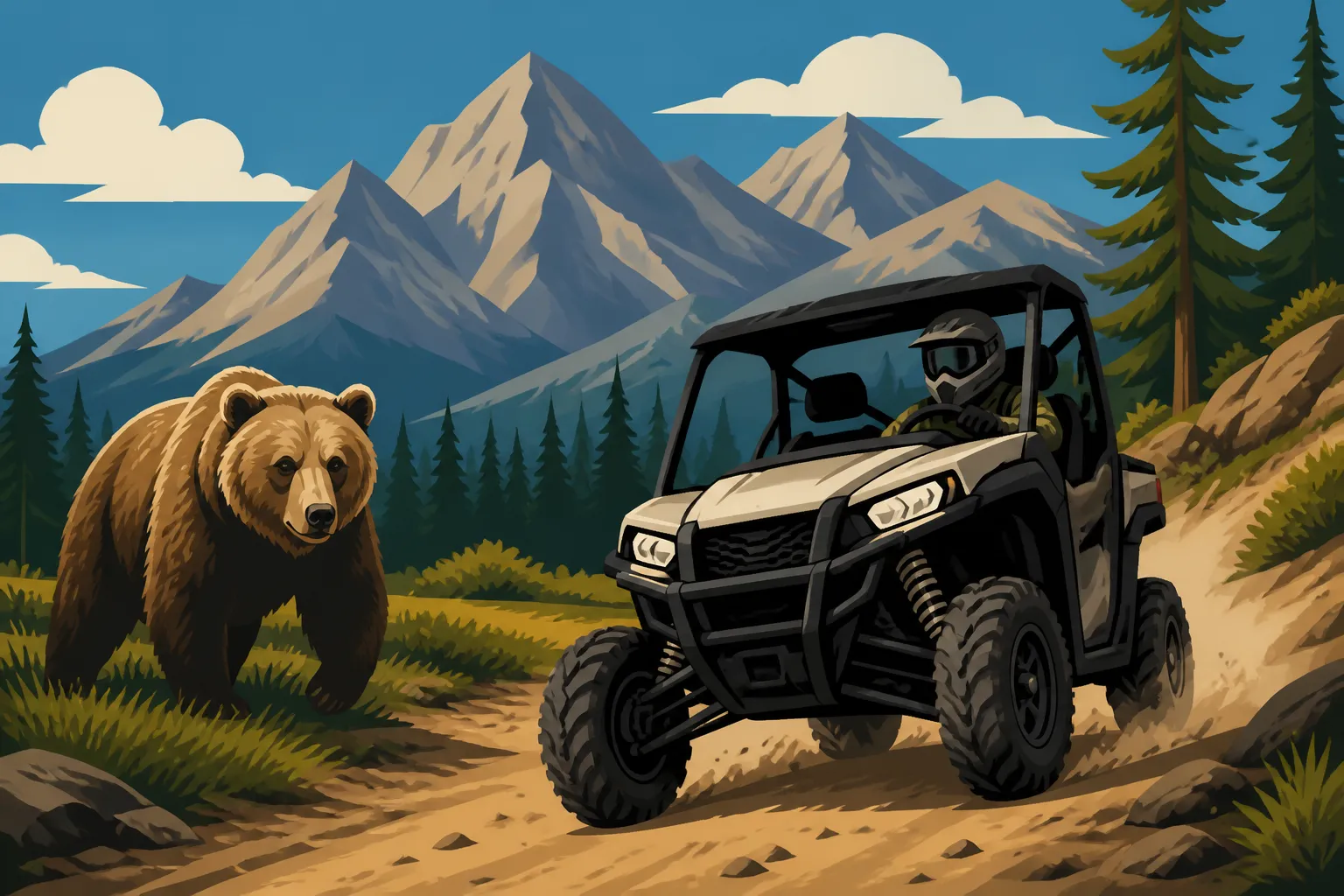
An ATV or UTV can cover ground quickly, but speed and engine noise do not guarantee that a bear will move away. A bear may be hidden by terrain, focused on food, or close to the road before you see it. Riding defensively is the most useful habit: keep a pace that allows you to respond, scan the route, and leave room to stop or turn around.
Slow down where sightlines are short
Reduce speed before blind corners, narrow bends, thick brush, and places where a road crosses a creek or runs through a forested draw. Look ahead without becoming so focused on the trail surface that you miss movement at the edge of your view. At the same time, keep attention on the ground; a sudden steering move to avoid wildlife can create a rollover or collision risk.
Do not race, make repeated high-speed passes, or use the machine to push wildlife off a route. If you see a bear ahead, do not drive toward it to make it leave. Stop at a safe distance, warn the rest of the group, and give it time and room to move away. If it does not leave, turn around if that can be done safely and choose another route.
A bear may appear to tolerate the noise of a machine, but that is not permission to approach. Do not follow it for a photograph, herd it with the vehicle, or block its way out. Keep passengers inside the vehicle and do not get out for a closer view.
Use extra caution at stops
Stops can put riders closer to a bear’s food or travel area than the ride itself. Choose a spot with good visibility, and avoid stopping near a carcass, a cluster of scavengers, or a place where bear activity has been reported. If you notice a carcass, leave the area promptly without approaching it. Do not investigate the site or try to determine what animal made it.
Be alert when taking a break in thick cover or near water, where visibility may be limited. Before getting off the machine, look around and listen. Keep the group together, and do not let one rider walk away from the group without telling anyone where they are going.
Never park close to a bear to watch or photograph it. A machine is not a safe viewing platform, and its presence may limit the animal’s ability to move away. If a bear is near the route or campsite, leave the area when you can do so without moving toward it. If you are unsure about the safest direction, contact the land manager or follow posted instructions.
Follow land rules for equipment and conduct
Bear safety does not replace other public-land requirements. Stay on routes open to your machine, respect width restrictions, and use required equipment. Wyoming’s Wyoming Spark Arrester Requirement is one example of an equipment issue riders should check for public-land travel. The land manager can also have route-specific rules that are not captured by a general permit.
Keep your machine in good operating condition and ride within your ability. A broken machine can leave a group exposed for longer than planned, while aggressive riding can make a stop or encounter harder to manage. Carry enough fuel for the route and a contingency, but transport it safely and follow applicable rules; see Wyoming Rules for Carrying Fuel.
Do not assume that a route is open just because another vehicle is using it. The other machine may have permission, may be on a different route designation, or may be breaking the rules. Confirm your own access before setting out.
Handle food, trash, and camping responsibly
Food and other scented items can attract wildlife. That includes more than meals: cooking items, garbage, toiletries, pet food, and other products with an odor can be a concern. Secure them according to the rules for the specific area, and do not leave food or trash unattended at a trailhead or campsite.
A closed cargo box is useful for carrying equipment, but do not assume it qualifies as approved bear-resistant storage. Requirements vary by place, and a box that keeps rain out may not prevent a bear from reaching its contents. Check local instructions for the place where you plan to stop or camp. The related information in Food Storage Rules at a Trailhead and Camping Beside a Machine in Bear Country can help you plan these parts of a trip.
Keep the riding area clean
Pack out food scraps, wrappers, and other garbage. Do not toss scraps into the brush or leave them in an open fire ring. Do not feed wildlife, even if an animal appears calm or comes close to a camp. Feeding can draw animals toward people and vehicles, creating risks for both visitors and wildlife.
Keep meals and snacks in the proper storage location when they are not in use. Avoid leaving an open cooler, grocery bag, or food container on the seat or in an unsecured cargo area while you ride. At the end of a break, check the area for anything that may have been dropped or left behind.
If you are riding with a dog, plan for the animal to stay controlled and close to the group. A dog that runs ahead or chases wildlife can return with a bear following it, putting people at risk. Check Taking a Dog on a Wyoming Trail Ride for more on keeping pets under control on a ride.
Make a camp plan before arriving
If your outing includes an overnight stop, find out in advance where camping is allowed and what food-storage method the land manager requires. Do not choose a camp solely because it is close to a trail or has a convenient parking area. Consider the site’s visibility, the amount of space around it, and whether bear activity has been reported.
Keep sleeping areas separate from food preparation and storage where the site’s rules and layout call for it. Store food, trash, and scented items in the approved way, and do not leave them in a tent or unsecured machine. Follow posted directions for bear-resistant lockers or other storage systems; do not improvise a substitute if the local requirement specifies a particular method.
If a bear visits camp or gets into stored food, do not approach it to retrieve belongings. Move away safely, gather the group, and follow local instructions for reporting the incident. A bear that has found food may return, so treat the situation seriously and contact the appropriate land manager or wildlife authority.
Respond calmly if you see a bear
Seeing a bear does not automatically mean you need to use bear spray. The right response depends on distance, the animal’s behavior, your surroundings, and whether it has a way to leave. Your priorities are to avoid approaching, avoid provoking it, and create distance when you can do so safely.
If you see a bear at a distance
Stop at a safe distance and let the group know. Do not try to get closer for a better view. If the bear has room to leave, give it time and space. If it stays near the route, move back the way you came when safe, or use a different route without travelling toward it.
Do not surround the animal with machines or passengers. Keep a clear route for it to move away, and do not position a vehicle between a bear and its cubs. If the bear changes direction or approaches, do not accelerate toward it or try to drive past at close range. Stay together and be ready to leave when a safe opportunity is available.
If a bear approaches or charges
Avoid sudden actions that bring you closer to the bear. Do not run. Prepare bear spray if it is safe to do so, and use it according to the label and applicable guidance if the bear comes within the spray’s effective range. Wind and distance matter, so do not discharge it casually or assume it will work from too far away.
Do not count on a machine as a shield or try to use it to intimidate the bear. A vehicle may complicate your options, especially if the animal is already close. Focus on staying calm, keeping other riders together, and making space without blocking the bear’s escape.
Bear encounters are not all the same. If a physical attack occurs, response guidance depends on whether it appears defensive or predatory. A close, sudden encounter may involve a defensive response; if a grizzly makes contact in a defensive attack, standard bear-safety guidance generally advises protecting your neck and vital areas and playing dead. If an attack is clearly predatory, or the bear continues an attack after a defensive response has ended, fight back. Local bear-safety advice and training can help you understand these distinctions before a trip; do not try to work them out for the first time during an encounter.
After the encounter
Once you are away from the bear, check that everyone in the group is accounted for and uninjured. Do not return to the location to retrieve a dropped item while the bear may still be present. Report a serious encounter, injury, or food-conditioning incident to the appropriate authority, following local directions.
If spray was used, treat the canister as expended or damaged and handle it according to its instructions. Do not continue the ride without a workable safety plan if the group’s spray is no longer available and bears remain nearby. Consider turning around, choosing another route, or leaving the area.
Review what happened before continuing. If the encounter involved a bear on the route, a carcass, or a closure notice, share the relevant information with the land manager so others can be directed appropriately. Do not post an exact location in a way that encourages people to crowd the animal.
Frequently Asked Questions
Does a Wyoming ORV permit give me permission to ride in grizzly habitat?
No. A permit and route access are separate. You still need to confirm that the road or trail is open to your machine and that no seasonal or wildlife closure applies.
Is bear spray required for riding in grizzly country?
Do not assume there is one statewide bear-spray rule that applies to every ride. Requirements and recommendations can depend on the area. Check current land-manager guidance, and carry spray where you can reach it quickly if you choose to bring it.
Should I stay on my ATV or UTV if I see a bear?
Do not approach or try to pass close to a bear. Stop at a safe distance, keep the group together, and give the animal room to leave. If the route is blocked, turn back when it is safe rather than pressuring the bear.
Can I camp beside my machine in bear country?
Camping rules and food-storage requirements depend on the location. Check whether camping is allowed and how food, trash, and scented items must be secured. A machine’s cargo box should not be treated as approved bear-resistant storage unless the land manager says it qualifies.
Disclaimer
This article is for general informational purposes only and does not constitute professional advice. Laws, prices and regulations vary by location and change over time. Consult a qualified professional for guidance on your specific situation.