Wyoming Fines for No ORV Permit
Riding without the required ORV permit can turn a Wyoming trail day into a citation—and the amount due may depend on the violation and how it is handled. The key is knowing when a permit applies, what a ticket actually says, and how to check current penalties rather than relying on a guessed fine or another state’s sticker.
When a Wyoming ORV permit is required
Wyoming’s ORV permit is generally required for covered off-road vehicles using routes or riding areas included in the state’s off-road trail system. The exact requirement depends on the machine, where you ride, and whether an exemption applies. Do not assume that every road, trail, or piece of public land has identical rules.
A permit is not the same as a road registration or a license plate. It also does not authorize riding on a route that is closed or not designated for your machine. Check the specific land manager’s current information and the applicable permit rules before setting out. Wyoming ORV Permits Explained provides a broader overview of how the permit system works.
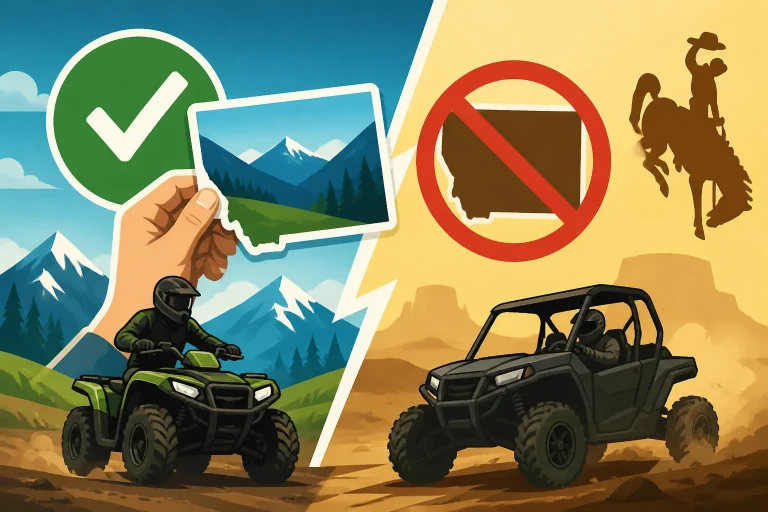
The decal is associated with the machine, not simply with the person riding it. If you bring several machines, check whether each one needs its own permit rather than assuming one decal covers a household or group. Visitors should be especially cautious: a registration sticker or permit from another state generally does not substitute for Wyoming’s permit. See Wyoming ORV Reciprocity Rules and Do Visitors Need a Wyoming ORV Permit? for the visitor-specific basics.
The practical test is not just “Am I riding on public land?” Ask:
- Is this machine covered by Wyoming’s ORV permit rules?
- Is this particular route or riding area part of the system where the permit is required?
- Is there a specific exemption that applies to this vehicle or use?
- Is the decal valid for the relevant permit period and displayed as required?
If any answer is unclear, confirm it with the responsible land manager or permit authority before riding. A decal bought for one machine does not necessarily protect another, and a valid decal does not override a closure or route restriction.
The cost of the permit and the penalty for riding without one are separate questions. The permit price is set through the state’s system, while a citation may involve a different process and additional amounts. For the current permit charge, check Wyoming ORV Permit Cost. For where to obtain a decal, see Where to Buy a Wyoming ORV Permit.
What a no-permit citation can mean
There is no safe, universal dollar figure to rely on for a Wyoming no-permit citation. The amount can depend on the specific law or rule cited, the circumstances, and the court or agency process listed on the ticket. Fine schedules and related costs can change, so verify the current amount using the official contact or instructions provided with the citation.
A citation may require more than paying a fine. It can include a response deadline, instructions for appearing or responding, and possible court costs or other charges. The ticket should identify the alleged violation and explain how to respond. Read it carefully rather than treating the amount written in one field as necessarily the total cost.
The permit issue may also be only one part of an encounter. An officer could identify separate concerns, such as riding on a closed route, operating outside a designated area, or failing to follow another applicable rule. Those allegations may carry separate consequences. A permit does not make an unauthorized route legal, and riding a permitted machine does not automatically resolve a different violation. For the distinction between route access and permit compliance, see [Wyoming Fines for Riding a Closed Route].
If you receive a citation, pay attention to the exact wording. “No permit” and “riding where prohibited” are not interchangeable descriptions. The response process, the relevant rule, and any available way to contest the citation depend on what is actually alleged. Keep the ticket and any attached instructions together, and use the issuing agency or court’s contact information if you need clarification.
A receipt can help show that you purchased a permit, but it may not replace the decal or satisfy a display requirement. Similarly, showing an online order confirmation does not necessarily prove that the decal was affixed correctly or that it covered the machine being checked. If you bought a permit shortly before riding, keep the receipt and confirm the provider’s instructions for using the decal while it is being delivered or processed. See Does a Permit Receipt on Your Phone Count? for this specific question.
| Situation | What to check | Why it matters |
|---|---|---|
| No decal on the machine | Whether the route requires a permit and whether an exception applies | A permit requirement may apply even if the rider has another state’s sticker |
| Permit recently purchased | Receipt, order status, and decal display instructions | Proof of purchase may not replace required display |
| Out-of-state registration | Wyoming’s reciprocity rules | A home-state document may not satisfy Wyoming’s permit requirement |
| Citation received | Alleged violation, response deadline, and listed contact | The ticket determines what must be addressed and how |
| Decal present, route closed | Current route and closure information | A permit does not authorize riding a closed or undesignated route |
What to do if you are cited
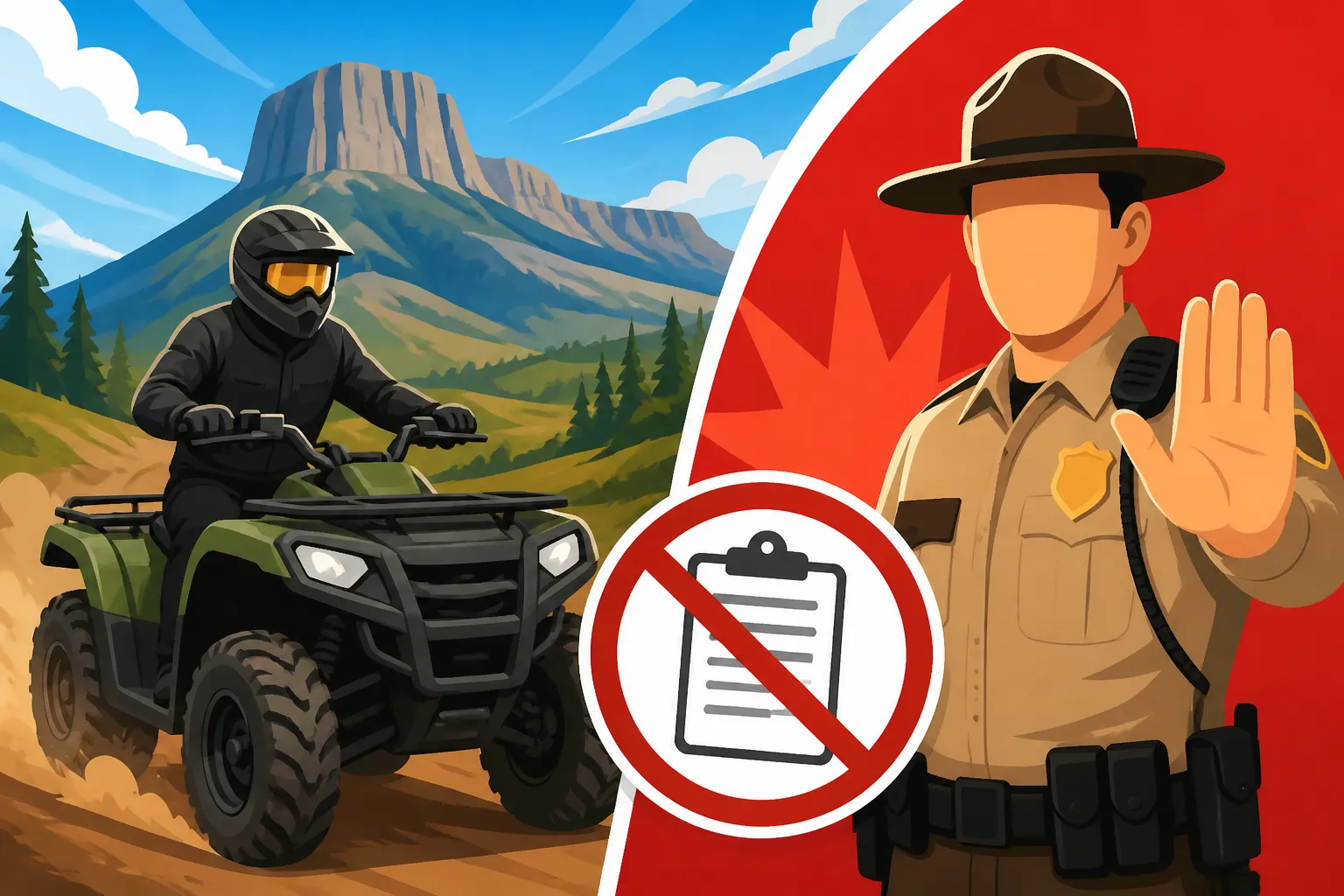
First, stop riding where the officer directs and keep the interaction calm. Ask what violation is being alleged if it is not clear, but avoid arguing roadside about a legal interpretation. Make a note of the location, machine, route, and the documents or decal you showed. If there were signs, a map, or a permit receipt involved, preserve those details.
Next, read the citation from beginning to end. Check:
- The specific violation or rule named
- The issuing agency or court
- Any response or appearance deadline
- The payment or response instructions
- Whether the citation lists additional charges or related violations
Do not ignore the ticket because you believe the decal was valid or because you plan to explain the situation later. Missing the stated response process can create a separate problem. If you think the citation is mistaken, follow the listed procedure for contesting it and gather relevant records, such as proof of purchase, machine information, route maps, and photographs. Keep copies and make sure any submitted material is actually received.
If the ticket does not clearly explain the amount due or the correct response, contact the listed agency or court. Ask which current schedule applies and whether the amount shown includes all required costs. Do not rely on an old post, a friend’s experience, or an online discussion to calculate a current penalty.
If you believe the machine was exempt, be ready to explain the basis for that belief and provide supporting information if available. An exemption should not be assumed just because the machine is used for work, belongs to a ranch, is rented, or is registered elsewhere. Rules can distinguish between machine type, use, location, and ownership. Check the details before riding rather than trying to establish an exemption after a citation.
For more context on how Wyoming treats visitors and permits, Wyoming ORV Permit for Nonresidents explains why an out-of-state sticker may not settle the question. If you are checking a machine’s permit status, Wyoming ORV Permit Lookup may also help identify what information is available, but it should not replace the citation’s official response instructions.
How to avoid a no-permit citation
The most reliable approach is to confirm the permit and route separately before each trip. A valid decal addresses the permit requirement; it does not confirm that a route is open, suitable for your machine, or available to the public. Check the land manager’s current travel information, including temporary closures and seasonal restrictions.
Use this simple pre-ride process:
- Identify the exact machine you plan to ride and confirm whether it is covered by the permit requirement.
- Check whether the route or area requires a Wyoming ORV permit.
- Buy the appropriate permit through an authorized channel and follow the decal’s placement instructions.
- Carry proof of purchase while keeping in mind that it may not substitute for a required decal.
- Confirm the route is open to your machine and follow any posted restrictions.
- If the machine is borrowed or rented, verify that its decal is valid and belongs to that machine.
Do not assume that the decal on a friend’s ATV covers yours, or that a rental machine automatically has the required permit. Ask the owner or rental provider to confirm the decal is in place and valid for the intended area. For borrowed machines, see Wyoming ORV Permit for a Machine You Borrowed. For rental machines, see Wyoming Rules for a Rented Machine.
Visitors should check Wyoming’s requirements even when their home state has its own permit or registration system. Different states do not necessarily recognize one another’s off-road credentials. That means a trip across the border can require a separate Wyoming decal, even if the machine is fully registered or permitted at home. Riding Wyoming With an Out-of-State Sticker covers this common source of confusion.
Finally, make sure the decal is visible and attached according to the instructions. A sticker stored in a glove box or a receipt saved on a phone may not meet a display requirement. If the decal is lost, damaged, or peeling, use the official replacement process rather than treating the original purchase record as a permanent substitute. Wyoming ORV Permit Replacement explains what to check when a decal needs replacing.
The bottom line: the fine for riding without a Wyoming ORV permit is not a figure to guess from memory. Confirm whether the permit applies, follow the citation’s instructions if you receive one, and check the responsible agency for current penalties and costs.
Disclaimer
This article is for general informational purposes only and does not constitute professional advice. Laws, prices and regulations vary by location and change over time. Consult a qualified professional for guidance on your specific situation.