Replacing a Clogged Spark Arrester
A clogged spark arrester can make an ATV or UTV feel weak, run hotter, or stall, but riding with a damaged or missing arrester can create a bigger problem. The safe fix starts with letting the exhaust cool, checking the machine’s manual, and identifying the correct part. Wyoming riders also need to consider the rules for the road or trail they plan to use.
What a clogged spark arrester does
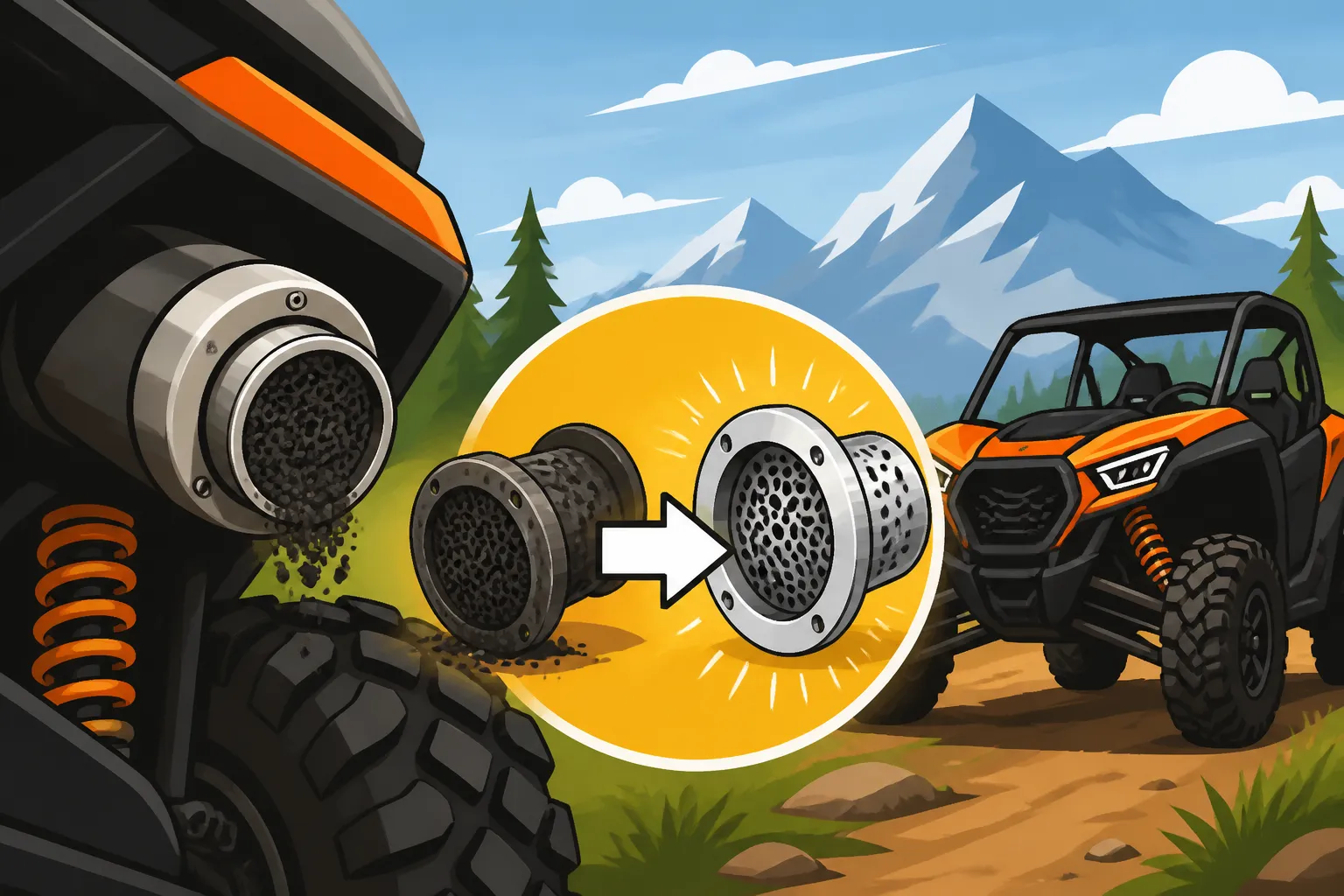
A spark arrester is designed to trap or cool carbon particles that could leave the exhaust and start a fire. Many ATV and UTV exhaust systems use a removable screen, but the design varies. Some machines have an arrester built into the muffler, and others use a different arrangement. Check the owner’s manual before taking anything apart.
Carbon and soot can collect on a screen over time. A buildup may restrict exhaust flow, affecting how the engine runs. Symptoms can include sluggish acceleration, reduced power at higher engine speeds, unusual exhaust behavior, or an engine that struggles under load. These signs are not proof that the arrester is clogged: a dirty air filter, fuel problem, damaged exhaust, or other engine issue can cause similar trouble.
| What you notice | What it could mean | Sensible next step |
|---|---|---|
| Gradual loss of power | A restricted screen or another engine problem | Let the exhaust cool, then inspect the arrester and follow the manual |
| A screen covered in soot | Carbon buildup or an engine condition causing excess deposits | Clean only as the manufacturer directs, and look for recurring buildup |
| A torn, loose, or missing screen | The arrester may no longer work as intended | Replace the correct part before riding where an arrester is required |
| Rattling near the muffler | A loose screen, fastener, or damaged exhaust component | Stop and inspect; do not assume the noise is harmless |
| A strong exhaust smell or unusually hot exhaust | Possible operating or exhaust trouble | Stop riding and investigate rather than continuing under load |
A clogged arrester is worth addressing, but removing the screen and riding without it is not a repair. The machine may regain some power, yet it loses the protection the device is meant to provide. On public land, an approved arrester may be required by the rules for that area. See Wyoming Spark Arrester and Sound Rules and Wyoming Spark Arrester Requirement for the broader requirements.
A spark arrester also does not make an exhaust system compliant with every land manager’s rules by itself. Noise limits, route restrictions, and fire restrictions are separate considerations. The device and the muffler both matter; Mufflers and Sound on Wyoming Public Land explains why a functioning arrester is not a substitute for acceptable exhaust sound.
Check the machine before cleaning or replacing anything
Start with the owner’s manual for the exact ATV or UTV model. It should explain whether the arrester is removable, where it sits, and how the manufacturer expects it to be serviced. The procedure can differ even between machines that look similar. If the manual says the part is not serviceable, or if the screen is inaccessible without removing the muffler, do not force it apart.
Before removing the arrester:
- Park the machine on a stable surface outdoors, away from dry grass, leaves, fuel, or other flammable material.
- Shut off the engine and let the exhaust system cool completely. The muffler and nearby parts can stay hot after the engine stops.
- Check the manual for the right tools and any special steps, such as removing a heat shield or loosening a particular fastener.
- Take a photo of the assembly before disassembly. It can help you return the parts and hardware to their original positions.
- Keep small hardware together, and note the direction the screen faces if the manual or part design makes that relevant.
Wear gloves and eye protection when handling soot or cleaning a screen. Do the work in a well-ventilated place, and avoid breathing dust from the exhaust. Do not clean the part while it is still attached to a hot machine.
Inspect the screen under good light. Look for packed carbon, holes, broken mesh, corrosion, warping, or a loose fit. Check the mounting surface and fasteners too. A screen that looks clean but is torn or distorted may not be doing its job. If the arrester has been modified, is missing parts, or cannot be removed as described in the manual, ask a qualified repair shop or the manufacturer’s dealer for help.
If a replacement is needed, match it to the machine’s make, model, and model year, and confirm that it is intended for the exhaust system fitted to that machine. A part that appears to fit may not be the right design or may not meet the requirements for the land you plan to ride. If shopping through Amazon or another marketplace, verify the exact fitment and manufacturer information rather than relying only on a broad listing title. When compatibility is unclear, a dealer or the part manufacturer is a safer source to check.
Clean or replace the arrester
Cleaning is appropriate only when the manufacturer’s procedure allows it and the screen is intact. Do not scrape, drill, cut, or enlarge the mesh to make it flow better. That changes the device and can undermine its purpose. Avoid using a method or chemical the manual does not approve; some cleaners can damage materials, leave residue, or create a hazard if used near an exhaust system.
A careful cleaning process
The precise steps depend on the machine, so use the manual as the controlling instruction. As a general approach:
- Remove the arrester only after the exhaust has cooled completely.
- Check the screen and housing for physical damage before trying to remove deposits.
- Use the cleaning method specified by the manufacturer. If the manual permits brushing, use a suitable soft brush and work gently so the mesh is not bent or torn.
- If the manual calls for a particular cleaner, follow its directions and safety precautions. Keep solvents and cleaning products away from heat, sparks, and open flames.
- Let the part dry fully if the cleaning method involves liquid.
- Reinstall the arrester with the correct hardware and tighten it as directed. Do not guess at a torque value if the manual specifies one.
- Start the machine outdoors and check for exhaust leaks, rattling, or a loose fit before riding.
Compressed air, aggressive wire brushing, and improvised soaking are not universal solutions. A cleaning method that works for one screen or material can damage another. If the manual does not describe cleaning, contact the manufacturer or a repair professional instead of experimenting.
When replacement is the better choice
Replace the part if the screen is perforated, cracked, badly corroded, deformed, or no longer held securely. Replacement is also appropriate when cleaning does not clear the blockage using the approved method. A clogged screen that quickly becomes clogged again deserves attention beyond another cleaning. Repeated carbon buildup may point to an engine or exhaust issue, so have the machine checked rather than treating the symptom indefinitely.
Install the correct replacement and make sure it seats and fastens properly. Do not leave out a gasket, retaining ring, or other component shown in the service instructions. After installation, inspect for exhaust escaping around the connection. If the part will not seat, the fastener threads are damaged, or the muffler is cracked, stop and get the repair assessed.
A replacement arrester should not be confused with a different exhaust insert or a sound-reduction component. Read the product details and the machine manual to confirm what the part does. For riders using National Forest or BLM routes, also check the land manager’s current requirements. The general guidance in Wyoming Rules for Riding a National Forest and Wyoming Rules for Riding BLM Land is useful context, but the specific route and current restrictions still matter.
Wyoming trail decisions after the repair
Once the machine is running normally, confirm the arrester is fitted and secure before heading out. A clean screen is not a pass to ride anywhere: a route must be open to your machine, and restrictions can vary by area and season. Check the relevant travel-management map and posted signs, and follow any temporary closure or fire restriction. Wyoming Fire Season and Trail Access covers why conditions can change access even when a route is normally open.
If you are unsure whether a replacement part meets a land manager’s requirement, ask the managing agency or the part’s manufacturer before your trip. A product description or seller’s claim may not answer whether it meets a particular standard. Some land managers specify an approved type or rating, so confirm what applies rather than assuming that any screen is acceptable. A Forest Service Rated Arrester in Wyoming explains the rating question, and What Happens at a Trailside Sound Check covers another exhaust-related check riders may encounter.
Do not ride if the arrester is missing, damaged, or too loose to stay in place. That is especially important in dry conditions, when a hot particle or a mechanical failure can have serious consequences. If a machine starts losing power on a ride, stop in a safe place and let the exhaust cool before inspecting it. Avoid parking over dry vegetation, and do not remove the screen trailside just to get moving again.
When the machine’s symptoms continue after a correct cleaning or replacement, treat that as a repair issue, not a reason to keep testing it on the trail. A restricted exhaust, a damaged muffler, or another engine problem may require diagnosis. A shop can check the exhaust system and determine whether the problem is actually the arrester.
Disclaimer
This article is for general informational purposes only and does not constitute professional advice. Laws, prices and regulations vary by location and change over time. Consult a qualified professional for guidance on your specific situation.