Wyoming Rules for Hunting From a Machine
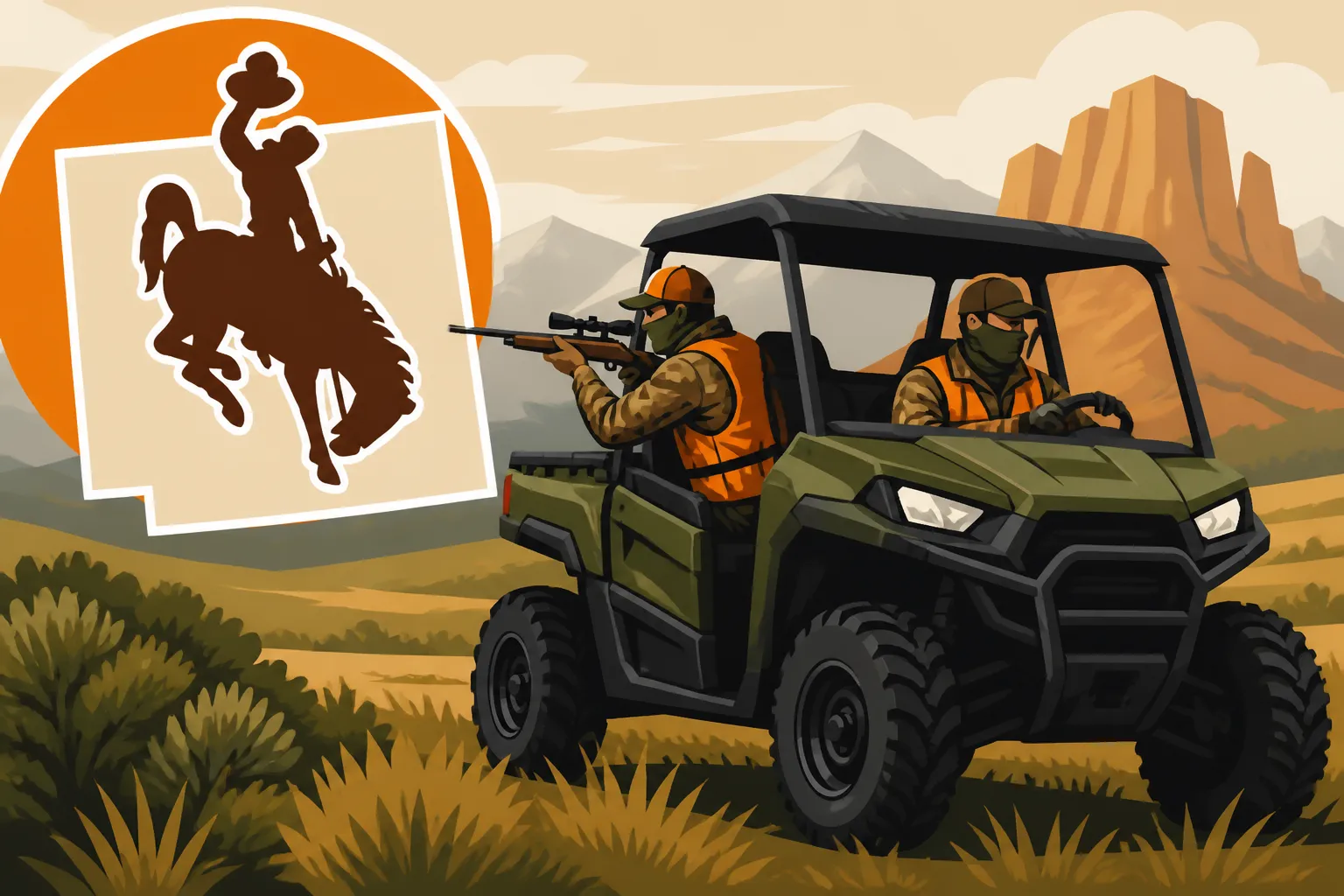
Hunting with an ATV or UTV in Wyoming can make a long trip to a hunting area more manageable, but a machine does not change where you may hunt or ride. The key is to treat it as transportation unless current rules clearly say otherwise, and to check hunting regulations, land access, route designations, and permit requirements separately.
What “hunting from a machine” means
The phrase can mean several different things: riding to a hunting area, carrying a firearm or bow on a machine, pursuing game while riding, shooting from the machine, or using an ATV to retrieve harvested game. Those activities do not necessarily have the same rules.
A useful starting point is to separate the hunt from the ride. A valid hunting license or tag does not automatically authorize you to drive anywhere, and a Wyoming ORV permit does not authorize you to hunt, possess a particular weapon, or take an animal. Each requirement covers a different part of the trip.
As a practical rule, use the machine to get to a place where access and hunting are lawful, then stop and follow the current rules for the species, season, weapon, and location. Do not assume it is legal to shoot from a machine or to use it to pursue, herd, harass, or flush wildlife. If a current regulation or written authorization does not clearly allow the specific activity, do not do it.
| Activity | What to check before you go |
|---|---|
| Riding to a hunting area | Whether the route is open to your machine, whether travel is allowed during the season, and whether a Wyoming ORV permit is required |
| Carrying a firearm or bow | Current weapon and transport rules, plus safe handling and any restrictions that apply to the vehicle or hunting area |
| Shooting from a machine | Whether current Wyoming regulations expressly allow the specific method and circumstances |
| Pursuing or disturbing game with a machine | Species-specific hunting rules and any restrictions on using motorized vehicles in taking wildlife |
| Retrieving harvested game | Whether the route is open and whether the machine may travel to the retrieval location |
| Crossing private or trust land | Landowner permission or the required recreational-use authorization, in addition to route and hunting rules |
For more on the hunting side, see Wyoming Rules for Hunting From an ATV. For riding during the hunt, Wyoming Rules for Riding During Hunting Season addresses the separate access and travel question.
Check hunting rules separately from riding rules
Before leaving, check the current Wyoming hunting regulations for the species and hunt area, along with any applicable season notices, emergency closures, and weapon rules. Requirements can differ by species, season, hunt area, and method of take. A general rule about riding an ATV cannot tell you whether a specific weapon or hunting method is allowed for your tag.
Pay particular attention to rules that restrict taking wildlife with the aid of a motor vehicle. A machine may be useful for reaching a legal hunting location, but using it to find, follow, pressure, or position on game can raise a different legal issue from simply traveling on an open route. Never treat the ability to ride somewhere as permission to hunt from the vehicle there.
Shooting from a machine deserves special caution. Do not assume that stopping the engine, putting the vehicle in park, or stepping onto a footrest turns a vehicle-based shot into an ordinary shot on foot. Follow the current rule that applies to your species, weapon, and situation. If an exception or disability-related authorization may apply, confirm its exact scope with the appropriate wildlife authority before relying on it.
Also check the ordinary requirements for the hunt:
- Confirm that your license and tag are valid for the species, hunt area, season, and method you plan to use.
- Review weapon restrictions, including any limits that apply to the season or hunt area.
- Check legal shooting hours and any rules about taking, tagging, and documenting an animal.
- Make sure you understand restrictions on hunting near roads, buildings, occupied areas, or other protected places.
- Review rules for transporting a harvested animal and for evidence of sex or species, where those requirements apply.
- Check any local or temporary closure notice that could affect the hunt or the route to it.
A route closure and a hunting closure are not always the same thing. A road may be open to vehicles while hunting is restricted in the surrounding area, or a hunting area may be open while a particular road or trail is closed to motorized travel. Check both sets of rules rather than assuming one map or license answers everything.
The same care applies to other riders in your party. A passenger, a second machine, or a borrowed ATV does not expand your hunting privileges. Make sure every person hunting has the correct license and tag, and make sure every machine is being used lawfully. For machine-specific permit questions, Wyoming ORV Permit for a Hunting Machine explains why a hunting purpose does not replace the riding requirements.
Confirm that the route and land are open
An ATV permit is not a pass to ride across public land wherever the ground looks passable. Federal, state, and local land managers may limit motorized travel to signed or mapped routes. A route can be closed seasonally, restricted by vehicle type or width, or subject to temporary conditions. Riding off a designated route to reach game or retrieve an animal may be prohibited even when the hunt itself is legal.
Check the travel map or route information for the land you plan to use, and read signs at the trailhead and along the route. If a map and a sign appear to disagree, do not treat the map as permission to ignore a posted closure. Get clarification from the managing agency before riding into an uncertain area. Carrying a Travel Management Map in Wyoming covers why a hunting map and a motorized travel map are not interchangeable.
The land manager matters. National Forest, BLM, state trust, and private lands can have different access terms. An open hunting season does not by itself open a closed road, and public access to one route does not guarantee access to neighboring land. For land-specific background, see [Wyoming Rules for Riding a National Forest], [Wyoming Rules for Riding BLM Land], and Wyoming Trust Land and Its Own Permit.
Private land and trust land
Do not assume that a two-track, gate, or section line gives you permission to cross private property. Get the required permission before entering, and respect boundaries even if a route appears to connect public lands. Hunting permission and permission to cross with a machine are related but can be different; ask specifically whether motorized access is allowed and where.
State trust land also has its own access rules. A hunting license, an ORV decal, or permission to use a nearby public road does not automatically serve as authorization to ride on trust land. Confirm the applicable recreational-use requirements and any limits on motorized travel before entering.
For a grazing allotment or ranch road, do not treat the road as public merely because it is visible on a map or has been used by others. Ask the landowner or leaseholder when required, and follow instructions about gates, livestock, and travel routes. [Wyoming Rules for Riding a Grazing Lease] and Which Gates You Are Required to Close offer more detail on these access issues.
Wildlife, closures, and seasonal conditions
Hunting season can bring temporary closures, wildlife-protection restrictions, and changes to road access. Some routes may close during sensitive periods or remain closed until conditions improve. Fire restrictions or other emergency measures can also affect access. Verify current notices close to your trip, not only when planning it weeks in advance.
Stay on routes that are open to your vehicle and avoid detouring around a closure. If game is visible beyond a closed route, that does not make the route available for pursuit or retrieval. A closure may be there to protect wildlife, habitat, soil, or public safety, and the stated boundary still matters.
Use the machine for access, not pursuit
A careful plan makes it easier to keep transportation separate from hunting activity. Pick an open route to a lawful staging place, park without blocking the road or trail, and continue on foot where appropriate. Keep the machine on the authorized route, even if an animal or a promising slope is just off the track.
Do not use an ATV or UTV to chase animals, push them toward another hunter, cut off their escape, or drive alongside them to improve a shot. Those actions may be treated differently from ordinary travel and can violate wildlife rules. If you are uncertain whether a planned use counts as pursuit or assistance in taking wildlife, leave the machine out of that part of the hunt and ask the wildlife authority for a clear answer.
Safe firearm handling is essential while riding. Secure firearms and bows so they cannot fall, shift into an unsafe position, or be accessed carelessly during travel. Before loading, unloading, or handling a firearm, stop in a safe place away from other riders and people. Follow the applicable transport rules and the firearm manufacturer’s instructions; do not rely on a rack or scabbard as a substitute for safe handling.
Plan for a safe place to park. Avoid blocking gates, narrow roads, trailheads, livestock access, or emergency access. Do not park where the machine could roll into traffic or obstruct another user’s route. If the hunting area is busy, establish a clear meeting point so the group does not have to search for one another by riding across closed ground.
These habits help prevent common mistakes:
- Choose the route before the hunt. Confirm that it is open to your machine and that the route remains open for the date and season of your trip.
- Identify where motorized travel must stop. Use a map and on-site signs to find the authorized route boundary.
- Unload or secure equipment safely. Handle firearms only in a safe location and in accordance with the current rules.
- Hunt without using the machine to pressure game. Leave the route on foot only where foot access is allowed.
- Return by the same lawful route. Do not create a new track to reach an animal, avoid a closure, or save time.
Transporting weapons and harvested game
Weapon transport rules can depend on the type of weapon and the circumstances. Check the current requirements rather than relying on a habit from another state or a different type of hunt. A weapon that is secured for transport may still have to be unloaded or positioned in a particular way. If you are crossing roads or riding through an area with separate rules, account for those restrictions as well.
After a successful hunt, follow the current tagging, evidence, and transport requirements for the species. Plan how the animal will be secured to the machine without creating a safety hazard or obstructing the driver’s view and controls. Do not ride with an unsecured load or with a passenger positioned where the animal or equipment could interfere with safe operation.
Retrieval is not permission to leave an open route. If an animal is down beyond a motorized-travel boundary, do not assume you can ride to it because the hunt was lawful. Check whether the route is open to the exact location and whether any rule allows machine-assisted retrieval in that circumstance. [Wyoming Rules for Retrieving Game] and [Wyoming Rules for Packing Out an Elk] cover related questions, but the applicable land and species rules still need to be checked for your trip.
Permits, reciprocity, and trip planning
Wyoming’s ORV permit and hunting credentials solve different problems. The hunting license and tag relate to taking wildlife. An ORV permit relates to operating a covered machine in places where that permit is required. Neither automatically supplies landowner permission, opens a closed route, or makes a prohibited hunting method legal.
Do not assume that a permit or registration from your home state substitutes for Wyoming’s requirements. A visitor should check the Wyoming permit rules for the machine and location rather than relying on an out-of-state sticker. Wyoming ORV Reciprocity Rules explains the reciprocity issue, and Do Visitors Need a Wyoming ORV Permit? focuses on nonresident riders.
Before the trip, use this checklist:
- Hunt: Check the current species regulations, hunt-area rules, tag conditions, season dates, and method-of-take restrictions.
- Land: Identify who manages the land and whether you need permission or a separate recreational-use authorization.
- Route: Confirm that each road or trail is open to motorized travel and suitable for your machine.
- Permit: Check whether your machine needs a Wyoming ORV permit for the places where you plan to ride.
- Machine: Make sure the ATV or UTV is in safe operating condition and that its width and equipment meet the route’s limits.
- Group: Make sure each hunter has the required credentials and each rider understands the route and closure boundaries.
- Conditions: Check for current closures, fire restrictions, weather, and other notices that may change access.
- Retrieval: Decide in advance how you will recover an animal without riding off-route or violating a closure.
If the answer to any one of these questions is unclear, pause before the trip. A phone call to the land manager or wildlife authority can be more useful than guessing at the trailhead, especially when an exception or temporary closure may apply. Keep a copy of relevant maps and permit information available, but remember that carrying a document does not override a sign or a current closure.
The most reliable approach is simple: use an ATV or UTV only on routes where motorized travel is allowed, and follow hunting rules as if the machine were not part of the decision to take game. Confirm any exception directly before relying on it. That approach helps protect access, reduces the risk of a citation, and avoids turning a legal hunt into an unlawful ride.
Frequently Asked Questions
Can I ride an ATV to my Wyoming hunting area?
Possibly, if the route is open to your machine and you meet the applicable permit and access requirements. A hunting license does not authorize motorized travel on a closed or unauthorized route.
Can I shoot an animal from an ATV or UTV?
Do not assume that you can. Check the current rules for the species, season, weapon, and location. Unless the applicable rule clearly allows the specific method, treat the machine as transportation and do not shoot from it.
Can I ride off a trail to retrieve a harvested animal?
Not automatically. Check whether motorized travel is allowed at the retrieval location and whether any applicable rule authorizes that use. A legal harvest does not by itself open a closed route or allow cross-country travel.
Does my home-state ORV sticker cover me in Wyoming?
Do not rely on it as a substitute for Wyoming requirements. Check the Wyoming permit rules for your machine and planned riding area, as well as any separate land-access conditions.
Disclaimer
This article is for general informational purposes only and does not constitute professional advice. Laws, prices and regulations vary by location and change over time. Consult a qualified professional for guidance on your specific situation.