No Reciprocity in Wyoming, Stated Plainly
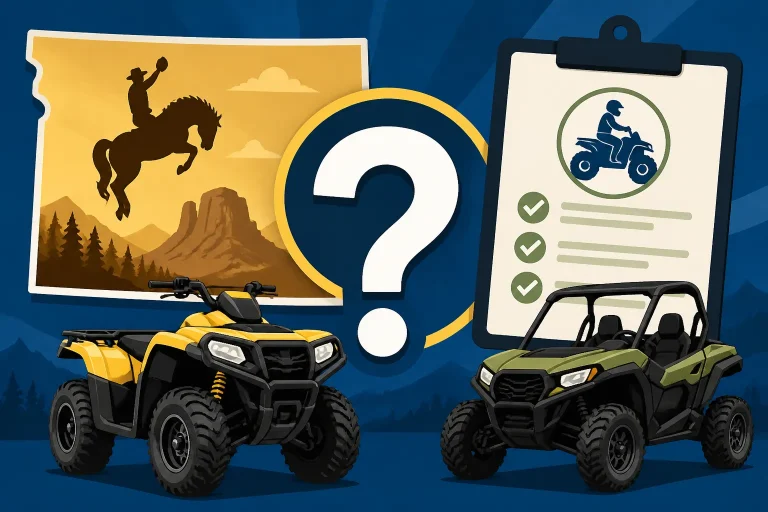
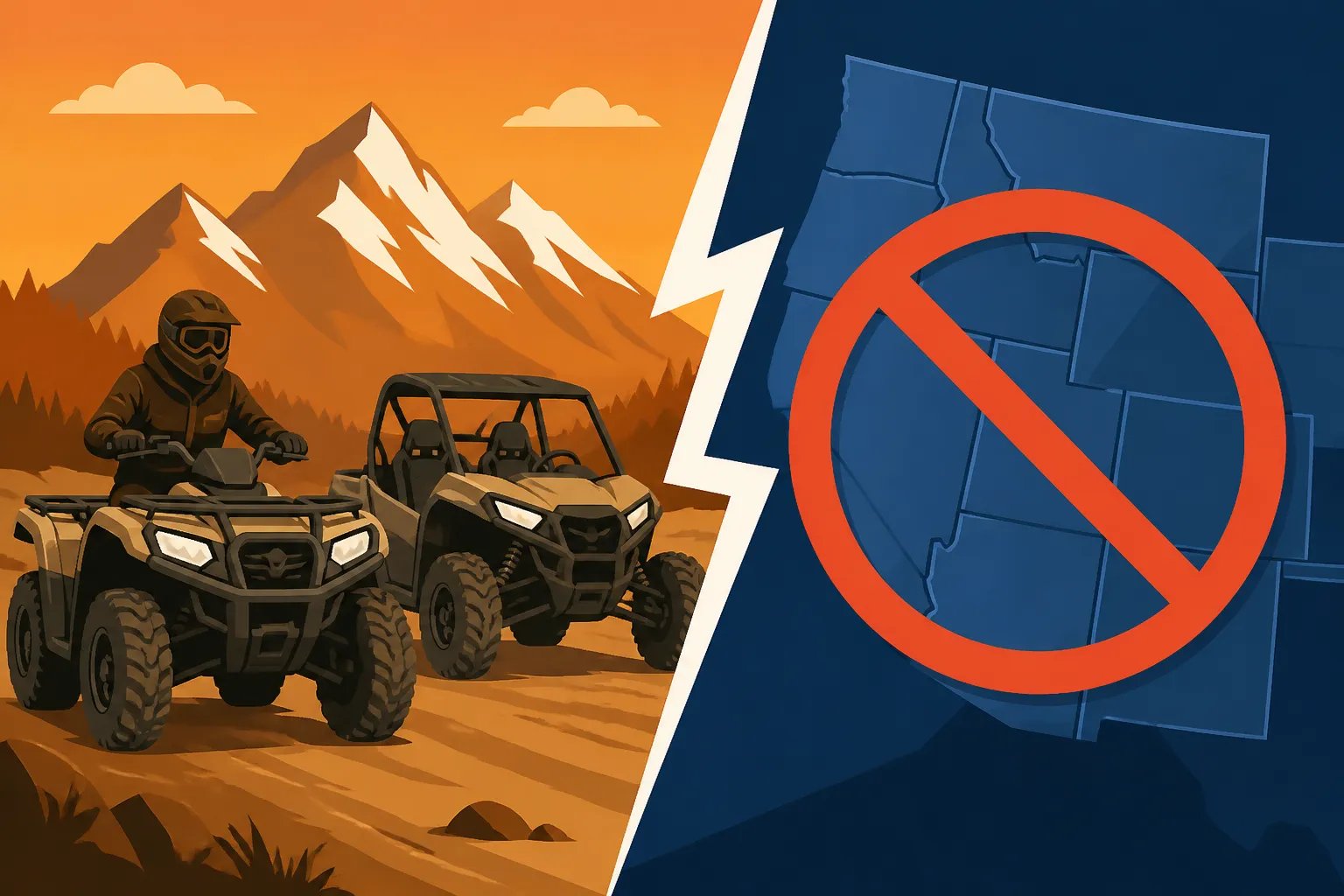
If you’re bringing an ATV or UTV into Wyoming, a registration sticker from home may look official—but it does not replace Wyoming’s off-road permit. The practical rule is simple: plan on getting the Wyoming permit when it is required for your ride. This guide explains what reciprocity does not cover, how to avoid confusing permits with registration, and what to check before unloading.
What “No Reciprocity” Means in Practice
Wyoming does not treat another state’s ATV or UTV registration, decal, or off-road permit as a substitute for its own off-road permit when a Wyoming permit is required. A machine that is properly registered at home may still need a Wyoming permit for the riding you plan to do in Wyoming.
That can feel counterintuitive if your home state’s sticker lets you ride on public land there. But permits are issued under different state programs, and one state’s paperwork does not automatically satisfy another state’s requirements. Wyoming’s position is straightforward: an out-of-state credential is not the Wyoming permit.
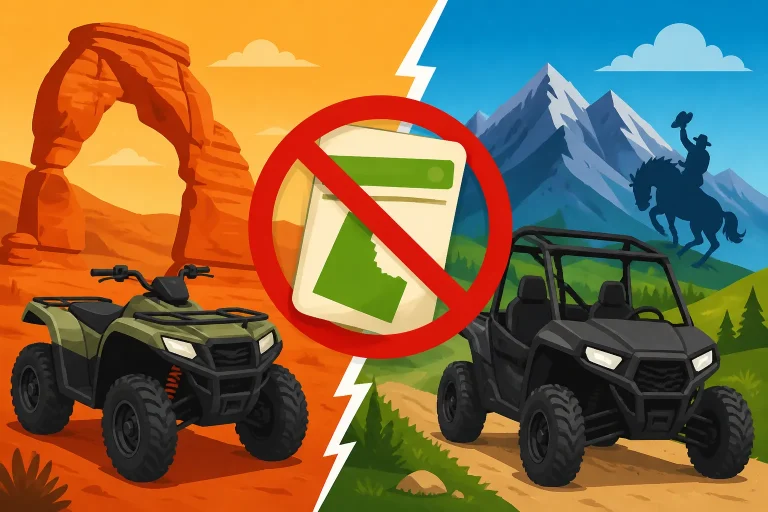
This is the point behind Wyoming ORV Reciprocity Rules. It is also why a Montana sticker, Colorado permit, Utah registration, or Idaho decal should not be treated as a pass for Wyoming riding. For state-specific examples, see Does Wyoming Honor a Montana Registration?, Does Wyoming Honor a Colorado Permit?, Does Wyoming Honor a Utah Registration?, and Does Wyoming Honor an Idaho Sticker?.
The rule is about the permit—not whether your machine is legal at home, whether you own it, or whether you have paid a fee in another state. Those facts may matter for other reasons, but they do not make the Wyoming permit requirement disappear.
The simple test
Before you ride, ask two separate questions:
- Does this machine need a Wyoming ORV permit for the place and type of riding I plan to do?
- If it does, do I have the Wyoming permit for this machine?
Do not substitute “I have a registration from home” for the second question. That is the common mistake.
The permit is tied to the machine and Wyoming’s rules, not merely to the rider’s address. A Wyoming resident can need a permit for one machine, and a visitor can need one for another. Being a resident or nonresident does not turn an out-of-state sticker into a Wyoming permit.
If you are visiting, start with Wyoming ORV Permit for a Visiting Rider. If you have already decided to ride in Wyoming, [Buying a Wyoming Permit as a Visitor] covers the practical purchase question. Wyoming’s program does not offer a special visitor exemption simply because your home state has its own registration system.
What no reciprocity does not mean
“No reciprocity” does not mean that every machine needs a Wyoming permit in every possible setting. The requirement depends on where and how you operate it, and other types of vehicle authorization may apply to different uses. Private land, public roads, designated off-road routes, and federal lands can each raise separate questions.
It also does not mean an out-of-state plate or registration is useless. Those documents may be relevant to ownership, transport, or road use under applicable rules. They simply do not count as the Wyoming ORV permit where that permit is required.
Keep the categories separate:
| Document or status | What it may address | What it does not do by itself |
|---|---|---|
| Out-of-state registration or decal | Registration requirements in the issuing state; sometimes road use there | Replace a Wyoming ORV permit |
| Wyoming ORV permit | Wyoming’s off-road permit requirement for covered riding | Make a closed route open or authorize road use |
| Title or bill of sale | Ownership or transfer records, depending on the situation | Serve as an ORV permit |
| Road registration or plate | Road-use requirements that apply to that vehicle and route | Automatically authorize off-road riding |
| Land manager’s route map or sign | Whether a particular route is open to a particular type of machine | Replace a required permit |
The distinction matters because riders sometimes arrive with a folder full of paperwork and assume one document covers everything. It may not. A permit is not a title, a plate is not a trail pass, and a trail pass does not grant access to land or routes that are closed.
Registration, Permit, and Access Are Different Questions
A useful way to avoid confusion is to treat paperwork, vehicle use, and route access as three separate checks. They overlap, but none automatically answers the other two.
Registration is not the same as an ORV permit
Registration generally relates to how a vehicle is recognized or authorized under a particular jurisdiction’s rules. An ORV permit is a separate authorization under Wyoming’s off-road program. A state may use different terms and issue different types of credentials, so the label on your home-state decal is not enough to establish that it satisfies Wyoming’s requirement.
For example, you may have registered your UTV in your home state, paid a recreational fee there, and displayed the required sticker. That establishes something under that state’s program. It does not, on its own, show that you have the Wyoming permit.
That remains true even if your home state’s document looks similar to Wyoming’s decal. Appearance is not the test. The issuing authority and the rules it satisfies are what matter. If the credential was issued by another state, do not assume Wyoming recognizes it as a substitute.
For a closer look at the practical issue, read Riding Wyoming With an Out-of-State Sticker and Why Your Home State Sticker Means Nothing in Wyoming.
A permit is not permission to ride everywhere
Buying the right permit answers only the permit question. It does not give you blanket access to Wyoming’s public lands, roads, or trails. A route can be closed, limited to certain vehicle types, seasonally restricted, or subject to a width limit. Some land has separate access rules, and riding on private property requires the appropriate permission.
Before a trip, confirm that the exact route is open to your type of machine. Check the current information from the relevant land manager and pay attention to signs on the ground. A permit does not override a closure or a route restriction.
This matters especially when a ride crosses more than one kind of land. A trail may begin on one managed area and continue onto another, or a road that looks public may have restrictions that are not obvious from the trailhead. Check route access as well as permit status. The article [Wyoming Rules for Riding a Designated Route] explains why being on a designated route matters.
Road use is another category
A Wyoming ORV permit is not a road license. If you intend to ride on a public road, you need to understand the road-use rules for that machine and that road. The rules may depend on whether the vehicle qualifies for the relevant road category, whether the road has been designated for that use, and what equipment or driver requirements apply.
Likewise, a plate from another state does not necessarily answer whether you may ride a particular Wyoming road. Do not treat either an ORV permit or an out-of-state plate as a universal authorization.
If your plan involves connecting trail segments by road, verify the specific road rules before the trip. The route may be open to certain machines but not others, or it may not be open to off-road vehicles at all. This is a separate check from reciprocity.
Private land and special circumstances
Riding entirely on private property with the owner’s permission is different from riding on public land. But do not assume that a private-land plan automatically resolves every paperwork issue. The applicable rule may depend on the machine, location, activity, and whether you leave the property for a public route.
For unusual situations—such as a machine used for work, a rental, a club vehicle, or a machine that crosses between public and private areas—check the specific Wyoming requirements rather than relying on a general rule of thumb. The same is true if your vehicle is road-registered or has been modified for road use. Its status for one kind of use does not necessarily settle its status for another.
What to Do Before You Ride in Wyoming
A few minutes of preparation can prevent a frustrating stop at a trailhead or a last-minute search for the right permit. Use this sequence for a visiting ATV or UTV.
- Identify the machine and the intended use. Note whether it is an ATV, UTV, dirt bike, or another type of off-road vehicle, and whether you plan to ride off-road, on public roads, or both.
- Check the permit requirement for the planned riding. Confirm the current Wyoming requirement with the relevant official program or land manager. Do not infer that your home-state registration covers it.
- Get the Wyoming permit if required. Use an authorized purchasing channel and follow the instructions for the machine. If you are unsure where to buy, see Where to Buy a Wyoming ORV Permit.
- Follow the decal instructions. Place the Wyoming decal where the program requires it and make sure it is visible and attached as directed. A receipt or photo on your phone should not be assumed to replace a required decal.
- Check route access separately. Confirm that your machine is allowed on the specific trail or road and that it is open for the dates of your trip.
- Carry useful records. Keep purchase confirmation or other relevant documents accessible, while remembering that paperwork does not replace the physical permit if the rules call for one.
A visiting rider may buy a permit before leaving home or arrange to buy one through an authorized seller. The key is not to wait until you reach a remote trailhead and discover that your home-state decal does not count. Check the available purchase methods and allow time for any delivery or processing involved. For online ordering details, see Ordering a Decal Through the State Site.
Keep proof organized, but do not mistake it for the permit
A clear photo of the purchase confirmation can help you keep track of the transaction. A small waterproof document pouch can also protect receipts and trip notes from dust, rain, and mud. If you need a basic pouch, Amazon is one place to look; the specific brand or style is not important.
A pouch is useful for records, not as a substitute for the decal. Keep the permit attached to the machine as instructed. If you store a backup image on your phone, make sure you can access it without a signal; remote riding areas may have limited service. A phone mount from Amazon may make navigation easier, but do not let a screen distract you while riding or replace an official map and route check.
For riders who prefer paper, a folded map or printed route information can be kept with the receipt. Amazon sells waterproof map sleeves, but any suitable way to protect your route notes will do. The important preparation is knowing which routes are open and carrying information you can actually use—not buying a particular accessory.
Confirm details close to the trip
Rules, purchase channels, route access, and seasonal closures can change. Check the official Wyoming permit information and the land manager’s current route information before you travel. If your plans change from an off-road trail ride to road use, revisit the road rules too. One permit decision should not be treated as a blanket answer for a different kind of ride.
Common Reciprocity Mistakes to Avoid
Most problems come from applying a rule from home to a different state or assuming that one document solves several different issues. These are the mistakes worth catching before you leave.
“My state already charged me a fee”
A fee paid to another state does not establish that Wyoming has received its required permit fee or that Wyoming has accepted that state’s credential. States run different programs, and there is no automatic exchange just because both programs involve off-road riding.
If you are comparing fees, compare the requirement—not just the amount or name printed on a sticker. The relevant question is whether Wyoming recognizes that specific credential as its own required permit. For visitors, the practical answer is not to count on recognition.
“The machine is registered for the road”
Road registration and an ORV permit address different uses. A road-registered machine may still need the Wyoming ORV permit for covered off-road riding. Conversely, an ORV permit does not establish that the machine meets road requirements.
If your itinerary includes both trail riding and road segments, check both sets of rules. Do not assume that your registration makes the permit unnecessary, or that the permit makes road use legal.
“I’m only visiting for a weekend”
A short visit is not, by itself, a reciprocity exemption. If the permit is required for the riding you plan to do, the length of your stay does not turn another state’s decal into the Wyoming permit.
That is why it is better to check before packing the trailer. The time spent arranging the correct permit is usually less troublesome than reaching the riding area and discovering that your paperwork is not the one Wyoming requires.
“The sticker looks like the Wyoming decal”
Similar colors, shapes, or placement do not make two decals interchangeable. A sticker issued by a different state remains an out-of-state credential, even if it appears comparable.
Follow Wyoming’s purchase and placement instructions for the Wyoming decal. If you are uncertain whether a decal is valid or belongs to the machine, ask the issuing program or an authorized seller rather than relying on a visual guess.
“The seller said the machine was ready to ride”
A previous owner or dealer may have left a decal on the machine, but that does not automatically establish that it is current, valid for the machine, or sufficient for your plans. Verify what the decal is, whether it is still valid, and whether it meets the requirements for your trip.
When buying a used machine, ask for documents and inspect the machine carefully, but do not treat a seller’s assurance as a substitute for checking Wyoming’s current rules. A previous owner’s registration may not transfer to you, and an out-of-state credential still does not substitute for Wyoming’s permit.
A Quick Pre-Trip Check for Visitors
Before you load the machine, use this short checklist:
- Permit: Have you confirmed whether a Wyoming ORV permit is required for the riding you plan to do?
- Correct credential: If required, have you obtained the Wyoming permit rather than relying on an out-of-state sticker?
- Machine: Does the permit correspond to the machine you will ride?
- Decal: Is it attached and visible as instructed?
- Route: Is each planned road or trail open to your type of vehicle?
- Dates: Have you checked for seasonal or temporary closures?
- Other rules: If you will ride on a road, have you checked the applicable road-use requirements separately?
- Records: Can you access your purchase confirmation and trip information if needed?
If you have already purchased a Wyoming permit but cannot find the decal or are unsure how to replace it, use the official replacement process rather than riding on the assumption that the receipt will be enough. See Wyoming ORV Permit Replacement for that separate situation.
For visitors, the safest working rule is plain: an out-of-state registration or permit does not count as the Wyoming ORV permit when Wyoming requires one. Confirm the requirement for your route, get the Wyoming credential if needed, and treat access and road-use rules as separate checks. That approach keeps a home-state sticker from becoming an unpleasant surprise at the trailhead.
Disclaimer
This article is for general informational purposes only and does not constitute professional advice. Laws, prices and regulations vary by location and change over time. Consult a qualified professional for guidance on your specific situation.