Wyoming Rules for Campfires at a Trailhead
A campfire can seem like a natural end to a Wyoming trail ride, but a fire ring at a trailhead is not permission to light a fire. Rules depend on the land manager, the site, and current fire restrictions. Here’s how to check whether a fire is allowed, reduce wildfire risk, and avoid confusing an ATV permit with permission to burn.
Start With the Site Rules and Current Restrictions
There is no single answer that applies to every Wyoming trailhead. A trailhead may be on federal, state, county, or private land, and each land manager can set rules for fires at that location. Restrictions can also change with weather and wildfire conditions.
Before lighting a fire, check two things: the rules for the specific site and any current fire restriction or closure that covers it. A general sign at a parking area may not tell you whether a temporary order has since been issued. Conversely, an absence of a fire-ban sign does not necessarily mean fires are permitted.
Start by identifying who manages the land and the exact area where you plan to stop. A route may cross more than one jurisdiction, and a trailhead near a forest boundary may have different rules from the route beyond it. For a forest ride, check the relevant land manager’s current notices and map; for more on route access, see Wyoming Rules for Riding a National Forest. On BLM-administered ground, consult the local office’s current restrictions and route information, as explained in Wyoming Rules for Riding BLM Land.
Look specifically for rules covering:
- Campfires, charcoal fires, and open flames
- Whether fires are allowed only in a designated site or constructed fire ring
- Temporary restrictions, closures, or fire orders
- Whether portable cooking stoves are treated differently from campfires
- Firewood collection, transport, or use restrictions
- Requirements for putting out a fire before leaving
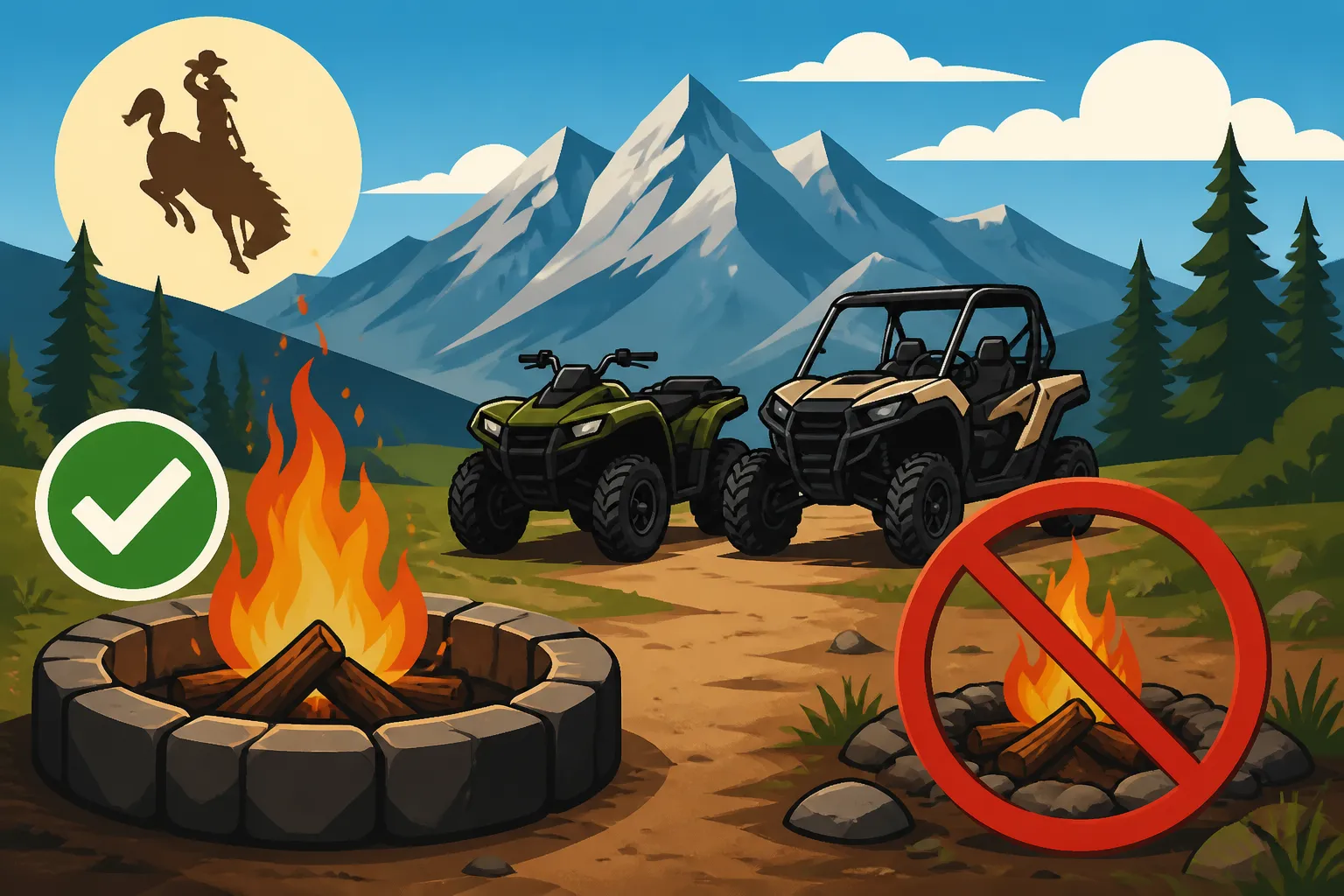
A fire ring is a useful clue about how a site is intended to be used, but it is not a guarantee that fires are allowed that day. A land manager may prohibit fires even in established rings during dry, windy conditions. Likewise, permission to use a stove does not automatically mean permission to build a wood fire.
| What you see or plan to use | What it tells you | What to check |
|---|---|---|
| A constructed fire ring | The site may be set up for fires under some conditions | Current site rules and fire restrictions |
| No posted fire-ban sign | Nothing conclusive about current permission | Current notices from the land manager |
| A portable stove | It may be treated differently from an open campfire | Whether the current order permits that stove type |
| A fire ring with ash or wood nearby | It shows past use, not necessarily current authorization | Whether fires are allowed now |
| A campfire allowed at a nearby campground | Rules at that campground may not apply to the trailhead | Rules for the exact place you plan to stop |
For a quick pre-trip check, look at the land manager’s official website or contact the local office. Read the full restriction notice, not only a headline or a social media summary. Orders can distinguish between campfires, charcoal, and stoves, and they may specify which locations or activities are affected. If wording is unclear, ask the office before you travel rather than relying on an assumption at the trailhead.
Fire restrictions are separate from trail closures. A route can remain open to riding while fires are prohibited, or a route can be closed for reasons unrelated to fire. Review current route and fire information separately. Wyoming Fire Restrictions That Close Trails explains why fire conditions can affect access as well as campfire use.
Understand What Counts as Permission
Campfire rules are not the same as an ATV or UTV permit rule. Having a valid Wyoming ORV decal does not authorize a fire, and permission to use a fire ring does not authorize riding a closed or undesignated route. Each requirement applies to a different activity.
Wyoming’s ORV permit system concerns qualifying machines used on designated public routes and areas. It does not replace land-use rules, fire restrictions, or site-specific requirements. If you are planning a ride and a cookout, check both the machine rules and the fire rules. Wyoming ORV Permits Explained covers the permit side; the land manager’s instructions determine whether a fire is allowed at your chosen stop.
A practical way to think about permission is to ask these questions in order:
- Is this the right place? Confirm that the site is open and that fires are allowed at that specific trailhead or campsite.
- Is a fire currently allowed? Check for restrictions or orders that may temporarily prohibit it.
- Is this type of fire allowed? A wood campfire, charcoal grill, and portable stove may not be covered by the same rule.
- Can the fire be safely contained and fully extinguished? If wind, dry grass, or limited water makes that doubtful, do not light it.
- Can you leave the site without leaving hot ash or embers behind? If not, choose a no-fire option.
The word “campfire” can also create confusion. A land manager’s order may define open fires, stoves, charcoal, or devices with an on-off valve in a specific way. Do not assume that a small fire, a portable fire pan, or a stove is automatically exempt. Follow the exact wording of the current order and site rules. If the order does not clearly answer your question, treat that as a reason to check before burning, not as permission by default.
A posted fire ring does not override an active restriction. Nor does seeing another rider build a fire prove it is legal. Conditions and rules can change, and another person may be mistaken. If you cannot confirm that a fire is permitted, bring food that does not require one or use a cooking method the current rules clearly allow.
Land ownership also matters. A trailhead sign may identify a managing agency, but nearby land can have a different owner or manager. Do not move a fire to a convenient-looking spot just beyond a parking area without checking whether that place is open to public use and whether fires are allowed there. A roadside pullout, a dispersed campsite, and a developed trailhead can each have different rules. More broadly, Wyoming Rules for Riding a Designated Route is useful when planning where you can ride, but route permission and fire permission still need separate checks.
Reduce Fire Risk at a Wyoming Trailhead
Even when a fire is allowed, the conditions may make one unsafe. Wind can carry embers into dry grass, brush, or nearby timber. A small flame can become difficult to control if gusts pick up or the ground around the ring is dry. Wyoming fire conditions can change quickly, so take a fresh look at the site rather than relying only on a forecast from earlier in the day.
Do not light a fire if the wind is strong or gusting, vegetation is dry around the fire area, or you cannot keep the fire contained. Also avoid fires when you lack enough water and tools to put one out completely. If a restriction is in effect, follow it even if the site looks damp or the fire seems small.
If the land manager allows a campfire, follow the site’s instructions and keep these precautions in mind:
- Use only the designated fire area, if one is provided.
- Keep flames and embers inside the approved ring or device.
- Clear away nearby dry grass, leaves, and other combustible material only if site rules allow it.
- Keep children, pets, clothing, and riding gear at a safe distance.
- Do not leave the fire unattended, even briefly.
- Keep water and a shovel or another suitable tool close enough to use immediately.
- Do not burn trash, plastic, cans, treated wood, or other material that can produce harmful smoke or leave debris.
- Put the fire out before packing up or moving on.
A fire is not out just because the visible flames have disappeared. Douse the fuel and ashes with water, stir them, and add more water as needed. Check for heat before you leave. Ash can hide hot embers, and wind can revive them after a fire appears finished. If you do not have enough water to extinguish the fire thoroughly, do not start it.
Riders should also account for the machines and gear at the site. Park well clear of the fire area, keep fuel containers away from flame and hot surfaces, and do not use a fire to dispose of oily rags or other workshop waste. Let equipment cool before handling it around combustible material. These are simple precautions, but a crowded staging area can make them easy to overlook.
Firewood is another point to check. Do not assume that wood lying near a trailhead is available to collect or burn. Local rules may restrict gathering wood, and transporting firewood can spread pests or disease. Use wood only in the manner permitted at the site, and follow any local instructions about where it can come from. If wood is not provided and gathering is prohibited or unclear, do not take it from the surrounding area.
The safest choice is to skip the fire when conditions are questionable. A packed meal, cold food, or an approved stove can still make a trail stop comfortable without adding wildfire risk. Check current local rules for the stove you plan to use; “no campfires” does not always mean every cooking device is allowed.
For a broader look at how changing fire conditions affect riding plans, see Wyoming Rules for Riding During Fire Season and Wyoming Fire Restrictions That Close Trails. Those issues may overlap, but neither a ride’s permit nor an open route should be read as permission to burn.
A Simple Pre-Ride and Pack-Up Checklist
A short routine can prevent the most common mistake: arriving at a trailhead with firewood and plans, but no reliable answer about whether a fire is allowed.
Before leaving home:
- Choose the exact trailhead or camp spot. Do not rely on a general area name if the ride passes through several land jurisdictions.
- Identify the land manager. Check the official information for the site and the route.
- Review current fire rules. Look for restrictions, closures, and the specific wording about campfires and stoves.
- Check for updates close to departure. Fire conditions and orders can change after you first plan the trip.
- Pack a no-fire meal. Treat it as a backup even if you expect a fire will be allowed.
- Bring the right extinguishing supplies if fires are permitted. Do not count on a water source at a remote trailhead.
At the trailhead, check signs and conditions again. If signs conflict with what you found online, follow the more restrictive instruction and contact the manager if possible. If the site is closed, the fire area is not designated, or the restriction is unclear, do not improvise a new fire location. A fire pan or portable ring may not be an acceptable substitute unless the rules say it is.
Before driving away, make sure every ember and piece of fuel is fully extinguished and cold. Leave the fire area clean, pack out trash, and do not leave partially burned wood or ash where it can blow into surrounding vegetation. If you discover that another person has left a smoldering fire, do not assume it is safe; extinguish it only if you can do so safely and completely, and notify the land manager when appropriate.
The same careful approach applies to the ride itself. Confirm that the route is open and stay on designated routes; campfire permission does not change riding boundaries. Wyoming Rules for Riding a National Forest and Wyoming Rules for Riding BLM Land can help with the riding side of the plan, while current site information answers the fire question.
When the answer is uncertain, the dependable choice is not to light a fire. Rules at Wyoming trailheads vary by place and conditions, and an existing ring, a past visit, or another rider’s behavior is not a substitute for current permission.
Disclaimer
This article is for general informational purposes only and does not constitute professional advice. Laws, prices and regulations vary by location and change over time. Consult a qualified professional for guidance on your specific situation.