Wyoming Rules for Riding During Fire Season
Wyoming’s fire-season rules can change by county, land manager, and even individual trail area. A route that was open yesterday may be closed today, and a valid ATV or UTV permit does not override a fire restriction. Check the rules for the exact place and date of your ride, then make a backup plan before you unload.
What Fire Season Changes for ATV and UTV Riders
Wyoming does not have one fire-season rule that applies uniformly to every trail and public land area. Restrictions may be issued by different agencies, and their timing and terms depend on local conditions. A county order, for example, may not cover federal land within the same area. Conversely, a land manager may close a specific road or trail while nearby routes remain open.
Restrictions can also be staged. The limits in effect may change as fire danger rises or falls. One stage might limit certain activities; a stricter stage may prohibit more uses or close routes. The restriction’s text, location, and effective dates matter more than a general assumption that the whole region is open or closed. See Wyoming Stage Restrictions in a Dry Summer for more on how staged limits can affect a ride.
Fire-season notices may address more than campfires. Depending on the order, they can cover smoking, equipment use, vehicle travel, or other activities that could start a fire. Do not assume that a rule applies only to people building a fire at a campsite. Read the actual order and follow any listed exceptions rather than relying on an old post, a trail-app comment, or what another rider says was allowed earlier in the season.
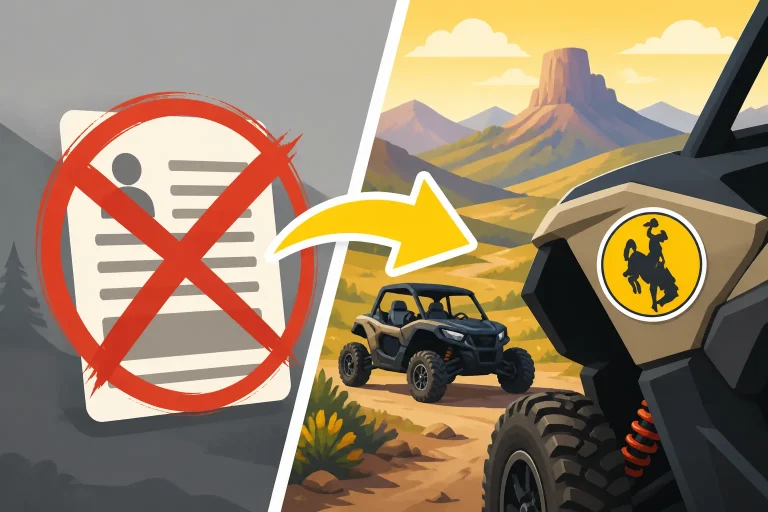
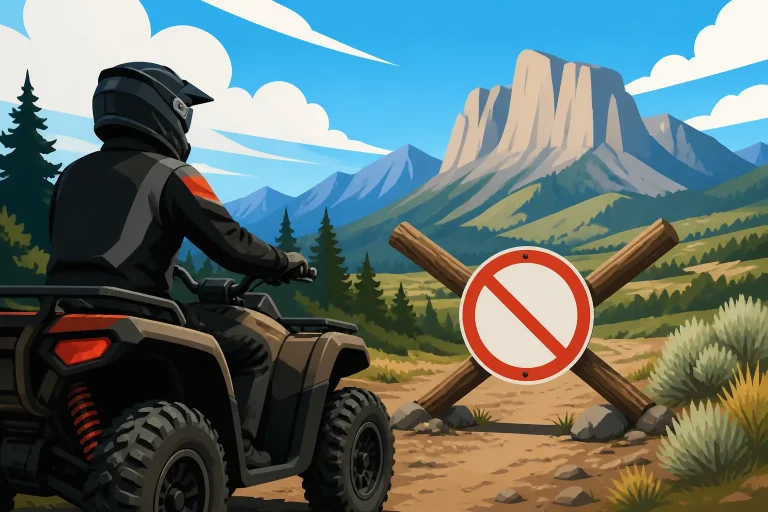
A restriction can also lead to a route closure. The land manager may close a road, trail, recreation area, or access point because of fire danger, nearby fire activity, or the need to protect crews and the public. A valid permit does not grant permission to ride through a closure. The same applies to routes shown on a map: a map can help you plan, but it may not reflect a new order issued after it was published. For closure-specific planning, see Wyoming Fire Restrictions That Close Trails.
| What you find | What it means for your ride |
|---|---|
| A permit or decal for your machine | It may meet a permit requirement, but it does not authorize riding on a closed route or override a fire order. |
| A route on a printed or digital map | Confirm that the route is currently open and that your machine is allowed there. |
| A stage restriction notice | Read the full terms, including the area covered, activities limited, and dates in effect. |
| Smoke or an active fire near your route | Recheck official notices and avoid entering an area where access is restricted or conditions are unsafe. |
| A posted closure at the trailhead | Do not ride past it, even if an online map or an earlier notice shows the route as open. |
A fire-related closure does not always affect every route in a nearby recreation area. But it is not safe to infer that an unmentioned route remains open. Check with the agency or land manager responsible for that route before riding, especially if the notice describes a broad closure area or if signs at the access point differ from your map.
Check Restrictions Before You Ride
A useful pre-ride check has two parts: confirm that your planned routes are open, and confirm which fire restrictions apply to the land you will enter. Your trip may cross county, state, federal, or private land, and each section can have different rules. Do not assume that a single county page covers the whole route.
Start with the land manager’s current notices and maps for the riding area. If the route crosses more than one jurisdiction, check each relevant authority. A National Forest route and a Bureau of Land Management route, for example, may be managed under different notices. The details of Wyoming Rules for Riding a National Forest and Wyoming Rules for Riding BLM Land can help you understand why it matters to identify who manages the land.
Then check the specific fire restriction order, not just a general fire-danger rating. A danger rating is useful context, but it may not tell you what activities are prohibited or whether your route is closed. Look for:
- The geographic area covered, including boundaries or named recreation sites.
- The date the order takes effect and any end date or revision.
- Activities that are prohibited, limited, or allowed only under conditions.
- Any road, trail, or area closures.
- Exceptions and instructions for permitted activities.
- The agency or office to contact if the route or boundary is unclear.
Repeat the check close to departure. Conditions and restrictions can change quickly, so a notice checked days earlier may no longer be current. Recheck during a multi-day ride, especially before moving into a different drainage, forest, district, or county. If an official notice is unclear, contact the responsible land office or choose a route whose status you can confirm.
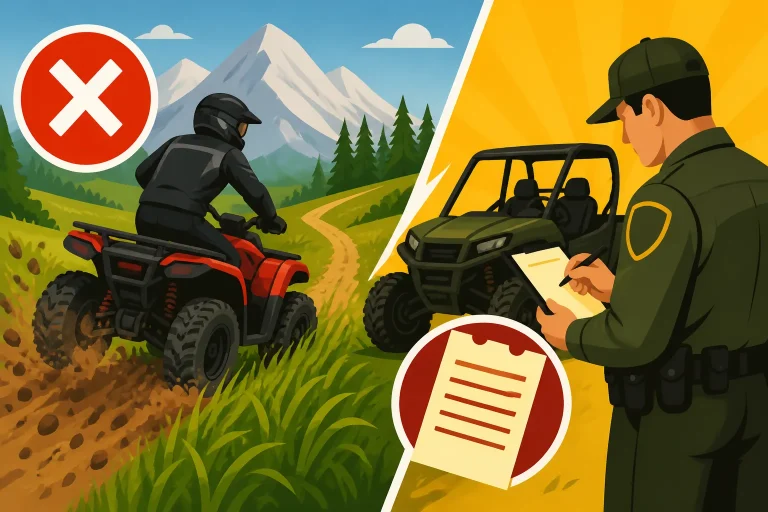
At the trailhead, read the posted signs before unloading or starting the ride. Signs may announce a closure or restriction that was issued after you planned the trip. If a sign says the route is closed, do not treat your map, permit, or previous trip as permission to continue. If a sign and an online notice appear to conflict, pause and ask the land manager for clarification instead of guessing. When a Map and a Sign Disagree covers this kind of route-status problem.
Plan a backup route that stays within land you are allowed to use and that is not subject to the same closure. A detour is not automatically legal just because it avoids a closed trail. Confirm that the alternate road or trail is open to your machine and that your permit and other requirements are satisfied there.
Permits, Equipment, and Fire-Related Limits
Fire restrictions and riding permits address different things. A permit or decal may be required for riding on a particular public route system, but it is not a fire-season authorization and does not cancel a temporary closure. Visitors should check Wyoming’s permit requirements separately from the rules set by the land manager. Wyoming Rules for Riding a Designated Route explains why route access depends on more than having a permit.
Equipment rules still matter during fire season. Public-land riding may require a spark arrester that meets the applicable standard. Confirm that your machine has the required equipment and that it is in working condition before you leave. A damaged, missing, or clogged arrester can cause a compliance problem and may also affect how the machine operates. See Wyoming Spark Arrester Requirement and A Forest Service Rated Arrester in Wyoming for more detail about arrester requirements.
A spark arrester is not a pass to ride anywhere or to ignore other fire restrictions. Follow the order and the land manager’s instructions even when your machine is properly equipped. The same principle applies to mufflers and sound rules: meeting one equipment requirement does not exempt a rider from other restrictions. Check Wyoming Spark Arrester and Sound Rules if you need to review both topics.
Campfire rules deserve particular attention if your trip includes a campsite or trailhead stop. A fire that is allowed in one place, or under one set of conditions, may be prohibited elsewhere or during a later stage. Do not rely on a fire ring as proof that a campfire is currently permitted. Check the current order and any site-specific instructions before lighting anything. For related guidance, see [Wyoming Rules for Campfires at a Trailhead].
If the restrictions prohibit an activity you planned, change the plan rather than looking for an informal workaround. For example, do not use an undeveloped spot or an unmarked pullout simply because a designated site is restricted. Restrictions apply according to their terms, not according to whether a site looks suitable or is already being used by other visitors.
A Practical Fire-Season Ride Plan
A little preparation can keep a day ride from turning into a last-minute search for an open route. Before leaving home, write down your planned access point, route, alternate route, and the agencies responsible for the land. Save current notices or maps for offline use if you expect limited cell service, but verify that your saved information is still current before riding. An offline map is a navigation aid, not a live closure update.
Use this checklist before you unload:
- Confirm that the trailhead and route are open for your planned date.
- Check the current fire restrictions for every jurisdiction you will enter.
- Read the full terms, including any activity limits, exceptions, and closure boundaries.
- Verify permit requirements and route eligibility separately.
- Inspect your machine’s spark arrester and other required equipment.
- Identify a legal alternate route in case conditions or access change.
- Tell someone where you plan to ride and when you expect to return.
Keep the ride flexible. If smoke thickens, a notice changes, or crews are working nearby, stop and reassess rather than pressing farther into an area. Follow directions from authorized personnel and do not obstruct fire crews or emergency access. A route that appears passable is not necessarily safe or open.
Avoid riding around a closure sign or across unmarked ground to get back to a planned route. Going off the authorized route can create new safety and land-management problems, and a closed segment may be restricted for reasons that are not visible from the trailhead. If you are unsure whether a route is open, turn around and contact the responsible office when you have a reliable connection.
After the ride, check your machine and gear for hot or damaged parts before transporting or storing them. Follow any instructions that apply to your vehicle and campsite, and do not leave burning materials or hot debris behind. Good practices do not replace the written rules, but they help reduce avoidable risks during dry conditions.
The safest approach is straightforward: confirm the route, read the current restriction, and treat any posted closure as controlling until the responsible land manager clarifies otherwise. Wyoming’s fire-season rules can vary from one place to the next, so checking again on the day of the ride is part of trip planning, not an optional extra.
Disclaimer
This article is for general informational purposes only and does not constitute professional advice. Laws, prices and regulations vary by location and change over time. Consult a qualified professional for guidance on your specific situation.