Wyoming Rules for Packing Out an Elk
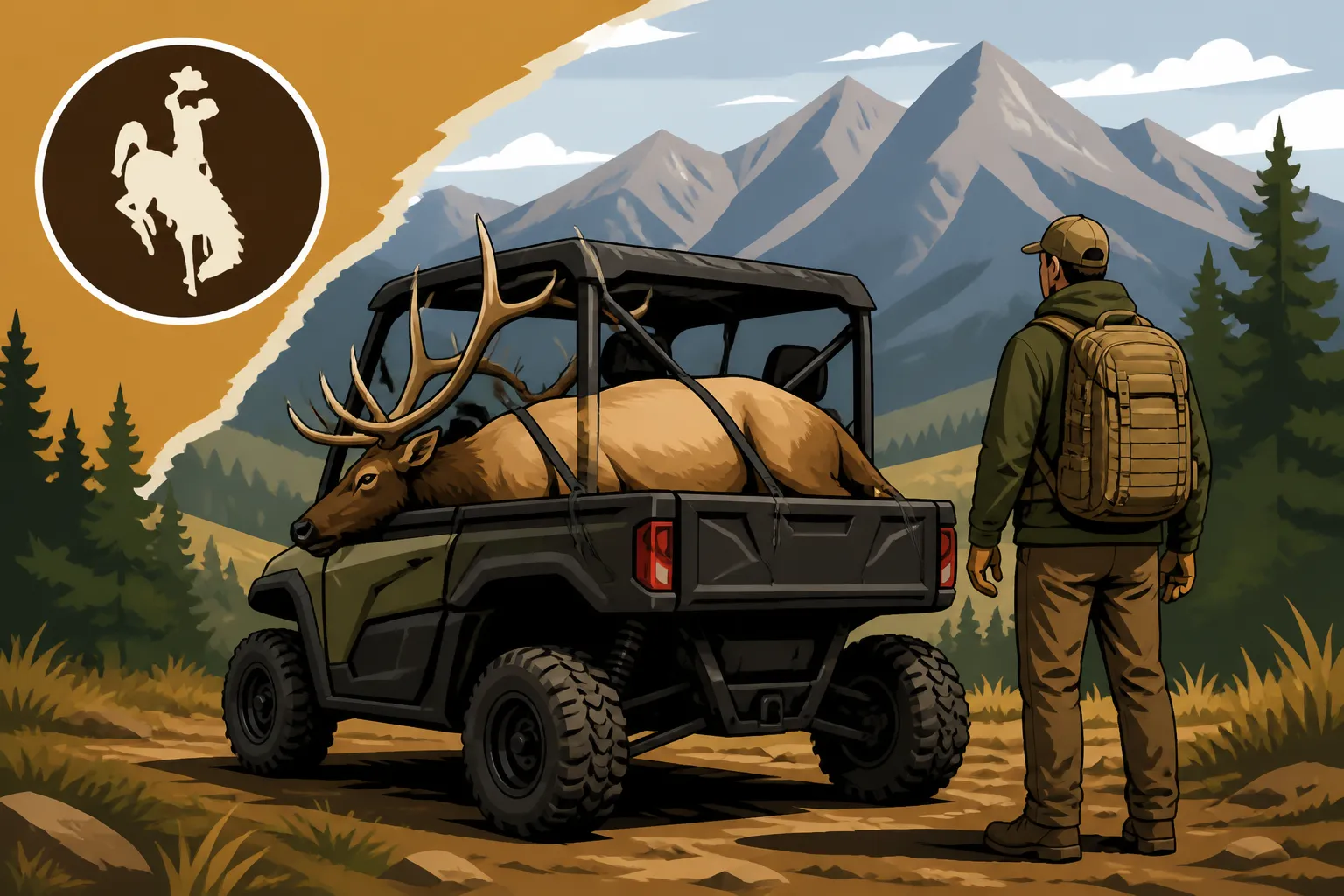
After a successful hunt, an ATV or UTV can make hauling elk meat easier—but it does not give you permission to drive anywhere the animal falls. Wyoming hunters need to keep hunting rules, land access, route designations, and vehicle permits straight. The safest plan is to confirm where your machine may travel before the hunt, then retrieve the elk without leaving an open route.
Separate elk retrieval from hunting with a machine
Using an ATV or UTV to carry out an elk is different from using it to pursue, locate, or shoot one. A machine can help transport an animal, but its presence does not make otherwise prohibited hunting activity lawful. Keep the machine parked while hunting unless the specific activity and location are allowed under current regulations.
Before the season, read the Wyoming Game and Fish Department’s regulations for the elk hunt area and license type you plan to use. Check rules for motor-vehicle use, retrieval, carcass transport, and any special restrictions in the area. Regulations can vary by hunt area and can change, so do not rely on a rule of thumb from another season or location.
A useful starting point is Wyoming Rules for Hunting From a Machine. For the retrieval stage, also review Wyoming Rules for Retrieving Game. These are separate questions: what you may do while hunting, and how you may move a harvested animal afterward.
| Question | What to confirm before the hunt |
|---|---|
| May you use a machine for this hunting activity? | Check the current hunting regulations and any area-specific restrictions. |
| May you drive to the elk’s location? | Confirm that the route is open to your machine and that off-route travel is not allowed. |
| Does the machine need a Wyoming permit? | Check the requirements for the land and route you will use; an out-of-state sticker may not substitute. |
| Can the carcass be transported as planned? | Check carcass and evidence-of-sex requirements for your license and hunt area. |
| Do you have permission to cross the land? | Confirm access with the land manager or private landowner before entering. |
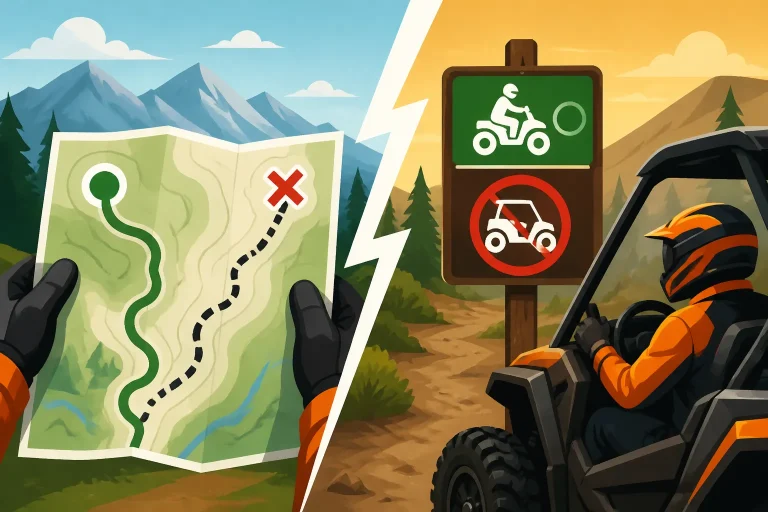
Do not assume that an ATV is permitted simply because it is smaller than a truck, or that a UTV is permitted because it fits on a road. The controlling details may include who manages the land, whether the route is designated for motorized use, the machine’s width, and seasonal closures. A route that appears on a map is not automatically open to every type of vehicle.
Plan a legal route to the elk
The most important retrieval decision may happen before you take a shot: know where the elk is likely to fall and what routes, if any, reach it legally. In rough country, an animal can end up beyond the last open road or trail. If that happens, the shortest line on the map may cross terrain where motorized travel is prohibited.
Use the current travel-management map for the specific area, and check for temporary closures before riding. National forests, Bureau of Land Management areas, state lands, and private parcels can have different access rules. A road may be open to highway vehicles but closed to ATVs, or a trail may have a width restriction that excludes a wider side-by-side. For general land-use context, see Wyoming Rules for Riding a National Forest and Wyoming Rules for Riding BLM Land.
Keep these distinctions clear:
- A route is not open just because it exists. Confirm its current designation and whether your type of machine is allowed.
- A permit is not route permission. A decal or registration does not authorize travel on a closed road, across private property, or off a designated route.
- A hunting license is not motorized access. Permission to hunt an area does not necessarily include permission to drive through it.
- An open route can still have limits. Seasonal, wildlife, fire, or other temporary restrictions may apply.
- A map and a sign can tell different stories. If a posted closure conflicts with your plan, stop and verify the route status with the land manager rather than riding through.
Private land access needs its own check. Ask the landowner before crossing or retrieving an elk on private property; do not treat a fence, gate, two-track, or section line as proof that the route is public. Close gates as directed, avoid livestock, and stay on the route you were authorized to use. Wyoming Rules for Crossing Private Ground and Wyoming Landowner Permission Rules cover the access side of that decision.
State trust land is also not the same as ordinary public recreation land. It may require a separate recreational-use permit, and access terms can differ from those on nearby federal land. Confirm the rules for the particular parcel before planning to use it as a shortcut or retrieval route. See Riding Wyoming Trust Land With a Permit for more on that distinction.
Check the permit and machine rules
A Wyoming ORV permit and a land manager’s route rules address different things. The permit is one requirement to check when operating an off-road machine in Wyoming; it does not replace route authorization, landowner permission, or hunting regulations. Wyoming does not generally treat another state’s sticker as a substitute for its own permit, so visitors should verify the requirement before traveling. Wyoming ORV Reciprocity Rules explains why an out-of-state registration or permit may not be enough.
The exact requirement depends on where and how the machine will be used. Check whether a Wyoming decal is required for your route and land type, and buy it through an authorized channel before you ride if required. You can review Wyoming ORV Permits Explained and Wyoming ORV Permit for a Hunting Machine for permit details. Current requirements and purchase options should be confirmed through official Wyoming sources.
Also verify that the machine can legally use the intended route. A narrow trail may exclude a wide UTV, while a route open to some motor vehicles may not be open to off-road machines. When the route is subject to a width limit, measure the machine as the land manager specifies rather than relying on its advertised width. For help identifying applicable restrictions, see Wyoming Width Limits on an Enrolled Trail.
A straightforward pre-hunt check looks like this:
- Identify the hunt area and the land manager for each part of your intended route.
- Find the current travel-management map and check that each segment is open to your machine.
- Confirm any width, seasonal, wildlife, or temporary restrictions with the relevant land manager.
- Check Wyoming permit requirements and obtain any required decal before riding.
- Ask for permission where the route crosses private land, and check any separate trust-land requirements.
- Make a backup plan for an elk that falls beyond legal motorized access.
That last step matters. If an elk falls off-route, it does not create permission to drive cross-country to reach it. You may need to carry the meat to the machine by hand, use another lawful method, or arrange help that complies with access rules. Do not widen a trail, cut through vegetation, bypass a gate, or ride around a closure because the animal is heavy or the distance is inconvenient.
Recover and transport the elk without creating a second problem
Once the elk is down, prioritize safe handling and lawful access. Field-dress and cool the meat promptly, and follow the current regulations for transporting the carcass or its parts. Requirements can include retaining particular evidence of sex or following specific tagging and reporting procedures. Check the rules that apply to your hunt before removing or dividing the carcass; do not assume that a method accepted in another area applies to your license.
Plan loads around the machine’s capacity and stability, not just the amount of cargo space available. Elk quarters and equipment can shift a center of gravity, affect steering, and make braking less predictable. Follow the manufacturer’s load limits, secure the meat so it cannot slide or fall, and avoid stacking a load where it blocks the driver’s view, lights, controls, or access to emergency equipment. A heavy load also increases the risk of a rollover on side slopes, soft ground, or uneven trails.
A safer retrieval often means more than one trip. Keep the machine on the route, carry a manageable load, and avoid rushing down steep or loose sections. If conditions are poor or the terrain makes the machine unstable, stop and choose a safer transport method. A winch or trailer is not a shortcut around land restrictions; use equipment only where it can be operated lawfully and safely.
Be careful around gates, cattle, and other hunters. Slow down when approaching people or livestock, yield appropriately, and leave gates as you found them unless the landowner or sign directs otherwise. Avoid blocking a road or trail while loading. If the route is busy, move the machine and carcass to a safe, lawful place before organizing the load.
Common mistakes include:
- Assuming the hunting license grants vehicle access. It does not necessarily authorize motorized travel.
- Riding off the route to save time. A harvested elk does not make cross-country travel legal.
- Treating a Wyoming decal as permission to ride anywhere. The route still needs to be open to your machine.
- Relying on an out-of-state sticker. Check Wyoming’s own permit rules rather than assuming reciprocity.
- Skipping carcass-transport checks. Preserve required information and follow the rules for your hunt area.
- Overloading or carrying an unstable load. A machine that handled well empty may be difficult to control with elk quarters aboard.
- Ignoring a closure because the map looks outdated. Verify the status with the land manager before riding past a sign or barrier.
If you are unsure whether a route is open, contact the responsible land manager before the hunt. If you are unsure about carcass handling or hunting restrictions, check the current Wyoming Game and Fish Department regulations for your hunt. A little route planning can prevent a difficult recovery from becoming a citation, an unsafe ride, or an access problem for other hunters.
Disclaimer
This article is for general informational purposes only and does not constitute professional advice. Laws, prices and regulations vary by location and change over time. Consult a qualified professional for guidance on your specific situation.