What a Wyoming Rally Organizer Needs
Planning an ATV or UTV rally in Wyoming takes more than choosing a scenic route and gathering riders. Routes may cross land managed by different agencies, and an event can require approvals beyond each machine’s state permit. This checklist helps organizers sort out access, permits, rider requirements, safety, and event logistics before advertising a route or accepting registrations.
Confirm the route and get permission
Start with the route, not the sign-up page. A line on a map, a two-track that looks public, or a route used by local riders does not prove that your group may use it. You need to know which land manager controls each segment and whether that segment is open to the machines and dates you have in mind.
Map every segment and land manager
A rally route might use county roads, federal land, state land, or private property. Different sections can have different rules, closures, and permit requirements. Create a route inventory that records, for each segment:
- The road or trail name and its start and end points
- The landowner or managing agency
- Whether the route is open to the machines in your group
- Seasonal, wildlife, fire, or weather-related restrictions
- Any width, sound, spark-arrester, or other equipment rules
- The contact who confirmed access and the date of confirmation
Use current travel-management maps and agency information, then check whether signs on the ground change what the map appears to allow. A route being shown on a map does not automatically mean it is open to every type of off-highway vehicle. For help interpreting maps and route status, see Which Travel Map You Must Carry in Wyoming and When a Map and a Sign Disagree.
Avoid advertising a route until you have confirmed that the entire itinerary is usable. If one segment is uncertain, plan a lawful alternative and decide how you will reroute the group if a closure appears during the event. Do not assume that riders can simply leave the designated route to get around a locked gate, muddy section, or closure.
Ask about event approval early
Contact each relevant land manager with a clear description of what you are proposing. Explain the dates, route, expected number of machines and participants, whether the ride is open to the public, whether you will charge a fee, and whether you will have guides, support vehicles, vendors, or organized stops. Ask what authorization is needed and whether the proposed route can accommodate your event.
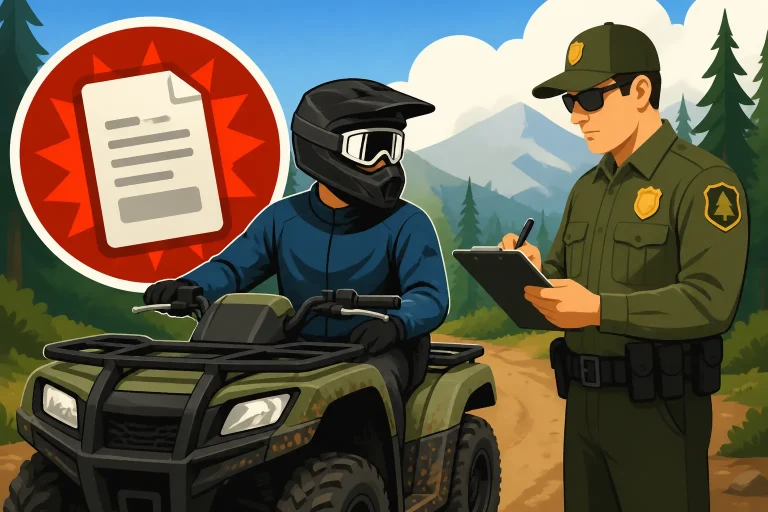
An agency may distinguish between a small informal group ride and a planned event, but the factors and approval process can vary. Do not rely on a general assumption about group size or event type. Ask the agency directly whether a permit or other written authorization is required for your particular plan. Wyoming Rules for an Organized Ride offers related context, and A Federal Permit for a Wyoming Event explains why federal-land events may need a separate review.
If your route crosses land managed by more than one agency, one agency’s approval may not cover the others. Likewise, permission to use a route is not necessarily permission to stage vehicles, set up a registration area, place signs, bring vendors, or hold a gathering at a trailhead. Put each permission in writing and confirm its limits.
Private land needs the owner’s permission. Do not treat a route as open because it is a section line, crosses a grazing area, or appears in an online map. Ask about gates, livestock, timing, parking, and any conditions for crossing. For more on access and landowner consent, see Wyoming Rules for Crossing Private Ground.
Sort out machine permits and participant requirements
An event organizer should explain the permit rules before riders arrive, but each participant is responsible for bringing a machine that is properly permitted and equipped. A rally registration form or event wristband does not replace a state permit, road registration, landowner permission, or agency authorization.
Make clear that Wyoming permits are separate
Wyoming’s off-road vehicle permit is distinct from a plate, title, out-of-state registration, or event entry. A sticker from another state should not be presented as a substitute for Wyoming’s permit. Visitors need to check Wyoming’s own requirements, even if their machine is registered or permitted at home. See Wyoming ORV Reciprocity Rules and Riding Wyoming With an Out-of-State Sticker for the reciprocity issue.
Tell participants to confirm that their machine needs the Wyoming permit for the locations on your itinerary, obtain it through an authorized channel, and display it as required. If you include a permit link in your event materials, use an official source and remind riders to check current instructions. Permit details, purchase channels, and fees can change, so avoid printing outdated amounts or promises in a flyer.
An event organizer should not assume that one permit covers a group, club, household, or fleet. Ask riders to check the requirement for each machine they intend to operate. This is particularly important when a participant brings a borrowed machine, rents a vehicle, or switches machines during the rally. The permit is associated with the machine and applicable rules, not simply with the person who paid the event fee. For placement guidance, see Wyoming ORV Decal Placement.
A Wyoming off-road permit also does not make an ordinary trail legal to drive on the road. If the route uses a road, confirm that the road is open to that machine and that the vehicle and rider meet any requirements for that specific use. A road-legal plate or an off-road decal does not grant permission to ride on a closed or undesignated segment.
Give participants a practical pre-ride checklist
Send participants the requirements well before the event. A concise checklist helps reduce delays at the staging area and makes clear that riders need to do their own preparation.
Ask each rider to confirm:
- Their machine has the required Wyoming permit for the planned route
- The decal is attached and visible as instructed
- They have checked any separate title, plate, or road-use requirements that apply to their machine
- The machine meets the route’s size and equipment restrictions
- Its muffler and spark arrester meet applicable public-land requirements
- They have a current route map and understand where the group may and may not ride
- They have the required license, insurance, or other documents for any road sections
- They know the event’s helmet, passenger, age, and supervision policies
Do not guarantee that a participant’s home-state sticker, club membership, or event payment satisfies Wyoming’s rules. Refer questions about a particular machine or rider to the appropriate agency or qualified professional. If you are organizing a ride for nonresidents, make the no-reciprocity point especially clear; Does Wyoming Honor a Colorado Permit? is one example of the issue visitors often need to resolve.
Build a safety and operating plan
A route can be legally open and still be a poor choice for a large group. Wyoming conditions can change with elevation, weather, fire activity, road work, and seasonal closures. Your plan should cover both the expected ride and what the group will do when conditions change.
Plan for different machines and rider abilities
Before setting the route, identify the narrowest trails, steepest sections, difficult crossings, and places where a machine cannot safely turn around. Confirm width limits and other restrictions for every segment, rather than assuming that all routes accommodate wide side-by-sides. If the group includes several machine types, design the ride around the limits of the most restricted route or split the event into suitable groups.
Be realistic about rider experience. A route suitable for a confident local rider may not be appropriate for a first-time visitor, a young rider, or a long line of machines. Use a clear description of the route’s terrain and duration, and identify whether riders need to be comfortable with sand, mud, loose rock, steep grades, or exposed areas. Do not market an advanced route as beginner-friendly just to increase registration.
Set expectations for safe spacing, passing, regrouping, and following the lead rider. Tell participants to remain on designated routes, obey posted closures, and avoid pressuring slower riders. A short safety briefing before departure is useful, but it cannot replace the organizer’s responsibility to choose a route that matches the group.
Prepare for communication, breakdowns, and changing conditions
Cell service can be unreliable in remote areas. Decide how the group will communicate, who is carrying a first-aid kit, and how riders should respond if they become separated. Identify the nearest practical access points for emergency services and make sure support staff know the route. For a remote ride, consider appropriate satellite communication equipment and a check-in plan.
Plan for mechanical problems without turning a breakdown into an unsafe recovery. Decide in advance who can provide basic help, where a disabled machine can wait, and how the rest of the group will proceed. Participants should carry suitable water, clothing, food, and basic repair supplies for the route and conditions. Tell riders to start with enough fuel for the full planned distance plus a reasonable margin; do not build a route around an unconfirmed fuel stop.
Check for closures and hazards shortly before the event, not just when you first draft the itinerary. Fire restrictions, weather, road damage, snow, wildlife measures, and agency decisions can affect access. Assign someone to monitor official updates and keep a backup route ready. If an agency closes a segment or directs the group away, follow that instruction rather than trying to preserve the advertised itinerary. See Wyoming Trail Closures to Check First and Wyoming Spark Arrester Requirement for two topics worth including in your pre-event checks.
Make sure participants know how to report an injury, crash, lost rider, or machine failure. Establish a meeting point and a process for accounting for riders at stops. If the event spans multiple groups, assign a responsible lead and sweep rider for each group, and give them the same route information and emergency plan.
Coordinate paperwork, insurance, and event logistics
Permits and route access are only part of the organizer’s workload. A well-run rally needs a realistic timeline, clear participant communications, and a way to show that permissions and safety decisions were handled before the event.
Use a written approval and deadline tracker
Keep copies of applications, approvals, landowner permissions, maps, agency messages, and event instructions in one place. Track the conditions attached to each approval, such as allowed dates, route limits, staging locations, vehicle restrictions, or requirements for signs and cleanup. Share relevant conditions with the people leading the ride and managing the staging area.
Ask land managers about lead times as soon as your event concept is firm. Review and approval can take longer than expected, and an agency may request route changes, more details, or additional documentation. Do not set a public date on the assumption that approval will be automatic. How Early to Apply for an Event Permit can help frame the timing question, but the agency handling your specific route is the authority on its process.
A useful planning sequence is:
- Draft a route and identify every land manager.
- Ask each manager about access, event authorization, and application timing.
- Revise the route to meet land-use and machine restrictions.
- Confirm required insurance, traffic control, staging, or other conditions.
- Open registration only after the key permissions and dates are sufficiently clear.
- Recheck closures and conditions before departure.
- Keep approval documents and emergency contacts available during the event.
Check insurance and financial responsibilities
Ask the land manager whether the event requires proof of insurance, specific coverage, or additional documentation. Requirements depend on the location and event, so do not assume that a personal policy, club policy, or participant waiver meets an agency’s conditions. If you hire guides, vendors, or support contractors, clarify their insurance and responsibilities as well. Insurance an Outfitter Needs covers related considerations for commercial operators.
A waiver can help communicate risks and participant responsibilities, but it is not a substitute for safe planning, required insurance, or official approval. Have appropriate legal counsel review event documents if you need advice about liability, waivers, or the structure of your organization.
Budget for the practical costs of organizing: application and permit expenses where applicable, insurance, signs, communications, first aid, staging, sanitation, cleanup, and contingency plans. Costs and fees vary by provider and location. Confirm current amounts with the agency, insurer, or service provider instead of relying on an old event budget.
Keep participant instructions simple and specific
Send a pre-event packet that answers the questions riders will have before they load their machines:
- Where and when to stage, and where trailers may park
- Which route is planned and what alternate route may be used
- What permits and equipment each rider must bring
- Whether fuel, food, water, and facilities are available
- The expected riding pace and approximate duration
- Rules for passengers, children, dogs, and support vehicles
- What to do if someone is late, separated, or unable to finish
- How weather, closures, or other changes will be communicated
A route map or waterproof map sleeve can help riders keep directions accessible; organizers sometimes source simple gear through retailers such as Amazon. Make sure any map you distribute is current and does not imply that closed or private routes are open.
For the event itself, keep registration, staging, and public traffic organized without blocking access for other users or emergency responders. Place event signs only where you are allowed to place them, and remove them afterward. Give land managers a contact who can make decisions during the ride, and provide a way for participants to reach that person.
The practical standard is straightforward: confirm access for every segment, get any event-specific approvals in writing, explain Wyoming’s separate machine-permit rules, and prepare participants for route limits and changing conditions. Those steps do not eliminate every risk, but they make it much less likely that a rally is delayed or rerouted by a requirement the organizer could have checked in advance.
Disclaimer
This article is for general informational purposes only and does not constitute professional advice. Laws, prices and regulations vary by location and change over time. Consult a qualified professional for guidance on your specific situation.