Registering an ORV in Wyoming
It’s easy to feel a little overwhelmed when you first dive into the world of off-road vehicle (ORV) riding in Wyoming. You’ve got your machine, you’re itching to hit those stunning trails and wide-open spaces, but then the questions start piling up: "Do I need a special sticker? Where do I get it? What if I'm just visiting?" This guide is here to cut through all that confusion, breaking down exactly how to register your ORV in Wyoming so you can focus on the adventure, not the paperwork.
Why Wyoming Cares About ORV Registration (The Big Picture)
You might wonder why the Cowboy State, with its rugged individualism and vast landscapes, bothers with ORV registration at all. Isn't it just another hoop to jump through? The truth is, it's about much more than just a piece of paper or a sticker; it's about ensuring the incredible riding opportunities we all cherish remain accessible and well-maintained for years to come. Think of your permit as your contribution to the longevity of your favorite pastime.
Funding Our Trails (Where Does the Money Go?)
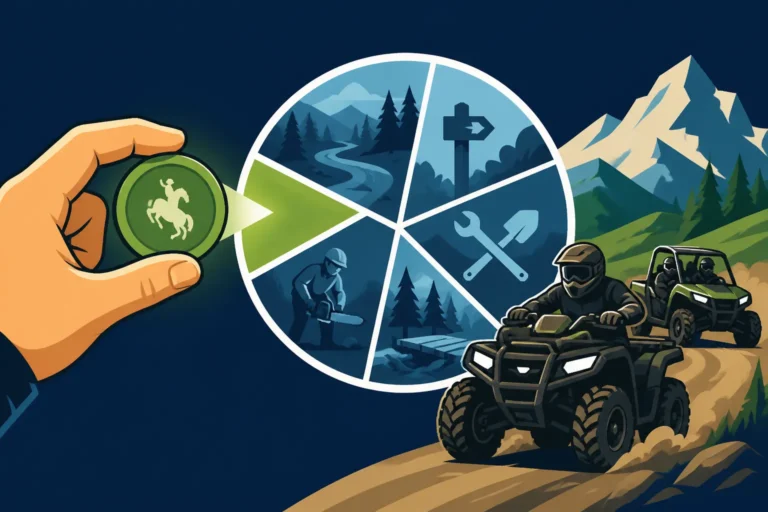
Every dollar collected from ORV registrations goes right back into the trails and facilities you use. Imagine roaring down a perfectly graded two-track, crossing a sturdy bridge over a spring runoff, or pulling into a well-equipped trailhead with proper parking and restrooms. These aren't just dreams; they're realities made possible by the collective contribution of registered riders. This money funds trail grooming, sign installation, bridge construction, and even the creation of new riding areas. Without this system, our trails would quickly degrade, becoming impassable or even dangerous, and the cost of maintenance would fall squarely on county or state budgets, which often can't cover it. It's a self-sustaining model that truly benefits every rider.
The revenue generated by these permits is managed by the Wyoming State Trails Program, which then allocates funds for various projects across the state. This means that the little fee you pay directly supports the infrastructure that makes your riding experiences so enjoyable. From the high mountain passes to the rolling sagebrush hills, your registration helps keep those routes open and welcoming. It's truly a testament to how the riding community can work together to preserve and enhance our shared passion. You can learn more about this process and why the funds often stay local in [Why Fees Stay Where They Were Collected] and [Where Wyoming ORV Permit Money Goes].
Identification and Enforcement (Keeping Everyone Safe)
While most riders are responsible and courteous, the registration system also plays a vital role in identification and enforcement. That decal on your machine isn't just a pretty sticker; it's a unique identifier that helps land managers, park rangers, and local law enforcement quickly see that your vehicle is compliant. If there's an incident on the trail – say, a lost rider, an accident, or even an illegal act – having a registered machine makes it much easier to track down owners and ensure accountability. This isn't about "big brother" watching your every move; it's about having a system in place that protects everyone, including you.
Furthermore, proper registration helps deter illegal riding. When every legal machine displays its permit, it becomes much easier for officials to spot unregistered vehicles that might be causing damage to sensitive areas or trespassing on private land. This selective enforcement helps maintain the integrity of our designated trail systems and ensures that everyone is playing by the same rules. It fosters a safer environment for families and solo adventurers alike, knowing that there's a baseline of accountability.
What Exactly Is an ORV in Wyoming's Eyes? (Defining Your Machine)
Before you worry about getting your permit, it's crucial to understand what Wyoming actually considers an "Off-Road Recreational Vehicle" (ORV). The state has specific definitions that determine whether your machine needs that annual decal or not. This isn't always as straightforward as it seems, especially with the wide variety of power-sports machines available today.
Quads, Side-by-Sides, and Dirt Bikes (The Usual Suspects)
Generally speaking, if it's designed for off-highway travel and has an engine, it probably falls under Wyoming's ORV definition. This includes the machines you most commonly see tearing up trails:
- All-Terrain Vehicles (ATVs): These are your traditional four-wheeled quads, designed for single riders (or sometimes a driver and one passenger, depending on the model). Whether it's a sport quad or a utility quad, if it's not primarily intended for street use, it's an ORV.
- Utility Terrain Vehicles (UTVs) / Side-by-Sides (SxS): These popular machines, often with steering wheels, roll cages, and bucket seats, are unequivocally ORVs. Their design is inherently off-road, whether you're using them for recreation or ranch work. You'll definitely need a permit for these. For more specific details, check out [Wyoming Permits for a Side-by-Side].
- Dirt Bikes / Off-Road Motorcycles: While they have two wheels, these motorcycles are built for the dirt, mud, and rocks, not paved roads. If it's a dedicated off-road motorcycle, it requires an ORV permit. [Wyoming ORV Permit for a Dirt Bike] has more specific information.
- Youth Machines: Even smaller quads and dirt bikes intended for younger riders typically fall under the ORV umbrella and need a permit to be ridden on public land. It's all about consistency, regardless of the machine's size or rider's age.
Essentially, if it's a motorized vehicle built for navigating rugged terrain, chances are Wyoming expects you to register it as an ORV if you plan to ride it on designated public trails or routes.
Machines That Don't Need ORV Registration (The Exceptions)
Now, here's where it gets a little more nuanced. Not every machine that goes off-pavement needs an ORV permit. There are a few key exceptions:
- Snowmobiles: These have their own separate registration and permit system in Wyoming. If you're hitting the powder, you're looking at a different set of rules entirely.
- Street-Legal Vehicles: If your truck, SUV, or even a specialized "multipurpose vehicle" (MPV) is fully street-legal with a standard license plate and title, it generally won't need an ORV permit unless it's specifically designated for off-road recreational use and isn't registered for highway use. However, most MPVs are essentially street-legal side-by-sides, which opens up different possibilities. We’ll touch on MPVs a bit later, but you can also dig deeper into [Wyoming's Multipurpose Vehicle Class].
- Machines Used Exclusively on Private Land: If your ATV or side-by-side never leaves your own property or private land where you have explicit permission to ride, you typically aren't required to have an ORV permit. However, this is a very strict definition. "Private land" means only private land, not public routes that happen to cross private parcels, or section lines. The moment you touch public land, an enrolled trail, or even a designated public road, that permit becomes mandatory.
- Agricultural Implements/Heavy Equipment: Tractors, bulldozers, and other heavy machinery used purely for agricultural, industrial, or construction purposes are not considered ORVs for recreational registration purposes.
It’s always best to err on the side of caution. If there’s any doubt about whether your machine needs an ORV permit, it's safer to get one. A quick check of the Wyoming State Parks, Historic Sites & Trails website can often clarify specific situations.
The Wyoming ORV Permit: Your Ticket to Ride (What You Need)
So, you've confirmed your machine is an ORV. Now, let's talk about the permit itself. Unlike some states that might issue a small card or a different type of tag, Wyoming uses a distinctive decal. This decal is your proof of registration and needs to be properly displayed.
The Annual Decal and Its Placement (Sticker Shock?)
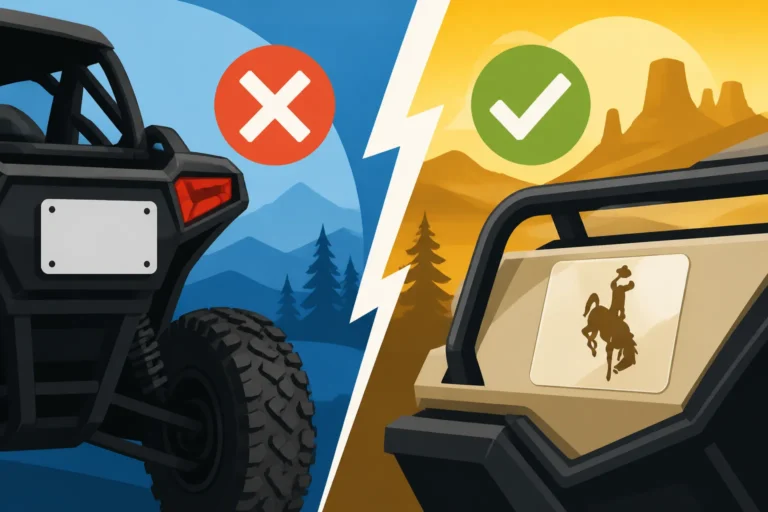
The Wyoming ORV permit comes in the form of an adhesive decal. This isn't just a casual sticker; it's designed to be durable and withstand the elements, just like your machine. You'll receive one decal for each ORV you register. The most important thing about this decal, beyond simply having it, is where you place it. Wyoming law is quite clear: the decal must be affixed to the front half of the ORV, on the left side, and in a location that is clearly visible.
Think about it from an enforcement perspective: a ranger or warden needs to quickly identify your machine as registered without having to climb all over it. This usually means a visible spot on the front fender, the left side of the hood, or even the left fork tube on a dirt bike. Avoid placing it upside down, obscured by accessories, or in a spot that's easily covered by mud or brush. If your decal gets damaged or falls off, you'll need to look into [Replacing a Lost Wyoming Decal]. Proper placement ensures smooth sailing on the trails and avoids any unnecessary stops or conversations with officials. More detail on placement can be found in [Where the Wyoming Decal Goes on a Machine].
Why No License Plate for ORVs? (A Common Misconception)
Many new riders, especially those from states with different regulations, often ask why Wyoming ORVs don't get a traditional metal license plate. It's a valid question! The answer lies in the nature of ORV use and the state's specific approach to off-highway regulation. Off-road machines are subjected to much harsher conditions than street vehicles. Metal plates can get bent, torn off, or become unreadable in the rough and tumble of trail riding. A durable, adhesive decal is simply more practical and less prone to damage.
Furthermore, Wyoming's ORV permit is specifically for off-road recreational use. It does not grant you the right to operate your machine on public roads, highways, or interstates (unless those roads are specifically designated and "enrolled" for ORV use, which is a whole other topic related to Multipurpose Vehicles). Since the ORV permit isn't a highway registration, the traditional metal plate associated with street-legal vehicles isn't necessary. The decal serves its purpose as an identifier for designated off-highway systems. If you're curious about the specific reasoning, check out [Why Wyoming Issues a Decal, Not a Plate].
Understanding the Calendar-Year Permit (Expiration Dates Matter)
This is a crucial detail that often catches riders off guard: the Wyoming ORV permit is a calendar-year permit. This means it is valid from January 1st to December 31st of the year for which it is issued, regardless of when you actually purchase it. So, if you buy your permit in August, it will still expire on December 31st of that same year, not one year from your purchase date.
This system simplifies enforcement and tracking. Everyone's permit expires on the same day, making it easy for rangers to know if a machine is current. While it might feel a little unfair if you buy late in the year, the cost is the same whether you buy it in January or October. Many savvy riders plan their purchases accordingly, often picking up next year's permit as they become available in the fall. Make sure you understand [When a Wyoming ORV Permit Expires] to avoid any issues. This fixed period also makes renewal straightforward: it's an annual event, much like many other recreational permits.
Where to Get Your Wyoming ORV Permit (Finding the Right Spot)
Wyoming understands that riders come from all corners of the state and beyond, so they've made the process of obtaining an ORV permit relatively accessible. You have several options, whether you prefer the convenience of online shopping or the personal touch of an in-person visit.
Online Purchases (Convenience at Your Fingertips)
For many, the easiest way to get an ORV permit is online. The Wyoming State Parks, Historic Sites & Trails website typically offers an online portal where you can complete the application and pay the fee from the comfort of your home. This is particularly convenient for non-residents or those who live far from a physical vendor. You'll fill out your information, provide details about your machine, make your payment, and then the decal will be mailed directly to you.
While convenient, remember to factor in mailing time. If you're planning a trip next weekend, don't wait until Thursday to order online! Give yourself plenty of lead time, usually at least a week or two, to ensure your decal arrives before you hit the trails. You can find more specific details on [Buying a Wyoming Permit Online] and [How Long a Decal Ordered Online Takes to Arrive]. This option also cuts down on potential frustration if you arrive at a physical location only to find it closed or out of stock.
Dealerships and Retailers (Shopping While You Register)
Many powersports dealerships and other authorized retailers across Wyoming act as selling agents for ORV permits. This is a fantastic option if you're already at the dealership buying a new machine, picking up parts, or just browsing. It's a one-stop shop! These vendors are usually well-versed in the process and can often answer any questions you might have on the spot. They often keep a stock of decals on hand, so you can walk out with your permit immediately, ready to stick on your machine.
Look for signs indicating they sell "Wyoming ORV Permits" or simply ask at the service or parts counter. It's a great way to support local businesses while taking care of your registration needs. Remember, these agents keep a small portion of the fee (typically $1) for their service, which is a fair trade for the convenience they provide. This is detailed in [Why a Selling Agent Keeps $1 of Every Permit]. So next time you're at your favorite shop, ask about getting your [Wyoming's Annual ORV Permit] there.
County and Forest Service Offices (Local Help)
Another reliable option is to visit specific county offices or Forest Service ranger stations. Many County Clerks or County Treasurers' offices are designated selling agents, especially in areas popular with off-road enthusiasts. These government offices are accustomed to handling various registrations and permits, so the process is usually smooth and efficient. Similarly, some Forest Service offices, particularly those managing extensive ORV trail systems, will sell permits directly.
This can be a great option if you prefer in-person transactions, need to ask specific questions about local trails, or just happen to be in town for other errands. Calling ahead to confirm hours and availability of permits is always a good idea, as smaller offices might have limited stock or specific operating hours. You can find more information on these locations in [Where Wyoming Sells ORV Permits] and [Buying a Permit at a Forest Office] or [Buying a Decal at a County Counter]. These local connections ensure that the service is readily available across the state, from the busiest towns to more remote areas.
The Registration Process Step-by-Step (No Stress, Just Ride)
Once you know what an ORV is and where to get your permit, the actual process is pretty straightforward. It’s all about having your ducks in a row. Don’t let bureaucracy get you down; a little preparation goes a long way.
What You'll Need to Bring (Documentation Checklist)
Whether you're buying online or in person, you'll need a few key pieces of information and possibly some documentation. Being prepared saves time and prevents frustrating delays.
Here's a general checklist:
- Proof of Ownership: This is usually a title (if your machine has one, which most ORVs don't in Wyoming), a manufacturer's statement of origin (MSO/MCO) for new machines, or a bill of sale for used machines. If you're buying a used machine, a solid, legally sound bill of sale is crucial. Online resources like LawDepot can provide customizable bill of sale templates that ensure all necessary information is included, protecting both buyer and seller.
- Machine Information: You'll need the Vehicle Identification Number (VIN) or the serial number of your ORV. This is usually stamped on the frame. Also be ready to provide the make, model, and year of your machine.
- Personal Identification: A valid driver's license or state ID for the person registering the vehicle.
- Payment: The current permit fee. Remember, do not state a specific price, but know it's a fixed amount for everyone. Make sure you have the correct form of payment (cash, card, check) accepted by your chosen vendor.
| Item Required | Why It's Needed | Where to Find It / Notes |
|---|---|---|
| Proof of Ownership | To confirm you legally own the ORV | Bill of sale (especially important for used machines), MSO, or title. LawDepot can help create a solid bill of sale. |
| Machine VIN/Serial | Unique identifier for your specific vehicle | Stamped on the frame, usually on the left side or near the engine. |
| Make, Model, Year | General identification of the ORV | Found on original paperwork or on the machine itself. |
| Personal ID | To verify your identity as the registrant | Valid driver's license or state ID. |
| Payment | For the annual permit fee | Cash, credit/debit card, or check (check with vendor for accepted types). |
Always double-check with the specific vendor or the state website if you have any unusual circumstances, like registering an inherited machine or one from out of state.
Filling Out the Forms (Making Sure It's Right)
Whether you're doing it online or with a physical form, the registration process requires accurate information. You'll typically be asked for your personal contact details (name, address, phone), the details of your ORV (VIN, make, model, year), and possibly information about how it was acquired.
Take your time filling out the form. A common mistake is transposing VIN digits or misspelling your address, which can lead to delays or issues with receiving your decal. If you're filling out a paper form, write clearly and legibly. If you’re unsure about a section, don't hesitate to ask the selling agent for clarification. They're there to help you get it right. For transactions involving buying or selling used machines, templates from services like LawDepot can guide you in creating comprehensive documents that ensure all required information is accurately captured for future registration needs.
Paying the Fee (The Cost of Adventure)
The final step in the registration process is paying the required fee. Wyoming has a very straightforward fee structure for its ORV permits: it's a flat rate for everyone, whether you're a resident or a non-resident. There are no sliding scales based on machine type, engine size, or weight. This keeps things simple and fair for all riders enjoying the state's trails.
While I can't provide the exact current figure, be aware that the price is set by the state. This fee is non-refundable, so make sure you're ready to commit. Once your payment is processed and your application is approved, you'll receive your ORV decal, either immediately if you're in person, or by mail if you ordered online. Then, it's just a matter of affixing it properly to your machine, and you're good to go! You can read more about why everyone pays the same in [Why Wyoming Charges Everyone the Same] and details about the cost in [Wyoming ORV Permit Cost].
Special Situations and Common Questions (Navigating the Nuances)
While the general registration process is quite simple, life rarely fits neatly into a single box. There are specific scenarios that often bring up questions for riders. Let's tackle some of the most common ones.
Non-Resident Registration (Visiting Our Great State)
One of the most frequent questions we hear is from riders visiting from out of state. You've trailered your rig all the way from Colorado, Utah, or South Dakota, and you're wondering, "Does my home state registration count?" The clear answer is no. Wyoming does not have reciprocity with any other state for ORV permits. This means that if you plan to ride your ATV or side-by-side on public lands in Wyoming, regardless of where you're from or if you have a permit from another state, you must purchase a Wyoming ORV permit.
This applies equally to residents and non-residents, and the fee is the same for everyone. It's important not to let this catch you off guard, as riding without the proper Wyoming permit can lead to fines. Many out-of-state riders make it a point to purchase their permit at the first available vendor or online before they even arrive at their chosen trailhead. Remember, a permit from Montana, Idaho, or any other state does not substitute for a Wyoming decal. For more specific information, check out [Wyoming ORV Permit for Nonresidents] and [Does Wyoming Honor a Montana Registration?].
Registering a Used Machine (Buyer Beware, or Be Prepared)
Buying a used ATV or side-by-side can be a great way to get into the sport, but it comes with its own set of considerations regarding registration. The most critical piece of documentation for a used machine is a clear and complete bill of sale. This proves that you are the legal owner and helps prevent issues if the machine was stolen or had previous liens.
When buying a used machine, make sure the seller provides a signed bill of sale that includes:
- The date of sale.
- The seller's full name, address, and signature.
- Your full name and address.
- A detailed description of the machine (make, model, year, color).
- The VIN/serial number.
- The purchase price.
It's wise to use a robust bill of sale template, which can often be found through legal document services like LawDepot, to ensure all the necessary information is present and legally sound. Always perform a VIN check if possible, and verify the seller's identity. Once you have a valid bill of sale, the registration process for a used machine is the same as for a new one; you'll present your proof of ownership, machine details, and ID, and pay the fee. For further reading, look into [Wyoming ATV Bill of Sale Requirements] and [Checks Before You Buy a Used Wyoming Quad].
Lost or Damaged Decals (Getting a Replacement)
It happens. Decals can peel off due to weather, get scuffed beyond recognition, or simply go missing. If your Wyoming ORV decal is lost, stolen, or damaged to the point of being unreadable, you'll need to obtain a replacement. Don't risk riding with an unreadable or missing decal, as it's essentially the same as riding without a permit and can result in a citation.
To get a replacement, you typically need to contact the Wyoming State Parks, Historic Sites & Trails Department or visit a designated selling agent. You'll usually need to provide your original registration information (your name, the machine's VIN, and the year the original permit was issued) and pay a small replacement fee. This process ensures that only legitimate permit holders receive new decals. Always promptly replace a damaged or lost decal to avoid any disruptions to your riding plans. Check out [Replacing a Lost Wyoming Decal] for more detailed steps.
Beyond the Sticker: Related Considerations for Wyoming Riders
While the ORV permit gets you on the designated trails, there are a couple of related topics that often cause confusion for riders in Wyoming – particularly around titles and street legality. These are distinct from the ORV permit but are important for comprehensive understanding.
Titling an ORV in Wyoming (The Myth and the Reality)
Here's a common point of confusion: most dedicated off-road vehicles in Wyoming, like ATVs and dirt bikes, do not receive a traditional Certificate of Title from the state. Unlike cars or trucks, which are designed for highway use and require titles for ownership tracking, ORVs are primarily designed for off-highway recreation.
This means when you buy a brand-new ATV, you'll typically get a Manufacturer's Statement of Origin (MSO) or Manufacturer's Certificate of Origin (MCO). For a used machine, your primary proof of ownership will be a detailed bill of sale. While this might seem unusual if you're used to titled vehicles, it's standard practice for ORVs in Wyoming. The lack of a title means the bill of sale becomes an even more critical document when buying or selling a used machine, which is why utilizing templates from services like LawDepot can be invaluable to ensure all essential details are covered. This can seem perplexing, but [Why Most Wyoming Off-Road Machines Have No Title] explains it further.
There are, however, specific circumstances where an ORV might get a title, and that leads us to our next point.
When an ORV Becomes an MPV (Street Legal Possibilities)
While a standard ORV permit does not make your machine street legal, Wyoming has a unique vehicle classification called "Multipurpose Vehicles" (MPVs). An MPV is essentially an off-road vehicle (often a side-by-side, but sometimes a quad) that has been modified and equipped to meet specific street-legal requirements, allowing it to be registered and licensed for highway use. This is where a title does become necessary.
To qualify as an MPV, your machine must meet strict criteria, including minimum weight, seat height, and specific equipment requirements (like mirrors, horn, headlights, brake lights, etc.). Once these modifications are made, the machine goes through a separate registration and titling process with the County Clerk and County Treasurer, similar to a regular vehicle. An MPV receives a title and a license plate, allowing it to operate on designated public roads. This is a big step beyond a simple ORV decal. If you're considering making your side-by-side street legal, you'll want to thoroughly research the process of [Crossing From ORV to MPV] and [Titling a Multipurpose Vehicle in Wyoming]. It's a significant commitment but opens up a whole new world of riding opportunities, blending trail access with road travel.
Disclaimer
This article is for general informational purposes only and does not constitute professional advice. Laws, prices and regulations vary by location and change over time. Consult a qualified professional for guidance on your specific situation.