Wyoming ORV Permit After Moving to the State
Moving to a new state is exciting, but it often comes with a whole new rulebook, especially when it comes to your beloved off-road vehicles. If you've just landed in Wyoming with your ATV, UTV, or dirt bike in tow, you might be scratching your head trying to figure out how to get it legally on our incredible trails. This guide will walk you through everything you need to know about getting your Wyoming ORV permit as a new resident, from why your old sticker won't cut it to where to buy your new one.
Understanding Wyoming's ORV Permit System for Newcomers
Welcome to Wyoming! We're thrilled to have you and your machine, but there's one crucial thing many new residents find frustrating: our off-road vehicle (ORV) permit system is pretty unique. You might be used to your home state's registration, but here, things work a little differently.
Why Your Out-of-State Sticker Doesn't Count
Let's just get this out of the way upfront: Wyoming has no reciprocity agreements with other states when it comes to ORV permits. That shiny registration sticker you've had on your fender from Montana, Colorado, Utah, or anywhere else? It's not valid for riding on Wyoming's designated public trails or roads. This can feel like a real bummer, especially if you've paid good money for a multi-year registration in your previous state, but it's a fundamental aspect of how Wyoming manages its vast trail system.
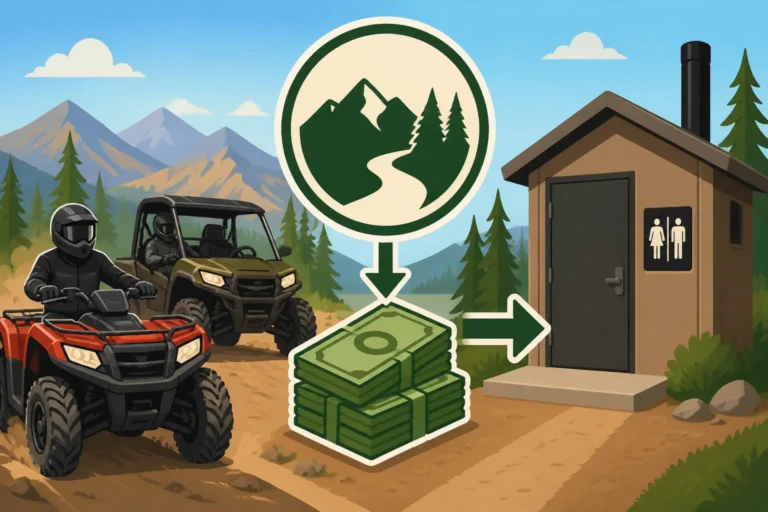
The reason for this "no reciprocity" rule is deeply tied to how our state funds and maintains its ORV trails. Every permit dollar collected in Wyoming goes directly back into the state's Trails Program, funding everything from trail building and maintenance to signage and enforcement. If we honored out-of-state registrations, that money wouldn't stay here to benefit our trails, and that's just not how our system is designed to work. It ensures that those who ride our trails contribute directly to their upkeep. So, while it might feel like an extra step, think of it as your personal investment in keeping Wyoming's fantastic riding opportunities alive and well. For more on the basics, check out [Registering an ORV in Wyoming].
The Flat Fee: Residents and Non-Residents Pay the Same
Here's a bit of good news that evens the playing field: whether you're a long-time Wyoming resident or someone who just moved here last week, the cost for a Wyoming ORV permit is the same flat fee. There's no "new resident" surcharge, no "out-of-state" premium – everyone pays the exact same amount. This simplifies things greatly and means you won't be digging deeper into your pockets just because you're new to the Cowboy State.
This uniform pricing also underscores the purpose of the permit: it's a trail user fee, not primarily a registration fee tied to your residency. It's about contributing to the system you're using. The permit is valid for a calendar year, typically expiring on December 31st, regardless of when you purchase it. So, if you buy it in July, it's good until the end of that year. This is part of [Wyoming's Annual ORV Permit] structure, which keeps things consistent for everyone.
The Step-by-Step Process for a New Wyoming Resident
Alright, you've moved, you've unpacked, and now you're ready to hit the trails. Getting that Wyoming ORV permit for your machine is probably high on your to-do list. The process is pretty straightforward, but knowing what to expect can save you time and hassle.
Gathering Your Documentation
When you head to purchase your permit, you'll need to show proof of ownership for your ORV. This is crucial for verifying that the machine is yours and to ensure proper record-keeping. Typically, acceptable documents include:
- A bill of sale: If you recently purchased the machine, a formal bill of sale is excellent proof. This is especially important if you're coming from a state where ORVs aren't titled, or if you bought it used from a private party. If you need a template, services like LawDepot offer customizable bill of sale forms that can make this process smooth. Remember, having a clear paper trail protects both buyer and seller. You can learn more about this by reading [A Wyoming Bill of Sale for an ATV].
- Previous state registration: While your out-of-state registration isn't valid for riding here, it can serve as proof of ownership when purchasing your Wyoming permit. It shows that the vehicle was legally registered to you previously.
- Manufacturer's Statement of Origin (MSO) or Certificate of Origin (COO): For brand-new machines, this document proves original ownership.
It's always a good idea to bring your driver's license or other valid identification as well, just to confirm your identity with the selling agent. If you find yourself missing key documents, don't panic. Contact the selling agent or your local county treasurer's office to discuss what alternative proofs of ownership they might accept. Sometimes a notarized affidavit can suffice, but it's best to confirm beforehand.
Where to Purchase Your Permit
Wyoming makes it relatively easy to get your ORV permit by offering several convenient locations. You've got options, depending on what works best for you.
- County Treasurers' Offices: Most county treasurers in Wyoming sell ORV permits. This is a reliable option, especially if you're already at the county building for other new-resident tasks. The staff are typically well-versed in the process, and you'll get your decal on the spot.
- Authorized Dealers and Retailers: Many powersports dealers and other retail establishments throughout the state are authorized selling agents for ORV permits. This is super convenient, as you might already be visiting a dealer for parts, service, or just to check out new machines. They often have extended hours compared to government offices.
- Forest Service and BLM Offices: Some federal land management offices, particularly those near popular riding areas, may also sell permits. This can be handy if you're already out exploring and realize you need one.
- Online: Yes, you can purchase your Wyoming ORV permit online through the state's Parks, Historic Sites & Trails website. This is a great option if you prefer to handle things from home, but remember you'll have to wait for the decal to be mailed to you. Plan accordingly, as you cannot legally ride until you have the physical decal affixed to your machine.
No matter where you choose to buy, you'll walk away with a small sticker – your new Wyoming ORV decal. For a full list of places, check out [Where Wyoming Sells ORV Permits].
Affixing Your Decal Correctly
Once you have that little sticker in hand, the next step is crucial: putting it on your machine correctly. Proper placement ensures visibility for enforcement officers and helps the decal last through varying weather conditions.
The state mandates that the decal be "permanently affixed and plainly visible" on the left side of your ORV. For an ATV or quad, this usually means on the left front fender, on the left side of the engine cowling, or sometimes even on the left side of the handlebar shroud – as long as it's clear and unobstructed. For a side-by-side (UTV), the left side of the bodywork, often near the driver's side door or fender, is common. For dirt bikes, it typically goes on the left fork leg or the left side of the number plate.
Here are some tips for proper application:
- Clean the Surface: Before applying, make sure the surface is clean, dry, and free of dirt, dust, or grease. A little rubbing alcohol works wonders.
- Choose a Flat Spot: Find a smooth, relatively flat surface where the decal won't be easily scratched or peeled off by brush or other trail hazards.
- Avoid Extreme Temperatures: Apply the decal when temperatures are moderate. Applying it in freezing cold or scorching heat can affect its adhesion.
- Smooth it Out: Once applied, press firmly and smooth out any air bubbles, working from the center outwards.
Proper placement is key to avoid issues on the trail. A faded, obscured, or improperly placed decal could potentially lead to a stop or questions from a game warden or law enforcement officer. Ensure it's clearly visible and secure. For more detailed guidance, see [Where the Wyoming Decal Goes on a Machine].
What About Titling Your ORV in Wyoming? (The MPV Distinction)
Another common point of confusion for new Wyoming residents, especially those coming from states with vehicle titling systems, is the concept of an ORV title. Here, it's not as straightforward as with cars and trucks.
Why Most ORVs Don't Get a Title
In Wyoming, the vast majority of off-road vehicles – your standard ATVs, dirt bikes, and even most side-by-sides – do not receive a title. This is a significant difference from many other states where an ATV might have a title just like a car. For most ORVs, your proof of ownership remains your bill of sale, the Manufacturer's Statement of Origin (MSO), or previous registration documents.
This lack of a title can feel a bit unsettling when you're used to having that official piece of paper for every vehicle you own. However, it's standard practice here for machines intended only for off-road use. The permit decal is what makes them legal for designated trails, not a title. The state treats them more like recreational equipment than road-going vehicles. Knowing [Why No Title for an Off-Road Machine in Wyoming] can help clarify this common misconception.
The Multipurpose Vehicle (MPV) Exception
There is, however, a crucial exception to the "no title" rule for certain ORVs: the Multipurpose Vehicle, or MPV. Wyoming created this special classification to allow some larger, more capable side-by-sides to be legally driven on public roads, where allowed. If your machine meets specific criteria, you can obtain a title and a license plate for it, essentially making it "street legal" in designated areas.
To qualify as an MPV, your machine must meet strict requirements, including:
- Weight: It must weigh between 300 and 3,000 pounds.
- Seat Height: It must have a seat height of at least 24 inches from the ground to the lowest point on the top of the driver's seat.
- Wheels: It must have four or more wheels.
If your side-by-side (often referred to as a UTV) meets these physical specifications and you want to use it on public roads, you'll go through a two-step process. First, you'll apply for an MPV title through your county clerk. Once you have the title, you can then take it to your county treasurer's office to get a license plate and register it for road use. This is a more involved process than just getting an ORV permit.
This MPV route is specifically for those who want the added flexibility of riding their machine on pavement, perhaps to connect trails or access amenities. It requires additional equipment like headlights, taillights, turn signals, mirrors, and a horn. If you're considering this for your new-to-Wyoming side-by-side, diving into [Titling a Multipurpose Vehicle in Wyoming] and [Wyoming MPV Title Requirements] will be essential. Again, services like LawDepot can provide templates for any forms or contracts you might need if you're dealing with buying or selling an MPV.
Important Considerations for Your First Wyoming Rides
With your permit secured and your understanding of Wyoming's rules growing, you're almost ready to hit the dirt! But before you load up and head out, there are a few more things new residents should keep in mind to ensure safe and legal adventures.
Planning Your Adventures: Trails and Regulations
Wyoming boasts an incredible network of trails across federal, state, and even some county lands. However, not all land is open to ORVs, and rules can vary by agency and location. As a new resident, it's vital to:
- Consult Travel Management Maps (TMMs) or Motor Vehicle Use Maps (MVUMs): These maps, typically available from Forest Service or Bureau of Land Management (BLM) offices (and often online), are your bible for legal riding. They clearly show which roads and trails are open to which types of vehicles and any seasonal restrictions. Don't rely solely on navigation apps, as they may not show current ORV designations.
- Respect Designated Routes: Stick to marked and designated routes. Riding off-trail or on closed routes is illegal and can lead to significant fines. Our state is committed to maintaining its natural beauty and protecting wildlife habitats, and sticking to the trails is a big part of that. Ignoring these rules can result in [Wyoming Fines for Riding Without a Permit] or for riding where you shouldn't.
- Be Aware of Seasonal Closures: Many trails, especially at higher elevations or in critical wildlife areas, have seasonal closures to protect wintering animals or during spring thaw to prevent trail damage. Always check current conditions before you go. [Wyoming's Enrolled Roads and Trails] provides more information on where you can ride.
Maintenance and Safety Gear
Proper preparation extends beyond just having a permit. The Wyoming backcountry can be rugged and remote, so taking precautions is essential.
- Spark Arresters and Mufflers: All ORVs operating on public lands in Wyoming must be equipped with a U.S. Forest Service-approved spark arrester in good working condition. This is a critical fire prevention measure. Your machine should also have an adequate muffler to keep sound levels within legal limits.
- Helmets: While Wyoming's helmet law primarily applies to riders under 18 or those on MPVs on public roads, wearing a helmet is always a smart choice for any age or machine type when off-roading. Injuries can happen quickly, and a helmet provides vital protection. Always check [Wyoming Helmet Law for ATV Riders] for the latest regulations.
- Preparedness: Carry essential tools, a first-aid kit, water, snacks, and extra fuel. Cell service can be spotty to non-existent in many remote areas. Tell someone your riding plan and estimated return time. Consider a satellite messenger for emergencies.
Financial Aspects Beyond the Permit
Beyond the initial permit fee, moving to Wyoming with your ORV might involve a few other financial considerations.
- Sales Tax: If you purchase a new or used ORV within Wyoming as a new resident, you'll be subject to Wyoming's sales tax. This is separate from the permit fee and is usually collected by the dealer or paid to the county treasurer when you transfer ownership (if applicable) or title an MPV.
- Insurance: While not legally required for purely off-road use, carrying ORV insurance is highly recommended. It protects your investment and can cover liabilities in case of an accident. If you opt for an MPV and plan to ride on public roads, liability insurance becomes mandatory, similar to a car.
- Future Transactions: Should you decide to sell your machine in the future, having all your paperwork, including your bill of sale and permit history, will streamline the process. Tools from LawDepot can assist with creating professional documents for selling your ORV, ensuring all details are legally sound.
Taking the time to understand these nuances will ensure your transition to off-roading in Wyoming is as smooth and enjoyable as possible.
ORV vs. MPV: A Quick Comparison for New Residents
To help new residents quickly grasp the difference between a standard ORV permit and the MPV titling process, here's a quick overview:
| Feature | Standard ORV (ATV, Dirt Bike, most UTVs) | Multipurpose Vehicle (MPV) |
|---|---|---|
| Purpose | Designated off-road trails and routes | Designated off-road routes AND public roads (where allowed) |
| Title Required? | No, generally not titled | Yes, a title is required |
| Plate Required? | No | Yes, a license plate is required |
| Permit/Decal | Yes, an annual ORV decal is mandatory | Yes, an annual ORV decal is still needed for off-road use |
| Road Legal? | No | Yes, with additional equipment and proper registration |
| Weight Limits | None for off-road permit | 300 to 3,000 lbs |
| Seat Height | None for off-road permit | At least 24 inches from ground |
| Equipment | Spark arrester, muffler | Headlight, taillight, turn signals, mirrors, horn, etc. |
| Insurance | Recommended | Mandatory for road use |
| Cost | Flat annual permit fee | Permit fee + title fee + registration fee + plate fee |
Disclaimer
This article is for general informational purposes only and does not constitute professional advice. Laws, prices and regulations vary by location and change over time. Consult a qualified professional for guidance on your specific situation.