Riding Wyoming Trust Land With a Permit
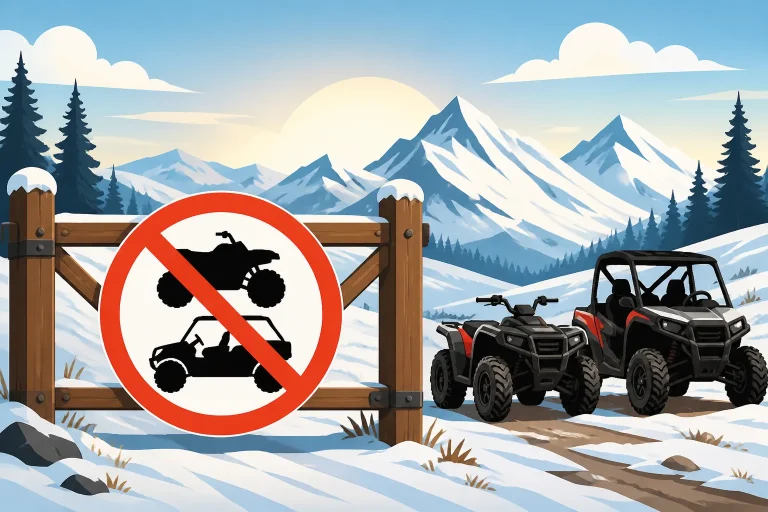
A Wyoming recreation permit may let you access state trust land, but it does not automatically make every two-track or open-looking stretch legal for an ATV or UTV. The key is checking both the parcel’s access rules and the route’s motorized-use status. Here’s how to plan a ride without confusing a trust land permit with an off-road vehicle permit or permission to drive anywhere.
What a Wyoming trust land permit does
Wyoming state trust lands are managed to support designated public beneficiaries. They are not the same as national forest, Bureau of Land Management, or ordinary public recreation land. Access can be allowed for specific recreational uses, but it remains subject to the rules for that parcel and to the rights of any lessee or other authorized user.
A recreational use permit and a Wyoming ORV permit solve different problems:
- A recreational use permit concerns whether you may access state trust land for an activity covered by the permit.
- A Wyoming ORV permit or decal concerns the machine’s permit requirement for riding where Wyoming requires one.
- A route designation or other access authorization determines whether you may operate a motor vehicle on that particular road or trail.
One permit does not replace the others. Having a decal on your ATV does not, by itself, authorize entry onto a trust parcel. And having permission to access a parcel does not necessarily authorize motorized travel across it. For the distinction between these land-access rules and the machine decal, see Wyoming Trust Land and Its Own Permit and Why Every Machine Needs a Wyoming Permit.
Before setting out, confirm that the parcel is open to your planned activity and that motorized travel is allowed on the route you intend to use. Do not treat a trust land permit as a general right to ride across state land. If the applicable map or parcel information is unclear, ask the land manager or the state office responsible for the parcel before riding.
| What you need to confirm | What it answers | What it does not answer |
|---|---|---|
| Recreational use permit | Whether you have the required access permission for the activity | Whether an ATV or UTV may use a particular route |
| Wyoming ORV permit or decal | Whether the machine has the required Wyoming permit | Whether the parcel or route is open to motorized use |
| Parcel and route information | Whether the land and route are open to your planned use | Whether you have every required machine permit |
| Permission from a landowner or lessee, when required | Whether a specific access issue has been resolved | Whether you can ignore a closure or other applicable rule |
Check the parcel and route before riding
The most important planning step is identifying the exact land and route—not just the nearest road, trailhead, or public-land boundary. A road may pass through or alongside a trust parcel, and a route visible on a phone map may not be open to motorized recreation. Property boundaries can also be difficult to spot on the ground.
Start with the current information provided by the relevant state land office. Confirm whether the parcel is open to recreation, whether a permit is required for your use, and whether motorized access is allowed. Then check the route itself. A permit to enter a parcel is not a substitute for a route designation, and permission to use one access road does not imply permission to explore every track branching from it.
Verify the route, not just the destination
A common planning mistake is to find a destination on a map and assume the surrounding roads are all usable. Instead, trace the entire intended route and identify which sections cross trust land, private land, federal land, or other jurisdictions. A trip can cross several types of property, each with its own access rules.
For each section, check:
- Whether the parcel or area is open to your activity.
- Whether the route is authorized for motorized travel.
- Whether the route has seasonal or temporary closures.
- Whether you need a separate permit or permission for any portion.
- Whether the route is suitable for your machine’s width and equipment.
- Whether the map or posted signs show restrictions that apply to your vehicle.
A route that is open to hikers or hunters is not necessarily open to ATVs and UTVs. Likewise, a route open to some motor vehicles may have limits that make it unsuitable for a wider side-by-side. If you are unsure whether a road or track qualifies, ask the responsible land manager rather than relying on tire marks or other riders’ use.
For help understanding motorized access on public routes, see Wyoming Rules for Riding a Two-Track and Which Travel Map You Must Carry in Wyoming. Those resources do not replace parcel-specific trust land information, but they can help you recognize why a visible track is not proof that riding is allowed.
Watch for boundaries, closures, and changes
Trust land may sit beside private property, leased land, or other areas with different access conditions. Do not assume that a fence, gate, or road is a public boundary marker. A route may enter private land without an obvious change in surface, and an open gate does not necessarily give riders permission to pass.
Follow posted signs and current closure information. If a sign on the ground conflicts with an older map, stop and check with the land manager before continuing. Do not ride around a gate or closure to reach a route that appears open farther ahead. For more on boundary and access concerns, see Wyoming Rules for Crossing Private Land and [Wyoming Rules for Riding a Grazing Lease].
How to prepare your ATV or UTV trip
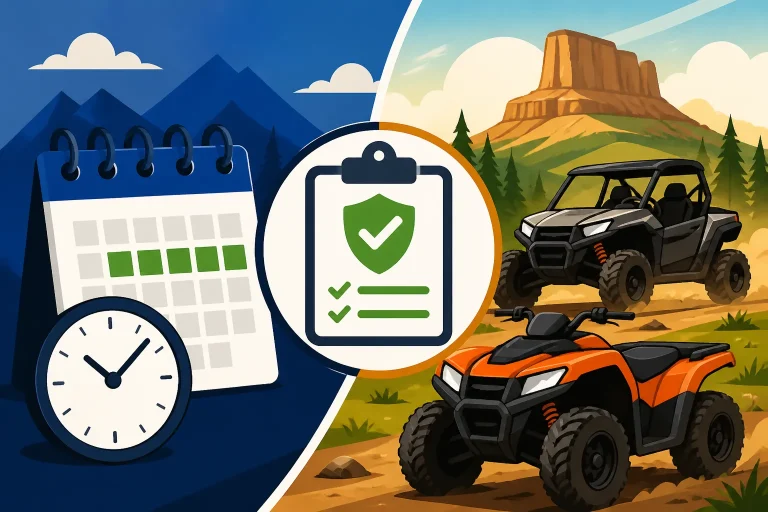
Once you have confirmed access, prepare for the ride as you would for any other Wyoming route: carry the required permit information, make sure the machine is properly permitted, and have a plan for navigation and changing conditions. A successful permit check before leaving is more useful than trying to settle a boundary question while stopped at a gate.
Confirm permits for the rider and machine
Check the current requirements for the recreational use permit before visiting the parcel. Make sure the permit is valid for the dates and activity you have planned, and understand whether it must be carried or shown in a particular way. If the state offers multiple permit options, compare their current terms through the official source rather than relying on an old receipt or a secondhand summary. See Buying a Recreational Use Permit for the purchase question and Wyoming State Trust Land Permit Cost for cost details to verify.
Separately, confirm that your ATV or UTV has the Wyoming ORV permit required for the places where you plan to ride. Wyoming’s permit requirement is not waived simply because the machine is registered or permitted in another state. For broader context, see Wyoming ORV Reciprocity Rules and Riding Wyoming With an Out-of-State Sticker.
Keep the relevant proof of permits accessible during the ride. A digital record can be useful, but do not assume a phone receipt replaces a required decal or other form of proof. Check the current rules for what needs to be displayed on the machine and what you should carry.
Plan for access conditions on the ground
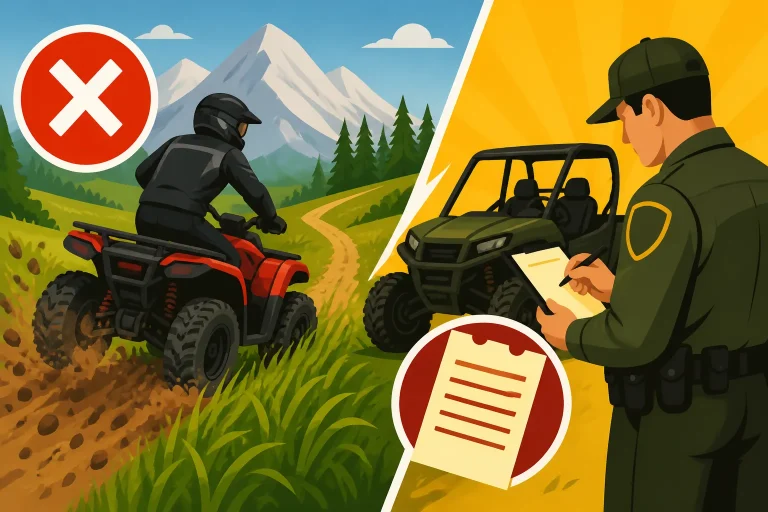
Bring a current map or other reliable route information that shows land boundaries and the routes authorized for motorized use. Download information before leaving areas with cell service, and do not depend on a phone signal at the parcel. If the route passes through a gate, leave it as you found it unless signs or instructions say otherwise. Keep the machine on the authorized route; driving off-route can create damage, trespass issues, or conflict with land users.
Respect other users and the land’s working purpose. State trust land can be subject to leases and operational activity. Give livestock room, avoid disturbing equipment, and do not block roads or access points. If you encounter a ranch worker, lessee, or other authorized user, follow reasonable instructions about access and safety. For additional context on gates and leased ground, see Which Gates You Are Required to Close and Riding a Grazing Lease You Do Not Hold.
Also account for ordinary ride risks. Weather, mud, snow, fire restrictions, and changing road conditions can affect whether a planned route is safe or open. Have enough fuel for the full route, tell someone where you are going, and set a turnaround point. If a route is closed or conditions make it unsafe, choose another authorized route rather than trying to go around the restriction.
If you cannot verify access
Do not ride into a parcel simply because it looks unused, unfenced, or easy to reach. Pause and contact the relevant state office or land manager. Give them the parcel location, the route you want to use, your machine type, and the activity you plan to do. Those details make it easier to get a useful answer.
If you cannot confirm that motorized travel is allowed, plan a different route. Permission for recreation in general may not answer the more specific question of ATV or UTV access. When a trip crosses multiple ownerships, check each segment separately; approval for one section does not resolve access for the next.
A practical pre-ride checklist
Use this checklist before riding a Wyoming ATV or UTV on trust land:
- Identify the parcel and land manager. Confirm that the location is state trust land and not an adjacent parcel with different ownership.
- Check recreational access requirements. Verify whether you need a recreational use permit for your planned activity and whether the parcel is open.
- Confirm motorized access. Make sure the specific road or trail is authorized for your type of machine.
- Check every part of the route. Identify private, federal, or other state lands along the way, and verify access for each section.
- Confirm the machine’s Wyoming permit. A trust land access permit does not replace the ORV permit or decal.
- Review current closures and restrictions. Check official information and pay attention to signs at the site.
- Carry the right proof and navigation. Keep permit information available and bring a map that works without cell service.
- Stay on the authorized route. Do not use the permit as a reason to explore unmarked tracks or cross closed land.
- Respect gates, livestock, and other land users. Leave access points as directed and avoid interfering with ongoing land use.
- Have a backup plan. If access is unclear or a route is closed, turn around and use a route you have verified.
The short version: get the required trust land access permission, verify that motorized use is allowed on the exact route, and make sure the machine has its required Wyoming ORV permit. Treat these as separate checks. That approach helps prevent the most common mistake: assuming that permission to be on a parcel means permission to ride anywhere on it.
Disclaimer
This article is for general informational purposes only and does not constitute professional advice. Laws, prices and regulations vary by location and change over time. Consult a qualified professional for guidance on your specific situation.