Why Wyoming Issues a Decal, Not a Plate
It can be incredibly confusing and even a little frustrating when you first dive into the world of off-road vehicle (ORV) registration in Wyoming. You might be expecting to get a shiny new license plate for your ATV or side-by-side, just like you would for your car, only to find out that's not quite how it works here. Instead, Wyoming uses a decal system for most off-highway vehicles, and this guide is here to unravel the "why" behind that, helping you understand the rules and get your machine ready for the trails.
Understanding Wyoming's Off-Road Vehicle Definition
Let's start by getting on the same page about what we're even talking about when we say "Off-Road Vehicle" here in Wyoming. The state has pretty clear definitions, and understanding them is the first step to knowing whether you'll be getting a decal or a plate. It's not just a matter of semantics; these distinctions directly impact how you register and, more importantly, where you can legally ride.
What Qualifies as an ORV in Wyoming
When the Cowboy State talks about an Off-Road Recreational Vehicle (ORV), it's generally referring to machines primarily designed and manufactured for off-highway use. This umbrella covers a wide range of exciting equipment that gets us out exploring the vast landscapes. Think about your traditional All-Terrain Vehicles (ATVs) – those four-wheeled quads that are synonymous with tearing up dirt roads and navigating rugged trails. These are definitely in the ORV category.
Then there are the ever-popular Utility Terrain Vehicles (UTVs), often called side-by-sides. These are typically larger, have more seating, and often boast greater cargo capacity, making them perfect for both recreation and ranch work. While many side-by-sides operate exclusively off-road, some can actually be converted to street-legal status under Wyoming's Multipurpose Vehicle (MPV) classification, which we’ll dive into later. For now, if your side-by-side isn't explicitly set up for street legality, it's considered an ORV. Of course, we can't forget dirt bikes, those nimble two-wheeled machines built for challenging single-track trails and high-octane fun. They, too, fall squarely into the ORV definition. The key here is their primary design: they are built for the backcountry, the dirt, the sand, and the rocks, not for asphalt highways. They don't have standard automotive safety features like crumple zones or airbags, nor do they typically come equipped with full lighting packages or mirrors necessary for road use.
The Purpose of ORV Registration
So, why do we need to register these awesome machines if they aren't going on the road? The purpose of ORV registration in Wyoming is multi-faceted and incredibly important for maintaining the riding opportunities we all cherish. First and foremost, registration is about funding. The fees collected from these decals go directly into the Wyoming Trails Program. This program is the lifeblood of our state's vast network of off-road trails. Without this funding, those trails wouldn't get maintained, new ones wouldn't be built, and the riding experience would degrade significantly. It's a direct investment in the very thing we love to do. [Where Wyoming ORV Permit Money Goes]
Beyond funding, registration provides a crucial layer of identification and accountability. When you display that decal, it signals to land managers, law enforcement, and fellow riders that your machine is operating legally on designated routes. It allows officials to quickly verify that a machine has met the basic requirement for trail access. This isn't about control for control's sake; it's about ensuring that our shared public lands are managed responsibly and that everyone is contributing to their upkeep and orderly use. It helps minimize illegal riding, reduce environmental impact, and provides a framework for addressing issues should they arise on the trail. Think of it as your passport to Wyoming's incredible backcountry riding.
The Decal System Versus Traditional License Plates
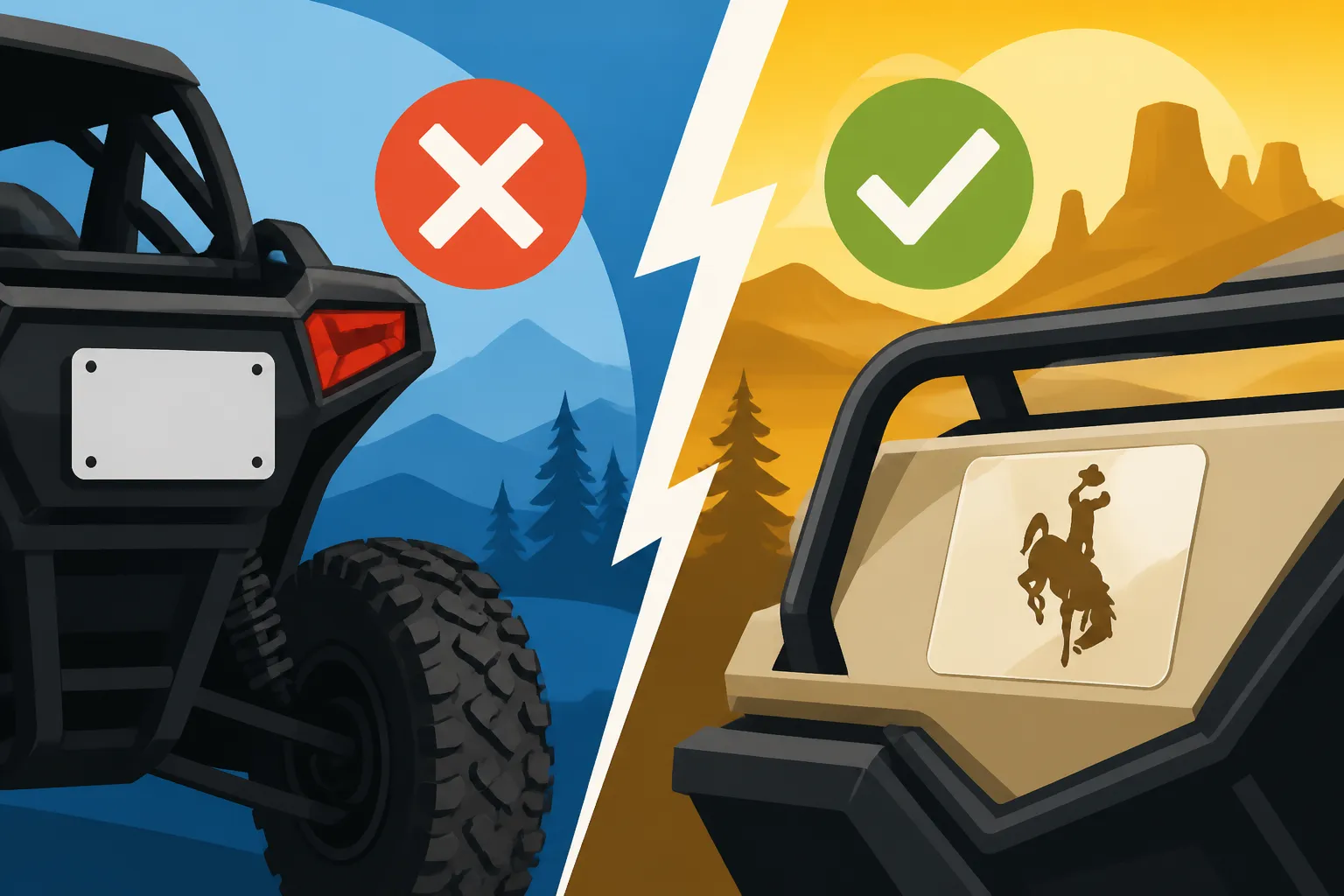
Now for the core of the matter: why a decal? When most people think of vehicle registration, a metal license plate with embossed numbers probably springs to mind. But for the majority of off-road machines in Wyoming, a durable sticker is the name of the game. This isn't an oversight or a cost-cutting measure; it's a practical decision based on the unique demands of off-highway riding.
Why a Decal for Off-Road Use?
Imagine trying to navigate a rocky trail, churning through deep mud, or pushing through thick sagebrush with a traditional metal license plate bolted onto your fender. What do you think would happen? Chances are, that plate would get bent, scratched beyond recognition, or ripped off entirely in short order. Off-road environments are notoriously harsh, and anything that protrudes or isn't securely integrated into the machine is vulnerable. Metal plates, designed for relatively smooth road conditions, simply aren't suited for the abuse inherent in trail riding.
Decals, on the other hand, offer a much more robust and practical solution. They are designed to adhere directly to the plastic or metal surfaces of your ATV or side-by-side, becoming almost part of the machine itself. They lie flat, presenting a much smaller target for damage from branches, rocks, or mud. They are manufactured to withstand extreme weather conditions—the scorching Wyoming sun, freezing winter temperatures, and constant exposure to dust and moisture. Plus, from a logistical standpoint, decals are typically far less expensive to produce and distribute than stamped metal plates, which means more of your permit fee can go directly to the trails, not to manufacturing overhead.
Where the Decal Goes and Its Visibility
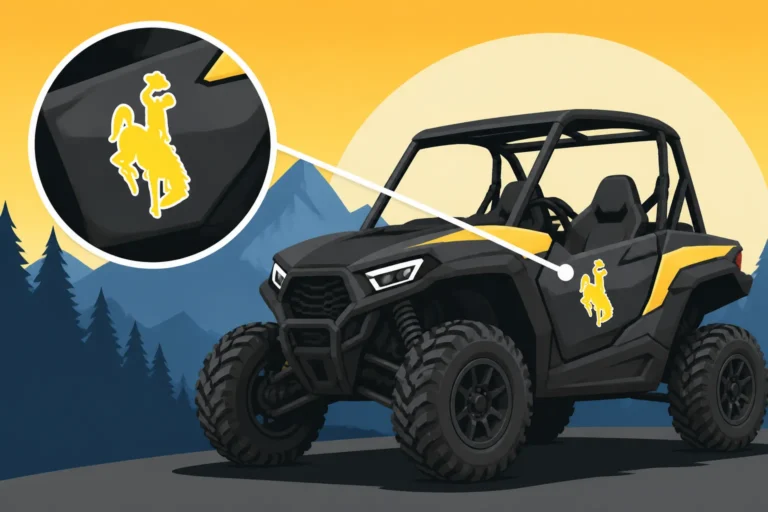
The effectiveness of the decal system hinges on its visibility. To ensure that your ORV can be easily identified by trail wardens, rangers, or other officials, there are specific requirements for where the decal must be placed on your machine. Generally, the decal needs to be prominently displayed on the front or rear fender, or another easily visible location. The key is that it must be un-obscured and legible. You want to make sure it's not tucked away under a mud flap, hidden by a cooler, or covered by saddlebags.
Think about it from an enforcement officer's perspective: they need to quickly scan a passing machine to ensure it's properly registered. A clearly placed decal makes this process efficient, allowing them to focus on safety and trail etiquette rather than chasing down riders for a closer look. Proper placement also helps the decal last longer. Placing it on a clean, flat surface that isn't subjected to constant friction or extreme angles will maximize its lifespan. While they are built tough, even the best decals can wear out over time due to sun exposure or abrasion, which is why consistent, correct placement is emphasized. [Wyoming ORV Decal Placement]
The Legal Framework Behind Wyoming's Decal Policy
Wyoming's approach to ORV registration isn't just a random decision; it's rooted in specific state legislation designed to manage and fund off-road recreation while clearly distinguishing it from road-going vehicles. This legal framework is essential for understanding why your ATV gets a sticker and your truck gets a plate.
Wyoming's Specific ORV Legislation
The State of Wyoming has enacted specific statutes that govern the definition, operation, and registration of off-road vehicles. These laws are housed within the Wyoming Statutes, creating a dedicated legal framework that acknowledges the unique nature of ORVs. Unlike cars or trucks, which are designed for paved roads and governed by a broad set of motor vehicle laws, ORVs have their own set of rules tailored to their primary use in off-highway environments. This distinction is crucial because it allows the state to manage ORV use on public lands effectively without forcing them into a regulatory box meant for street vehicles.
The legislation outlines what constitutes an ORV, who needs to register, where those machines can operate, and, critically, how the registration fees are collected and utilized. This framework is explicitly designed to support the Wyoming Trails Program, ensuring a sustainable funding source for the maintenance, improvement, and expansion of our state's extensive network of ORV trails. It's a system built from the ground up to support the off-road community and preserve access to our incredible outdoor resources.
Distinguishing ORVs from Street-Legal Vehicles
Perhaps the most important aspect of Wyoming's ORV legal framework is the clear line it draws between an off-road vehicle and a street-legal vehicle. Your ORV decal is not, under any circumstances, a license to operate your ATV or dirt bike on public roads. That's a common misconception that can lead to significant fines and dangerous situations. Vehicles with a standard license plate are registered with the County Treasurer and are intended for general highway use, meeting specific safety and equipment standards for that purpose.
For an off-road machine to gain street-legal status in Wyoming, it must jump through a different set of hoops. This is where the Multipurpose Vehicle (MPV) classification comes into play. An MPV is a specific type of off-road vehicle—typically a side-by-side or UTV—that, due to its design (meeting certain weight, size, and seating requirements), can be legally registered and plated for road use, provided it also meets additional equipment and insurance standards. This means adding things like headlights, taillights, mirrors, a horn, and turn signals, among others. The distinction is vital: if your machine only has an ORV decal, it's for the trails, not the highway. If you want to ride legally on public roads, you need to understand the MPV path and obtain a plate, not just a decal. [Wyoming's Multipurpose Vehicle Class]
The Benefits of Wyoming's Decal System for Riders and Trails
While the decal system might initially seem less "official" than a license plate, it brings with it substantial benefits, directly impacting the quality of your riding experience and the health of our shared trail systems. It's a targeted solution for a specific type of recreation, and it works remarkably well to achieve its goals.
Funding for Trail Systems and Infrastructure
This is arguably the most significant benefit of Wyoming's ORV decal system. Every time you purchase that annual decal, a significant portion of that fee directly feeds into the Wyoming Trails Program. This isn't money that disappears into a general state fund; it's earmarked specifically for off-road recreational purposes. What does that mean for you, the rider? It means those funds are used to maintain existing trails, clear downed trees, repair erosion, and install proper signage. It also supports the development of new trails, expanding our riding opportunities across the state.
Think about the last time you rode a beautifully maintained trail, saw clear markers, or used a clean pit toilet at a trailhead. These things don't happen magically. They are often the direct result of the Trails Program's work, funded by those very decals. This system creates a direct and transparent link between the user (the rider) and the resource (the trails), ensuring that those who benefit most are also contributing to its sustainability. It's a cycle of investment that keeps Wyoming one of the best places in the country for off-road adventure. [Wyoming Permits and the Trails Program]
Simplified Compliance and Enforcement
From a rider's perspective, obtaining and displaying an ORV decal is generally a much simpler process than navigating the full titling and plating requirements of a street-legal vehicle. You don't need inspections, specialized insurance for road use, or trips to multiple government offices. You purchase the decal, affix it, and you're good to go for the year on designated trails. This streamlined approach means less bureaucracy and more time out on the trails.
For land managers and law enforcement, the decal system also simplifies enforcement. A quick visual check is all that's typically needed to confirm that a machine is registered for trail use. This efficiency allows officers to focus their efforts on more critical issues like safety violations, illegal off-route riding, or environmental damage, rather than spending excessive time verifying basic registration. It helps ensure that all riders are playing by the rules and contributing their fair share, fostering a sense of community responsibility on our public lands. The simplicity benefits everyone by making the system accessible and effective.
Multipurpose Vehicles MPVs and Their Plate Requirements
So, we've talked about ORVs and their decals. But what about those machines that can go on the road? This is where Wyoming's Multipurpose Vehicle (MPV) classification comes in, offering a pathway for certain off-road machines to become street-legal with a traditional license plate. It's a significant distinction and one that riders often confuse with the standard ORV permit.
What Makes a Machine an MPV
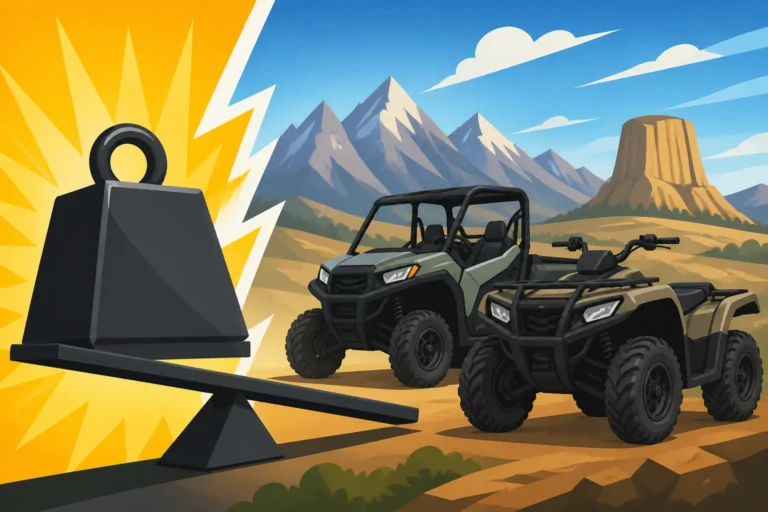
An MPV isn't just any ATV or UTV; it's a specific type of off-road machine that meets a precise set of criteria outlined in Wyoming law. The definition focuses on physical characteristics that make it more suitable for potential road use. For instance, an MPV generally needs to have four wheels—so your dirt bike won't qualify here. It also has a weight requirement, typically falling between 300 and 3,000 pounds, which often includes many popular side-by-sides but excludes lighter youth models or heavier custom builds. Another key feature is the seat height, which must be at least 24 inches from the ground, ensuring the driver has a reasonable sightline and position for road operation. [Wyoming MPV Weight Limits], [Wyoming MPV Seat Height Rule]
These specific measurements aren't arbitrary; they help distinguish machines that have the potential to be safely operated on public roads from purely off-highway vehicles. Many larger, modern side-by-sides, like certain models from Polaris, Can-Am, or Honda, often meet these MPV criteria straight from the factory. If your machine fits these descriptions, you might have the option to pursue MPV status, which opens up a whole new world of riding possibilities, including legal travel on enrolled public roads. It's crucial to measure and check your specific machine against these rules, as they are the gatekeepers to getting a plate instead of just a decal.
The MPV Titling and Plating Process
This is where the process truly diverges from the simple ORV decal. If your machine qualifies as an MPV and you intend to make it street-legal, you'll go through a two-step process involving two different county offices. First, you'll head to your County Clerk's office to obtain a title for your MPV. This is just like titling a car or truck and establishes legal ownership. You'll need documents proving ownership, such as a manufacturer's certificate of origin (MCO) if new, or a bill of sale and previous title if used. This step is critical because without a title, you cannot get a plate. [Titling a Multipurpose Vehicle in Wyoming], [Wyoming County Clerk Title Process]
Once you have your title from the County Clerk, you then take that to the County Treasurer's office. This is where you'll actually register the MPV for road use and receive your metal license plate. This process will also involve paying registration fees and proving you have the necessary insurance for road use. Beyond the plate itself, remember that an MPV must also be equipped with various safety features to be road-legal, such as headlights, taillights, brake lights, mirrors, and a horn. Essentially, you're treating it much like a regular motor vehicle for registration purposes, which is a far cry from simply slapping an annual decal on for trail access. It's a more involved process, but it's the only way to legally gain street-legal status for an off-road machine in Wyoming. [Wyoming County Treasurer Plate Process]
Practicalities of the Wyoming ORV Decal
Understanding why Wyoming uses a decal is one thing, but knowing the practical steps of getting one and what to expect is just as important. For both residents and non-residents, the process is designed to be straightforward, ensuring you can quickly get your machine ready for the trails.
Obtaining Your ORV Decal
Getting your annual Wyoming ORV decal is fortunately a pretty simple affair. You don't need to make an appointment at the Department of Motor Vehicles or fill out reams of paperwork. The Wyoming State Parks, Historic Sites and Trails system manages the program, and they've made the decals widely available. You can purchase them at a variety of locations throughout the state, including many authorized selling agents. These agents often include powersports dealers, outdoor recreation shops, and even some county government offices. This widespread availability means you can often pick one up on your way to the trailhead, or even order one online through the state's official website. [Where Wyoming Sells ORV Permits], [Buying a Wyoming Permit Online]
It's important to remember that the Wyoming ORV permit is an annual, calendar-year permit. This means it's valid from January 1st through December 31st of the year it's issued, regardless of when you purchase it. So, if you buy a decal in July, it will still expire on December 31st of that same year. Plan accordingly, especially if you're riding late in the season, as you might want to consider buying next year's permit if available. The process typically involves providing some basic information about yourself and your machine, and then paying the flat fee. You'll receive the physical decal, which you then need to affix clearly to your ORV. [Wyoming's Calendar-Year Permit], [When a Wyoming ORV Permit Expires]
Non-Residents and the Decal Rule
This is a point of frequent confusion for out-of-state riders, so let's be crystal clear: if you plan to ride your ATV, UTV, or dirt bike on designated public trails in Wyoming, it must display a current Wyoming ORV decal. There are no exceptions, and Wyoming does not honor off-road registrations or permits from any other state. This means if you're coming from Montana, Colorado, Utah, or anywhere else, your home-state sticker simply won't cut it on Wyoming trails. [Wyoming ORV Permit for Nonresidents], [No Reciprocity in Wyoming, Stated Plainly]
While it might seem inconvenient to purchase another permit, consider the purpose: the fee you pay, just like that of a resident, goes directly to maintaining the Wyoming trails you're about to enjoy. It's a fair and equitable system where everyone who uses the resource contributes to its upkeep. Wyoming charges everyone the same flat fee for the annual decal, whether you live here year-round or are just visiting for a week of epic riding. This ensures that the funding for our trails is robust and consistent, regardless of where the riders originate. So, before you hit those incredible trails, make sure you swing by a vendor or hop online to grab that Wyoming decal. [Why Wyoming Charges Everyone the Same]
The Future of Wyoming's ORV Registration and Trail Access
The world of off-road recreation is constantly evolving, and so too are the methods for managing and accessing public lands. Wyoming's ORV registration system, while effective, is not static. It's part of a dynamic process that considers rider needs, environmental impact, and the long-term sustainability of our precious outdoor resources.
Ongoing Management and Changes
The Wyoming Trails Program, which benefits directly from your ORV decal purchases, is continuously engaged in managing and evaluating our state's trail systems. This involves not only the physical maintenance of trails but also assessing potential changes to regulations, identifying new riding areas, and addressing challenges like resource protection and user conflict. State agencies, often in collaboration with federal land managers like the U.S. Forest Service and the Bureau of Land Management (BLM), work to create and update travel management plans that designate where ORVs can and cannot ride. These plans are developed through public input processes, meaning riders have a voice in shaping the future of off-road access.
While I can't predict specific legislative changes, it's safe to say that the system is always under review to ensure it remains relevant, efficient, and beneficial for both riders and the environment. Factors such as changing machine technology (e.g., electric ORVs), increasing rider numbers, and evolving conservation priorities all contribute to ongoing discussions about how best to manage our trails. Staying informed and engaging with official state resources is key to understanding any updates.
Resources for Riders
For any off-road enthusiast in Wyoming, whether resident or visitor, the best practice is always to rely on official state resources for the most current information. The Wyoming State Parks, Historic Sites and Trails website is your primary source for details on ORV permits, trail maps, and current regulations. Land management agencies like the Forest Service and BLM also publish Motor Vehicle Use Maps (MVUMs) that are indispensable for knowing exactly where you can legally ride. These maps indicate designated routes, seasonal closures, and any restrictions you need to be aware of.
Beyond official channels, a strong off-road community thrives on shared knowledge and responsible practices. Being a good steward of the land means educating yourself on the rules, adhering to "Tread Lightly!" principles, and respecting other trail users. And when it comes to essential documents that support your ownership or use of an ORV, even if not directly related to the state decal, remember that platforms like LawDepot can be incredibly helpful. For example, if you're buying or selling a used ATV in Wyoming, having a clear and legally sound bill of sale—which you can easily create through a service like LawDepot—is crucial, especially since most ORVs don't come with a traditional title. This helps establish proof of ownership and protects both parties in a transaction. [A Wyoming Bill of Sale for an ATV] Similarly, if you ever found yourself in a situation needing to document a specific agreement or an affidavit of ownership for other purposes, LawDepot provides customizable legal forms to assist. Always make sure your paperwork is in order, even for machines that only carry a decal.
ORV Decal vs. MPV Plate: A Quick Comparison
To help clarify the differences between Wyoming's ORV decal and the MPV license plate, here's a handy table outlining the key distinctions. Understanding these points can prevent confusion and ensure your machine is legally equipped for the adventures you have planned.
| Feature | ORV Decal | MPV Plate |
|---|---|---|
| Primary Purpose | Access to designated off-road trails & funding for trail maintenance | Legal operation on public roads (with proper equipment) & some designated trails |
| Issuing Authority | Wyoming State Parks (via authorized vendors or online) | County Treasurer (after obtaining title from County Clerk) |
| Physical Item | Adhesive sticker (affixed to machine) | Metal license plate (mounted on machine) |
| Duration | Annual (January 1st – December 31st) | Annual (based on vehicle type and registration period) |
| Street Legal? | No (does not permit road travel) | Yes (requires additional safety equipment and driver's license/endorsement) |
| Titling Required? | No (most ORVs do not have a title in Wyoming) | Yes (required from County Clerk before plating) |
| Common Examples | Most ATVs, dirt bikes, recreational UTVs (side-by-sides not converted for road use) | Specific UTVs/side-by-sides meeting Wyoming's weight/size/seat height criteria (e.g., Polaris Ranger, Can-Am Defender, Honda Pioneer models) |
Disclaimer
This article is for general informational purposes only and does not constitute professional advice. Laws, prices and regulations vary by location and change over time. Consult a qualified professional for guidance on your specific situation.